
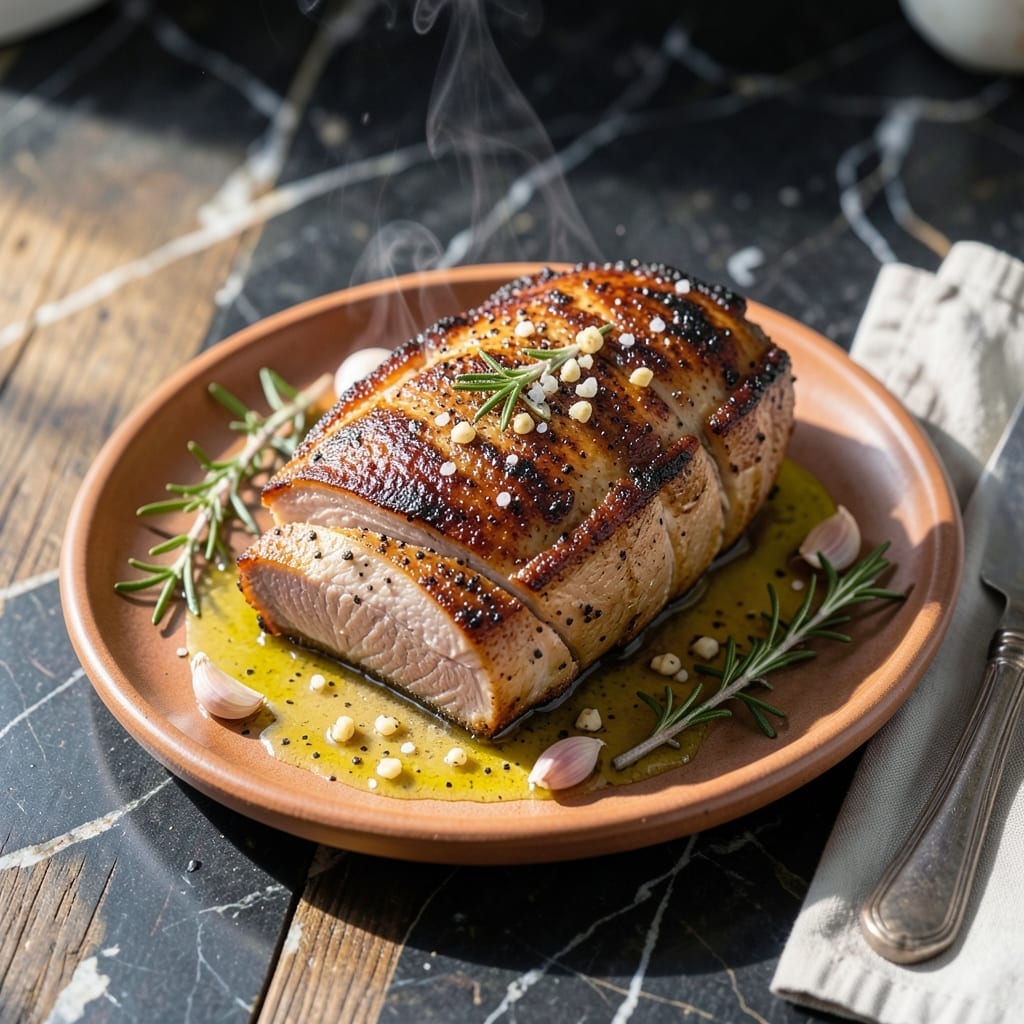
I developed this stovetop method after struggling with uneven oven roasting. The key to tender pork loin lies in controlled heat and proper searing before the slow cook.
This approach uses a single pan to build deep flavor through caramelization, then finishes with a resting period that locks in juices. The herb-infused pan sauce captures every bit of flavor from the cooking process.
You’ll achieve perfectly cooked pork with a golden crust and moist interior, all without turning on the oven. The pan sauce adds restaurant-quality finishing touch to each slice.
Ideal for Sunday suppers or weekday meals when you want impressive results with minimal cleanup. This technique delivers consistent quality every time.
Ingredients for Pork Loin Roast Recipe on Stove Top
A short list of quality ingredients creates a stovetop masterpiece with tender pork and rich sauce.
| Ingredient | Amount | Notes |
|---|---|---|
| Pork Loin 🥩 | 2 lb | Boneless, trimmed of excess fat |
| Kosher Salt 🧂 | 1 ½ tsp | Diamond Crystal preferred for even seasoning |
| Freshly Ground Black Pepper 🌶️ | 1 tsp | Coarse grind for texture |
| Olive Oil 🫒 | 2 tbsp | High smoke point for searing |
| Unsalted Butter 🧈 | 2 tbsp | For pan sauce richness |
| Garlic Cloves 🧄 | 4 cloves | Minced for even distribution |
| Fresh Rosemary 🌿 | 2 tbsp | Chopped, stems discarded |
| Fresh Thyme 🍃 | 2 tbsp | Leaves stripped from stems |
| Dijon Mustard 🟡 | 1 tbsp | For pan sauce depth |
| Low-Sodium Chicken Broth 🍲 | 1 cup | For deglazing and sauce base |
| Dry White Wine 🍷 | ½ cup | Sauvignon Blanc or Pinot Grigio works well |
| Shallot 🧅 | 1 whole | Finely minced for sauce |
The pork loin is the star here. Look for a center-cut piece with even thickness—around 2-3 inches diameter—for consistent cooking. Whole Foods or Costco usually have great options. Avoid pre-marinated versions; you want to control the seasoning. Fresh herbs are non-negotiable for that bright, restaurant-quality finish (the dried stuff just won’t deliver).
No white wine? Extra chicken broth with a splash of vinegar works in a pinch. Shallots can be swapped for half a small onion, but the flavor will be milder. For the herbs, fresh oregano or sage can stand in for thyme or rosemary if needed. The butter is key for the sauce—don’t use margarine or oil here (trust me on this one).
Leftovers keep beautifully. Store sliced pork and sauce separately in airtight containers for up to 4 days. Reheat gently in the sauce to keep it moist. The pan sauce can be frozen for 1 month—perfect for quick weeknight meals.
Why You’ll Love This Recipe
- One Pan Wonder: I love that this cooks entirely on the stovetop—no oven juggling, just a heavy pan and that beautiful pork loin searing in butter and oil.
- Crispy & Juicy: The combo of olive oil and butter gives it this ridiculous crust while keeping the inside so tender, and that salt and pepper? Simple but spot-on.
- Weeknight Hero: Honestly, it’s my go-to for busy evenings—start to finish in under an hour, and it feels fancy enough for company.
- Leftovers Gold: Between us, the slices reheat beautifully for sandwiches, and that rich pan juices? I save every last drop for drizzling.
Step-by-Step Instructions for Pork Loin Roast on Stove Top
Here’s how I get fork-tender pork with a rich pan sauce every single time.
Step 1: Season and Sear the Pork Loin
Pat the 2 lb Pork Loin dry with paper towels—this is non-negotiable for a good sear. Season all over with the 1.5 tsp Kosher Salt and 1 tsp Freshly Ground Black Pepper, pressing gently so it adheres.
Heat the 2 tbsp Olive Oil in a large, heavy skillet over medium-high heat until it shimmers. Add the pork loin and sear undisturbed for 4-5 minutes per side until deeply golden brown. You’ll notice the edges start to pull away from the pan—that’s your cue to flip.
Transfer the pork to a plate and tent loosely with foil. The sear locks in juices and builds the foundation for your pan sauce.
Step 2: Build the Aromatic Base
Reduce the heat to medium and add the 2 tbsp Unsalted Butter to the same skillet. Once melted, add the finely minced Shallot and cook for 2-3 minutes until softened and translucent. Don’t let it brown—just sweat it down.
Add the 4 cloves minced Garlic Cloves, 2 tbsp Fresh Rosemary, and 2 tbsp Fresh Thyme. Stir constantly for 30 seconds until fragrant. Here’s the thing—garlic burns fast, so keep it moving.
Step 3: Deglaze and Simmer
Pour in the 0.5 cup Dry White Wine and scrape up all those browned bits from the bottom of the pan with a wooden spoon. This is where the magic happens—those fond bits dissolve into pure flavor.
Let the wine reduce by half, about 3-4 minutes. Then stir in the 1 cup Low-Sodium Chicken Broth and 1 tbsp Dijon Mustard. Return the pork loin to the skillet along with any accumulated juices.
Step 4: Cook to Tender Perfection
Cover the skillet and reduce the heat to low. Simmer gently for 35-40 minutes, turning the pork occasionally, until the internal temperature reaches 145°F. Use a meat thermometer—this is the only way to guarantee tenderness.
If the liquid reduces too much during cooking, add a splash of water to keep the pork partially submerged. The goal is steady, gentle heat that breaks down the fibers without drying out the meat.
Step 5: Rest and Serve with Pan Sauce
Transfer the pork to a cutting board and tent with foil. Let it rest for 10 minutes—this redistributes the juices so every slice stays moist.
While the pork rests, increase the heat to medium-high and simmer the pan sauce for 3-4 minutes until it thickens slightly and coats the back of a spoon. Slice the pork into ½-inch thick pieces and spoon the herb-infused sauce over the top.
Pro Tips For Making Pork Loin Roast Recipe On Stove Top
- Pat It Dry First: Use paper towels to thoroughly dry the pork loin before seasoning—I learned this the hard way after my first few roasts steamed instead of seared.
- Start Hot, Finish Low: Sear the pork over high heat in olive oil and butter until golden, then reduce to medium-low to cook through without burning the outside.
- Rest Before Slicing: Tent the roast with foil and let it rest for at least 10 minutes after cooking, or all the juices will end up on the cutting board.
- Salt Generously: Kosher salt should coat the meat like a light snowfall—more than you think, especially since pork loin can be lean and needs the flavor boost.
Creative Variations of These Flavors
Asian-Inspired Glaze
Swap the pan sauce for a sweet-savory glaze using 3 tbsp soy sauce, 2 tbsp honey, 1 tbsp rice vinegar, and 1 tsp grated ginger. Simmer until syrupy and brush over the pork during the final 5 minutes of cooking. I love this with sesame seeds and green onions. 🌟
Mustard-Crusted Version
Before searing, coat the pork with 2 tbsp Dijon Mustard mixed with 1 tbsp whole grain mustard and 1 tsp brown sugar. This creates a tangy crust that pairs beautifully with the herb sauce. My Portland farmers market mustard works perfectly here.
Apple and Onion
Add 1 diced apple and 1 sliced onion when building the aromatic base. The fruit caramelizes alongside the pork, adding natural sweetness. Use Honeycrisp or Fuji for best texture—they hold up well during cooking.
Creamy Mushroom Sauce
After removing the pork, sauté 8 oz cremini mushrooms in the pan until golden. Add ½ cup heavy cream to the sauce at the end for a luxurious finish. I get my mushrooms from New Seasons Market—they’re always fresh.
Balsamic Reduction
Deglaze with ½ cup balsamic vinegar instead of wine for a richer, more complex sauce. Reduce it by half before adding the broth. The tang pairs wonderfully with the pork’s natural sweetness.
Herb Crust Variation
Press a mix of breadcrumbs, chopped rosemary, and thyme onto the pork before searing for extra crunch. Use panko for maximum texture. This reminds me of Mrs. Henderson’s apple butter days in Cincinnati. 💛
Nutrition Facts
Frequently Asked Questions
What internal temperature should I aim for?
Use a meat thermometer and remove the pork at 145°F. The temperature will rise to 150-155°F during resting, which is perfect for tender, juicy meat.
Can I use a different cut of pork?
Pork tenderloin works but cooks faster (20-25 minutes). Pork shoulder needs longer cooking. Stick to loin for best texture and even cooking.
How do I prevent the pork from drying out?
Don’t skip the resting period—10 minutes is crucial. Also, keep the heat at low during simmering and add liquid if it reduces too much.
What can I substitute for white wine?
Use extra chicken broth with 1 tbsp vinegar or apple cider. The acidity helps deglaze the pan and balance the sauce flavors.

- Potato Patty Recipe No Egg: Crispy Edges Without the Binder - October 30, 2026
- Paula Deen’s Potato Chip Cookies Recipe: Salty-Sweet Crunch in Every Bite - October 30, 2026
- Potato Gnocchi Recipe Ideas: Pillowy Soft Dumplings With Rustic Charm - October 30, 2026