
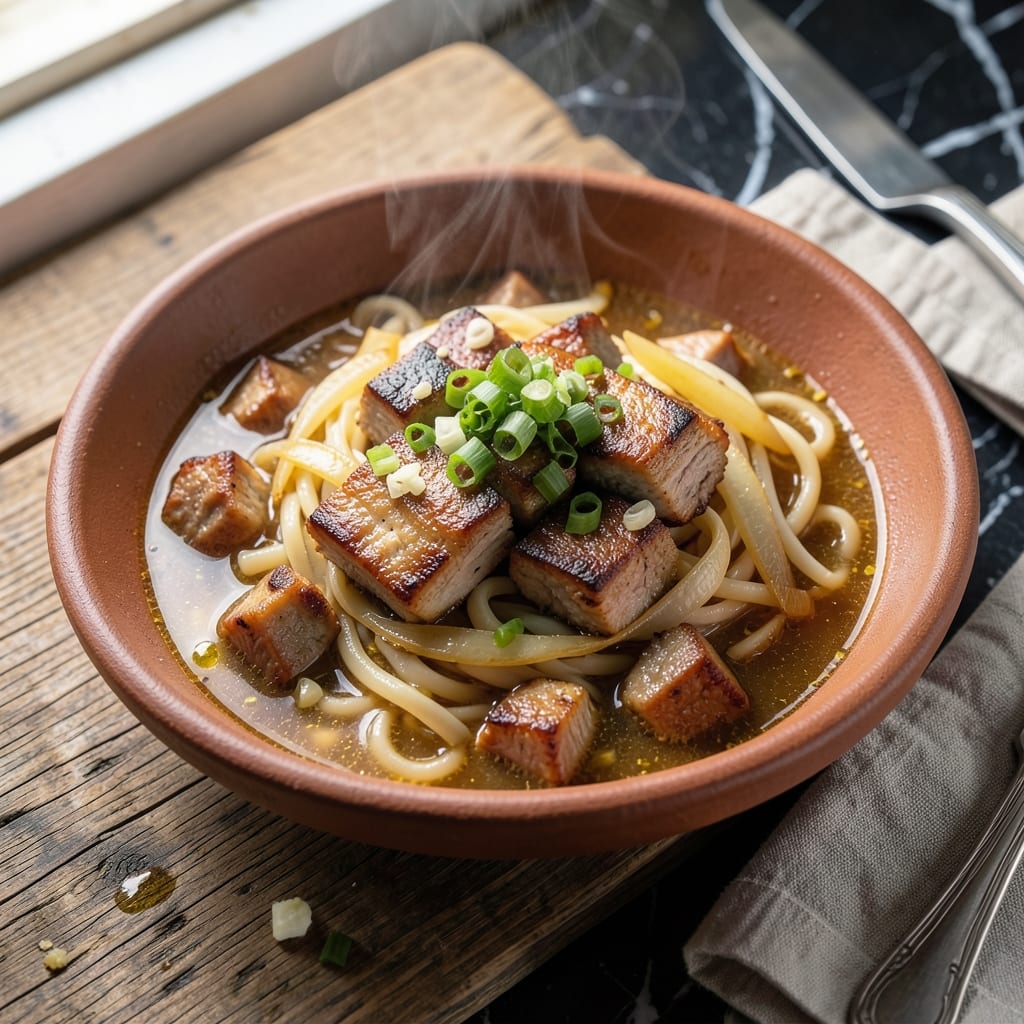
This Batangas-style noodle stew delivers restaurant-quality comfort in every bowl. I developed this version after tasting authentic lomi during a trip to the Philippines, determined to recreate that rich, savory depth at home.
The secret lies in the slow-simmered pork belly broth, which infuses the thick egg noodles with deep umami flavor. Each component builds on the last: tender pork, chewy noodles, and a silky egg topping that soaks up the savory sauce.
You’ll achieve that signature thick, hearty consistency that defines traditional lomi, with every element perfectly balanced. The dish comes together through careful layering of ingredients and a patient simmer.
This stew tastes even better the next day as the flavors meld. Here’s how to build this Filipino classic in your kitchen.
Ingredients for Pork Lomi Recipe Batangas
Rich pork belly, chewy noodles, and silky eggs make this Batangas classic sing.
| Ingredient | Amount | Notes |
|---|---|---|
| Pork Belly 🥩 | 1 ½ lb | Cut into 1-inch cubes, skin-on preferred |
| Thick Egg Noodles 🍜 | 12 oz | Fresh or dried lomi noodles |
| Chicken Stock 🍲 | 6 cups | Low-sodium preferred for control |
| Garlic Cloves 🧄 | 6 cloves | Minced finely for broth depth |
| Yellow Onion 🧅 | 1 whole | Medium, thinly sliced |
| Ginger 🌿 | 1 whole | 2-inch piece, julienned |
| Soy Sauce 🫒 | ¼ cup | Filipino brand like Silver Swan |
| Oyster Sauce 🫒 | 2 tbsp | Vegetarian oyster sauce if needed |
| Sesame Oil 🫒 | 1 tbsp | Toasted for aromatic finish |
| Large Eggs 🥚 | 4 whole | Soft-boiled for topping |
| Green Cabbage 🥬 | 2 cups | Thinly shredded for texture |
| Carrots 🥕 | 2 whole | Julienned for color contrast |
| Green Onions 🧅 | 4 pieces | Thinly sliced for garnish |
| Cornstarch 🌾 | 2 tbsp | Mixed with water for thickening |
| Black Peppercorns 🌶️ | 1 tsp | Freshly cracked for aroma |
The pork belly is non-negotiable here. Asian grocery stores have the best selection—look for pieces with even fat-to-meat ratios. The skin adds collagen for that signature silky broth, so don’t trim it off. I always grab mine from HMart when I’m nearby, but a well-stocked Whole Foods can work too (ask at the butcher counter). The noodles need to be thick—regular spaghetti won’t cut it.
No pork belly? Pork shoulder at half the amount works in a pinch (add an extra hour to simmer). Vegetarian? Swap in shiitake mushrooms and tofu—the umami will still be there. For the noodles, udon or thick ramen are the closest substitutes. The oyster sauce can be skipped if needed, but add an extra tablespoon of soy to compensate. Fresh ginger is key—dried just doesn’t have the same zing.
This stew improves overnight—24 hours is ideal. Refrigerate in airtight containers for up to 4 days, or freeze for 3 months. Reheat gently to avoid breaking the noodles. The eggs? Boil fresh the day you serve. (frozen works in a pinch, but fresh is better)
Why You’ll Love This Recipe
- One PotWonder: I throw everything in a single pot—pork belly, noodles, stock—and let it simmer while I set the table.
- Garlic Onion Magic: The garlic and yellow onion in the chicken stock create this deep, savory broth that soaks right into the thick egg noodles.
- Feeds Hungry Crowds: I make a big batch for family gatherings, and it’s always the first thing to disappear.
- Tastes Better Next Day: Honestly, the flavors meld overnight, so leftovers are even more crave-worthy the next afternoon.
Step-by-Step Instructions for Pork Lomi Batangas
This method delivers rich, savory broth and tender noodles every single time.
Step 1: Sear the Pork Belly and Build the Broth Base
Heat a large pot over medium-high heat and add the 1.5 lb Pork Belly cubes. Sear them for 5-7 minutes until golden brown on all sides and fat begins to render. This step locks in juices and creates a flavor foundation for the broth.
Add the 6 cloves Garlic Cloves, 1 whole Yellow Onion, and 1 whole Ginger to the pot. Sauté for 2-3 minutes until the aromatics soften and release their fragrance. The onion should turn translucent but not brown.
Pour in the 6 cups Chicken Stock, 0.25 cup Soy Sauce, 2 tbsp Oyster Sauce, and 1 tsp Black Peppercorns. Stir well to combine and bring to a gentle boil.
Step 2: Simmer and Develop the Flavors
Once boiling, reduce heat to medium-low and let the broth simmer uncovered for 40-45 minutes. You’ll see the pork belly become fork-tender and the broth take on a deep, savory color.
During this time, the flavors meld together beautifully. The pork fat renders into the broth, creating a rich, silky texture. Skim off any excess foam that rises to the surface with a fine-mesh skimmer to ensure a clean, clear broth.
Taste the broth and adjust seasoning if needed, though the soy and oyster sauces typically provide enough saltiness. The liquid should reduce slightly but not too much, as you’ll add the noodles next.
Step 3: Cook the Noodles and Vegetables
Add the 12 oz Thick Egg Noodles to the simmering broth. Cook for 8-10 minutes until the noodles are al dente—they should be tender but still have a slight bite. Stir occasionally to prevent sticking.
Next, add the 2 cups Green Cabbage and 2 whole Carrots (julienned). Cook for an additional 3-4 minutes until the vegetables are tender-crisp. The cabbage should wilt slightly but retain some texture, and the carrots should soften without turning mushy.
In a small bowl, mix the 2 tbsp Cornstarch with 2 tablespoons of cold water to create a slurry. Stir this into the pot and simmer for 1-2 minutes until the broth thickens slightly, coating the noodles and vegetables.
Step 4: Finish with Aromatics and Serve
Drizzle the 1 tbsp Sesame Oil over the lomi and stir to incorporate. This adds a nutty aroma that enhances the dish’s depth. Turn off the heat and let the stew sit for 2-3 minutes to allow the flavors to settle.
While the lomi rests, soft-boil the 4 whole Large Eggs for 6-7 minutes if you haven’t already. Peel them and set aside. Ladle the lomi into deep bowls, ensuring each serving has plenty of noodles, pork, and vegetables.
Top each bowl with a soft-boiled egg and garnish with the 4 pieces Green Onions. The egg yolk should be runny, ready to mix into the hot broth for extra richness. Serve immediately while hot.
Pro Tips For Making Pork Lomi Recipe Batangas
- Parboil Pork First: I learned this the hard way—boil the pork belly slices for 3-5 minutes before cooking to remove excess fat and impurities. It keeps the broth cleaner and less greasy.
- Toast the Garlic: Sounds weird, but it works: fry the minced garlic until golden before adding other ingredients. It adds a deep, nutty flavor to the lomi broth.
- Avoid Overcooking Noodles: Steer clear of adding noodles too early—they should only simmer for 3-4 minutes in the broth. They’ll turn mushy if left longer.
- Use Cold Stock: After burning a batch, I finally figured out that adding cold chicken stock to the hot pan deglazes it better and builds a richer base for the lomi.
Troubleshooting Perfect Results
Broth Too Thin
If your lomi broth lacks thickness after simmering, create a cornstarch slurry with 1 tbsp Cornstarch and 2 tbsp cold water. Stir this into the hot broth and simmer for 1-2 minutes until it coats the back of a spoon. 💡
Pork Not Tender
When pork belly remains tough, it needs more time. Continue simmering for an additional 15-20 minutes at medium-low heat. Ensure the liquid covers the pork cubes—add 1 cup Chicken Stock if needed to prevent drying out.
Noodles Mushy
Overcooked noodles turn to mush in lomi. To fix, remove the pot from heat immediately and stir in 1 cup cold water to stop cooking. Next time, check noodles at 7 minutes—they should be al dente before adding vegetables.
Eggs Overcooked
For perfect soft-boiled eggs, use room-temperature Large Eggs and boil in gently simmering water for exactly 6 minutes. Plunge into ice water to stop cooking. I learned this trick from my Dad—he swore by it for perfect eggs every time.
Bland Broth
If the flavor seems flat, stir in 1 tbsp Soy Sauce and 1 tsp Oyster Sauce. Taste and adjust with ½ tsp Black Peppercorns if needed. The pork belly fat should provide richness, but extra seasoning boosts depth.
Vegetables Soggy
Add Green Cabbage and Carrots last to maintain texture. If they’re already in the pot, remove them with a slotted spoon and set aside. Return to the broth just before serving. This keeps them tender-crisp. 🥕
Nutrition Facts
Frequently Asked Questions
Can I use regular spaghetti instead of lomi noodles?
Udon or thick ramen work better than spaghetti. The dish relies on the noodles’ ability to absorb the rich broth, and thicker varieties hold up during the 40-45 minute simmer.
How do I store leftovers?
Refrigerate in airtight containers for up to 4 days. Reheat gently on the stove with a splash of water to prevent drying. The flavors deepen overnight!
Why is my broth not as rich as expected?
Sear the pork belly well first—this renders fat for depth. Also, use skin-on cuts for collagen, and simmer uncovered to concentrate flavors for 40-45 minutes.

- Potato Patty Recipe No Egg: Crispy Edges Without the Binder - October 30, 2026
- Paula Deen’s Potato Chip Cookies Recipe: Salty-Sweet Crunch in Every Bite - October 30, 2026
- Potato Gnocchi Recipe Ideas: Pillowy Soft Dumplings With Rustic Charm - October 30, 2026