
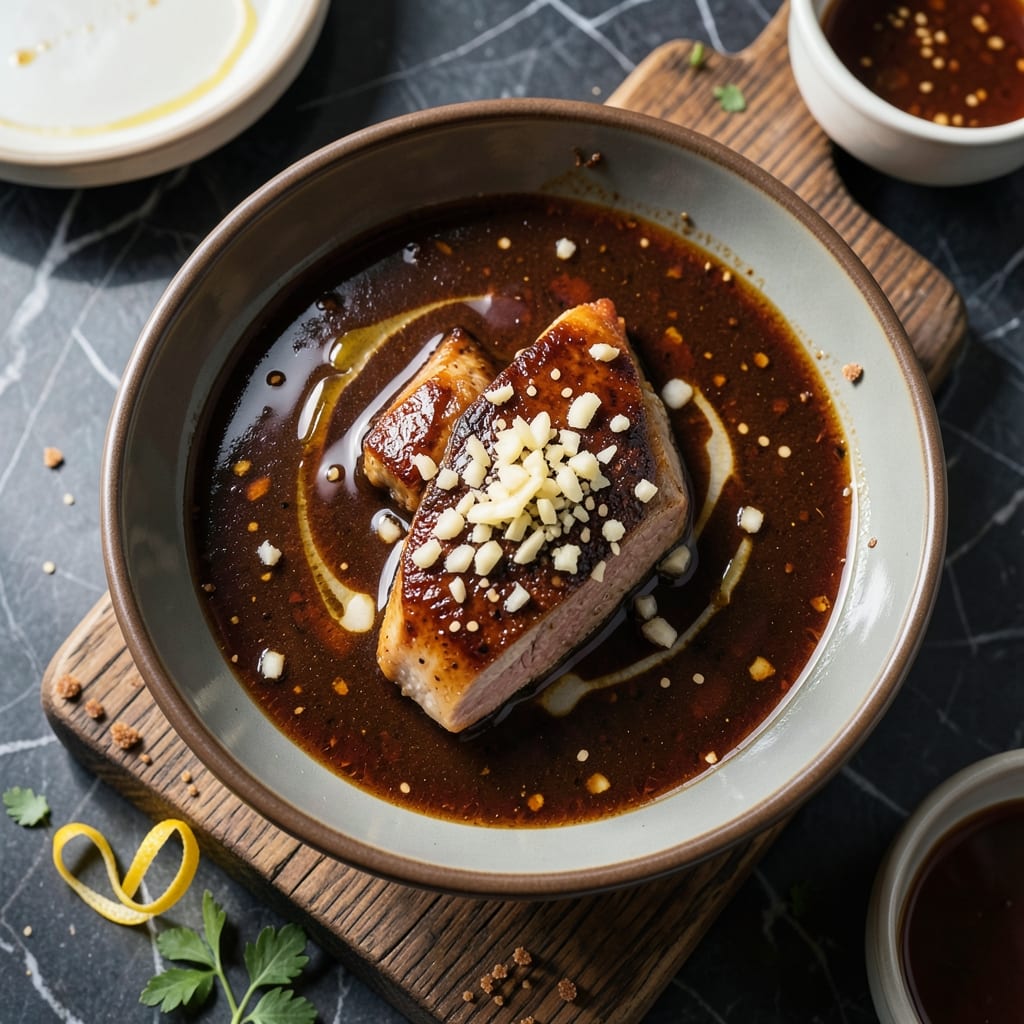
This soy-based pork marinade transforms ordinary cuts into deeply flavorful, tender masterpieces. I developed it after years of experimenting with umami-rich combinations, and it never fails to deliver restaurant-quality results at home.
The secret lies in balancing salty soy sauce with sweet and acidic elements. This creates a marinade that penetrates the meat while keeping it moist and flavorful. A 30-minute soak is all it takes to achieve noticeable improvement.
What you’ll get is pork with a perfect caramelized crust and juicy interior. The soy sauce forms the backbone, while other ingredients add complexity without overpowering the natural pork flavor.
Use it for chops, tenderloin, or ribs. Store any extra in the fridge for up to one week.
Ingredients for Pork Marinade Recipe Soy Sauce
Nine ingredients for a marinade that turns good pork into unforgettable.
| Ingredient | Amount | Notes |
|---|---|---|
| Soy Sauce 🫕 | ½ cup | Low-sodium preferred for balance |
| Brown Sugar 🍚 | ¼ cup | Packed, for sweetness and caramelization |
| Rice Vinegar 🍶 | 2 tbsp | Adds necessary acidity to brighten |
| Sesame Oil 🫒 | 1 tbsp | Toasted for depth of flavor |
| Garlic Cloves 🧄 | 4 cloves | Minced for even distribution |
| Fresh Ginger 🌿 | 1 tbsp | Grated, skin removed |
| Honey 🍯 | 2 tbsp | Balances salty and acidic notes |
| Green Onions 🧅 | 3 whole | Thinly sliced, white and green parts |
| Black Pepper 🌶️ | 1 tsp | Freshly ground for best results |
The soy sauce is the star here. Kikkoman or San-J are my go-tos—avoid the ultra-cheap stuff, it tastes thin. Brown sugar can be light or dark (I prefer light for a cleaner flavor). Asian markets have the best rice vinegar prices, but any grocery store works. Fresh ginger is non-negotiable—dried just doesn’t deliver the same zing.
No honey? Maple syrup or agave at a 1:1 ratio works fine. Out of rice vinegar? Apple cider vinegar in a pinch, but cut back to 1.5 tbsp—it’s stronger. Garlic powder can replace fresh at 1/4 tsp per clove, but fresh is better. For extra umami, a splash of fish sauce (even though this is pork) adds insane depth.
Marinade keeps 1 week in the fridge. Freeze portions for up to 3 months in ice cube trays—pop out a cube when you need a quick flavor boost. Always marinate in a zip-top bag for easy cleanup and even coating.
Why You’ll Love This Recipe
- Five-Minute Mix: I dump soy sauce, brown sugar, vinegar, sesame oil, and crushed garlic in a bowl—no whisking marathon, just stir and it’s done.
- Sweet-Savory Magic: Brown sugar caramelizes on the pork while soy and garlic hit that umami depth I can’t resist.
- Freezer Friend: I marinate a big batch, freeze half, and pull it out for stir-fry or grilling whenever I’m in a pinch.
- Pocketbook Pleaser: A handful of pantry staples transforms cheap pork shoulder into a dish that tastes like a weekend splurge.
Step-by-Step Instructions for Pork Marinade
This method ensures deep flavor penetration and maximum tenderness for your pork.
Step 1: Combine Liquid Base and Sweeteners
In a medium bowl, whisk together the 0.5 cup Soy Sauce, 0.25 cup Brown Sugar, and 2 tbsp Rice Vinegar until the sugar begins to dissolve. I prefer using low-sodium soy sauce here to control the saltiness and let the other flavors shine.
The soy sauce provides the umami foundation while the brown sugar adds caramelized depth. The rice vinegar cuts through the richness with a bright acidity that balances the whole marinade. You’ll notice the mixture darken slightly as the sugar starts to incorporate.
Step 2: Incorporate Aromatics and Fat
Add the 1 tbsp Sesame Oil, 4 cloves Garlic Cloves (minced), and 1 tbsp Fresh Ginger (grated) to the bowl. Stir well to distribute the aromatics evenly. The sesame oil adds a nutty depth, while the garlic and ginger provide a pungent, aromatic backbone.
Here’s the thing—freshly minced garlic and grated ginger release more flavor than pre-minced or powdered versions. The sesame oil should be toasted for maximum impact, but don’t overdo it; a little goes a long way. You’ll smell the marinade come to life at this stage.
Step 3: Finish with Sweetness and Freshness
Stir in the 2 tbsp Honey, 3 whole Green Onions (thinly sliced), and 1 tsp Black Pepper. The honey adds a smooth sweetness that complements the brown sugar, while the green onions bring a fresh, oniony brightness.
Freshly ground black pepper is a must here—it has a vibrancy that pre-ground pepper just can’t match. The green onions should include both the white and green parts for a balanced flavor. At this point, the marinade should look glossy and slightly thick from the honey.
Step 4: Marinate the Pork for Maximum Flavor
Transfer your pork to a resealable plastic bag or shallow dish and pour the marinade over it, ensuring all pieces are fully coated. For best results, marinate in the refrigerator for at least 4 hours, or preferably overnight. This gives the flavors time to penetrate deeply.
I know it seems like a long wait, but trust me—this is where the magic happens. The pork will absorb the bold umami, sweet, and aromatic notes, resulting in a succulent, flavor-packed dish. Turn the pork occasionally to ensure even distribution of the marinade.
Pro Tips For Making Pork Marinade Recipe Soy Sauce
- Marinate Overnight: I learned this the hard way—pork needs at least 4 hours in the soy sauce mix to soak up the flavors, but overnight actually changes the outcome. Anything less and the garlic and sesame oil just sit on the surface.
- Toast the Garlic: Sounds weird, but it works: lightly brown the minced garlic in a dry pan for 30 seconds before adding to the marinade. It mellows the sharpness and deepens the flavor without overpowering the soy and brown sugar.
- Skip the Metal Bowl: After ruining a batch with a reactive aluminum bowl, I finally figured out—use glass or plastic for the marinade. The rice vinegar and soy sauce can react with metal and give the pork a weird aftertaste.
- Warm the Soy Sauce: My grandmother swore by this, and she was right: gently warm the soy sauce and brown sugar together until the sugar dissolves. It blends smoother and clings better to the pork instead of pooling at the bottom.
Troubleshooting pork marinade recipe soy sauce
Too Salty Marinade
If your marinade tastes too salty, balance it with 1-2 tbsp honey or brown sugar. I learned this trick after overdoing soy sauce once—sweetness counters saltiness perfectly. You can also dilute with 2 tbsp water or rice vinegar if needed. 💡
Marinade Too Thin
When your marinade lacks body, whisk in 1 tsp cornstarch slurry (mixed with 1 tbsp cold water). This thickens it without changing flavor. I use this when I want better cling to pork chops. Heat gently if needed.
Flavor Too Weak
Boost weak marinade with 1 tbsp fish sauce for umami depth or 1 tsp grated ginger. Fresh garlic cloves also add punch. Remember, flavors intensify as pork marinates, so taste after 2 hours before adjusting. 🌟
Pork Not Absorbing
For better penetration, score pork surface in ¼-inch crosshatches or use a fork to pierce meat. I always marinate in a zip-top bag—massaging it helps distribute marinade. Turn pork every 30-60 minutes for even coating.
Marinade Separating
If ingredients separate, whisk vigorously or use an immersion blender. A bit of separation is normal with sesame oil. Store in an airtight container and shake before use. I keep mine in a mason jar for easy mixing.
Burning on Grill
Prevent sugar burning by patting pork dry before cooking. Use medium heat and move pork to cooler spots if flaring up. I learned this after ruining a batch of chops—lesson learned the hard way!
Nutrition Facts
Frequently Asked Questions
Can I use this for chicken or beef?
This works beautifully with chicken thighs or beef cuts like flank steak. For poultry, reduce marinating time to 2-4 hours to avoid over-tenderizing the meat.
What’s the minimum marinating time?
You’ll notice improved flavor after just 30 minutes, but for maximum impact, aim for at least 4 hours. Overnight marinating delivers the most tender, flavorful results.
Can I reuse leftover marinade?
Never reuse raw meat marinade directly. To reuse, boil it for at least 3 minutes to kill bacteria. Better yet, set aside some marinade before adding meat for basting.

- Potato Patty Recipe No Egg: Crispy Edges Without the Binder - October 30, 2026
- Paula Deen’s Potato Chip Cookies Recipe: Salty-Sweet Crunch in Every Bite - October 30, 2026
- Potato Gnocchi Recipe Ideas: Pillowy Soft Dumplings With Rustic Charm - October 30, 2026