
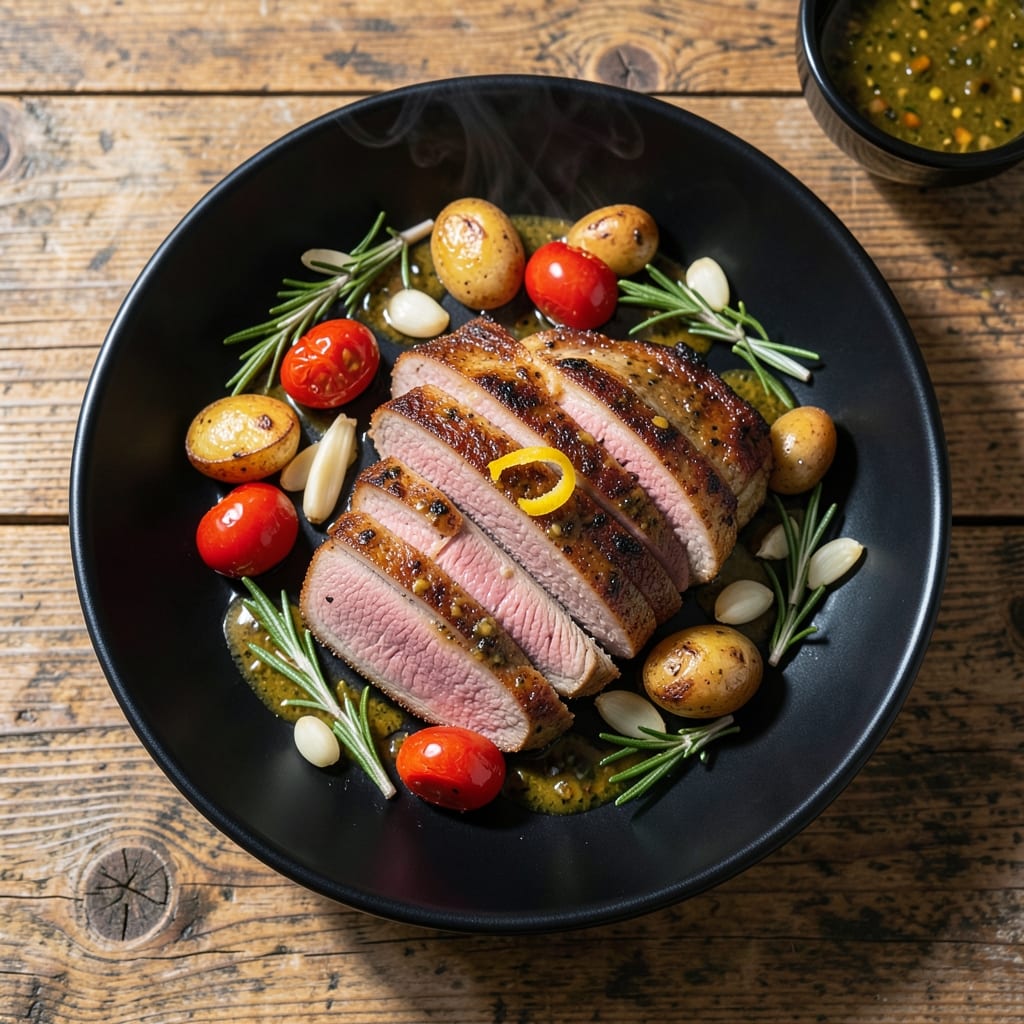
This dish transforms a simple pork tenderloin into a tender, herb-crusted masterpiece paired with roasted vegetables. I developed this method after years of testing, ensuring the pork stays juicy while the vegetables caramelize beautifully.
The key is searing the seasoned tenderloin first, then finishing it in the oven alongside hearty root vegetables. This creates a perfect balance of flavors and textures, with the herbs forming a fragrant crust on the meat.
You’ll end up with a centerpiece worthy of any dinner table—tender pork with a golden crust, surrounded by sweet, roasted vegetables. The aromas alone will have everyone gathering in the kitchen.
Ready in about an hour with minimal active time, this recipe proves elegant meals don’t require complicated techniques.
Ingredients for Pork Tenderloin Recipe with Vegetables
Elegant yet approachable ingredients transform pork and vegetables into a showstopping meal.
| Ingredient | Amount | Notes |
|---|---|---|
| Pork Tenderloin 🥩 | 1 ½ lb | Trimmed of excess fat |
| Olive Oil 🫒 | 2 tbsp | Divided for searing and roasting |
| Kosher Salt 🧂 | 1 ½ tsp | Diamond Crystal preferred |
| Black Pepper 🌶️ | 1 tsp | Freshly ground |
| Garlic Cloves 🧄 | 4 cloves | Minced for herb crust |
| Fresh Rosemary 🌿 | 2 tbsp | Chopped, stems discarded |
| Fresh Thyme 🍃 | 2 tbsp | Leaves stripped from stems |
| Dijon Mustard 🟡 | 1 tbsp | For herb crust adhesion |
| Carrots 🥕 | 4 whole | Peeled, cut into 2-inch pieces |
| Yukon Gold Potatoes 🥔 | 1 ½ lb | Cut into 1.5-inch chunks |
| Red Onion 🧅 | 1 whole | Cut into 8 wedges |
| Brussels Sprouts 🥬 | ½ lb | Trimmed, halved |
| Balsamic Vinegar 💧 | 1 tbsp | For vegetable tossing |
| Honey 🍯 | 1 tbsp | Optional for glaze |
The pork tenderloin is the star—look for uniform thickness to ensure even cooking. Whole Foods or Costco typically stock high-quality options with good marbling. The herbs should be vibrant and fragrant; wilting or dull leaves won’t deliver the bold flavor needed for the crust. For the vegetables, firm, unblemished produce caramelizes best, so avoid pre-cut or soft specimens.
No fresh rosemary or thyme? Dried herbs at one-third the amount work in a pinch, though the crust won’t cling as well. Out of Dijon? Whole-grain mustard adds a nice texture, but avoid yellow mustard—it’s too mild. Brussels sprouts can be swapped for cauliflower florets or butternut squash cubes (peeled, of course). For a sweeter glaze, swap honey for maple syrup.
The herb crust can be prepped 1 day ahead and refrigerated, bringing it to room temperature before applying. Roasted vegetables keep in the fridge for 3-4 days, though they’re best served fresh. The cooked pork stores well for 4 days—slice before storing for easy reheating.
Why You’ll Love This Recipe
- One Pan Wonder: I toss everything on a sheet pan and let the oven do the work—minimal cleanup, maximum flavor.
- Garlic Lover’s Dream: The roasted garlic cloves mellow into this rich, savory depth that coats every bite of tender pork and veggies.
- Weeknight MVP: Honestly, it’s my go-to for busy Tuesdays and lazy Sundays alike.
- Leftovers Win: The pork slices up beautifully for sandwiches or salads the next day—no waste, no fuss.
Step-by-Step Instructions for Pork Tenderloin With Vegetables
Here’s the method. Straightforward, tested, works every time.
Step 1: Prepare the Herb Crust and Vegetables
Preheat your oven to 425°F. Trim the 1.5 lb Pork Tenderloin of excess fat, then pat it dry with paper towels. In a small bowl, combine the 2 tbsp Fresh Rosemary, 2 tbsp Fresh Thyme, 4 cloves Garlic Cloves, 1 tbsp Dijon Mustard, 1.5 tsp Kosher Salt, and 1 tsp Black Pepper.
Rub this herb mixture all over the pork tenderloin, pressing firmly to adhere. Meanwhile, toss the 4 whole Carrots, 1.5 lb Yukon Gold Potatoes, 1 whole Red Onion, and 0.5 lb Brussels Sprouts with 1 tbsp Olive Oil, 1 tbsp Balsamic Vinegar, and 1 tbsp Honey in a large bowl until evenly coated.
Step 2: Sear the Pork Tenderloin
Heat 1 tbsp Olive Oil in a large oven-safe skillet over medium-high heat until shimmering. Add the pork tenderloin and sear on all sides for 6-8 minutes total, turning occasionally, until deeply browned. This creates a flavorful crust and locks in juices.
Watch for the edges to turn golden brown and the surface to develop a slight crust. Don’t rush this step—proper searing ensures a rich, caramelized exterior. The pork should release easily from the pan when properly seared.
Step 3: Roast the Pork and Vegetables Together
Arrange the seasoned vegetables around the seared pork tenderloin in the skillet, ensuring they fit in a single layer. Transfer the skillet to the preheated oven and roast for 20-25 minutes, or until the pork reaches an internal temperature of 145°F.
The vegetables should be tender and caramelized at the edges, with the pork juices enhancing their flavor. If the vegetables aren’t browned enough, return the skillet to the oven for an additional 5-10 minutes, but monitor the pork to avoid overcooking.
Step 4: Rest and Serve
Remove the skillet from the oven and transfer the pork tenderloin to a cutting board. Tent it loosely with foil and let it rest for 10 minutes. This allows the juices to redistribute, ensuring a moist, tender result when sliced.
Slice the pork into ½-inch thick medallions and serve immediately with the roasted vegetables. Spoon any accumulated pan juices over the pork and vegetables for added flavor. The pork should be juicy and slightly pink in the center, with the vegetables offering a perfect, caramelized complement.
Pro Tips For Making Pork Tenderloin Recipe With Vegetables
- Sear High, Finish Low: Start with a screaming hot pan to get that golden crust on the pork, then drop the heat to medium-low so the center cooks through without drying out.
- Slash the Fat: Trim the silver skin and any thick fat from the tenderloin before seasoning—it prevents curling during cooking and keeps the texture even.
- Rest Before Slicing: Give it a solid 5-10 minutes under foil after cooking, or all those juices will end up on the cutting board instead of in the meat.
- Smash the Garlic: Lightly crush the cloves with the side of your knife so they release more flavor into the oil—I learned this the hard way after too many bland bites.
Pro Cooking Tips for Perfect Results
Perfect Searing Technique
Pat the pork tenderloin completely dry before searing—this is non-negotiable for a good crust. I use paper towels and press firmly. Heat your oven-safe skillet (I prefer Lodge cast iron) over medium-high heat until the oil shimmers but isn’t smoking. 🌡️
Herb Crust Adhesion
Press the herb mixture firmly into the pork—don’t just rub it on. The Dijon mustard helps it stick, but you need to really work it in with your fingers. If it’s not adhering, your crust will fall off during cooking. I learned this the hard way.
Temperature Control
Use an instant-read thermometer (I swear by ThermoWorks) for accuracy. Pull the pork at 145°F internal temp—it’ll rise to 150°F while resting. Overcooking is the fastest way to ruin this dish. The vegetables can handle extra time, but the pork can’t.
Pan Selection
A heavy skillet that can go from stovetop to oven is essential. My 12-inch cast iron works perfectly for both searing and roasting. Avoid nonstick pans—they can’t handle the high heat needed for proper searing. 💡
Resting Importance
Let the pork rest for the full 10 minutes before slicing. This isn’t optional—it’s what keeps the juices inside the meat instead of on your cutting board. I tent mine with foil to keep it warm. Slice against the grain for maximum tenderness.
Vegetable Arrangement
Cut vegetables uniformly (1.5-inch chunks) so they cook evenly. Arrange them around—not under—the pork so they get direct heat. If they’re crowded, they’ll steam instead of roast. I always leave a little space between pieces.
Nutrition Facts
Frequently Asked Questions
Can I substitute fresh herbs with dried?
Yes, use 1/3 the amount of dried herbs. They’re more concentrated, so 2 tsp dried rosemary and 2 tsp dried thyme will work. Just note the crust may not cling as well.
What if my pork cooks faster than the vegetables?
Remove the pork when it hits 145°F and tent with foil. Return the skillet to the oven for the vegetables, adding 5-10 minutes as needed. They’ll finish beautifully in the rendered pork juices.
How do I prevent the herb crust from burning?
Press the herbs firmly into the Dijon mustard base so they adhere well. If the crust darkens too quickly, loosely cover the pork with foil during the last 10 minutes of roasting.

- Potato Patty Recipe No Egg: Crispy Edges Without the Binder - October 30, 2026
- Paula Deen’s Potato Chip Cookies Recipe: Salty-Sweet Crunch in Every Bite - October 30, 2026
- Potato Gnocchi Recipe Ideas: Pillowy Soft Dumplings With Rustic Charm - October 30, 2026