
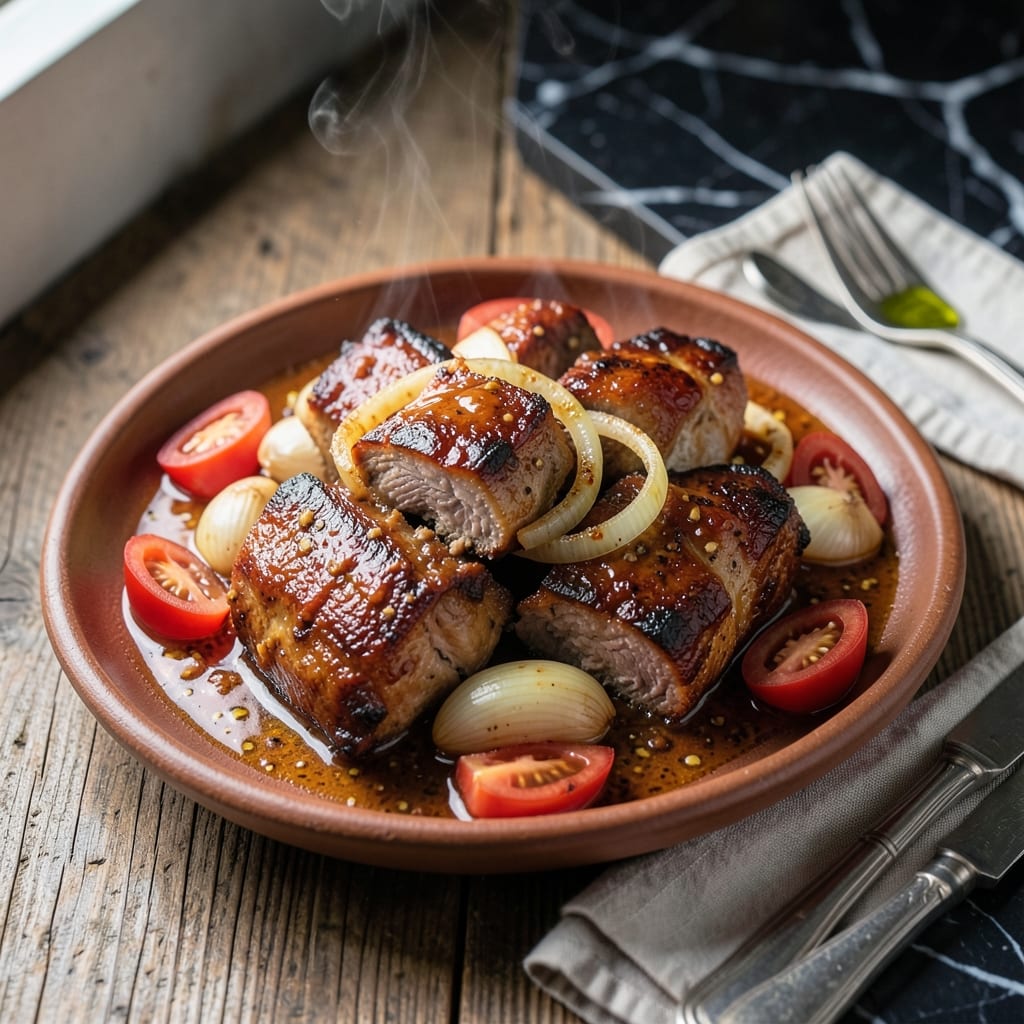
This Filipino-style pot roast transforms tough pork into fall-apart tender perfection through slow cooking with tomatoes, soy sauce, and bay leaves.
I developed this method after testing multiple techniques to achieve the signature melt-in-your-mouth texture. The key is letting the pork simmer gently until it absorbs all the rich, savory flavors.
What emerges is deeply flavorful meat swimming in a thick, tangy sauce that’s perfect over steamed rice. The dish balances sweet, salty, and umami notes beautifully.
David declared it his new favorite after the first bite. Serve this at your next gathering and watch it disappear.
Ingredients for Pork Mechado Recipe Panlasang Pinoy
Nothing exotic here—just good stuff for that signature melt-in-your-mouth texture.
| Ingredient | Amount | Notes |
|---|---|---|
| Pork Shoulder 🥩 | 2 lb | Cut into large cubes |
| Calamansi Juice 🍊 | ¼ cup | Or substitute lemon juice |
| Soy Sauce 🫙 | ½ cup | Regular or light variety |
| Tomato Sauce 🍅 | 1 cup | Canned or bottled |
| Garlic Cloves 🧄 | 6 cloves | Minced finely |
| Yellow Onion 🧅 | 1 whole | Sliced into rings |
| Bay Leaves 🍃 | 3 pieces | Dried or fresh |
| Ground Black Pepper 🌶️ | 1 tsp | Freshly cracked preferred |
| Brown Sugar 🟤 | 2 tbsp | Light or dark variety |
| Potatoes 🥔 | 2 whole | Peeled, cut into chunks |
| Carrots 🥕 | 2 whole | Peeled, sliced thick |
| Green Bell Pepper 🌶️ | 1 whole | Sliced into strips |
| Water 💧 | 1 cup | For adjusting sauce consistency |
| Vegetable Oil 🫒 | 2 tbsp | For searing pork |
| Salt 🧂 | 1 tsp | Adjust to taste |
The pork shoulder is non-negotiable for that fall-apart texture—look for well-marbled cuts at your butcher or Costco. I prefer the bone-in pieces for extra depth, but boneless works fine too. The calamansi juice is ideal (find it at Asian markets), but regular lemon juice in a pinch won’t ruin the dish. For the soy sauce, Silver Swan or Datu Puti are my go-tos for authentic Filipino flavor.
No pork shoulder? Pork butt works just as well. Short on calamansi? Lime juice at half the amount gets you close. The tomato sauce can be swapped for crushed tomatoes if you prefer chunkier texture. Bay leaves are essential though—don’t skip them. If you can’t find fresh, dried work fine (just use one less). The brown sugar can be swapped for coconut sugar for a deeper flavor.
This tastes even better the next day once all those flavors meld together. Keeps in the fridge for 4-5 days or freeze for up to 3 months. (Reheat gently to keep the pork tender—don’t boil it.)
Why You’ll Love This Recipe
- One Pot Meal: I just toss everything into a single pan—pork shoulder, garlic, and that tangy calamansi juice—then let it simmer.
- Tangy & Rich: The calamansi cuts through the soy and tomato sauce so every bite is bright and deeply savory.
- Feeds the Family: This fills the table for birthdays, lazy Sundays, or packed lunches the next day.
- Stretches the Budget: Pork shoulder stays tender without breaking the bank, and leftovers taste even better.
Step-by-Step Instructions for Filipino-Style Pork Mechado
This method guarantees fall-apart tenderness with every bite. Let’s create magic in your kitchen.
Step 1: Sear the Pork Shoulder to Lock in Flavor
Heat the 2 tbsp vegetable oil in a large pot over medium-high heat. Add the 2 lb pork shoulder cubes and sear until all sides are deep golden brown. This step builds a flavor foundation that makes the dish irresistible.
Work in batches if needed to avoid overcrowding the pot. You’ll know it’s ready when the meat releases easily from the bottom and develops a rich, caramelized crust. Remove the pork and set aside.
Step 2: Sauté Aromatics Until Fragrant
In the same pot, add the yellow onion slices, 6 cloves garlic cloves, and 1 whole green bell pepper strips. Sauté for 3-4 minutes until the onions turn translucent and the garlic releases its rich aroma.
Here’s the thing—don’t let the garlic burn. Lower the heat to medium if it starts browning too quickly. The goal is to soften the vegetables and extract their flavors without charring.
Step 3: Build the Sauce and Simmer the Pork
Return the pork to the pot. Pour in the 0.5 cup soy sauce, 0.25 cup calamansi juice, 1 cup tomato sauce, 2 tbsp brown sugar, 1 tsp ground black pepper, 1 tsp salt, and 3 pieces bay leaves. Add the 1 cup water and stir to combine.
Bring the mixture to a boil, then reduce the heat to low. Cover and let it simmer for 1 hour, stirring occasionally. You’ll start to smell the tangy-sweet aroma that defines this dish.
Step 4: Add Vegetables and Finish Cooking
After 1 hour, add the 2 whole potatoes and 2 whole carrots. These will soak up the incredible flavors of the sauce. Continue simmering for another 30-40 minutes until the pork is fork-tender and the vegetables are soft.
Real talk: if the sauce reduces too much before the pork is tender, add a splash of water. The meat should be so tender it nearly falls apart, and the sauce should coat the back of a spoon with a glossy sheen.
Step 5: Adjust and Serve
Taste and adjust the seasoning if needed. The sauce should balance sweet, tangy, and savory notes. Remove the bay leaves before serving.
Transfer to a serving dish and let it rest for 5 minutes. The flavors will meld together even more during this time, ensuring every bite delivers that signature Filipino comfort you’re after.
Pro Tips For Making Pork Mechado Recipe Panlasang Pinoy
- Sear the Pork First: Brown the pork shoulder cubes in batches over medium-high heat until deeply caramelized—I learned this the hard way when my first mechado turned out pale and watery. This builds flavor and keeps the meat from stewing in its own juices.
- Marinate with Calamansi: Let the pork soak in calamansi juice, soy sauce, and minced garlic for at least 30 minutes (or overnight if you have time). Sounds simple, but it actually changes the outcome, tenderizing the meat and giving it that signature tangy depth.
- Skip Overcrowding the Pan: Resist the urge to dump all the pork in at once—overcrowding steams the meat instead of searing it. I used to rush this part and wondered why my mechado lacked that rich, browned crust.
- Balance the Sauces: Taste as you go and adjust the soy-to-tomato sauce ratio—my grandmother swore by this, and she was right: too much tomato can make it overly sweet, while too much soy overpowers with saltiness. Aim for a deep, savory-sweet harmony.
Perfect Pairings for These Flavors
Rice Pairings
Steamed jasmine rice is my go-to—its fragrant aroma complements the rich sauce perfectly. For a heartier option, try garlic fried rice with crispy bits. David swears by 1:1 rice-to-water ratio for fluffiness.
Vegetable Sides
A simple steamed bok choy or sautéed green beans adds freshness to balance the dish. Toss the greens with 1 tsp sesame oil and a pinch of salt. Quick to prep while the mechado simmers. 🥗
Beverage Matches
Cold San Miguel beer cuts through the richness beautifully. For non-alcoholic, calamansi juice or sago’t gulaman (a Filipino iced drink) refreshes your palate. I always keep San Miguel stocked for this dish.
Bread Options
Pandesal (Filipino bread rolls) are perfect for soaking up the sauce. Toast them lightly for extra texture. At home, we often serve with crusty French bread from our local bakery.
Pickled Sides
Atchara (pickled green papaya) adds a tangy crunch that contrasts the tender pork. Store-bought works, but homemade with carrots and bell peppers is even better. 💫
Dessert Follow-Up
End with leche flan or halo-halo for a sweet finish. The creamy flan pairs especially well after the savory mechado. Emma always requests this combo for her birthday.
Nutrition Facts
Frequently Asked Questions
Can I use a different cut of pork?
Pork butt works just as well as shoulder. Avoid lean cuts like tenderloin—they won’t hold up to the long simmering time. The marbling in shoulder or butt is key for that melt-in-your-mouth texture.
What if I don’t have calamansi juice?
Lemon or lime juice makes a fine substitute. Use half the amount since they’re more acidic. The dish will still have that signature tangy brightness.
How do I know when it’s done?
The pork should be fork-tender and nearly fall apart. If it resists when pierced, simmer for another 15-20 minutes. The sauce will thicken as it reduces.
Can I make this in a slow cooker?
Yes! Sear the pork first, then transfer everything to the slow cooker. Cook on low for 6-7 hours or high for 4-5 hours. The flavors develop beautifully this way.

- Potato Chip Cookie Recipe With Pecans: Buttery Crunch Meets Nutty Richness - October 30, 2026
- Potato Patty Recipe No Egg: Crispy Edges Without the Binder - October 30, 2026
- Paula Deen’s Potato Chip Cookies Recipe: Salty-Sweet Crunch in Every Bite - October 30, 2026