
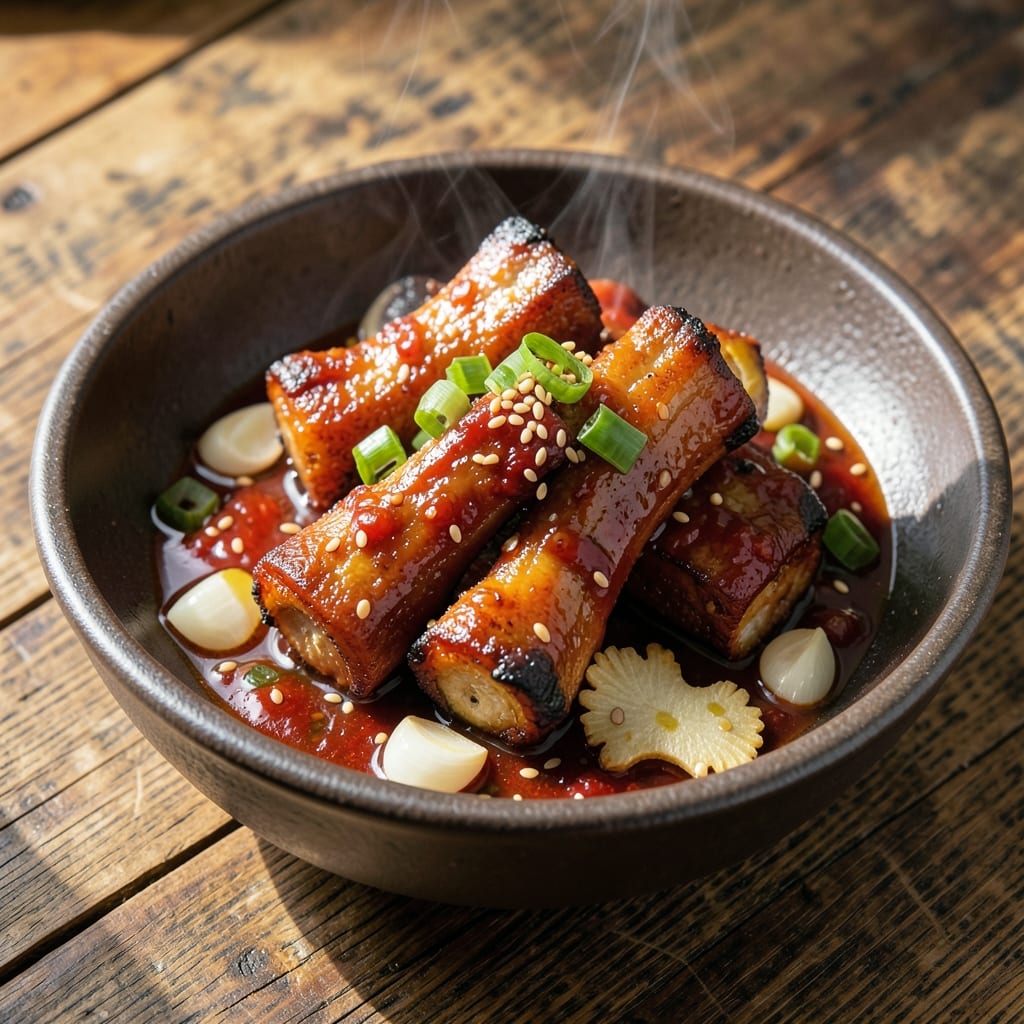
This Korean-style pork neck bone stew delivers deep, rich flavors through a slow simmer that transforms tough cuts into fall-off-the-bone tenderness. I developed this method after discovering how traditional Korean techniques elevate humble ingredients.
The key lies in building layers—first searing the bones, then simmering with gochujang, soy sauce, and aromatics until the broth develops complex depth. Garlic, ginger, and a touch of sugar balance the spicy-sweet profile that defines this dish.
What emerges is a hearty stew with meat so tender it nearly dissolves, all swimming in a savory, slightly spicy broth that begs to be soaked up with rice. The aroma alone signals this is no ordinary meal.
Serve with steamed rice, kimchi, and quick-pickled radishes for the full experience. The leftovers only improve overnight.
Ingredients for Pork Neck Bones Recipe Korean
Rich Korean flavors start with pork neck bones, gochujang, and aromatics for depth.
| Ingredient | Amount | Notes |
|---|---|---|
| Pork Neck Bones 🐖 | 2 lb | Meaty, cut into pieces |
| Gochujang 🌶️ | 3 tbsp | Korean red pepper paste |
| Soy Sauce 🫒 | ½ cup | Low-sodium preferred |
| Brown Sugar 🍚 | 2 tbsp | Light or dark variety |
| Garlic Cloves 🧄 | 8 cloves | Peeled, whole or minced |
| Fresh Ginger 🌿 | 2 tbsp | Peeled, thinly sliced |
| Onion 🧅 | 1 whole | Yellow or white, sliced |
| Carrots 🥕 | 2 whole | Peeled, cut into chunks |
| Green Onions 🌱 | 4 whole | White and green parts separated |
| Sesame Oil 🫒 | 1 tbsp | Toasted for aroma |
| Water or Pork Stock 💧 | 6 cups | Enough to cover bones |
| Black Pepper 🌶️ | 1 tsp | Freshly ground preferred |
| Bay Leaves 🍃 | 2 whole | For broth depth |
The pork neck bones are non-negotiable—ask your butcher for meaty cuts with good marrow. Asian markets often carry pre-cut pieces perfect for stewing. For the gochujang, Sempio or CJ brands offer consistent quality and heat. Fresh ginger and garlic are essential here (powdered versions lack the punch). Don’t skip the searing step—it builds the base flavor that defines this dish.
No gochujang? Gochugaru (Korean chili flakes) mixed with miso paste can work in a pinch. For a milder stew, reduce gochujang to 2 tbsp and add a dash of honey. If you’re out of pork stock, chicken stock works fine. The carrots and onions can be swapped for daikon radish or potatoes for variety. Always taste before final seasoning—the broth should be bold but balanced.
This stew tastes even better the next day after flavors meld. Store in the fridge for up to 4 days or freeze for 3 months. Reheat gently to preserve the pork’s tenderness. The fat will solidify when cold—skim it off or stir it back in for extra richness.
Why You’ll Love This Recipe
- One Pot Wonder: I just toss the neck bones, gochujang, and garlic in a pot and let it simmer—hardly any cleanup.
- Sweet Heat Balance: The brown sugar and gochujang create this sticky, spicy-sweet glaze that clings to every bite.
- Feeds the Crew: Between us, it stretches easily for family dinners or meal prep lunches all week.
- Budget Stretcher: Pork neck bones are cheap, but with soy sauce and garlic, they taste like a million bucks.
Step-by-Step Instructions for Korean Pork Neck Bone Stew
Master this slow-simmered technique to extract maximum depth from every ingredient.
Step 1: Sear and Build the Aromatic Base
Heat a large, heavy pot over medium-high heat. Add the 2 lb Pork Neck Bones and sear until deeply browned on all sides, about 8-10 minutes. This caramelizes the meat’s natural sugars and creates a rich fond that will flavor the entire dish.
Transfer the pork neck bones to a plate. In the same pot, add the sliced 1 whole Onion, 2 whole Carrots cut into chunks, 8 cloves Garlic Cloves, and 2 tbsp Fresh Ginger. Cook for 3-4 minutes until the onions begin to soften and the aromatics release their fragrance.
Step 2: Create the Flavor Foundation
Return the pork neck bones to the pot. Add the 3 tbsp Gochujang, 0.5 cup Soy Sauce, 2 tbsp Brown Sugar, 1 tsp Black Pepper, and 2 whole Bay Leaves. Stir well to coat the meat and vegetables evenly with the paste. The gochujang should begin to darken and caramelize slightly at the edges.
Pour in the 6 cups Water or Pork Stock, using a wooden spoon to scrape up any browned bits from the bottom of the pot. These fond bits are packed with flavor and will dissolve into the broth. Bring the mixture to a boil, then immediately reduce the heat to maintain a gentle simmer.
Step 3: Simmer for Rich, Collagen-Infused Broth
Cover the pot and let it simmer gently for 2 to 2.5 hours. You want a slow, steady bubble—not a rolling boil, which can make the meat tough. As the pork neck bones cook, their collagen will break down into gelatin, giving the broth a rich, silky mouthfeel.
About halfway through the cooking time, skim off any foam or impurities that rise to the surface. This keeps the broth clean and clear. The pork should be fall-off-the-bone tender when done, and the carrots should be soft enough to pierce easily with a fork.
Step 4: Finish and Enhance the Depth
Once the pork is tender, stir in the 1 tbsp Sesame Oil. This adds a nutty aroma that complements the gochujang’s spiciness. Taste the broth and adjust the seasoning if needed—though the soy sauce and gochujang should provide enough saltiness, you may want a touch more brown sugar for balance.
Discard the bay leaves and add the 4 whole Green Onions, separating the white and green parts. Simmer for an additional 5 minutes to meld all the flavors together. The green onions will soften slightly but retain a bit of bite for contrast.
Step 5: Serve with Traditional Accompaniments
Ladle the stew into deep bowls, ensuring each serving has a generous amount of the pork neck bones and vegetables. The broth should be deep amber in color, with a glossy sheen from the sesame oil and collagen. Garnish with extra green onion slices if desired.
This dish is traditionally served with steamed rice to soak up the rich, spicy-savory broth. The pork should be so tender that it nearly falls apart at the touch of a spoon, and the carrots will have absorbed the deep flavors of the gochujang and soy sauce.
Pro Tips For Making Pork Neck Bones Recipe Korean
- Blanch the Bones First: Parboil the neck bones for 8-10 minutes to remove impurities—I learned this the hard way after my first batch had a funky aftertaste.
- Bloom the Gochujang: Cook the gochujang with a little oil for 2-3 minutes before adding liquids; it deepens the flavor and removes the raw edge.
- Skip the Overcrowding: Use a wide pot or do it in batches so the bones brown instead of steam—after ending up with pale, soggy meat twice, I finally got it right.
- Add Sugar Late: Stir in the brown sugar during the last 20 minutes of cooking to prevent burning, especially if your sauce is reducing fast.
Storing and Reheating Leftovers
Refrigerator Storage
Let the stew cool to room temperature within 2 hours before transferring to airtight containers. I use glass containers from New Seasons Market for easy reheating. Store in the fridge for up to 4 days—the flavors deepen beautifully overnight. ❄️
Freezer Method
For longer storage, portion into freezer-safe containers, leaving 1-inch headspace for expansion. The stew freezes well for up to 3 months without losing its rich, spicy character. I always label with the date to keep track.
Stovetop Reheating
Gently reheat on medium-low heat in a pot, stirring occasionally to prevent sticking. Add ¼ cup water or stock if the broth thickens too much. This method preserves the pork’s tenderness best.
Microwave Option
For quick meals, microwave individual portions covered with a damp paper towel. Use 70% power in 1-minute intervals, stirring between each, until reaching 165°F. The pork stays juicy this way. 🔥
Reviving Leftovers
If the stew tastes muted after storage, brighten it with a splash of soy sauce or a pinch of brown sugar. The gochujang flavor often mellows, so adjust to taste.
Nutrition Facts
Frequently Asked Questions
Can I use a different cut of pork?
Pork shoulder or ribs work in a pinch, but neck bones give the richest collagen for that silky broth.
How do I adjust the spice level?
Reduce gochujang to 2 tbsp for mild heat or add 1 tsp sugar to balance spiciness.
What if my broth is too thin?
Simmer uncovered for 15-20 minutes to reduce or add a cornstarch slurry to thicken.
Can I make this in a slow cooker?
Yes! Sear first, then cook on low for 6-8 hours. The flavors meld beautifully.

- Potato Patty Recipe No Egg: Crispy Edges Without the Binder - October 30, 2026
- Paula Deen’s Potato Chip Cookies Recipe: Salty-Sweet Crunch in Every Bite - October 30, 2026
- Potato Gnocchi Recipe Ideas: Pillowy Soft Dumplings With Rustic Charm - October 30, 2026