
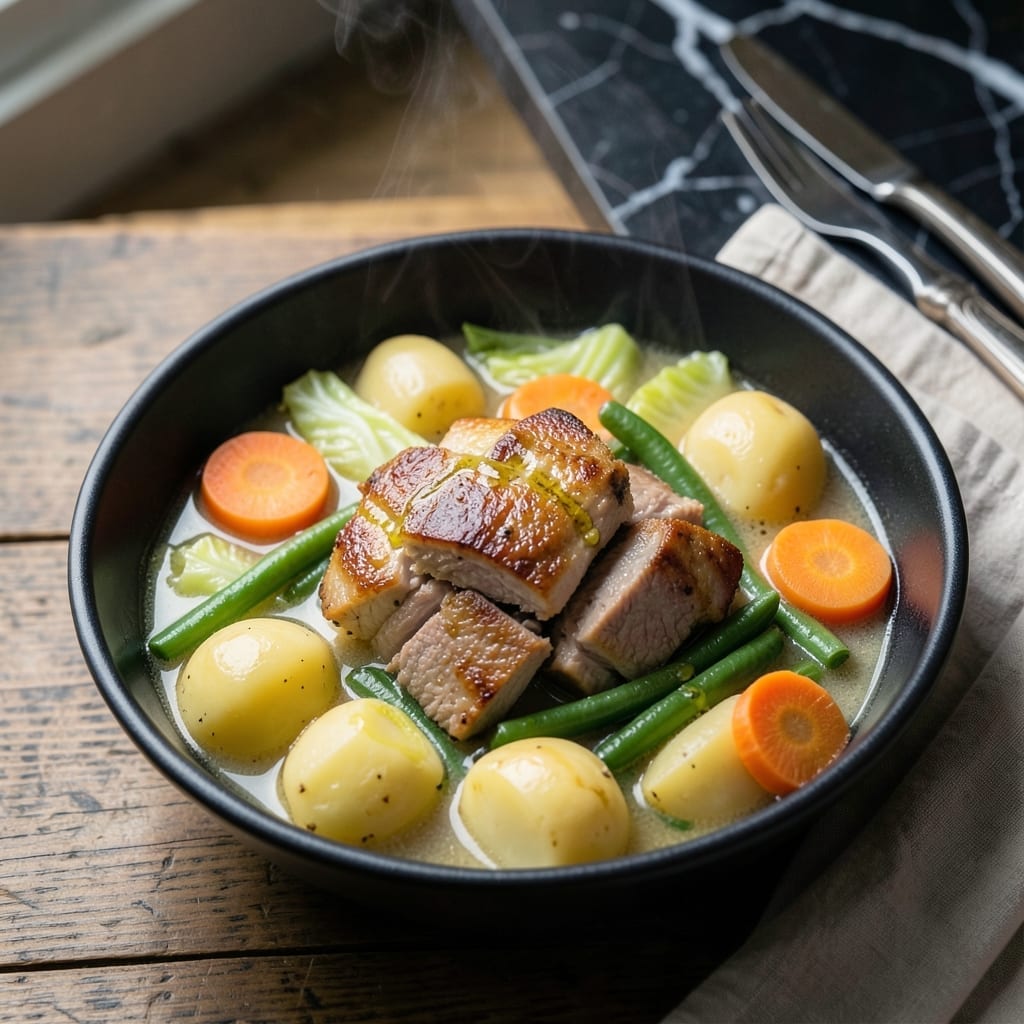
This Filipino comfort dish brings simple ingredients together for a hearty meal. I first tried nilaga during a trip to Manila, where families gather around steaming pots of this savory stew. The pork cooks until fork-tender, infusing the broth with rich flavor.
The beauty lies in its simplicity: pork, vegetables, and a light broth simmered to perfection. Traditional versions use pork ribs or shoulder, but any cut works. The key is patience—letting everything meld creates a depth of flavor that’s hard to beat.
What emerges is a bowl of tender meat, soft vegetables, and a clear, aromatic broth. It’s the kind of dish that warms you from the inside out, perfect for chilly evenings or when you need a taste of home.
Serve with steamed rice to soak up every drop of that flavorful broth. This is Filipino comfort food at its finest.
Ingredients for Pork Nilagang Baboy Recipe Ingredients
Simple, hearty ingredients for a comforting pot of Filipino stew. Nothing complicated here.
| Ingredient | Amount | Notes |
|---|---|---|
| Pork Shoulder 🥩 | 1 ½ lb | Cut into large chunks |
| Water 💧 | 8 cups | For broth base |
| Potatoes 🥔 | 2 whole | Peeled and quartered |
| Carrots 🥕 | 3 whole | Peeled and sliced thick |
| Cabbage 🥬 | ½ whole | Cut into wedges |
| Green Beans 🌿 | 1 cup | Trimmed and halved |
| Onion 🧅 | 1 whole | Quartered |
| Garlic Cloves 🧄 | 4 cloves | Smashed lightly |
| Bay Leaves 🍃 | 2 pieces | Dried or fresh |
| Salt 🧂 | 1 ½ tsp | Adjust to taste |
| Black Peppercorns 🌶️ | 10 pieces | Whole, cracked |
| Fish Sauce 🐟 | 1 tbsp | Optional for umami |
The pork shoulder is ideal here—look for well-marbled cuts at your local butcher or Asian market for the best flavor. Bone-in adds richness to the broth, but boneless works if that’s easier to find. I grab mine from H Mart when I want authentic cuts. The potatoes? Russet or Yukon Gold hold their shape best in the long simmer. Don’t skip the cabbage—it soaks up that savory broth beautifully.
No pork shoulder? Pork ribs or belly work great too. Short on veggies? Swap in sweet potatoes or daikon radish for variety. The fish sauce adds depth, but soy sauce at half the amount is a fine substitute if you’re avoiding seafood. Fresh garlic is non-negotiable though—powder just doesn’t hit the same. And the bay leaves? Dried are fine, but fresh ones pack more aroma.
This stew tastes even better the next day. Store leftovers in the fridge for up to 3 days—the flavors just get deeper. Freezes well for 3 months too. Reheat gently to keep the pork tender.
Why You’ll Love This Recipe
- Dump and Simmer: I just toss pork shoulder, potatoes, carrots, and cabbage into a pot with water and let it do its thing.
- Rich Broth Comfort: The pork shoulder cooks down into this savory, meaty broth that soaks into every bite of potato and carrot.
- Feeds the Whole Table: One pot, one meal—perfect for family dinners or when I need to stretch a budget without sacrificing flavor.
- Better the Next Day: Honestly, the leftovers taste even richer after the flavors meld overnight in the fridge.
Step-by-Step Instructions for Pork Nilagang Baboy
This is the method I always use for a comforting bowl of tender pork and vegetables.
Step 1: Sear the Pork and Build the Broth Base
In a large pot, add the 1.5 lb Pork Shoulder chunks and turn the heat to medium-high. Let them sear for 3-4 minutes, stirring occasionally, until the meat turns light brown and releases its natural juices.
Pour in the 8 cups Water and bring to a boil. As it heats, add the 1 whole Onion, 4 cloves Garlic Cloves, 2 pieces Bay Leaves, and 10 pieces Black Peppercorns. These aromatics will infuse the broth with deep, savory flavors.
Skim off any foam that rises to the surface during the first 5 minutes—this keeps your broth clear and clean. Reduce the heat to medium-low once boiling.
Step 2: Simmer the Pork Until Tender
Cover the pot and let the pork simmer gently for 45-50 minutes. You’ll know it’s ready when the meat is fork-tender and easily pulls apart with a gentle nudge.
Season the broth with 1.5 tsp Salt at this stage. Taste and adjust if needed, but remember the flavors will concentrate as it cooks further. I always wait until the pork is nearly done before adding salt to avoid over-seasoning.
If the broth reduces too quickly, add a bit more water to maintain the level. The key here is patience—rushing this step will leave your pork tough instead of fall-apart tender.
Step 3: Add the Vegetables in Stages
Once the pork is tender, add the 2 whole Potatoes and 3 whole Carrots. These heartier vegetables need 12-15 minutes to soften. You want them to hold their shape but be tender enough to pierce easily with a fork.
Next, stir in the 0.5 whole Cabbage wedges and 1 cup Green Beans. These cook faster, so they only need 5-7 minutes to become tender-crisp. Overcooking will turn them mushy, so keep an eye on them.
If you’re using the 1 tbsp Fish Sauce, add it now for an extra layer of umami. Stir gently to distribute it evenly through the broth.
Step 4: Finish and Serve
Give everything a final taste and adjust the seasoning with a bit more salt if needed. The broth should be rich and savory, with the natural sweetness of the vegetables shining through.
Turn off the heat and let the stew sit covered for 5 minutes. This allows the flavors to meld together beautifully. Serve hot in deep bowls, making sure each portion has a good mix of pork and vegetables.
The pork should be melt-in-your-mouth tender, and the broth should be light yet flavorful. Ladle plenty of broth over each serving—it’s the heart of this dish.
Pro Tips For Making Pork Nilagang Baboy Recipe Ingredients
- Skim the Broth: After the pork simmers for 30 minutes, skim off the foam that rises to the top—it keeps the broth clean and clear. I learned this the hard way after serving cloudy soup to guests.
- Cut Evenly: Chop the potatoes and carrots into similar-sized pieces, about 1.5 inches thick, so they cook at the same rate. Nothing worse than mushy carrots and rock-hard potatoes.
- Add Cabbage Last: Toss in the cabbage only 10 minutes before serving, or it’ll turn to mush. Sounds obvious, but I’ve ruined more than one batch by adding it too early.
- Use Bone-In Pork: Bone-in pork shoulder gives the broth deeper flavor than boneless cuts. It costs a little more, but the rich, meaty taste is worth it—my grandmother swore by this.
Dietary Considerations for This Dish
Gluten-Free Friendly
This dish is naturally gluten-free as written, with no wheat, barley, or rye ingredients. The only potential concern is the fish sauce, which sometimes contains wheat as a fermenting agent. I always use Red Boat Fish Sauce—it’s 100% gluten-free and made with just anchovies and salt. 💪
Low-Carb Adaptations
To reduce carbs, swap the potatoes for daikon radish or turnips, which have about 6g net carbs per cup versus 26g in potatoes. You can also halve the carrots and add more green beans or cabbage for volume without the carbs.
Dairy-Free by Default
No dairy is used in this recipe, making it safe for those with lactose intolerance or dairy allergies. The broth gets its richness from the pork shoulder and aromatics, not butter or cream. Just ensure your fish sauce doesn’t contain any dairy additives.
Pork Alternatives
For a lighter version, use pork tenderloin instead of shoulder—it’s leaner but still tender when cooked properly. If avoiding pork entirely, chicken thighs work well, though the flavor will differ. I’d recommend adding extra garlic and ginger to boost the depth.
Sodium Considerations
To lower sodium, reduce the salt to 1 tsp and skip the fish sauce. Boost flavor with extra garlic, black peppercorns, or a splash of vinegar instead. The natural sweetness of the vegetables will still shine through. 💡
Allergen Notes
This recipe is free from the top 8 allergens, except for the optional fish sauce. For a completely allergen-free version, simply omit it. Always check labels on your pork and vegetables for cross-contamination warnings if allergies are severe.
Nutrition Facts
Frequently Asked Questions
What cut of pork works best for this stew?
Pork shoulder is ideal for its rich marbling and fork-tender texture after 45-50 minutes of simmering. Pork ribs or belly also work well if shoulder isn’t available.
Can I use frozen vegetables instead of fresh?
Yes, but add them later to prevent mushiness. Frozen potatoes and carrots need 10-12 minutes, while cabbage and green beans only require 3-5 minutes in the hot broth.
How do I make the broth more flavorful?
Boost depth by adding extra garlic or a splash of fish sauce. For umami without seafood, use soy sauce at half the amount. Always simmer aromatics with the pork from the start.
Why did my pork turn out tough?
This usually means it didn’t simmer long enough. Pork shoulder needs at least 45 minutes on medium-low heat. Avoid boiling, which can make meat chewy instead of tender.

- Potato Chip Cookie Recipe With Pecans: Buttery Crunch Meets Nutty Richness - October 30, 2026
- Potato Patty Recipe No Egg: Crispy Edges Without the Binder - October 30, 2026
- Paula Deen’s Potato Chip Cookies Recipe: Salty-Sweet Crunch in Every Bite - October 30, 2026