
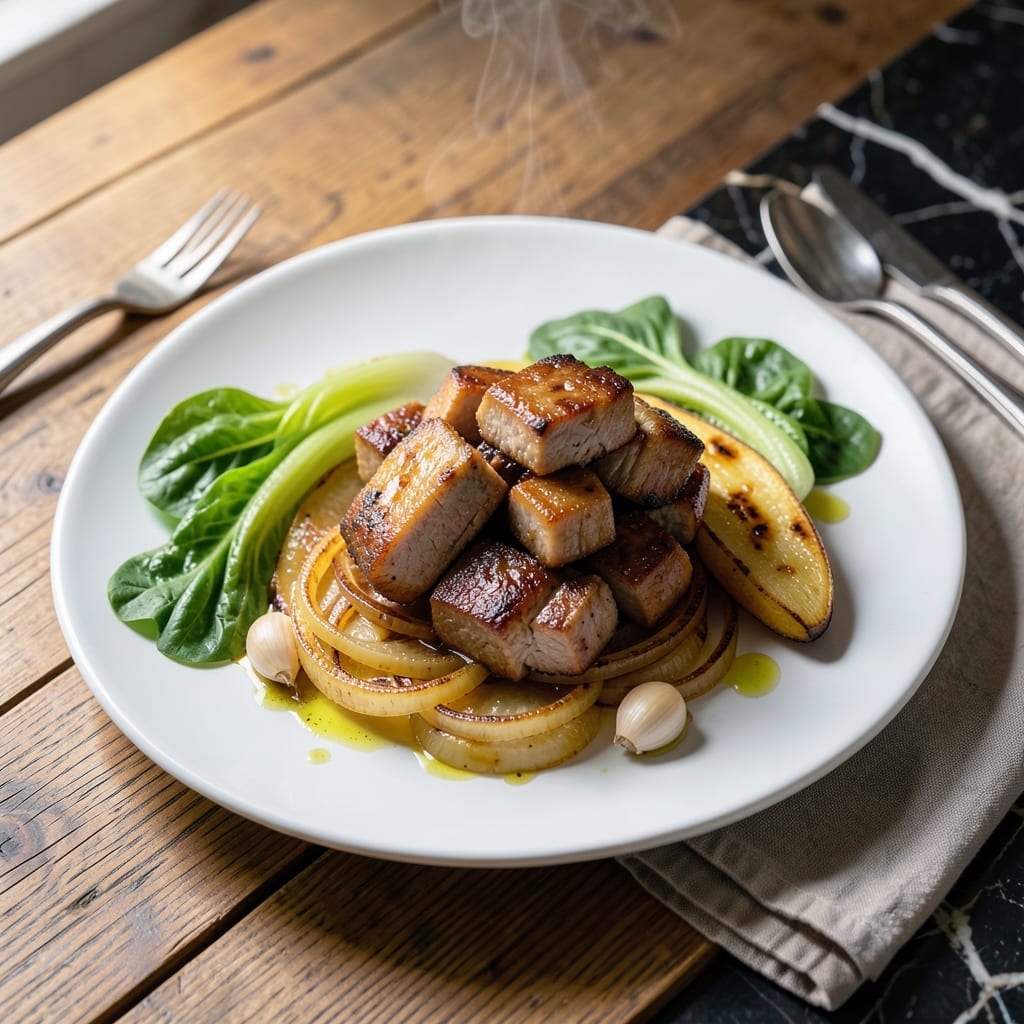
This Filipino pork pastel combines tender meat with sweet plantains and pechay in one satisfying dish. The slow-cooked pork soaks up rich, savory flavors while the plantains add a natural sweetness that balances perfectly.
I developed this recipe from my grandmother’s handwritten notes, decoding her intuitive cooking style into clear steps anyone can follow. The key is patience—letting the pork simmer until it’s fork-tender while the vegetables absorb the sauce.
What emerges is a hearty, flavorful stew with layers of texture and taste. The pechay adds a fresh green contrast to the rich pork and sweet plantains, creating a dish that’s both comforting and balanced.
Serve this over steamed rice for a complete meal that brings Filipino flavors to your home kitchen. Here’s how to make it right every time.
Ingredients for Pork Pastel Recipe Filipino Style
Rich pork, sweet plantains, and fresh pechay make this dish unforgettable and hearty.
| Ingredient | Amount | Notes |
|---|---|---|
| Pork Shoulder 🥩 | 2 lb | Cut into 1.5-inch cubes, trimmed of excess fat |
| Ripe Plantains 🍌 | 2 whole | Peeled and sliced into 1-inch pieces |
| Pechay (Bok Choy) 🥬 | 4 whole | Separated into leaves and stems |
| Garlic Cloves 🧄 | 6 cloves | Minced finely for maximum flavor |
| Yellow Onion 🧅 | 1 whole | Diced into small pieces |
| Soy Sauce 🥫 | ½ cup | Use low-sodium for better control |
| Calamansi Juice 🍋 | 3 tbsp | Or substitute lime juice |
| Bay Leaves 🌿 | 2 whole | Dried or fresh, removed before serving |
| Ground Black Pepper 🌶️ | 1 tsp | Freshly ground for best results |
| Salt 🧂 | 1 ½ tsp | Adjust to taste at the end |
| Cooking Oil 🫒 | 2 tbsp | Neutral oil like canola or vegetable |
| Tomato Sauce 🍅 | 1 cup | For depth and richness in sauce |
| Water 💧 | 2 cups | For simmering the pork |
| Brown Sugar 🧈 | 2 tbsp | Balances the savory flavors |
The pork is the foundation here. Pork shoulder works best for that fall-apart texture—avoid lean cuts like tenderloin. I always go to Asian markets for the best selection and prices, but most supermarkets carry it too. Look for pieces with good marbling (those white fat streaks mean flavor). For the plantains, pick ones that are yellow with some black spots—they’ll be sweet, not starchy.
No pechay? Regular bok choy or napa cabbage work just fine. Calamansi juice is traditional, but lime or lemon juice at the same amount gets you 90% there. If you can’t find ripe plantains, sweet potatoes add a similar sweetness. The soy sauce can be swapped for tamari if you need gluten-free, but it’s saltier so reduce by a quarter.
This stew actually improves overnight as the flavors meld. Keeps beautifully in the fridge for 4-5 days and freezes well for up to 3 months (portion into containers before freezing for easy meals). The plantains may darken a bit but the taste stays perfect.
Why You’ll Love This Recipe
- One Pot Wonder: I love that everything—pork, plantains, and pechay—simmers together in one pot with minimal fuss.
- Sweet-Savory Magic: The ripe plantains caramelize just enough to balance the garlic and pork in every bite.
- Feeds a Crowd: Honestly, this stretches perfectly for family gatherings or meal prep for the week.
- Budget Friendly: Pork shoulder and seasonal veggies keep costs low without sacrificing flavor.
Step-by-Step Instructions for Pork Pastel Filipino Style
Here’s how to achieve fall-apart tender meat with the perfect sweet-savory balance every time.
Step 1: Sear the Pork Shoulder for Depth of Flavor
Heat the 2 tbsp cooking oil in a large pot over medium-high heat. When the oil shimmers, add the 2 lb pork shoulder cubes in a single layer. I sear them in batches to avoid crowding—this ensures each piece browns properly instead of steaming.
Cook undisturbed for 3-4 minutes per side until the pork develops a deep golden-brown crust. You’ll hear a satisfying sizzle when it’s ready to flip. This searing step creates the fond that will deepen the sauce’s flavor later. Remove the pork and set aside.
Step 2: Build the Aromatic Base for the Sauce
In the same pot, add the diced yellow onion and sauté for 2-3 minutes until translucent. Then add the 6 cloves minced garlic and cook for 30 seconds until fragrant—don’t let it burn or it will turn bitter.
Stir in the 1 cup tomato sauce, 0.5 cup soy sauce, 3 tbsp calamansi juice, 2 tbsp brown sugar, 1 tsp ground black pepper, and 1.5 tsp salt. Add the 2 whole bay leaves and pour in the 2 cups water. Bring this mixture to a gentle simmer.
Step 3: Simmer the Pork Until Fork-Tender
Return the seared pork to the pot, ensuring it’s mostly submerged in the liquid. Cover and reduce heat to low. Let it simmer for 1 hour to 1 hour 15 minutes, stirring occasionally, until the pork is fork-tender and easily pulls apart.
This slow cooking process allows the flavors to meld beautifully. I check the doneness by piercing a piece with a fork—it should slide in with no resistance. If the liquid reduces too much during cooking, add a splash of water to maintain the simmer.
Step 4: Add Plantains and Pechay for the Final Touch
Once the pork is tender, gently stir in the 2 whole ripe plantains (peeled and sliced). Cook for 5 minutes until the plantains begin to soften slightly but still hold their shape. The plantains should absorb some of the sauce’s flavor without turning mushy.
Add the 4 whole pechay (bok choy), separating the leaves and stems. Cook for an additional 2-3 minutes until the pechay is wilted but still bright green. The stems should be crisp-tender. Remove the bay leaves before serving.
Taste and adjust seasoning if needed. The sauce should have a balanced sweet-savory profile with a hint of tang from the calamansi. Serve hot over steamed rice to soak up every last bit of the delicious sauce.
Pro Tips For Making Pork Pastel Recipe Filipino Style
- Sear the Pork First: Brown the pork shoulder in batches over medium-high heat until deeply caramelized—this builds a flavor base that simmering alone can’t achieve. I learned this the hard way when my first few pastels tasted flat. —
- Soak the Plantains: Slice the ripe plantains and soak them in cold water for 10 minutes before frying to prevent excessive browning. Sounds weird, but it keeps them tender and not bitter. —
- Don’t Overcook Pechay: Add the bok choy only in the last 5 minutes of cooking—any longer and it turns mushy. My grandmother swore by this, and she was right. —
- Use Pork Fat: Render some fat from the pork shoulder first, then use it to sauté the garlic and onions. It’s an extra step, but the depth of flavor is worth it.
Serving Suggestions for Leftovers
Steamed Rice Foundation
This dish shines over steamed jasmine rice—its mild flavor and fluffy texture soak up the rich sauce perfectly. I use a 1:1.5 rice-to-water ratio in my rice cooker. For extra aroma, toast the rice in the pot for 2 minutes before adding water. 💛
Fresh Garnishes
Brighten up each bowl with thinly sliced green onions and calamansi wedges on the side. The citrus adds a fresh contrast to the rich stew. I also sprinkle toasted garlic bits for extra crunch and flavor.
Side Dish Pairings
A simple cucumber-tomato salad with vinegar dressing cuts through the richness. Or serve with pickled vegetables like atchara for a tangy complement. Both add freshness to balance the hearty pork.
Beverage Choices
I love pairing this with iced tea or coconut water for a refreshing contrast. For adults, a light lager beer like San Miguel works beautifully. The crispness cleanses your palate between bites.
Family-Style Serving
Transfer everything to a large serving bowl and let everyone help themselves. The pork and plantains look stunning together, and the pechay adds vibrant green color. I always make extra rice—everyone comes back for seconds. ✨
Nutrition Facts
Frequently Asked Questions
What can I use if I can’t find pechay?
Regular bok choy or napa cabbage work perfectly as substitutes. Spinach or Swiss chard can also work in a pinch, though they cook faster.
How do I know when the pork is done?
Test with a fork—it should slide in with no resistance after 1 hour to 1 hour 15 minutes of simmering. The meat will pull apart easily when fully cooked.
Can I make this ahead of time?
The flavors deepen overnight. Store in an airtight container for up to 4-5 days in the fridge, or freeze for 3 months.

- Potato Patty Recipe No Egg: Crispy Edges Without the Binder - October 30, 2026
- Paula Deen’s Potato Chip Cookies Recipe: Salty-Sweet Crunch in Every Bite - October 30, 2026
- Potato Gnocchi Recipe Ideas: Pillowy Soft Dumplings With Rustic Charm - October 30, 2026