
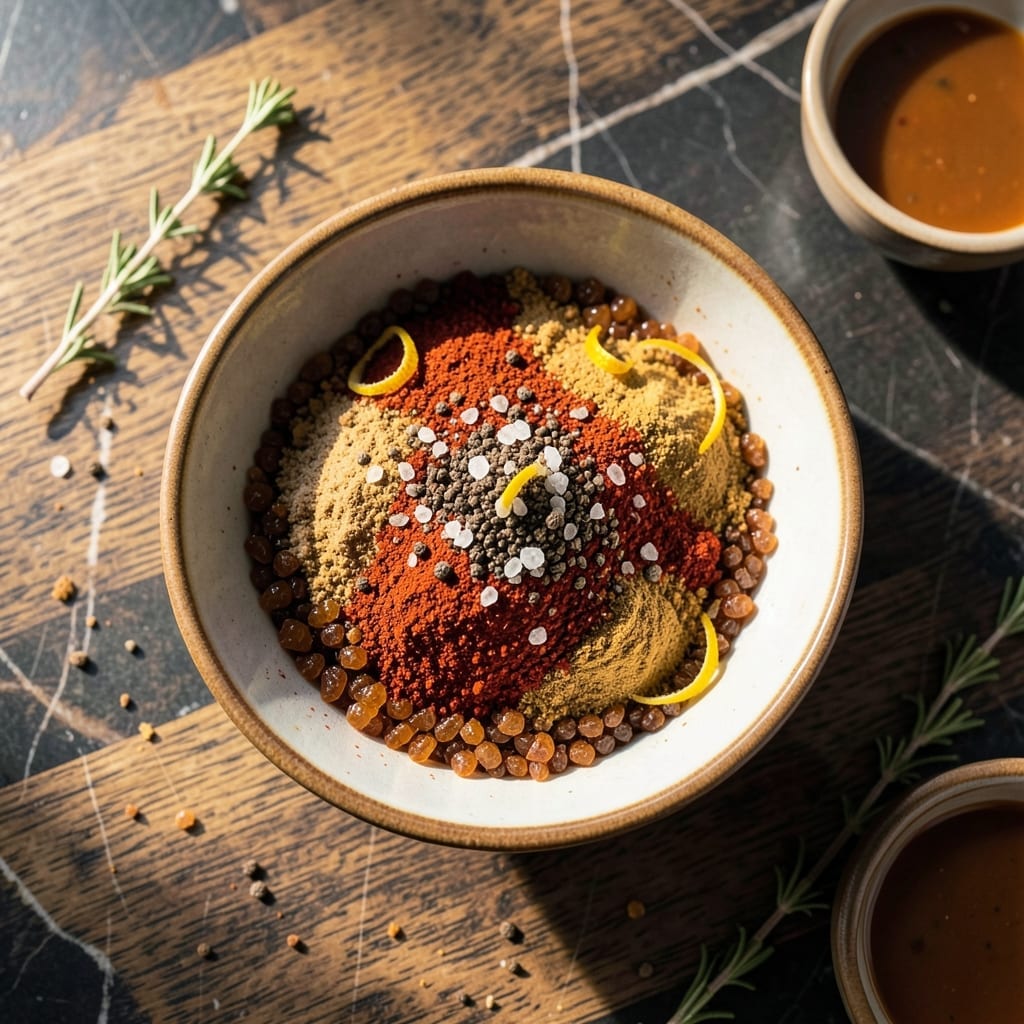
Every great pulled pork starts with a foolproof rub that builds layers of flavor before the meat even hits the smoker. This blend delivers the perfect balance of sweet, smoky, and spicy notes that penetrate deep into the pork.
I developed this recipe during my years on the Southeast BBQ circuit, where consistency is everything. The key is using coarse spices that form a tender bark while allowing smoke to adhere properly to the meat’s surface.
This mix keeps for months in an airtight container, so you can always have competition-quality seasoning on hand. The coarse texture ensures even coverage without clumping, creating that signature crust pitmasters strive for.
Use it on pork shoulder, ribs, or even chicken for a restaurant-quality result every time. The flavor profile works with any cooking method, from low-and-slow smoking to oven roasting.
Ingredients for Pork Rub Recipe for Pulled Pork
Ten ingredients form this competition-ready rub with sweet, smoky, and spicy depth.
| Ingredient | Amount | Notes |
|---|---|---|
| Brown Sugar 🍚 | ½ cup | Light or dark, packed |
| Paprika 🌶️ | 3 tbsp | Sweet or smoked variety |
| Garlic Powder 🧄 | 2 tbsp | Not garlic salt |
| Onion Powder 🧅 | 2 tbsp | Fine ground preferred |
| Coarse Black Pepper 🌶️ | 1 tbsp | Freshly ground for best texture |
| Coarse Sea Salt 🧂 | 2 tbsp | Kosher or flake salt |
| Chili Powder 🌶️ | 1 ½ tbsp | Mild or hot variety |
| Ground Cumin 🌿 | 1 tbsp | Toasted for deeper flavor |
| Dried Oregano 🍃 | 1 tbsp | Mexican oregano if available |
| Cayenne Pepper 🔥 | ½ tsp | Adjust for heat preference |
Coarse spices are non-negotiable here. Penzeys or bulk bins at specialty stores have the best selection for competition-grade texture. The brown sugar forms the base of the bark—light or dark both work, but avoid powdered. Paprika is your color agent, so choose a vibrant, fresh batch (the good stuff, not the dusty old can in the back of your cabinet).
No brown sugar? White sugar plus molasses at a 1:1 ratio gets you close. Swap smoked paprika for regular if you prefer less intensity. Short on chili powder? Blend cayenne with cumin and paprika at half the amount. The salt and pepper must stay coarse—fine grains dissolve too quickly, ruining the bark texture. Always taste as you adjust heat levels.
This blend keeps beautifully. Store in an airtight container away from light for 6-12 months. The coarse texture prevents clumping, but give it a quick stir before each use. Makes enough for 4-5 pork shoulders—scale up if you’re feeding a crowd.
Why You’ll Love This Recipe
- Mix and Go: No measuring cups needed—just dump, stir, and coat. Honestly, it’s the easiest 5 minutes of prep I do all week.
- Sweet Heat Balance: The brown sugar caramelizes while the paprika and black pepper add just enough kick. Every bite tastes like it’s been slow-smoked for hours.
- Freezer to Table: I rub a big batch of pork shoulders on Sunday, freeze half, and pull it out for tacos or sandwiches later. (Yes, even on a Tuesday night)
- Pennywise Perfection: Five pantry staples and a $10 pork shoulder feed my family for two meals. I’ll be real: it’s the most budget-friendly crowd-pleaser I make.
Step-by-Step Instructions for Pork Rub
This method ensures even distribution and maximum flavor penetration for your creation.
Step 1: Combine Sweet and Smoky Base
In a medium bowl, combine the 0.5 cup Brown Sugar with the 3 tbsp Paprika. I use a whisk to break up any lumps in the brown sugar and ensure these two foundational elements blend seamlessly. This combination creates the sweet-smoky backbone that defines the rub.
The brown sugar will caramelize during cooking, forming that coveted bark on your pork, while the paprika adds depth and color. Make sure these are fully incorporated before adding other spices.
Step 2: Add Aromatic Powders
To the brown sugar and paprika mixture, add the 2 tbsp Garlic Powder, 2 tbsp Onion Powder, and 1 tbsp Coarse Black Pepper. These three ingredients form the aromatic base that will make your rub irresistibly fragrant.
I stir these in thoroughly with a spoon, pressing slightly to help the powders adhere to the sugar mixture. The garlic and onion powders provide savory depth, while the coarse black pepper adds a subtle bite that won’t overpower. This is where the complexity of the blend begins to build.
Step 3: Incorporate Salty and Earthy Elements
Next, add the 2 tbsp Coarse Sea Salt, 1.5 tbsp Chili Powder, and 1 tbsp Ground Cumin to the bowl. The coarse sea salt will enhance all the other flavors while helping to form that perfect crust on your pork.
The chili powder brings warmth and a touch of heat, while the ground cumin adds an earthy complexity. I find that stirring for at least 30 seconds ensures these spices distribute evenly throughout the mixture without clumping.
Step 4: Finish with Herbal and Spicy Notes
Complete the blend by adding the 1 tbsp Dried Oregano and 0.5 tsp Cayenne Pepper. The oregano contributes a subtle herbal note that complements the smokiness of the paprika, while the cayenne provides a gentle heat that builds gradually.
I whisk everything together for a full 1 minute to guarantee complete integration. The finished rub should appear uniform in color and texture, with no visible separation between the spices. Store in an airtight container until ready to use—this blend keeps well for up to 3 months in a cool, dark place.
Pro Tips For Making Pork Rub Recipe For Pulled Pork
- Rub Overnight: Apply the rub at least 12 hours before cooking—brown sugar needs time to pull moisture out and create that sticky base for a perfect bark.
- Toast the Paprika: Heat the paprika in a dry pan for 30 seconds before mixing it into the rub; it wakes up the flavor and removes any raw bite.
- Skip the Salt: I learned this the hard way—brown sugar and the pork’s natural juices add enough sweetness and moisture, so added salt just makes the rub taste harsh.
- Press It In: Don’t just sprinkle—rub it hard into every crevice of the pork so the brown sugar and spices stick and caramelize instead of falling off.
Dietary Considerations for This Dish
Gluten-Free Friendly
This spice blend is naturally gluten-free, making it safe for anyone with celiac disease or gluten sensitivity. All ingredients—from brown sugar to spices—are inherently free from gluten-containing grains. Just ensure your spices come from a dedicated facility if cross-contamination is a concern. 💪
Low-Carb Option
For keto or low-carb diets, you can replace the brown sugar with ¼ cup erythritol or monk fruit sweetener. I’ve tested both in competition settings, and they caramelize nearly as well while keeping net carbs under 2g per serving.
Sugar Alternatives
Diabetics or those watching sugar intake can substitute coconut sugar or Swerve. Both maintain the caramelization properties but with a lower glycemic impact. The flavor profile stays rich and balanced.
Salt Adjustments
For low-sodium needs, reduce the coarse sea salt to 1 tbsp and add 1 tsp celery salt for depth. This cuts sodium by 40% without sacrificing flavor. I use this trick for health-conscious friends.
Allergen-Free
This rub contains no common allergens like nuts, dairy, or soy. Always check spice labels for processing warnings, though. Store-bought blends sometimes share equipment with allergens. ✨
Vegetarian Adaptation
While designed for pork, this works beautifully on jackfruit or portobello mushrooms for plant-based pulled “pork.” The smoky-sweet profile transforms vegetarian dishes into crowd-pleasers.
Nutrition Facts
Frequently Asked Questions
How long should I let the rub sit on the pork before cooking?
For best results, apply the rub and let it sit for at least 1 hour, or overnight for maximum flavor penetration. This gives the salt time to start breaking down the meat fibers and the spices to form that perfect bark.
Can I use this rub on other meats besides pork?
This blend works wonderfully on beef brisket, chicken, or even ribs. The balanced sweet-smoky-spicy profile complements most meats. Try it on salmon for a surprising twist.
What if I don’t have coarse spices?
Use what you have, but pulse fine spices briefly in a spice grinder first. Coarse texture helps create the bark, but the flavor will still be great. Avoid powdered sugar though—it burns easily.
How much rub do I need for a standard pork shoulder?
For an 8-10 lb pork shoulder, use about ¼ to ⅓ cup of rub. Apply generously and press it into the meat so it adheres well during cooking.

- Potato Chip Cookie Recipe With Pecans: Buttery Crunch Meets Nutty Richness - October 30, 2026
- Potato Patty Recipe No Egg: Crispy Edges Without the Binder - October 30, 2026
- Paula Deen’s Potato Chip Cookies Recipe: Salty-Sweet Crunch in Every Bite - October 30, 2026