
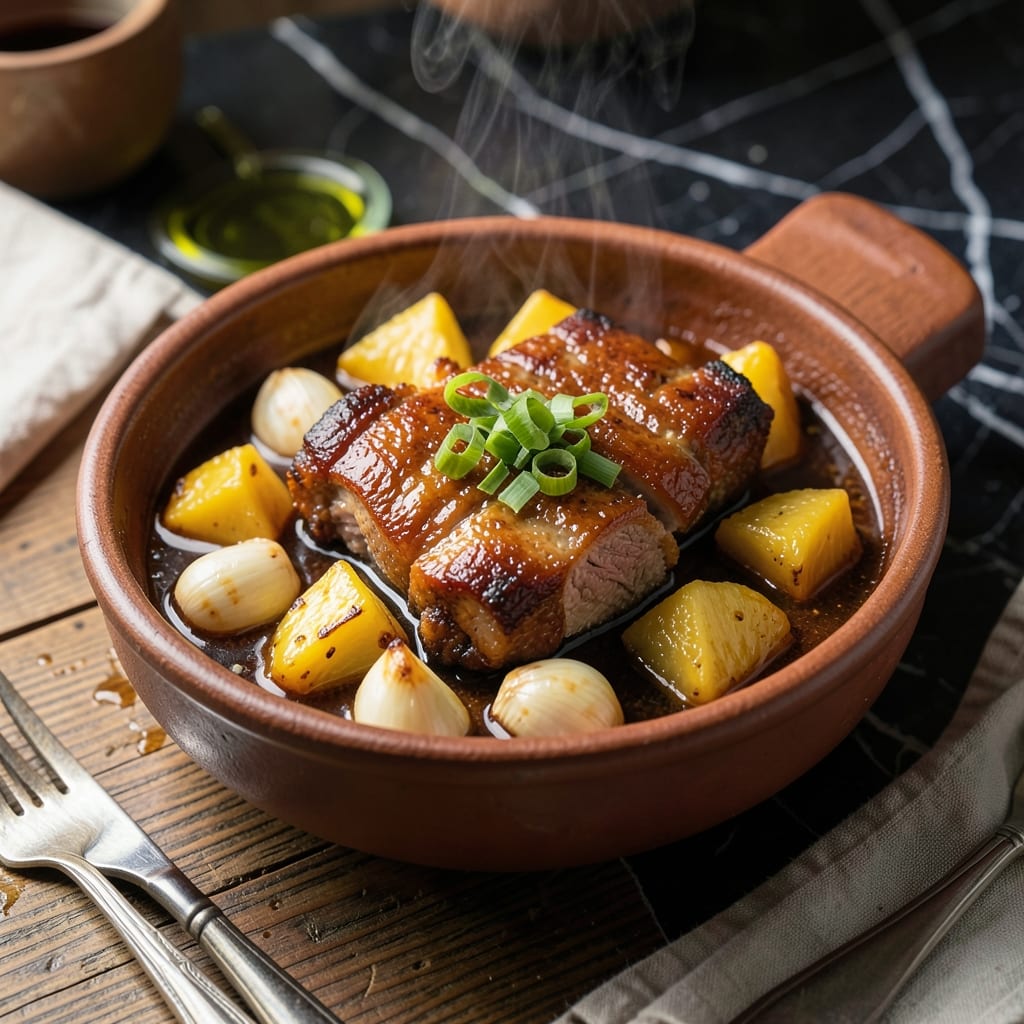
This slow-braised Filipino dish transforms tough pork cuts into tender, fall-off-the-bone comfort food. The pineapple juice adds a subtle sweetness that balances the rich, savory flavors perfectly.
I developed this recipe by testing different cooking times to achieve the ideal texture. The pork pata becomes incredibly tender while the sauce reduces to a glossy, flavorful glaze.
What starts as a simple combination of ingredients ends as a dish that fills your kitchen with an irresistible aroma. The pineapple juice tenderizes the meat while adding depth to the sauce.
Serve this over steamed rice to soak up every bit of the delicious sauce. The result is pure, comforting satisfaction in every bite.
Ingredients for Pork Pata Humba Recipe with Pineapple Juice
Tough cuts turn silky with pineapple juice and slow braising. Nothing beats this comfort.
| Ingredient | Amount | Notes |
|---|---|---|
| Pork Pata 🐖 | 2 lb | Cut into 2-inch pieces, skin-on |
| Pineapple Juice 🍍 | 1 ½ cups | Unsweetened, for tenderizing and sweetness |
| Soy Sauce 🫚 | ½ cup | Low-sodium preferred for balance |
| White Vinegar 🧪 | ¼ cup | Balances richness with acidity |
| Brown Sugar 🍚 | ¼ cup | Packed, for caramelized depth |
| Garlic Cloves 🧄 | 8 cloves | Minced for aromatic base |
| Yellow Onion 🧅 | 1 whole | Large, thinly sliced |
| Bay Leaves 🌿 | 2 pieces | Dried, for earthy undertones |
| Black Peppercorns 🌶️ | 1 tsp | Whole, lightly crushed |
| Star Anise Pods ⭐ | 2 pieces | Whole, for aromatic spice |
| Dried Thyme 🍃 | 1 tsp | Crushed between fingers |
| Vegetable Oil 🫒 | 2 tbsp | For searing pork |
| Water 💧 | 1 cup | For braising liquid |
The pork pata is key—look for pieces with good fat marbling at Asian markets or well-stocked butchers (they often pre-cut it). Skin-on is non-negotiable for that sticky, collagen-rich sauce. Pineapple juice should be 100% juice, no added sugar—brands like Dole or Del Monte work perfectly. Bay leaves and star anise are usually in the spice aisle, but HMart has bulk bags for better value.
No pork pata? Pork shoulder or belly still gives great results (just skip the skin). Short on pineapple juice? Half the amount of crushed pineapple (drained) works in a pinch. Star anise missing? One cinnamon stick plus a pinch of cloves mimics the warmth. The vinegar can be apple cider if that’s what you’ve got—just avoid balsamic (too sweet).
This tastes even better the next day—the flavors deepen overnight. Keeps in the fridge for 4-5 days, or freeze for 3 months (the sauce thickens slightly when thawed, but a splash of water fixes it). Always reheat gently to keep the meat fall-apart tender.
Why You’ll Love This Recipe
- Dump and Simmer: I just dump everything in the pot—pork pata, pineapple juice, soy sauce, vinegar, sugar—and let it braise. One pot, minimal fuss.
- Sweet-Savory Magic: The pineapple juice caramelizes with the brown sugar, creating this sticky, tangy-sweet glaze on the pork that’s honestly ridiculous.
- Feeds a Party: I’ve served this at birthdays and casual Sundays. It’s hearty enough for a crowd and reheats beautifully.
- Leftovers for Days: The flavors deepen overnight, so I always make extra. Tastes even better the next day with rice or in a sandwich.
Step-by-Step Instructions for Pork Pata Humba With Pineapple Juice
Here’s the method. Straightforward, tested, works every time.
Step 1: Sear the Pork Pata for Deep Flavor
Heat the 2 tbsp vegetable oil in a large, heavy pot over medium-high heat until shimmering. Add the 2 lb Pork Pata pieces skin-side down. I press them gently with a spatula to ensure even contact with the pot—this prevents curling and promotes consistent browning.
Sear for 5-7 minutes until the skin turns deep golden brown and crispy. Flip and sear the other side for another 3-4 minutes. You’ll know it’s ready when the meat releases easily from the pot and has developed a rich, caramelized crust. Remove the pork and set aside.
Step 2: Build the Aromatic Base
In the same pot, add the thinly sliced yellow onion and cook for 3 minutes until softened and translucent. Add the 8 cloves minced garlic cloves and sauté for 1 minute until fragrant—don’t let it burn, as garlic turns bitter quickly.
Stir in the 0.25 cup brown sugar and cook for 1-2 minutes until it begins to caramelize and coat the onions. This step creates a rich, sweet foundation that balances the acidity and saltiness in the dish. The sugar should melt into a glossy, bubbling mixture.
Step 3: Add Liquids and Spices for Braising
Pour in the 1.5 cups pineapple juice, 0.5 cup soy sauce, and 0.25 cup white vinegar. Stir to combine, scraping up any browned bits from the bottom of the pot—this adds depth to the braising liquid. Add the 2 pieces bay leaves, 1 tsp black peppercorns, 2 pieces star anise pods, and 1 tsp dried thyme.
Return the pork to the pot, skin-side up. Add the 1 cup water and bring to a gentle boil. Reduce heat to low, cover, and let it simmer for 1.5-2 hours until the pork is fork-tender and the liquid has reduced slightly. The pork should be tender enough to pull apart easily with a fork.
Step 4: Reduce and Glaze to Perfection
Once the pork is tender, uncover and increase the heat to medium. Let the sauce reduce for 10-15 minutes, basting the pork occasionally with the sauce. This step concentrates the flavors and creates a glossy, sticky glaze that clings to the pork.
You’ll know it’s ready when the sauce has thickened enough to coat the back of a spoon and the pork has absorbed the rich, tangy-sweet flavors of the braising liquid. The skin should be tender and infused with the aromatic spices, while the meat inside remains juicy and succulent.
Pro Tips For Making Pork Pata Humba Recipe With Pineapple Juice
- Boil Pata First: Parboil the pork pata for 10 minutes to remove impurities and excess fat—I learned this the hard way after my first batch had a greasy film on top.
- Balance Sweet and Sour: Taste as you go and adjust the brown sugar and vinegar in small increments; the pineapple juice adds sweetness, so you might need less sugar than expected.
- Simmer, Don’t Boil: Keep the heat low once the sauce is in—after burning the sauce once, I now know a gentle simmer keeps the flavors rich and the meat tender.
- Use Fresh Pineapple Juice: Skip the canned stuff if possible; fresh pineapple juice adds a brighter, more vibrant tang that pairs perfectly with the soy and vinegar.
Wine and Beer Pairings for This Recipe
Filipino Lager Pairing
I always reach for San Miguel Pale Pilsen—its crisp, clean profile cuts through the richness of the pork while complementing the pineapple’s sweetness. The light bitterness refreshes your palate between bites. 🍺
Riesling White Wine
A slightly off-dry German Riesling like Dr. Loosen Blue Slate balances the dish’s sweet and savory notes. The wine’s acidity mirrors the vinegar in the sauce, creating harmony. Serve chilled at 45-50°F.
Belgian Tripel Option
For beer lovers, a Belgian Tripel like Westmalle Tripel works beautifully. Its fruity esters echo the pineapple while the alcohol content stands up to the bold flavors. The effervescence cleanses your palate.
Rosè Wine Choice
A dry Provence rosé offers red fruit notes that complement the dish’s complexity. I prefer Whispering Angel for its consistent quality. The wine’s minerality enhances the star anise undertones.
Craft IPA Alternative
If you prefer hops, a New England IPA like Trillium Congress Street (from Boston!) brings citrusy brightness. The haze and juiciness mirror the pineapple juice in the recipe. However, avoid overly bitter West Coast IPAs.
Nutrition Facts
Frequently Asked Questions
What can I use if I don’t have star anise?
A cinnamon stick plus a pinch of cloves works as a substitute. It won’t be identical but provides similar warm, aromatic depth to the braising liquid.
Can I make this in a slow cooker?
Yes! Sear the pork first, then transfer everything to your slow cooker. Cook on low for 6-8 hours or high for 4-5 hours until fork-tender.
Why did my sauce stay watery?
This usually happens if the lid wasn’t removed during the final reduction. Uncover and simmer for 10-15 minutes on medium heat to thicken the sauce properly.
How do I know when the pork is done?
It should pull apart easily with a fork after 1.5-2 hours of braising. The meat will be fall-off-the-bone tender when fully cooked.

- Potato Chip Cookie Recipe With Pecans: Buttery Crunch Meets Nutty Richness - October 30, 2026
- Potato Patty Recipe No Egg: Crispy Edges Without the Binder - October 30, 2026
- Paula Deen’s Potato Chip Cookies Recipe: Salty-Sweet Crunch in Every Bite - October 30, 2026