
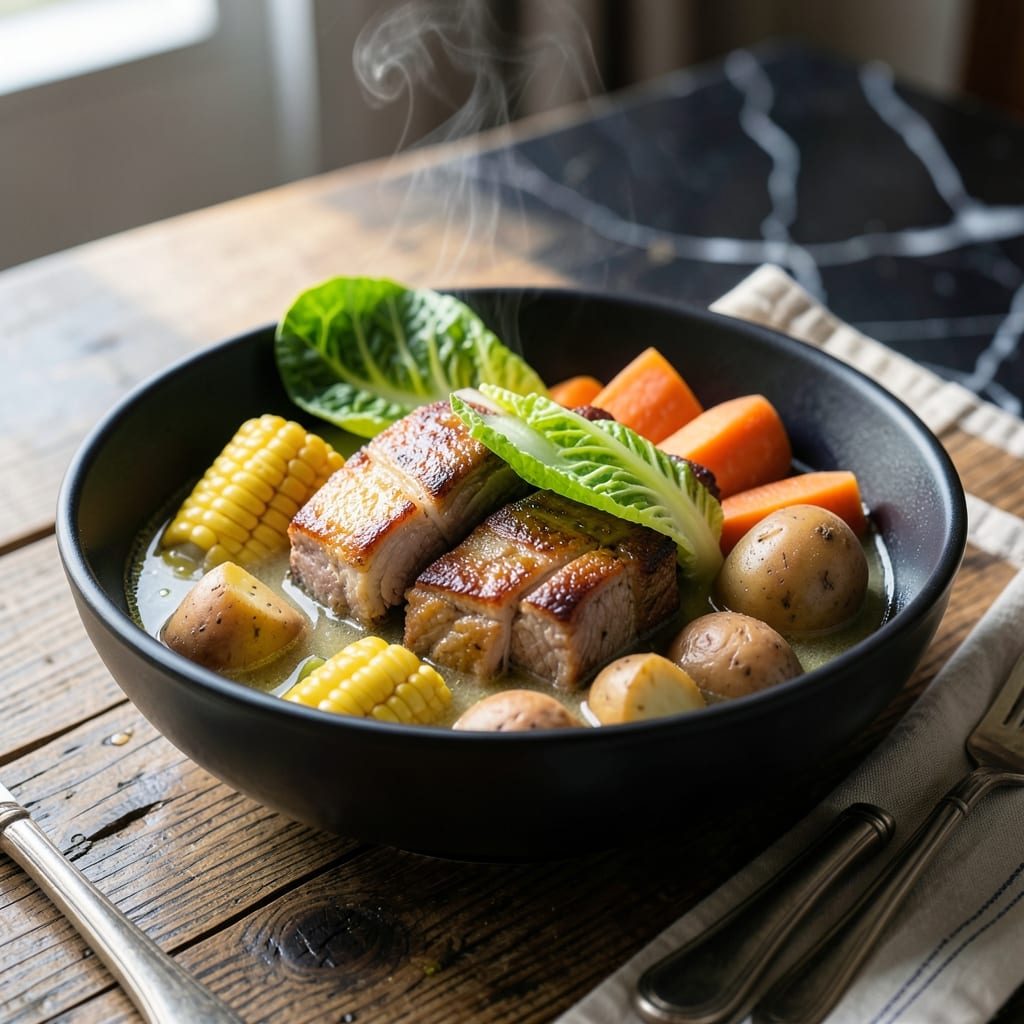
This Filipino stew brings comfort in every spoonful, with tender pork and vegetables simmered in a clear, flavorful broth. I developed this version after testing multiple pork cuts to find the most forgiving yet authentic approach.
The beauty lies in its simplicity—boiling pork with cabbage, potatoes, and corn creates a naturally rich broth without heavy seasoning. This method highlights the clean, honest flavors that define traditional nilaga.
You’ll end up with melt-in-your-mouth pork pieces, perfectly cooked vegetables, and a light but deeply satisfying broth. It’s a dish that proves simple ingredients can create extraordinary results.
Perfect for family dinners or when you crave a taste of home. The process is straightforward, and the outcome is always rewarding.
Ingredients for Pork Nilaga Recipe Ingredients
Simple ingredients for a comforting Filipino pork stew with rich, clean flavors.
| Ingredient | Amount | Notes |
|---|---|---|
| Pork Shoulder 🥩 | 1 ½ lb | Cut into 2-inch cubes, bone-in preferred |
| Green Cabbage 🥬 | 1 whole | Medium head, cut into wedges |
| Russet Potatoes 🥔 | 2 whole | Peeled and quartered |
| Corn on the Cob 🌽 | 2 whole | Cut into 2-inch pieces |
| Large Carrots 🥕 | 2 whole | Peeled and cut into chunks |
| Yellow Onion 🧅 | 1 whole | Peeled and quartered |
| Garlic Cloves 🧄 | 6 cloves | Lightly crushed, peeled |
| Bay Leaves 🍃 | 2 whole | Dried or fresh |
| Whole Black Peppercorns 🌶️ | 1 tsp | Lightly crushed |
| Kosher Salt 🧂 | 1 tbsp | Adjust to taste |
| Water 💧 | 8 cups | Or enough to cover pork |
| Fish Sauce 🐟 | 1 tbsp | Optional, for umami depth |
| Scallions 🧅 | 3 whole | Sliced thin, for garnish |
The pork shoulder is non-negotiable—bone-in, well-marbled pieces give you that melt-in-your-mouth texture. Most Asian markets sell it pre-cut, but any grocery store butcher can cube it for you (just ask for 2-inch chunks). I tested this with pork belly and loin too, but shoulder holds up best to the long simmer. Look for pieces with a good fat cap—this renders into the broth and adds depth.
No pork shoulder? Pork ribs work in a pinch, but they need extra time to get tender. Swap cabbage for Napa or bok choy if that’s easier to find. The corn can be fresh or frozen (add frozen straight from the freezer). Want to veg it up? Green beans or taro root are traditional additions. Skip the fish sauce if you’re strict about keeping it light, but it adds a subtle savoriness worth trying.
This stew actually tastes better the next day once the flavors meld. Keeps in the fridge for 4-5 days—reheat gently so the pork doesn’t toughen. Freeze portions for up to 3 months (leave some headspace in containers). The broth’s clarity comes from a rolling boil first, then a gentle simmer. Don’t skip the skimming step at the start.
Why You’ll Love This Recipe
- One Pot Wonder: I just toss pork shoulder, potatoes, and corn into a single pot and let it simmer—minimal cleanup, maximum flavor.
- Hearty Comfort: The tender pork and sweet carrots soak up the savory broth, making every spoonful crave-worthy.
- Feeds a Crowd: Honestly, it’s my go-to for family dinners—stretches easily and everyone leaves satisfied.
- Budget Stretcher: Pork shoulder and humble veggies like cabbage keep costs low without sacrificing taste.
Step-by-Step Instructions for Pork Nilaga
This method delivers tender pork and vegetables in a rich, aromatic broth every time.
Step 1: Sear and Parboil the Pork
In a large pot over medium-high heat, add the 1.5 lb Pork Shoulder cubes. Sear until lightly browned on all sides—this builds a flavor foundation for the broth. Don’t skip this; it removes impurities that would cloud your soup.
Add the 8 cups Water and bring to a boil. Skim off any foam that rises to the surface with a spoon. This keeps the broth clean and clear. Reduce heat to medium-low and let simmer for 10 minutes to par-cook the pork.
Step 2: Build the Aromatic Base
After parboiling, drain the pork and return it to the pot. Add the yellow onion, 6 cloves Garlic Cloves, 2 whole Bay Leaves, 1 tsp Whole Black Peppercorns, and 1 tbsp Kosher Salt. These aromatics infuse the broth with deep, balanced flavor.
Pour in fresh 8 cups Water and bring to a boil again. Once boiling, reduce to a gentle simmer. I always use fresh water here to avoid any lingering impurities from the parboiling step. Simmer for 30 minutes to develop the base flavors.
Step 3: Add the Hearty Vegetables
Add the 2 whole Russet Potatoes, 2 whole Corn on the Cob, and 2 whole Large Carrots to the pot. These vegetables soak up the pork broth beautifully, adding substance to the dish. Make sure they’re fully submerged for even cooking.
Simmer for 15 minutes until the potatoes and carrots are just starting to soften. You want them tender but not mushy—they’ll continue cooking with the cabbage. Taste the broth and adjust the Kosher Salt if needed, though the pork and vegetables will absorb some of the seasoning.
Step 4: Finish with Cabbage and Final Touches
Add the 1 whole Green Cabbage wedges to the pot, pressing them down gently into the broth. Simmer for another 10-12 minutes until the cabbage is tender but still holds its shape. The cabbage should turn vibrant and slightly translucent at the edges.
Stir in the 1 tbsp Fish Sauce for a boost of umami depth, if using. This is the point where all the flavors come together. The pork should be fork-tender, and the vegetables should be perfectly cooked through.
Step 5: Garnish and Serve
Remove the pot from heat and let it sit for 5 minutes before serving. This brief rest allows the flavors to meld completely. Discard the bay leaves and peppercorns if you prefer, or leave them in for a rustic touch.
Ladle the stew into bowls and garnish with the 3 whole Scallions, sliced thin. The scallions add a fresh, bright contrast to the rich broth. Serve hot with steamed rice to soak up every last bit of the delicious liquid.
Pro Tips For Making Pork Nilaga Recipe Ingredients
- Simmer, Don’t Boil: Keep the heat at a gentle simmer—rolling boils turn pork shoulder tough and break up the potatoes. I learned this the hard way after ending up with mushy spuds.
- Cut Evenly: Slice the carrots, potatoes, and corn into uniform pieces, about 2 inches thick, so they cook at the same rate. Sounds tedious, but it actually changes the outcome.
- Skip the Overcrowding: Add the cabbage last, as it cooks fastest, to avoid a soggy, dull green mess. Resist the urge to dump everything in at once.
- Use Bone-In Pork: Bone-in pork shoulder adds depth to the broth and stays juicier than boneless cuts. My grandmother swore by this, and she was right.
Wine and Beer Pairings for This Dish
Light Beer Pairings
Filipino lagers like San Miguel or Red Horse complement the clean broth beautifully. Their light body and crisp finish won’t overwhelm the delicate flavors. I love how the subtle maltiness enhances the pork’s natural sweetness.
White Wine Options
A dry Riesling or Pinot Grigio works wonders with this stew. The high acidity cuts through the richness while the citrus notes lift the vegetable medley. Serve chilled at 45-50°F for best results. 🍷
Wheat Beer Choices
Try a Belgian-style witbier like Hoegaarden for a refreshing contrast. The orange and coriander notes complement the garlic and onions in the broth. The effervescence cleanses your palate between bites.
Sparkling Wine
For special occasions, I reach for Prosecco or Cava. The bubbles and crisp acidity balance the stew’s heartiness. The light apple and pear flavors won’t compete with the dish’s simplicity.
Non-Alcoholic Pairing
Sparkling calamansi juice or lychee iced tea offers a refreshing alternative. The citrus notes echo the bright flavors in the stew. Serve over ice with a sprig of mint. 💛
Nutrition Facts
Frequently Asked Questions
Can I use pork belly instead of shoulder?
Shoulder works best because it stays tender during long simmering. Pork belly can get too fatty, but if you prefer it, use 1 lb and skim the broth often to remove excess fat.
Why do we parboil the pork first?
Parboiling removes impurities that would cloud your broth. This step ensures a clean, clear soup base and helps the pork stay juicy during the longer cooking process.
Can I add other vegetables?
Traditional additions include green beans or taro root. Add hearty veggies like these with the potatoes, and delicate ones like spinach at the very end.
How do I store leftovers?
Store in an airtight container in the fridge for 4-5 days. For longer storage, freeze for up to 3 months. Reheat gently to prevent the pork from toughening.

- Potato Chip Cookie Recipe With Pecans: Buttery Crunch Meets Nutty Richness - October 30, 2026
- Potato Patty Recipe No Egg: Crispy Edges Without the Binder - October 30, 2026
- Paula Deen’s Potato Chip Cookies Recipe: Salty-Sweet Crunch in Every Bite - October 30, 2026