
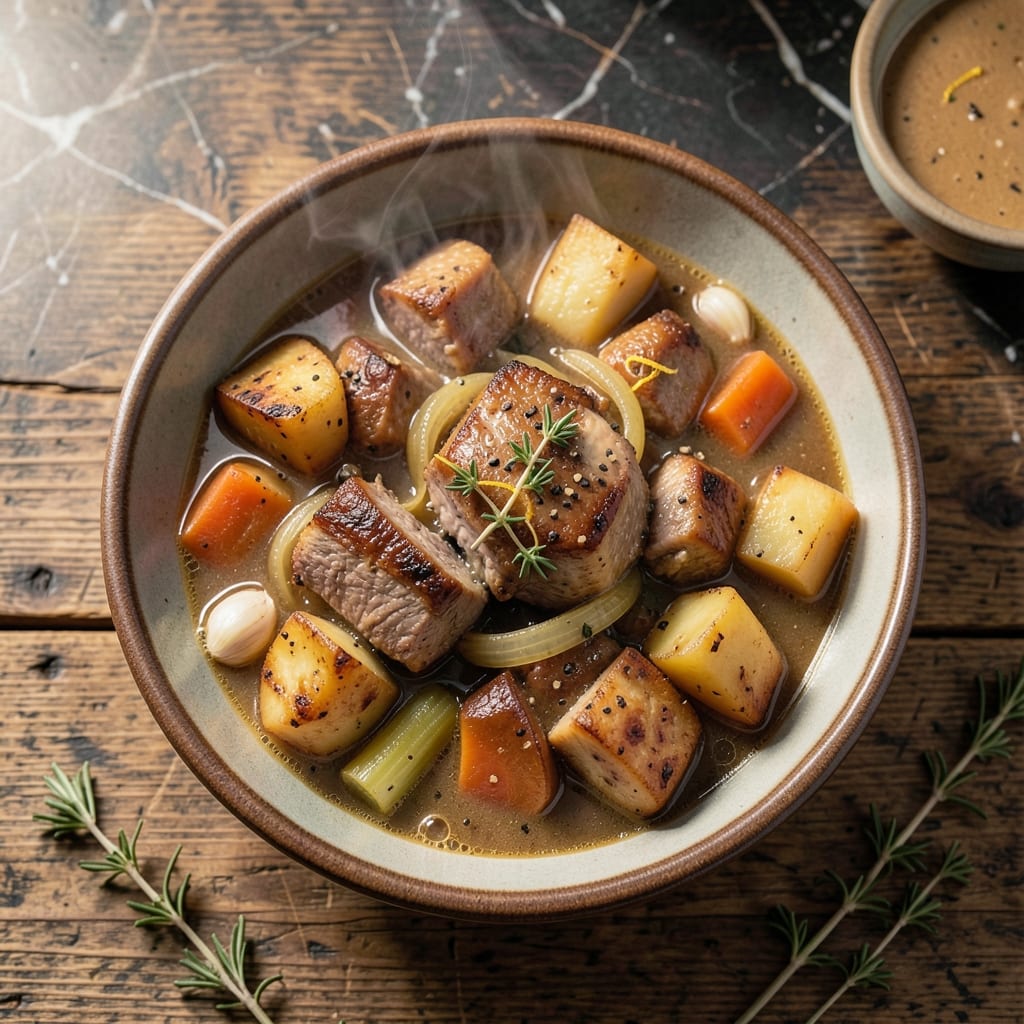
There’s nothing quite like a pot of pork stew simmering on the stove, filling your kitchen with warmth and rich aromas. This recipe transforms humble ingredients into something extraordinary through patience and simple techniques.
The slow cooking process works magic on tough cuts of pork, turning them into tender, fall-apart pieces while root vegetables absorb the deeply flavorful broth. I’ve perfected the timing and seasoning to ensure every bite delivers rich satisfaction.
You’ll end up with a hearty stew where the pork melts in your mouth, the vegetables are perfectly soft, and the broth has reduced to a velvety consistency. Each spoonful offers layers of savory depth that comfort food was made for.
Serve with crusty bread to soak up every last drop of the delicious sauce.
Ingredients for Recipe for Pork Stew
Pantry staples and a few fresh picks create this hearty, slow-simmered dish with incredible depth.
| Ingredient | Amount | Notes |
|---|---|---|
| Pork Shoulder 🐖 | 2 lb | Boneless, cut into 1.5-inch cubes |
| Yellow Onion 🧅 | 1 whole | Large, diced into 1-inch pieces |
| Garlic Cloves 🧄 | 5 cloves | Minced finely for depth |
| Carrots 🥕 | 3 whole | Peeled and cut into chunks |
| Celery Stalks 🌿 | 3 whole | Sliced into 1-inch pieces |
| Russet Potatoes 🥔 | 2 whole | Peeled and cubed large |
| Tomato Paste 🍅 | 3 tbsp | For umami richness |
| Low-Sodium Chicken Broth 🥣 | 4 cups | Homemade or quality boxed |
| Dried Thyme 🌿 | 1 tsp | Rubbed between fingers to release oils |
| Dried Rosemary 🌿 | 1 tsp | Crushed for maximum flavor |
| Bay Leaves 🍃 | 2 whole | For aromatic depth |
| Olive Oil 🫒 | 2 tbsp | For searing pork and vegetables |
| All-Purpose Flour 🌾 | ¼ cup | For thickening the stew |
| Kosher Salt 🧂 | 1 ½ tsp | Adjust to taste at end |
| Black Pepper 🌶️ | 1 tsp | Freshly ground preferred |
The pork shoulder is non-negotiable here—bone-in or boneless, just make sure it’s well-marbled. Costco or Whole Foods usually have good options, but your local butcher will hook you up with the best cut (ask for Boston butt). Root vegetables should be firm and fresh—no soft spots. For the broth, Better Than Bouillon is my go-to if I’m not using homemade.
No pork shoulder? Pork butt works identically—it’s practically the same thing. Short on time? Pre-cut stew meat saves a few minutes (just check the fat content). Swap chicken broth for vegetable broth if needed. Fresh herbs can replace dried, but use triple the amount and add them later. The tomato paste can be subbed with 1 cup crushed tomatoes—simmer it down first.
This stew tastes even better the next day. Refrigerate in an airtight container for up to 4 days, or freeze for 3 months. Reheat gently on the stove—adding a splash of water helps loosen the broth. Always remove the bay leaves before storing.
Why You’ll Love This Recipe
- Dump and Simmer: It’s basically chop, dump, and let the pork shoulder and veggies do their thing while I fold laundry.
- Deep, Rich Flavor: The garlic and pork shoulder slow-cook into this ridiculously good, savory broth that soaks into every carrot and celery bite.
- Feeds the Week: I make a big pot Sunday and we’re set for dinners and lunches—no sad leftovers here.
- Pantry Hero: Between us, pork shoulder is cheap, and the onion, carrots, and celery stretch it into a full meal without fancy extras.
Step-by-Step Instructions for Pork Stew
This method builds layers of flavor slowly, transforming simple ingredients into a hearty, comforting dish.
Step 1: Sear the Pork Shoulder for Depth
Heat the 2 tbsp olive oil in a large Dutch oven over medium-high heat until it shimmers. Pat the 2 lb pork shoulder cubes dry with paper towels, then season evenly with 1.5 tsp kosher salt and 1 tsp black pepper.
Working in batches to avoid crowding, brown the pork on all sides for 5-7 minutes until deeply caramelized. The fond (browned bits) that forms is crucial for flavor development. Transfer the seared pork to a plate and set aside.
Step 2: Build the Aromatic Base
In the same pot, add the 1 whole yellow onion, 3 whole carrots, and 3 whole celery stalks. Cook for 8-10 minutes, stirring occasionally, until the vegetables soften and begin to brown. This mirepoix foundation adds sweetness and complexity.
Stir in the 5 cloves garlic cloves and cook for 30 seconds until fragrant. Add the 3 tbsp tomato paste and cook for 2 minutes, stirring constantly, until it darkens slightly. This step intensifies the umami richness in your stew.
Step 3: Thicken and Simmer the Stew
Sprinkle the 0.25 cup all-purpose flour over the vegetables and stir to coat. Cook for 1 minute to remove the raw flour taste. Gradually pour in the 4 cups low-sodium chicken broth, whisking constantly to prevent lumps.
Return the pork to the pot along with any accumulated juices. Add the 1 tsp dried thyme, 1 tsp dried rosemary, and 2 whole bay leaves. Bring to a boil, then reduce heat to low and let it simmer covered for 1 hour.
Step 4: Add Potatoes and Finish Cooking
Add the 2 whole russet potatoes to the pot, ensuring they’re submerged in the liquid. Simmer uncovered for 30-40 minutes until the pork is fork-tender and the potatoes are easily pierced with a knife.
As the stew simmers, the liquid should thicken to a gravy-like consistency. If it’s too thin, simmer uncovered for an additional 10 minutes. If too thick, add a splash of water. Taste and adjust seasoning if needed.
Step 5: Rest and Serve
Discard the bay leaves before serving. Let the stew rest for 10 minutes off the heat to allow the flavors to meld together. The pork should be falling-apart tender, and the vegetables should be perfectly soft.
Ladle the stew into bowls and serve hot. The rich, velvety sauce should cling to every piece of pork and vegetable, delivering a satisfying bite with each spoonful.
Pro Tips For Making Recipe For Pork Stew
- Brown the Pork Well: Sear the pork shoulder in batches over medium-high heat until deeply browned on all sides—this builds a flavor base that simmering alone can’t achieve. I learned this the hard way when my first few stews tasted flat.
- Cut Evenly: Keep your pork shoulder, carrots, and celery in uniform 1-inch chunks so everything cooks at the same rate. Sounds obvious, but I used to chop carelessly and ended up with mushy veggies and undercooked meat.
- Deglaze Thoroughly: After browning, pour in a splash of liquid (broth, wine, or water) and scrape up all those browned bits stuck to the pot. Those little pieces are pure flavor gold for your stew.
- Skim the Fat: Once the stew is simmering, skim off the excess fat that rises to the top after 20-30 minutes. It’s a small step that makes the final dish richer without being greasy.
Essential Equipment for This Dish
Dutch Oven Essentials
This is the heart of your stew-making. I swear by my Le Creuset 5.5-quart Dutch oven—its heavy enameled cast iron distributes heat evenly and retains it perfectly for long simmers. A Lodge enameled version is a great budget alternative at about half the price.
Quality Knives Matter
A sharp 8-inch chef’s knife makes breaking down the pork and chopping vegetables effortless. I use a Wüsthof Classic—it’s been my reliable partner for over a decade. Dull knives slip and require more force, which is dangerous and inefficient.
Wooden Spoon for Stirring
For stirring and scraping up those precious browned bits, a wooden spoon won’t scratch your Dutch oven. I keep a 12-inch olive wood spoon dedicated to my stew-making. It’s gentle on cookware and feels great in hand.
Instant-Read Thermometer
While not strictly necessary, a ThermoWorks Thermapen takes the guesswork out of checking pork doneness. It gives accurate readings in 2-3 seconds. I aim for 195-203°F for that perfect fall-apart texture. 🌡️
Cutting Board Foundation
A large, stable cutting board gives you space to prep all your ingredients. My 18×12-inch bamboo board from Teakhaus has a juice groove that catches pork drippings. It’s also gentle on my knives.
Ladle for Serving
A 1-cup stainless steel ladle makes serving your stew clean and precise. I like the OXO Good Grips version—its comfortable handle and perfect pour spout make it my go-to for serving this dish. 💛
Nutrition Facts
Frequently Asked Questions
Can I use a different cut of pork?
Yes, pork butt works identically to shoulder. Avoid lean cuts like tenderloin, as they’ll dry out during the long simmer.
How do I thicken the stew if it’s too thin?
Simmer uncovered for an extra 10 minutes to reduce the liquid. Alternatively, mix 1 tbsp cornstarch with 1 tbsp water and stir into the stew.
Can I make this in a slow cooker?
Brown the pork first, then transfer everything to the slow cooker. Cook on low for 7-8 hours or high for 4-5 hours.
What should I serve with this stew?
Crusty bread is perfect for soaking up the sauce. For a heartier meal, pair with mashed potatoes or buttered noodles.

- Pav Bhaji Recipe Food Lab: Mumbai Street Food Magic at Home - October 6, 2026
- Peach Jelly Recipe Without Pectin: Naturally Set Sweet Spread - October 6, 2026
- Pasta Salad Recipe With Zesty Italian Dressing: Bright Herb-Kissed Medley for Picnics - October 6, 2026