
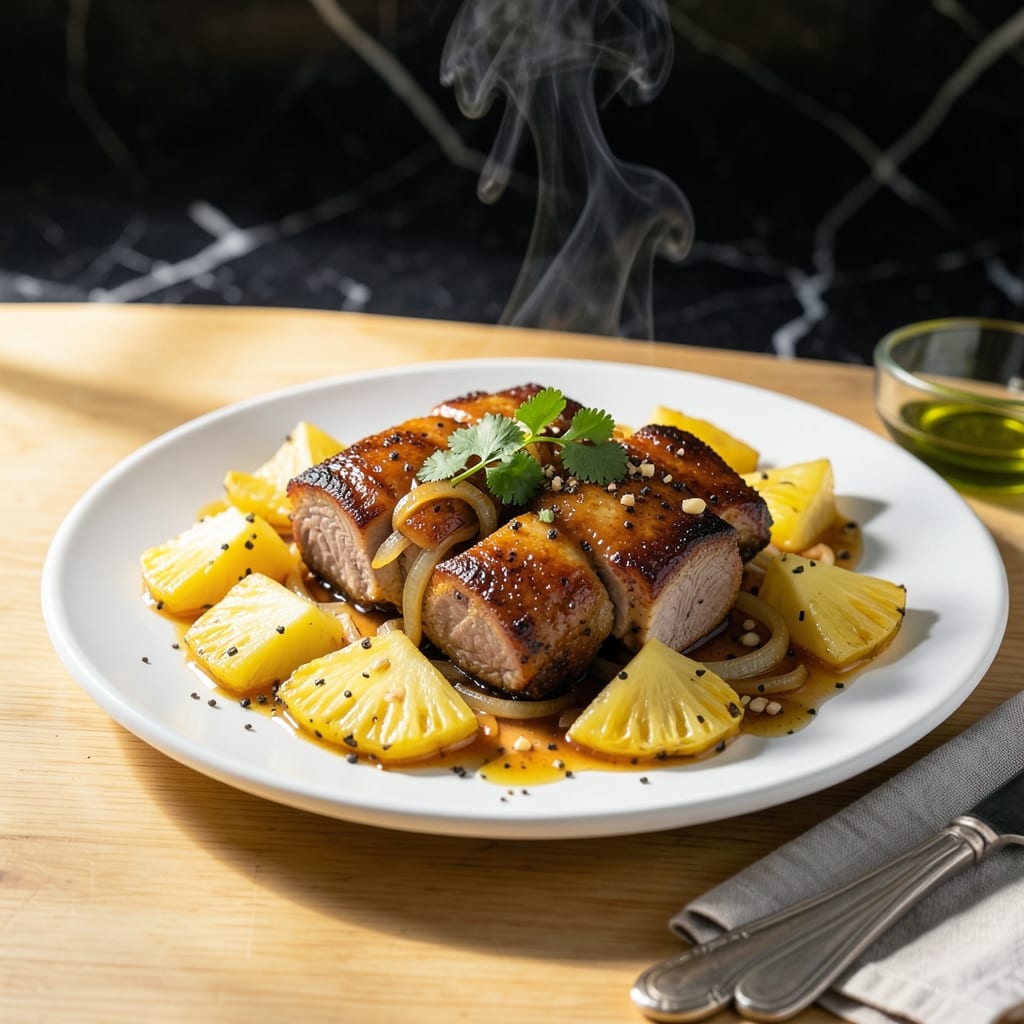
This adobo-style pork and pineapple dish brings the bold, balanced flavors of Filipino cuisine to your table. The combination of tender pork, sweet pineapple, and tangy vinegar creates a harmony that’s both comforting and complex.
I’ve refined this recipe to maintain authenticity while ensuring foolproof results. The pork is marinated in soy sauce, vinegar, and garlic, then simmered with pineapple until the meat is fall-apart tender and the sauce reduces to a glossy glaze.
What emerges is a dish where every bite delivers the perfect interplay of sweet, sour, and savory. The pineapple softens into the sauce, adding natural sweetness that balances the vinegar’s tang without overwhelming the pork’s rich flavor.
Serve this over steamed rice to soak up every last drop of the rich, flavorful sauce. The result is a meal that tastes like it came from a Filipino kitchen.
Ingredients for Pork Pineapple Recipe Filipino
Pantry staples plus fresh pork and pineapple. Bold, balanced, and deeply flavorful.
| Ingredient | Amount | Notes |
|---|---|---|
| Pork Shoulder 🥩 | 2 lb | Cut into 2-inch chunks, bone-in preferred |
| Fresh Pineapple 🍍 | 2 cups | Peeled, cored, cubed into 1-inch pieces |
| Soy Sauce 🫒 | ¾ cup | Low-sodium recommended for balance |
| White Vinegar 💧 | ½ cup | Cane vinegar or apple cider vinegar works |
| Garlic Cloves 🧄 | 8 cloves | Minced finely for even flavor distribution |
| Yellow Onion 🧅 | 1 whole | Sliced thinly into half-moons |
| Bay Leaves 🍃 | 3 pieces | Dried, removed before serving |
| Black Peppercorns 🌶️ | 1 tsp | Freshly cracked for bold flavor |
| Brown Sugar 🧂 | 2 tbsp | Light or dark, for rounding out acidity |
| Olive Oil 🫒 | 2 tbsp | For searing pork chunks |
| Water 💧 | 1 cup | For adjusting sauce consistency |
| Salt 🧂 | 1 tsp | Kosher salt, added to taste at the end |
The pork is non-negotiable here. Pork shoulder (or butt) is ideal for that fall-apart texture—leaner cuts won’t hold up to the long simmer. I grab mine from Costco for big batches or Whole Foods for smaller portions. Look for good marbling; that fat renders down into the sauce. The pineapple? Fresh is best (those pre-cut containers work in a pinch), but canned pineapple chunks in juice are a solid backup if you’re short on time.
No soy sauce? Tamari or coconut aminos work, but the flavor shifts slightly. Out of white vinegar? Rice vinegar at the same ratio keeps the tang without overpowering. Garlic is key—don’t skimp, but jarred minced garlic works if fresh isn’t available (just use a little less). The brown sugar can be swapped for coconut sugar if you want a deeper caramel note. Skip the bay leaves if you must, but they add that subtle depth.
This tastes even better the next day—4-5 days in the fridge, 3 months frozen. The sauce thickens as it cools, so thin with water when reheating. I always make extra for lunches (it freezes beautifully). Store pineapple in the fridge if not using immediately, but it’s best fresh.
Why You’ll Love This Recipe
- One Pan Wonder: I just toss the pork shoulder, pineapple chunks, soy sauce, vinegar, and garlic in a pan and let it simmer—minimal cleanup, maximum flavor.
- Sweet-Savory Magic: The fresh pineapple caramelizes with the soy and vinegar, creating that tangy-sweet glaze that coats every bite of tender pork.
- Feeds a Crowd: Honestly, this is my go-to for family gatherings—doubles easily and tastes even better the next day.
- Budget Hero: Pork shoulder is so affordable, and a little goes a long way with the bold garlic and pineapple flavors.
Step-by-Step Instructions for Pork Pineapple Filipino
Here’s the method. Straightforward, tested, works every time.
Step 1: Sear the Pork Shoulder to Lock in Flavor
Heat the 2 tbsp olive oil in a large pot over medium-high heat. Add the 2 lb pork shoulder chunks and sear for 4-5 minutes per side until deep golden brown on all sides. This creates a flavorful crust and prevents the meat from stewing.
Work in batches if necessary to avoid crowding the pot—crowding steams the pork instead of searing it. Transfer the browned pork to a plate and set aside. You’ll notice rich, caramelized bits stuck to the bottom of the pot; these will add depth to your sauce later.
Step 2: Build the Aromatic Base with Pineapple and Spices
In the same pot, add the 1 whole yellow onion, 8 cloves garlic cloves, and 2 cups fresh pineapple. Sauté for 3-4 minutes until the onion softens and the pineapple begins to caramelize. The pineapple will release its natural juices, which helps deglaze the pot.
Stir in the 0.75 cup soy sauce, 0.5 cup white vinegar, 2 tbsp brown sugar, 3 pieces bay leaves, and 1 tsp black peppercorns. Simmer for 2 minutes to meld the flavors together. The mixture should be fragrant and slightly syrupy.
Step 3: Braise the Pork Until Fork-Tender
Return the seared pork to the pot along with any accumulated juices. Pour in the 1 cup water, ensuring the liquid covers about three-quarters of the pork. Bring to a boil, then reduce the heat to low, cover, and simmer for 1.5-2 hours.
You’ll know it’s done when the pork is fork-tender and easily pulls apart. Check occasionally and add a splash of water if the sauce reduces too much. The pork should be submerged in a rich, tangy-sweet sauce that coats the back of a spoon.
Step 4: Adjust Seasoning and Finish the Dish
Once the pork is tender, taste the sauce and adjust the seasoning with the 1 tsp salt if needed. The balance should be a harmonious blend of salty, sweet, and tangy, with the pineapple adding a bright, fruity note.
Remove the 3 pieces bay leaves and discard. If the sauce is too thin, simmer uncovered for 5-10 minutes to thicken it slightly. The final dish should have a glossy, slightly reduced sauce that clings to the pork and pineapple.
Serve hot over steamed rice, ensuring each portion has a generous amount of sauce and pineapple chunks.
Pro Tips For Making Pork Pineapple Recipe Filipino
- Marinate Overnight: Let the pork shoulder soak in the soy-vinegar-garlic mix for at least 4 hours—overnight if you can. I learned this the hard way: the flavors just don’t penetrate the same if you rush it.
- Use Fresh Pineapple: Skip the canned stuff—fresh pineapple adds the right balance of tang and sweetness, and its enzymes help tenderize the pork. Sounds weird, but it works.
- Simmer, Don’t Boil: Keep the heat at a gentle simmer once the pineapple goes in, or the vinegar will turn bitter and the pork will toughen up. My grandmother swore by this, and she was right.
- Thicken the Sauce: After cooking, reduce the sauce uncovered for 5-7 minutes to thicken it into a glossy glaze. I skip this when I’m lazy, but the dish is noticeably better when I don’t.
Common Mistakes When Making Great pork pineapple recipe filipino
Overcrowding the Pot
When searing the 2 lb pork shoulder, resist the urge to dump it all in at once. Crowding the pot steams the meat instead of browning it. I sear in batches, giving each piece 4-5 minutes per side for that perfect golden crust. Trust me, this makes a huge difference in flavor development. 🔥
Skipping the Sear
Don’t rush straight to braising without searing first. That caramelized crust adds depth to your sauce. Even if you’re short on time, a quick 2-minute sear per side on medium-high heat creates those rich, flavorful bits that dissolve into the sauce later.
Wrong Vinegar Choice
Using balsamic vinegar or red wine vinegar instead of white vinegar can overpower the dish. The recipe needs that clean, sharp tang that white vinegar provides. If you must substitute, cane vinegar is your best alternative.
Pineapple Timing
Adding pineapple too early can make it mushy. I add the 2 cups fresh pineapple when building the aromatic base, not during the long braise. This preserves its texture while allowing its sweetness to infuse the sauce. The 3-4 minute sauté is perfect for caramelization.
Sauce Consistency
If your sauce is too thin, don’t cover the pot during the final simmer. Uncover and let it reduce for 5-10 minutes over medium heat. Conversely, if it’s too thick, add splashes of water. The ideal consistency should coat the back of a spoon.
Remember, the sauce thickens as it cools, so it should be slightly thinner than your final desired consistency when hot. 💡
Nutrition Facts
Frequently Asked Questions
Can I use canned pineapple instead of fresh?
Yes! Use 2 cups canned pineapple chunks in juice (drained). The texture will be softer but the flavor works well. Avoid heavy syrup versions as they’re too sweet.
What cut of pork works best if shoulder isn’t available?
Pork belly is the best alternative for rich flavor. For leaner options, pork ribs work but may need 30 minutes extra cooking. Avoid tenderloin—it dries out.
How do I store leftovers?
Keep in an airtight container in the fridge for 4-5 days or freeze for 3 months. Reheat gently on the stove with a splash of water to thin the sauce.
Why is my sauce too sour?
Balance it with 1-2 tbsp brown sugar or a pinch of salt. The vinegar mellows as it cooks, so taste before adjusting at the end.

- Potato Chip Cookie Recipe With Pecans: Buttery Crunch Meets Nutty Richness - October 30, 2026
- Potato Patty Recipe No Egg: Crispy Edges Without the Binder - October 30, 2026
- Paula Deen’s Potato Chip Cookies Recipe: Salty-Sweet Crunch in Every Bite - October 30, 2026