
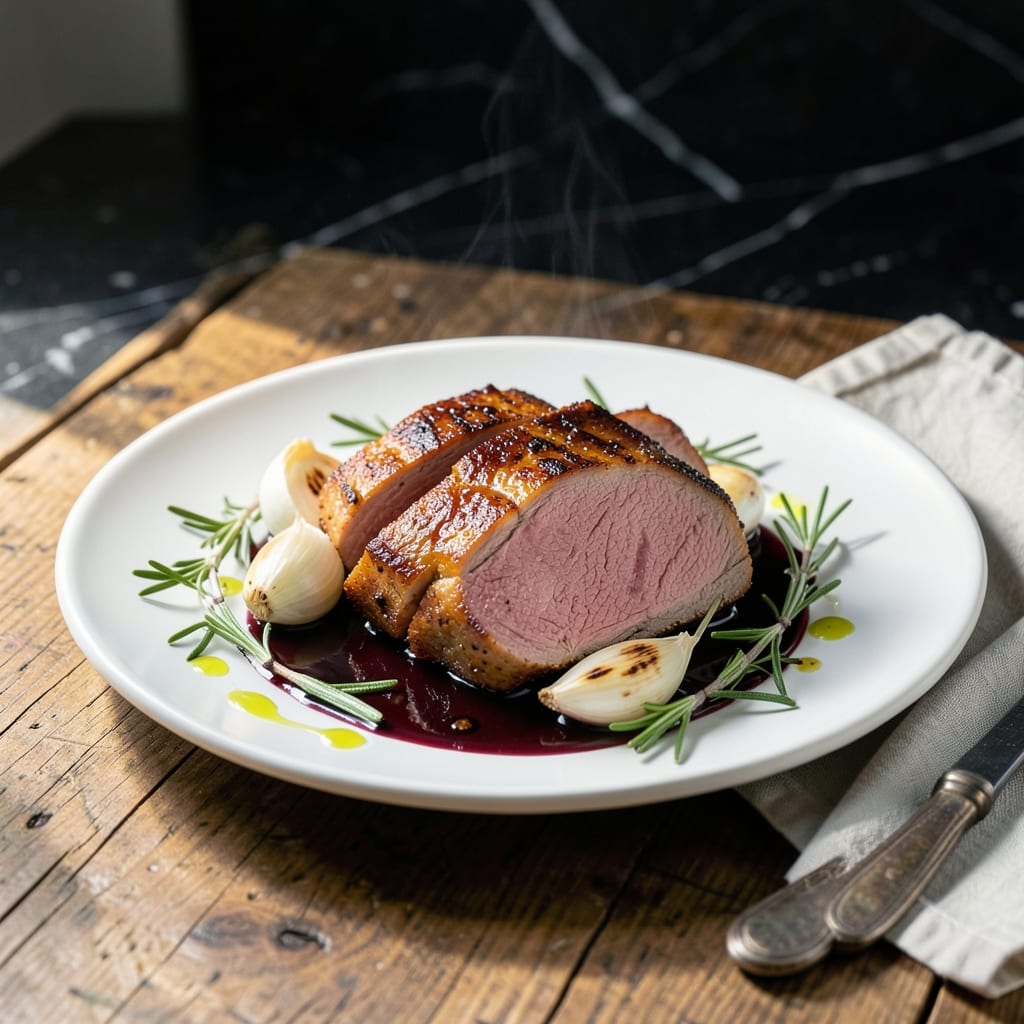
This pork loin recipe transforms an ordinary cut into a restaurant-worthy centerpiece with minimal effort. The combination of balsamic vinegar and brown sugar creates a glaze that caramelizes beautifully, locking in juices while adding depth.
I developed this method after years of experimenting with different marinades and glazes. The key is searing the pork first to build a flavorful crust, then basting it with the sweet-tangy mixture as it roasts to perfectly golden perfection.
What emerges is tender, succulent pork with a sticky, glossy coating that’s balanced by the vinegar’s acidity. The aroma alone will have everyone gathering around the table before it’s even done resting.
Serve sliced with the pan juices spooned over the top. This dish proves that impressive results don’t require complicated techniques.
Ingredients for Pork Loin Recipe with Balsamic Vinegar and Brown Sugar
Twelve ingredients elevate this centerpiece with bold, balanced flavors and minimal effort.
| Ingredient | Amount | Notes |
|---|---|---|
| Pork Loin 🥩 | 2 lb | Boneless, trimmed of excess fat |
| Balsamic Vinegar 🍷 | ½ cup | Aged for best depth of flavor |
| Light Brown Sugar 🍚 | ½ cup | Packed firmly into measuring cup |
| Olive Oil 🫒 | 2 tbsp | Divided for searing and basting |
| Garlic Cloves 🧄 | 4 cloves | Minced finely for even distribution |
| Fresh Rosemary 🌿 | 2 tbsp | Chopped, stems discarded |
| Kosher Salt 🧂 | 1 ½ tsp | Diamond Crystal preferred for consistency |
| Freshly Ground Black Pepper 🌶️ | 1 tsp | Coarse grind for texture |
| Dijon Mustard 🟡 | 1 tbsp | Smooth variety for glaze cohesion |
| Chicken Stock 🍲 | ½ cup | Low-sodium to control seasoning |
| Unsalted Butter 🧈 | 2 tbsp | For finishing the glaze |
| Shallot 🧅 | 1 whole | Finely diced for subtle sweetness |
The pork loin quality is paramount. Look for a well-marbled, boneless cut from a reputable butcher or Whole Foods—avoid pre-brined versions as they’ll interfere with the glaze absorption. For the balsamic, aged varieties from Modena (like Colavita or Giusti) provide the necessary complexity. Fresh rosemary should be vibrant green with no woody stems (the good stuff, not the pre-packaged kind).
Substitutions must preserve the sweet-tangy balance. Apple cider vinegar plus 1 tsp honey can replace balsamic in a pinch, though depth will suffer. Dark brown sugar works but adds molasses notes—reduce by 1 tbsp to compensate. No fresh rosemary? Dried at one-third the amount (or whatever herbs you’ve got). For a deeper crust, swap Dijon for whole-grain mustard (worth the extra minute).
The glaze can be made 2 days ahead and refrigerated. Roasted pork keeps 4-5 days sliced in airtight containers, or freeze for 3 months. Reheat gently in a skillet with a splash of stock to revive the glaze’s gloss—don’t microwave (trust me on this one).
Why You’ll Love This Recipe
- I’ll be real: it tastes even better the next day in sandwiches or salads, and it reheats like a dream.
- 5-Minute Prep: I just mix the balsamic, brown sugar, and olive oil, slather it on the pork loin, and pop it in the oven—no fancy techniques.
- Sweet-Tangy Magic: The brown sugar caramelizes with the balsamic vinegar to create this sticky, finger-licking glaze that’s honestly addictive.
- Weeknight Hero: Here’s what sold me—it’s fancy enough for Sunday dinner but unfussy enough for a Tuesday night with zero stress.
Step-by-Step Instructions for Pork Loin With Balsamic Vinegar and Brown Sugar
This method ensures perfectly caramelized pork with a glossy, rich glaze every time.
Step 1: Season and Sear the Pork Loin
Pat the 2 lb Pork Loin dry with paper towels, then season all over with 1.5 tsp Kosher Salt and 1 tsp Freshly Ground Black Pepper. Heat 1 tbsp Olive Oil in a large oven-safe skillet over medium-high heat until shimmering.
Sear the pork loin on all sides for 2-3 minutes per side until deep golden brown. This creates a flavorful crust and locks in juices. Transfer the pork to a plate and reduce heat to medium.
Step 2: Create the Balsamic Glaze Base
In the same skillet, add the remaining 1 tbsp Olive Oil and sauté the 1 whole Shallot (finely diced) for 2 minutes until translucent. Add the 4 cloves Garlic Cloves (minced) and 2 tbsp Fresh Rosemary (chopped), cooking for 30 seconds until fragrant.
Pour in the 0.5 cup Balsamic Vinegar and 0.5 cup Chicken Stock, scraping up any browned bits from the bottom of the pan. This deglazing step builds deep flavor into your glaze.
Step 3: Add Sweetness and Build the Glaze
Stir in the 0.5 cup Light Brown Sugar and 1 tbsp Dijon Mustard, mixing until the sugar dissolves completely. Return the pork loin to the skillet, spooning the glaze over the top to coat evenly.
Bring the mixture to a gentle simmer, then reduce heat to medium-low. The glaze should thicken slightly and become syrupy as it coats the pork.
Step 4: Finish and Rest the Pork
Swirl in the 2 tbsp Unsalted Butter until melted and fully incorporated into the glaze. Continue basting the pork with the glaze for 3-4 minutes until the internal temperature reaches 145°F on an instant-read thermometer.
Transfer the pork to a cutting board, tent loosely with foil, and let rest for 10 minutes. This allows the juices to redistribute for maximum tenderness.
Step 5: Slice and Serve
Slice the pork loin against the grain into ½-inch thick pieces. Spoon the remaining glaze from the skillet over the top. The pork should be juicy with a deep mahogany crust, and the glaze should be thick enough to cling to each slice.
Serve immediately while the glaze is still warm and glossy. The combination of sweet, tangy, and savory flavors creates a sophisticated yet approachable dish.
Pro Tips For Making Pork Loin Recipe With Balsamic Vinegar And Brown Sugar
- Sear First, Baste Later: Brown the pork loin in hot olive oil until golden, then add the balsamic and brown sugar glaze in the last 10 minutes of cooking—I learned this the hard way after burning sugar in the pan too early.
- Slice the Garlic Thin: Crush the garlic cloves just enough to release the oils, but don’t mince them; thin slices infuse the balsamic glaze better and won’t burn as easily.
- Check the Temp Early: Pull the pork at 140°F and let it rest to 145°F—overcooking even by a few degrees turns it dry, and I’ve ruined too many loins by guessing.
- Reduce the Glaze: After removing the pork, simmer the leftover balsamic and brown sugar mixture for 2-3 minutes until slightly thickened—it’ll coat the meat instead of running off the plate.
Regional Styles of This Recipe
Italian Inspiration
In Northern Italy, I’ve seen pork loin prepared with a balsamic reduction from Modena, often with rosemary sprigs and garlic. The vinegar is reduced by half first, then combined with brown sugar for a thicker consistency. They serve it with polenta to soak up the rich sauce. 🌿
Southern US Style
Down South, we add a touch of heat. I mix 1 tsp cayenne pepper into the glaze and serve with collard greens and cornbread. The sweetness of the sugar balances the spice perfectly. The pork is often cooked low and slow in a smoker for added depth.
French Technique
French chefs use Dijon mustard more liberally—about 2 tbsp—and finish with a splash of Cognac or Armagnac for complexity. They also prefer a butter-basted finish, adding 1 extra tbsp at the end for a silkier texture.
Asian Fusion Twist
For an Eastern influence, I substitute 1 tbsp soy sauce for some chicken stock and add 1 tsp grated ginger. The glaze takes on an umami depth that pairs beautifully with steamed jasmine rice. Serve with quick-pickled cucumbers.
Caribbean Flare
In the Caribbean, they incorporate tropical flavors. I add ½ cup pineapple juice to the glaze and sprinkle with toasted coconut before serving. The acidity of the pineapple complements the balsamic wonderfully. 💛
German Tradition
German cooks often use apple cider vinegar instead of balsamic and add 1 tsp caraway seeds to the glaze. They serve it with red cabbage and potato dumplings for a hearty meal.
Nutrition Facts
Frequently Asked Questions
What should I do if the glaze burns?
Lower the heat immediately and add 2 tbsp chicken stock to loosen it. Stir well to incorporate any browned bits. If it’s too bitter, start fresh with a new batch on lower heat.
Can I make the glaze thicker?
Simmer it uncovered for 3-4 minutes after removing the pork. For extra shine, stir in 1 tsp cornstarch mixed with 1 tbsp water at the end.
Is there a substitute for balsamic vinegar?
Use apple cider vinegar plus 1 tsp honey for a similar sweet-tangy balance. Red wine vinegar works too but may be sharper. Adjust sugar to taste.
How do I prevent dry pork?
Don’t overcook—pull it at 145°F internal temp. Resting for 10 minutes lets juices redistribute. Brining for 2 hours beforehand adds extra moisture.

- Potato Chip Cookie Recipe With Pecans: Buttery Crunch Meets Nutty Richness - October 30, 2026
- Potato Patty Recipe No Egg: Crispy Edges Without the Binder - October 30, 2026
- Paula Deen’s Potato Chip Cookies Recipe: Salty-Sweet Crunch in Every Bite - October 30, 2026