
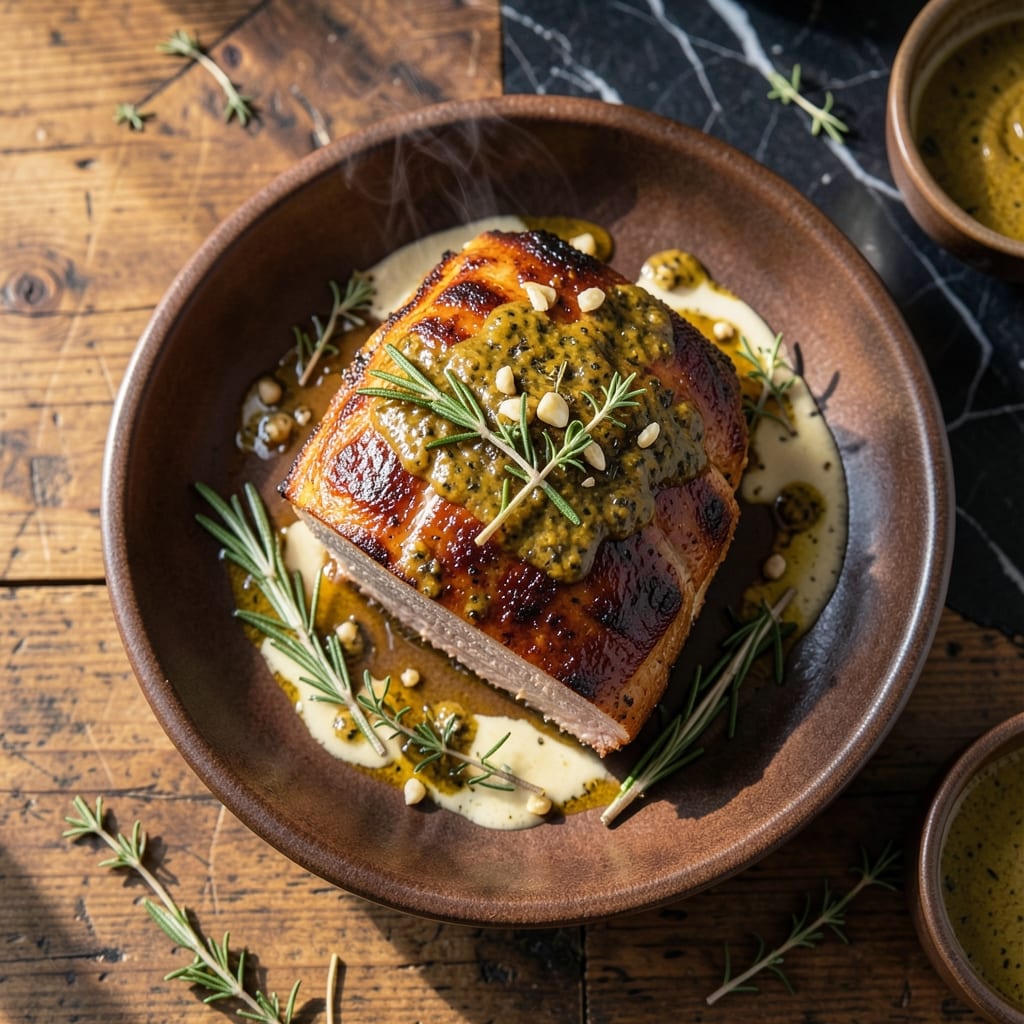
This pork loin roast delivers herb-crusted perfection with a golden brown finish every time. I developed this method after years of testing to achieve tender meat with a flavorful crust.
The mustard base creates a sticky surface for herbs to cling to, forming a crispy, aromatic coating as it roasts. A simple technique ensures juicy results without complicated steps.
You’ll get a centerpiece worthy of Sunday dinner, with each slice revealing moist pork under that fragrant crust. The oven does most of the work.
Pair with roasted vegetables or mashed potatoes for a complete meal. Here’s how to make it right.
Ingredients for Pork Loin Roast Recipe Mustard
Herb-crusted pork loin with mustard base requires these carefully selected ingredients for optimal flavor and texture.
| Ingredient | Amount | Notes |
|---|---|---|
| Pork Loin 🥩 | 2 lb | Boneless, trimmed of fat |
| Dijon Mustard 🟡 | ¼ cup | Smooth, not grainy |
| Fresh Rosemary 🌿 | 2 tbsp | Finely chopped |
| Fresh Thyme 🍃 | 2 tbsp | Leaves stripped from stems |
| Garlic Cloves 🧄 | 4 cloves | Minced finely |
| Olive Oil 🫒 | 2 tbsp | Extra-virgin preferred |
| Kosher Salt 🧂 | 1 ½ tsp | Diamond Crystal brand recommended |
| Black Pepper 🌶️ | 1 tsp | Freshly ground |
| Breadcrumbs 🍞 | ½ cup | Panko for extra crispiness |
| Dry White Wine 🍷 | ½ cup | For deglazing pan |
| Chicken Stock 🥣 | ½ cup | Low-sodium preferred |
| Unsalted Butter 🧈 | 2 tbsp | For basting |
The pork loin is the foundation. Opt for boneless, well-trimmed cuts from a reputable butcher or Whole Foods for consistent quality. Look for even marbling and a pale pink color—avoid grayish tones. The mustard should be Dijon or whole-grain for depth; Grey Poupon offers reliable quality. Fresh herbs are non-negotiable for the crust—organic if possible.
Need a mustard alternative? Whole-grain mustard at equal volume works, but avoid yellow mustard—it lacks complexity. For herbs, dried at one-third the amount is acceptable, though fresh delivers superior aroma. No white wine? Substitute apple cider vinegar with a pinch of sugar. Chicken stock can be replaced with vegetable stock for a lighter profile.
Store the pork loin in its original packaging on the coldest shelf for up to 4 days. Fresh herbs keep 1 week wrapped in damp paper towels. The herb crust mixture can be prepared 1 day ahead and refrigerated. Always bring meat to room temperature before roasting for even cooking.
Why You’ll Love This Recipe
- Five-Minute Prep: I just rub the loin with Dijon, herbs, and garlic—no marinating, no fuss.
- That Crust Though: The mustard caramelizes into this deep, tangy-sweet layer that cracks when you slice it.
- Sunday and Wednesday: Honestly, it feels fancy enough for company yet unfussy enough for a regular weeknight.
- Leftovers for Days: One roast gives me sandwiches, tacos, and stir-fry starter for the whole week.
Step-by-Step Instructions for Herb-Crusted Pork Loin Roast with Mustard
This professional technique ensures a perfectly cooked roast with a crisp, golden herb crust.
Step 1: Prepare the Herb and Mustard Crust
In a small bowl, combine the 0.25 cup Dijon Mustard, 2 tbsp Fresh Rosemary, 2 tbsp Fresh Thyme, minced 4 cloves Garlic Cloves, 2 tbsp Olive Oil, 1.5 tsp Kosher Salt, and 1 tsp Black Pepper. Stir until the mixture forms a thick, aromatic paste with visible herb flecks throughout.
Place the 2 lb Pork Loin on a clean work surface and pat it completely dry with paper towels. This step is critical—any moisture prevents the crust from adhering properly. Rub the mustard-herb mixture evenly over all surfaces, pressing firmly to create a uniform coating.
Step 2: Apply Breadcrumb Coating and Sear
Press the 0.5 cup Breadcrumbs evenly over the mustard-coated pork loin, ensuring complete coverage. The breadcrumbs should cling to the wet surface, creating a textured exterior. Use your hands to gently pat and press for maximum adhesion.
Heat a large oven-safe skillet over medium-high heat. Add the 2 tbsp Unsalted Butter and let it melt until it begins to foam but not brown. Carefully place the crusted pork loin in the skillet and sear for 2-3 minutes per side until the breadcrumbs turn golden brown and crisp. Watch closely to prevent burning.
Step 3: Roast to Perfection
Preheat your oven to 375°F. Transfer the seared pork loin (in the skillet) to the oven. Roast uncovered for 25-30 minutes, or until the internal temperature reaches 145°F when measured in the thickest part.
The crust should develop a deep, even golden brown color. If it begins browning too quickly, tent loosely with aluminum foil. Avoid piercing the meat during cooking to retain precious juices.
Step 4: Rest and Make Pan Sauce
Transfer the roast to a cutting board and tent with foil. Let it rest for 10-15 minutes—this allows the juices to redistribute for maximum moisture. During this time, the internal temperature will rise to 150-155°F, achieving perfect doneness.
Place the skillet on the stovetop over medium heat. Add the 0.5 cup Dry White Wine and scrape up any browned bits from the bottom. Simmer for 2 minutes, then add the 0.5 cup Chicken Stock. Reduce by half to create a light, flavorful pan sauce. Strain before serving if desired.
Step 5: Slice and Serve
Slice the rested pork loin into ½-inch thick pieces using a sharp knife. Arrange on a warm platter and drizzle with the pan sauce. Each slice should reveal a moist interior encased in the crisp, herb-flecked crust.
Serve immediately while the crust remains at its peak crispness. The combination of tender pork and aromatic herbs makes this dish a standout centerpiece for any meal.
Pro Tips For Making Pork Loin Roast Recipe Mustard
- Rest the Roast: Pull the pork loin off the heat at 140°F and let it rest under foil for 10-15 minutes—it’ll climb to 145°F while staying juicy. I learned this the hard way after carving into a roast too soon and watching the juices flood the cutting board.
- Score the Fat: Cut shallow slits into the fat cap before rubbing with mustard and herbs so the flavors penetrate deeper. Sounds fussy, but it actually changes the outcome, especially with pork loin’s thick fat layer.
- Use Room-Temp Meat: Take the pork out of the fridge 30-45 minutes before cooking, or the center stays cold while the outside overcooks. My grandmother swore by this, and she was right: even roasting starts with even temperature.
- Double the Dijon: Mix extra Dijon into the pan juices after roasting for a quick, tangy sauce—no extra effort, just a richer finish. I was skeptical until I tried it, but now it’s non-negotiable for this dish.
Dietary Considerations for This Recipe
Gluten-Free Adaptation
For a gluten-free version, replace the 0.5 cup Breadcrumbs with an equal amount of gluten-free panko or crushed cornflakes. I’ve tested this with Ian’s gluten-free panko from my local market—it browns beautifully and holds the crust together just as well. 💪
Dairy-Free Option
Swap the 2 tbsp Unsalted Butter for olive oil when searing the pork loin. The crust will still crisp up nicely, though the flavor will be slightly different. Use the same 2 tbsp Olive Oil called for in the crust mixture to keep it cohesive.
Low-Sodium Adjustments
Reduce the 1.5 tsp Kosher Salt to ½ tsp and use low-sodium chicken stock for the pan sauce. I also recommend skipping any added salt at the table. The mustard and herbs still provide plenty of flavor without the extra sodium. 🌿
Keto-Friendly Version
Omit the breadcrumbs entirely and double the amount of herbs in the crust mixture. Add ¼ cup grated Parmesan cheese to help bind the coating. The pork itself is naturally keto-friendly, and this adjustment keeps the carb count minimal.
Allergy Considerations
This recipe is naturally free of nuts, eggs, and soy, making it safe for many common allergies. However, always check your Dijon mustard label—some brands contain traces of allergens. I prefer Maille Dijon for its clean ingredient list.
Make-Ahead for Dietary Needs
The herb crust mixture can be prepared 1 day ahead and stored in the fridge. If adapting for gluten-free or keto, assemble the entire crusted loin and refrigerate for up to 12 hours before cooking. This makes weeknight prep easier for special diets.
Nutrition Facts
Frequently Asked Questions
What’s the best way to keep the crust from falling off?
Pat the pork completely dry before applying the mustard mixture. Press the breadcrumbs firmly into the mustard layer to ensure they adhere well.
Can I use a different type of mustard?
Yes, whole-grain mustard works well for extra texture. Avoid yellow mustard—it’s too mild and lacks the depth of flavor needed for the crust.
How do I know when it’s done without a meat thermometer?
Press the thickest part with tongs—it should feel firm but still slightly springy. For safety, always aim for 145°F internally.
Can I make this ahead of time?
Prepare the crust mixture 1 day ahead and refrigerate. Assemble and refrigerate the crusted loin for up to 12 hours before cooking.

- Potato Chip Cookie Recipe With Pecans: Buttery Crunch Meets Nutty Richness - October 30, 2026
- Potato Patty Recipe No Egg: Crispy Edges Without the Binder - October 30, 2026
- Paula Deen’s Potato Chip Cookies Recipe: Salty-Sweet Crunch in Every Bite - October 30, 2026