
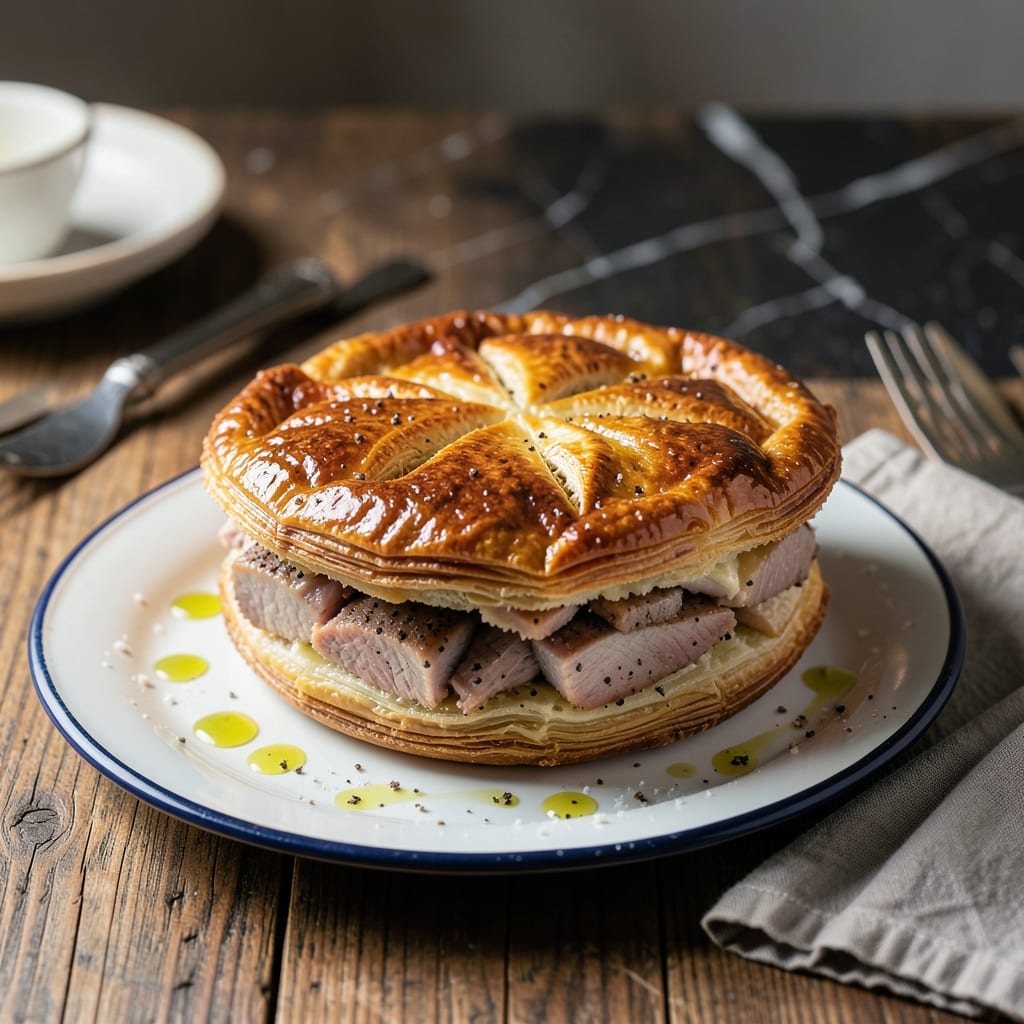
There’s something undeniably satisfying about a well-made British pork pie, with its golden crust and rich, seasoned filling. This recipe captures the traditional essence the Hairy Bikers would approve of.
The key lies in the hot water crust pastry, which creates a sturdy yet tender shell that holds the moist pork filling perfectly. I’ve refined this method to ensure it works for home cooks without specialty equipment.
You’ll end up with savory hand pies that are hearty, flavorful, and true to their British roots. The filling stays juicy while the crust bakes to a perfect crisp finish.
Perfect for picnics, lunches, or a taste of Britain at home. Here’s how to make them right.
Ingredients for Pork Pie Recipe Hairy Bikers
Traditional British ingredients for authentic savory hand pies with golden crust. Nothing overlooked here.
| Ingredient | Amount | Notes |
|---|---|---|
| Pork Shoulder 🥩 | 1 ½ lb | Diced, with some fat for moisture |
| All-Purpose Flour 🌾 | 3 cups | Plus extra for dusting |
| Lard 🧈 | ½ cup | For authentic hot water crust |
| Water 💧 | ¾ cup | For pastry dough |
| Salt 🧂 | 2 tsp | Divided for dough and filling |
| Ground Black Pepper 🌶️ | 1 tsp | Freshly cracked preferred |
| Dried Sage 🌿 | 1 tsp | Traditional British seasoning |
| Dried Thyme 🌿 | 1 tsp | For depth of flavor |
| Nutmeg 🌰 | ¼ tsp | Freshly grated for warmth |
| Onion 🧅 | 1 whole | Finely chopped for filling |
| Chicken Stock 🍲 | ½ cup | For moist filling |
| Egg 🥚 | 1 whole | For egg wash finish |
| Milk 🥛 | 2 tbsp | For pastry browning |
The lard is non-negotiable for authentic hot water crust—look for leaf lard at butcher shops or specialty stores like Whole Foods. Pork shoulder with good marbling ensures the filling stays juicy. I source mine from local farms when possible, but supermarket pork works fine for weeknight cooking. Sage and thyme are the classic British herbs here—fresh if you’ve got them, but dried holds up well.
No lard? Vegetable shortening works in a pinch (though it changes the texture). Short on pork? Pork belly or Boston butt both make excellent substitutes. The stock can be swapped for water, but stock adds depth. For a gluten-free version, a 1:1 GF flour blend works, though the crust will be less sturdy. Don’t skip the egg wash—it’s what gives that golden finish.
Hot water crust is best made fresh, but you can prep the dough 1 day ahead. Store uncooked pies in the fridge for 24 hours or freeze for 1 month. Baked pies keep 3-4 days refrigerated and reheat beautifully in a warm oven.
Why You’ll Love This Recipe
- Unfussy Dough: The lard and flour come together so smoothly I can almost mix it with my eyes closed.
- Rich Pork Center: That slow-cooked pork shoulder stays juicy, packed with savory depth in every bite.
- Feeds a Crowd: I made two pies for Sunday lunch and still had leftovers for Monday’s packed lunch.
- Budget Winner: Pork shoulder and basic pantry staples mean I spend less but eat like royalty.
Step-by-Step Instructions for Traditional British Pork Pies
Master the classic technique for authentic hot water crust and richly seasoned filling.
Step 1: Prepare the Hot Water Crust
In a saucepan, melt the 0.5 cup lard with the 0.75 cup water over medium heat until just simmering. I recommend using a thermometer to ensure the mixture reaches 180°F—this temperature is critical for the proper texture of hot water crust.
Meanwhile, combine the 3 cups all-purpose flour with 1 tsp salt in a large bowl. Make a well in the center and pour in the hot lard-water mixture. Using a wooden spoon, stir quickly until a shaggy dough forms. The steam from the hot liquid will make the dough slightly tacky but manageable.
Step 2: Form the Pie Cases
Generously dust your work surface with extra all-purpose flour. Turn out the hot water crust dough and knead briefly until smooth. This dough is more forgiving than traditional pastry, but work quickly while it’s still warm.
Divide the dough into 4 equal portions for individual pies. Roll each portion into a ball, then flatten into a disc. Press each disc into greased pie molds or ramekins, ensuring the pastry extends slightly above the rim. This creates a sturdy case for the filling and a proper seal for the lid.
Step 3: Make the Seasoned Pork Filling
In a bowl, combine the 1.5 lb pork shoulder (diced), 1 whole onion (finely chopped), 1 tsp salt, 1 tsp ground black pepper, 1 tsp dried sage, 1 tsp dried thyme, and 0.25 tsp nutmeg. Mix thoroughly to distribute the seasonings evenly.
Add the 0.5 cup chicken stock to the pork mixture and stir to combine. The stock ensures the filling stays moist during baking. Divide this mixture equally among the pastry-lined molds, pressing down gently to eliminate air pockets.
Step 4: Seal and Finish the Pies
Roll out the remaining dough to create lids for each pie. Place a lid over each filled case and press the edges together firmly to seal. Trim any excess dough with a sharp knife. Use your thumb to create a decorative crimp around the edge—this is traditional for pork pies.
Cut a small slit in the center of each lid to allow steam to escape during baking. Brush each pie with an egg wash made from the 1 whole egg and 2 tbsp milk. This gives the finished pies their characteristic golden-brown sheen.
Step 5: Bake to Golden Perfection
Preheat your oven to 375°F. Place the pies on a baking sheet and bake for 45-50 minutes, or until the pastry is deep golden brown and the filling is heated through. The hot water crust should be crisp and sturdy enough to hold its shape.
Remove from the oven and let the pies cool in their molds for 10 minutes before transferring to a wire rack. Allow them to cool completely before serving—the filling will firm up as it cools, making the pies easier to handle and enjoy.
Pro Tips For Making Pork Pie Recipe Hairy Bikers
- Chill the Lard: I learned this the hard way—grate cold lard directly into the flour for the hot water crust, it’ll stay firm longer and make the pastry easier to handle.
- Dice Pork Small: After my first attempt with chunky pork turned out dry, I now cut the shoulder into 1cm cubes so every bite stays juicy in the jelly.
- Seal the Edges: Press the pastry lid and base together firmly with your thumb—sounds obvious, but I skipped this once and the filling leaked everywhere.
- Use Stock for Jelly: Skip plain water for the jelly; simmer pork bones or use good stock instead, it sets firmer and tastes far richer.
Dietary Considerations for These Flavors
Gluten-Free Adaptation
For a gluten-free version, swap the all-purpose flour for a 1:1 gluten-free baking blend. I’ve had success with King Arthur’s Measure for Measure. The crust will be slightly less sturdy but still delicious and flaky. Add 1 tsp xanthan gum to improve the dough’s elasticity.
Lower-Fat Option
To reduce fat, replace half the lard with vegetable shortening. This maintains the hot water crust texture while cutting some saturated fat. The flavor will be slightly different, but still satisfying. You can also trim visible fat from the pork shoulder before dicing.
Vegetarian Alternative
Swap the pork for 1.5 lb mushrooms (cremini or portobello) finely chopped. Add 1 tbsp soy sauce and 1 tsp smoked paprika for depth. The stock and herbs remain the same. This version captures the savory essence without meat.
Dairy-Free Adjustments
For the egg wash, use 2 tbsp plant-based milk (oat or almond work best) mixed with 1 tbsp maple syrup. This gives a similar golden finish. The lard is already dairy-free, so no changes needed there. 🌱
Salt Reduction
Cut the salt in half for both dough and filling if watching sodium. Use low-sodium chicken stock and boost flavor with extra herbs. The sage and thyme will compensate nicely. I often do this for family members with blood pressure concerns.
Make-Ahead Dietary Tip
All these variations can be prepared ahead and stored the same way as the original. Bake from frozen, adding 10-15 minutes to the baking time. This makes it easy to accommodate different dietary needs for gatherings. 💡
Nutrition Facts
Frequently Asked Questions
Can I use a different type of fat for the crust?
Yes, you can substitute lard with vegetable shortening or butter. Keep in mind that lard gives the most authentic texture for hot water crust, but shortening works in a pinch. Butter may make the crust slightly softer.
How do I know when the pies are done?
The crust should be deep golden brown and the filling heated through. Bake for 45-50 minutes at 375°F. The pies are ready when the internal temperature reaches 160°F.
What can I use if I don’t have pie molds?
Use ramekins, muffin tins, or even free-form the pies on a baking sheet. Press the pastry into the shape you’re using and ensure the edges are well-sealed to prevent filling leaks.
Why did my crust turn out tough?
Overworking the dough or letting it cool too much before shaping can make it tough. Work quickly while the dough is still warm and avoid excessive kneading.

- Potato Chip Cookie Recipe With Pecans: Buttery Crunch Meets Nutty Richness - October 30, 2026
- Potato Patty Recipe No Egg: Crispy Edges Without the Binder - October 30, 2026
- Paula Deen’s Potato Chip Cookies Recipe: Salty-Sweet Crunch in Every Bite - October 30, 2026