
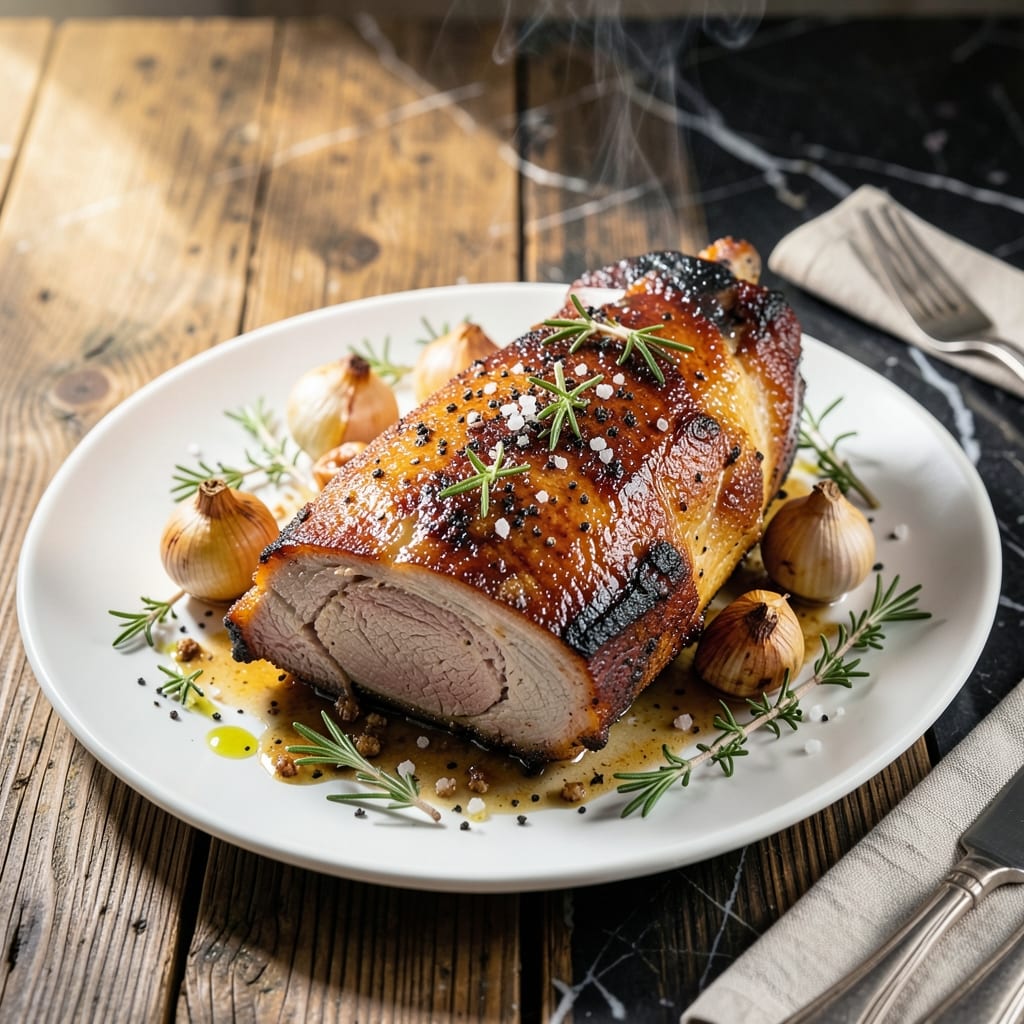
I’ve spent years perfecting the art of slow-braised pork roast, and this method delivers unmatched tenderness every time. The key is patience—low heat transforms tough cuts into fall-apart succulence while herbs infuse deep, aromatic flavor.
This approach works with any pork shoulder or butt, using a simple wet braise that keeps the meat moist. A blend of rosemary, thyme, and garlic creates a fragrant base, while the long cooking time allows the flavors to develop fully.
The result is pork so tender it nearly dissolves, with a rich sauce perfect for mopping up with crusty bread. Whether for Sunday dinner or a special occasion, this technique consistently produces restaurant-quality results at home.
Serve with roasted vegetables or mashed potatoes to complete the meal. The leftovers, if any remain, make exceptional sandwiches the next day.
Ingredients for Pork Roast Recipe Ideas
A few quality ingredients transform tough pork into melt-in-your-mouth perfection with aromatic depth.
| Ingredient | Amount | Notes |
|---|---|---|
| Pork Shoulder 🍖 | 3 lb | Bone-in, well-marbled preferred |
| Kosher Salt 🧂 | 2 tsp | Diamond Crystal brand recommended |
| Freshly Ground Black Pepper 🌶️ | 1 tsp | Coarse grind preferred |
| Fresh Rosemary 🌿 | 3 slices | Woody stems, 4-inch sprigs |
| Fresh Thyme 🍃 | 6 slices | Fresh sprigs, stems included |
| Garlic Cloves 🧄 | 8 cloves | Peeled, smashed lightly |
| Olive Oil 🫒 | 2 tbsp | Extra-virgin, high quality |
| Dry White Wine 🍷 | 1 cup | Sauvignon Blanc or Pinot Grigio |
| Low-Sodium Chicken Broth 🥣 | 2 cups | Homemade or quality store-bought |
| Yellow Onion 🧅 | 1 whole | Medium-sized, roughly chopped |
| Carrots 🥕 | 3 whole | Medium, peeled, cut into chunks |
| Celery Stalks 🥬 | 2 whole | Cut into large pieces |
| Tomato Paste 🍅 | 2 tbsp | Double-concentrated preferred |
| Bay Leaves 🌿 | 2 whole | Dried, whole leaves |
The pork shoulder is non-negotiable here. Bone-in, well-marbled cuts from Whole Foods or a trusted butcher yield the best results—avoid pre-cut stew meat, as it lacks the connective tissue needed for that signature tenderness. Fresh herbs matter more than you think; vibrant green rosemary and thyme (not the sad, wilted bunches) make a noticeable difference. For the wine, any dry white works, but a crisp Sauvignon Blanc adds brightness.
No white wine? Additional chicken broth with a splash of apple cider vinegar mimics the acidity. Fresh out of rosemary? Dried at one-third the amount works in a pinch, but fresh is ideal. Swap thyme for marjoram if needed. For the pork, pork butt is an acceptable substitute—it’s essentially the same cut, just from a different part of the shoulder. The tomato paste can be omitted, but it adds umami depth worth keeping.
This braise improves overnight, so plan ahead. Store leftovers in an airtight container for up to 4 days in the fridge or 3 months frozen. The meat shreds easily when cold, making it perfect for sandwiches or tacos. Always reheat gently to preserve moisture and prevent drying out.
Why You’ll Love This Recipe
- Set It and Forget: I just rub the pork shoulder with salt, pepper, rosemary, and thyme, pop it in the oven, and let it work its magic.
- Herb Crust Perfection: That crispy rosemary-thyme crust on the outside with the juicy pork inside? Every bite is worth it.
- Feeds a Hungry Crew: This roast stretches far—perfect for Sunday dinner with enough for sandwiches the next day.
- Budget-Friendly Feast: Pork shoulder is cheap, but with those fresh herbs, it tastes like a fancy meal.
Step-by-Step Instructions for Slow-Braised Pork Shoulder With Herbs
Master the technique for fall-off-the-bone tenderness with aromatic depth and rich braising liquid.
Step 1: Season and Sear the Pork Shoulder
Pat the 3 lb Pork Shoulder dry with paper towels to ensure a proper sear. Season generously with the 2 tsp Kosher Salt and 1 tsp Freshly Ground Black Pepper, rubbing the spices into all surfaces of the meat, including the crevices.
Heat the 2 tbsp Olive Oil in a heavy Dutch oven over medium-high heat until it shimmers. Sear the pork shoulder on all sides for 6-8 minutes total, turning occasionally, until it develops a deep, golden-brown crust. This creates the foundation for your braising liquid’s flavor.
Remove the pork and set it aside. The fond (browned bits) in the pot will dissolve into your braise, adding depth to the finished dish.
Step 2: Build the Aromatic Base
In the same pot, add the roughly chopped 1 whole Yellow Onion, chunked 3 whole Carrots, and large pieces of 2 whole Celery Stalks. Cook for 5-6 minutes over medium heat, stirring occasionally, until the vegetables begin to soften and develop light caramelization.
Add the 2 tbsp Tomato Paste and cook for 1-2 minutes, stirring constantly, until it darkens slightly in color. This step intensifies the paste’s sweetness and removes any raw flavor. Stir in the 8 cloves Garlic Cloves, 3 slices Fresh Rosemary, 6 slices Fresh Thyme, and 2 whole Bay Leaves.
Step 3: Deglaze and Braise
Pour in the 1 cup Dry White Wine and scrape the bottom of the pot with a wooden spoon to release all the browned bits. Let the wine reduce by half, which takes about 3-4 minutes. This process deglazes the pot and builds a flavorful foundation for your braising liquid.
Add the 2 cups Low-Sodium Chicken Broth and return the pork shoulder to the pot. The liquid should come about halfway up the meat. If it doesn’t, add a bit more broth to reach this level.
Step 4: Slow-Cook to Perfection
Bring the liquid to a gentle simmer over medium heat. Then reduce the heat to low, cover the pot, and let it braise for 3-4 hours. The pork is done when it’s fork-tender and pulls apart easily with minimal resistance. Check occasionally to ensure the liquid maintains a gentle simmer.
Turn the pork shoulder once or twice during cooking to ensure even cooking and flavor distribution. The meat should be tender enough to shred with a fork when fully cooked.
Step 5: Rest and Serve
Carefully transfer the pork to a cutting board and tent loosely with foil. Let it rest for 15-20 minutes while you skim excess fat from the braising liquid if desired. The resting period allows the juices to redistribute, ensuring moist, flavorful meat.
Shred the pork with two forks, discarding any large fat pieces. Serve the meat with the braising liquid spooned over the top, accompanied by the cooked vegetables. The sauce should be rich, aromatic, and deeply flavorful, with the herbs and wine creating a complex, savory profile.
Pro Tips For Making Pork Roast Recipe Ideas
- Dry the Pork: Pat the pork shoulder completely dry with paper towels before seasoning—it guarantees a better crust and helps the salt stick, which I learned the hard way after my first few roasts came out soggy.
- Start Hot, Finish Low: Sear the pork in a screaming hot pan first, then finish at 275°F in the oven. This gives you that golden exterior without drying out the meat, and I’ve never had a better result since switching to this method.
- Use Fresh Herbs: Skip the dried rosemary and thyme—fresh herbs bruised slightly with your fingers release oils that actually penetrate the meat, making the flavor pop in a way dried just can’t.
- Rest Before Carving: Let the roast rest under foil for at least 15 minutes after pulling it from the oven. I used to rush this part and ended up with a dry, tough cut every time—patience actually changes the outcome.
Dietary Considerations for pork roast recipe ideas
Gluten-Free Friendly
This dish is naturally gluten-free since it uses simple ingredients like pork, fresh herbs, and vegetables. Just ensure your chicken broth is certified gluten-free—I trust Pacific Foods brand for this. Always check labels on your wine and tomato paste as well. 💪
Low-Carb Option
For a keto-friendly version, simply skip the carrots and serve this over cauliflower mash instead of potatoes. The pork itself has 0g net carbs, making it perfect for low-carb diets. The braising liquid adds minimal carbs from the wine and vegetables.
Dairy-Free Naturally
No dairy is used in this recipe, so it’s safe for those with lactose intolerance. The richness comes from the pork’s natural fats and the olive oil. If you’re serving with sides, just ensure any additions like mashed potatoes are made with dairy-free alternatives.
Sodium Considerations
To reduce sodium, use low-sodium chicken broth and cut the Kosher Salt to 1 tsp. You can always add more at the table. The Diamond Crystal salt I recommend is less dense than table salt, so it’s easier to control. 💡
Paleo Adaptations
This recipe is already paleo-compliant if you use ghee instead of olive oil and omit the wine. Replace the wine with additional chicken broth and a splash of apple cider vinegar for acidity. The herbs and vegetables are all paleo-friendly.
Allergen Note
The only potential allergen here is celery, which can trigger reactions in some people. If celery is a concern, simply omit the 2 whole Celery Stalks—the dish will still be flavorful. Always check with guests about specific allergies before serving.
Nutrition Facts
Frequently Asked Questions
What’s the best cooking temperature for tender results?
For fall-apart tenderness, maintain a gentle simmer at low heat for 3-4 hours. The liquid should barely bubble to slowly break down the connective tissue without drying the meat.
Can I use a slow cooker instead?
Yes! Sear the pork first, then transfer to a slow cooker with all ingredients. Cook on low for 8 hours or high for 5-6 hours for equally tender results.
How do I prevent dry pork?
Ensure the braising liquid covers at least half the meat. Don’t skip the resting time—15-20 minutes lets juices redistribute. Check liquid levels occasionally during cooking.
What if I don’t have white wine?
Substitute with additional chicken broth plus 1 tbsp apple cider vinegar for acidity. This mimics wine’s brightness and helps tenderize the meat.

- Potato Chip Cookie Recipe With Pecans: Buttery Crunch Meets Nutty Richness - October 30, 2026
- Potato Patty Recipe No Egg: Crispy Edges Without the Binder - October 30, 2026
- Paula Deen’s Potato Chip Cookies Recipe: Salty-Sweet Crunch in Every Bite - October 30, 2026