
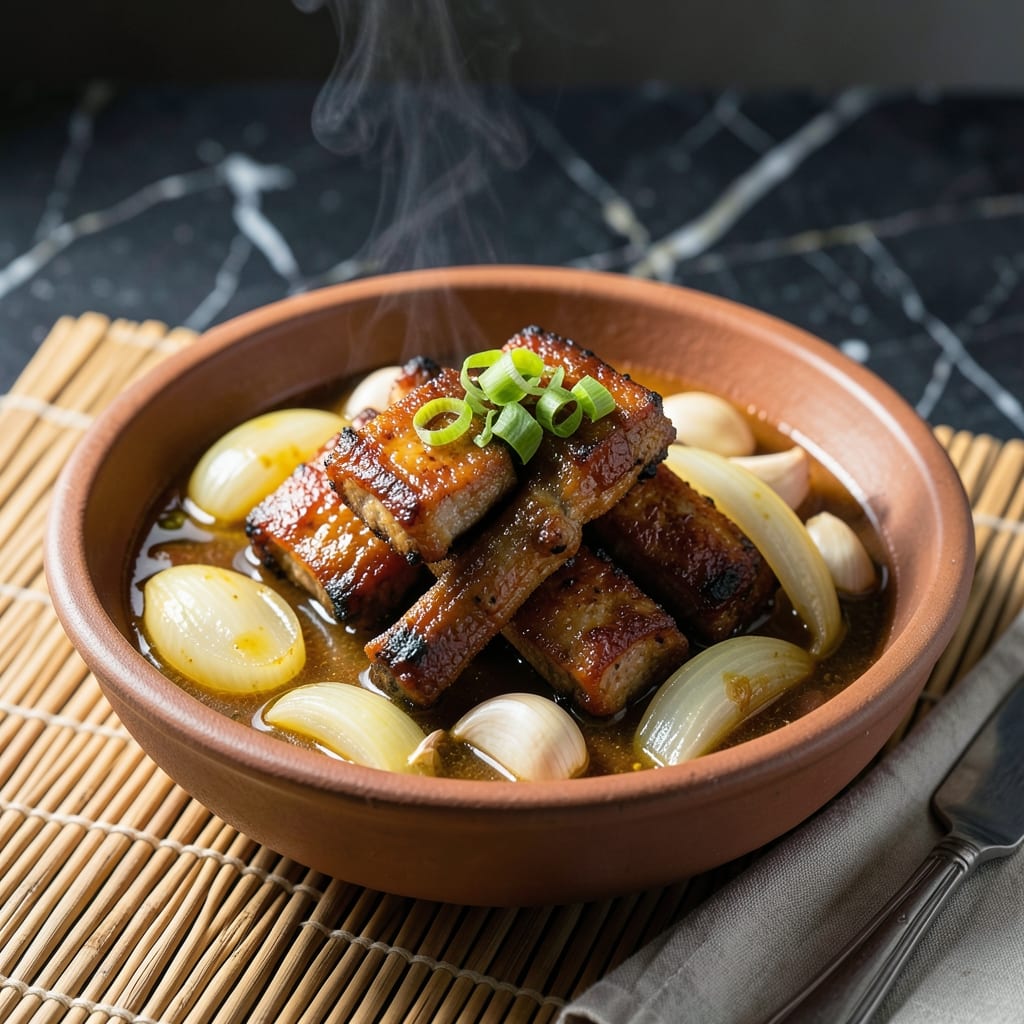
This Filipino-style pork ribs in tamarind broth delivers tender meat with a tangy, savory depth that defines comfort food. I perfected this method after testing various souring agents, and tamarind provides the most authentic flavor balance.
The key is slow-simmering the ribs in a rich broth enhanced with garlic, onions, and a touch of fish sauce. This creates a fall-off-the-bone texture while allowing the tamarind’s natural acidity to cut through the richness.
You’ll end up with a savory broth that’s perfect for soaking up with steamed rice, and meat so tender it nearly dissolves with each bite. The aromatics build a complex base that makes this dish unforgettable.
The beauty lies in its simplicity—just a handful of ingredients transformed into a deeply satisfying meal that tastes like home.
Ingredients for Pork Ribs Recipe Pinoy Sabaw
A handful of humble ingredients transforms into a rich, tangy Filipino classic with fall-off-the-bone tenderness.
| Ingredient | Amount | Notes |
|---|---|---|
| Pork Ribs 🍖 | 2 lb | Baby back or spare ribs, cut into serving pieces |
| Tamarind Paste 🍈 | ½ cup | Or tamarind pulp soaked in water |
| Water 💧 | 6 cups | For simmering broth |
| Yellow Onion 🧅 | 1 whole | Large, quartered |
| Garlic Cloves 🧄 | 8 cloves | Peeled and smashed |
| Fish Sauce 🐟 | 2 tbsp | Filipino patis preferred |
| Bay Leaves 🌿 | 2 pieces | Dried or fresh |
| Black Peppercorns 🌶️ | 1 tsp | Lightly crushed |
| Salt 🧂 | 1 ½ tsp | Adjust to taste |
| Green Onions 🧅 | 4 pieces | Sliced, for garnish |
| Cooking Oil 🫒 | 1 tbsp | Neutral oil for sautéing |
| Sugar 🍚 | 1 tsp | Optional, balances acidity |
The pork ribs are the foundation here. Baby back ribs offer consistent size and meatiness, but spare ribs work too—just trim excess fat. Filipino markets or Asian grocery stores often sell them pre-cut, saving prep time. For tamarind, Mama Sita’s tamarind paste is widely available and reliable. Fresh tamarind pods require soaking and straining, but the flavor payoff is worth the effort (if you can find them).
No tamarind paste? Lime juice plus a touch of brown sugar mimics the tangy-sweet balance (use 1/4 cup lime juice + 1 tbsp sugar per 0.5 cup tamarind). Out of fish sauce? Soy sauce works in a pinch—use half the amount and add a splash of water to balance the salt. Fresh garlic is non-negotiable here; jarred lacks the pungency this dish needs.
The cooked ribs keep beautifully in the fridge for up to 4 days and the broth actually deepens in flavor. Freeze for 3 months in airtight containers. Reheat gently to avoid breaking up the tender meat. Always skim excess fat from the broth before storing for cleaner reheating.
Why You’ll Love This Recipe
- One Pot Meal: I just dump ribs, tamarind paste, and aromatics in a pot and let it simmer—no fancy techniques.
- Sour-Savory Punch: The tamarind paste gives that tangy kick while garlic and onion deepen every bite.
- Feeds a Hungry Table: Honestly, it stretches perfectly for family dinners or weekend get-togethers with rice on the side.
- Budget-Friendly Comfort: Pork ribs are affordable here, and the broth makes great leftovers for the next day’s soup.
Step-by-Step Instructions for Pork Ribs Pinoy Sabaw
This method ensures tender ribs with a perfectly balanced tamarind broth every time.
Step 1: Brown the Pork Ribs
Heat the 1 tbsp Cooking Oil in a large pot over medium-high heat. Add the 2 lb Pork Ribs and sear for 3-4 minutes per side until golden brown on all sides. This step develops deep flavor in the meat and renders some fat.
Work in batches if your pot isn’t large enough to accommodate all the ribs in a single layer. Don’t overcrowd the pot, or the ribs will steam instead of brown. Transfer the browned ribs to a plate and set aside.
Step 2: Sauté Aromatics and Build the Broth
In the same pot, add the 1 whole Yellow Onion (quartered) and 8 cloves Garlic Cloves (smashed). Sauté for 2-3 minutes until the onion softens slightly and the garlic becomes fragrant. Be careful not to let the garlic burn.
Add the 0.5 cup Tamarind Paste, 6 cups Water, 2 tbsp Fish Sauce, 2 pieces Bay Leaves, 1 tsp Black Peppercorns, 1.5 tsp Salt, and 1 tsp Sugar. Stir until the tamarind paste dissolves completely in the liquid.
Step 3: Simmer the Ribs Until Tender
Return the browned pork ribs to the pot, ensuring they are mostly submerged in the broth. Bring the mixture to a boil, then reduce heat to medium-low to maintain a gentle simmer. Cover the pot and cook for 45-60 minutes.
Occasionally skim off any foam or impurities that rise to the surface. The ribs are done when the meat is fork-tender and begins to pull away from the bone. Resist the urge to increase the heat—low and slow is key for tender meat.
Step 4: Adjust Seasoning and Finish
Once the ribs are tender, taste the broth and adjust seasoning if needed. The tamarind should provide a pleasant tang, balanced by the saltiness of the fish sauce. If the broth tastes too sharp, add a pinch more sugar to mellow the acidity.
Discard the bay leaves and black peppercorns if desired, though leaving them in adds depth to the final dish. The broth should be rich and flavorful, with the tamarind’s sour notes complementing the savory pork.
Step 5: Garnish and Serve
Ladle the ribs and broth into serving bowls. Garnish each serving with the 4 pieces Green Onions (sliced). The green onions add a fresh, crisp contrast to the rich, savory broth.
Serve hot with steamed rice to soak up the delicious tamarind broth. The ribs should be fall-off-the-bone tender, and the broth should be tangy, savory, and deeply satisfying.
Pro Tips For Making Pork Ribs Recipe Pinoy Sabaw
- Simmer Low and Slow: I learned this the hard way—boil the ribs too hard and the meat turns tough. Keep it at a gentle simmer for 1.5-2 hours until the pork nearly falls off the bone.
- Soak the Tamarind: Mix the tamarind paste with warm water first and let it sit for 10 minutes. This draws out more sour flavor and prevents clumps in your sabaw.
- Skip the Salt Early: Tamarind paste already adds tang and saltiness, so hold off on extra salt until you’ve tasted the broth after 30 minutes of cooking.
- Crush the Garlic: Smash the garlic cloves lightly with the side of your knife before adding them whole—it releases more flavor without the bitterness of minced garlic.
Troubleshooting Great pork ribs recipe pinoy sabaw
Broth Too Sour
If your sabaw tastes overly tart, balance it with 1 tsp sugar at a time until the acidity mellows. I’ve found that tamarind paste varies in intensity, so taste as you go. A splash of coconut milk also softens the tang beautifully. 💡
Ribs Still Tough
When the meat resists pulling from the bone, extend simmering by 15-20 minutes on low heat. Ensure the broth barely bubbles—too-strong heat toughens the meat. I test doneness by piercing a rib with a fork; it should slide in effortlessly.
Broth Too Thin
For a richer consistency, remove the lid and simmer uncovered for 10-15 minutes to reduce the liquid. Alternatively, mix 1 tbsp cornstarch with 2 tbsp water and stir into the broth to thicken it slightly.
Foam on Broth
Skimming the foam that rises during simmering keeps your sabaw clear and clean. Use a fine-mesh skimmer or spoon to remove it as it appears. This step prevents a bitter aftertaste in your final dish.
Fish Sauce Overpowering
If the broth tastes too salty or fishy, add 1 cup water and 1 tbsp tamarind paste to dilute and rebalance. Avoid adding more salt until you’ve tasted the adjusted broth. 🔥
Garlic Burning
If your garlic browns too quickly, lower the heat to medium and stir constantly. Burnt garlic adds bitterness, so I pull the pot off heat if needed to control the cooking.
Nutrition Facts
Frequently Asked Questions
Can I use spare ribs instead of baby back?
Yes, spare ribs work well but may need 10-15 extra minutes of simmering. Trim excess fat first for cleaner broth. The flavor remains just as delicious with a slightly meatier bite.
What can I substitute for tamarind paste?
Use 1/4 cup lime juice + 1 tbsp sugar per 0.5 cup tamarind. The taste differs slightly but still delivers that signature tang. Calamansi works even better if available.
How do I know when the ribs are done?
The meat should pull away easily from the bone when pierced with a fork. If it resists, simmer for 15-20 more minutes on low heat. Patience ensures fall-off-the-bone tenderness.
Can I make this in a slow cooker?
Brown ribs first, then cook on low for 6-8 hours. The flavors deepen beautifully with the longer cooking time. Perfect for busy days.

- Potato Chip Cookie Recipe With Pecans: Buttery Crunch Meets Nutty Richness - October 30, 2026
- Potato Patty Recipe No Egg: Crispy Edges Without the Binder - October 30, 2026
- Paula Deen’s Potato Chip Cookies Recipe: Salty-Sweet Crunch in Every Bite - October 30, 2026