
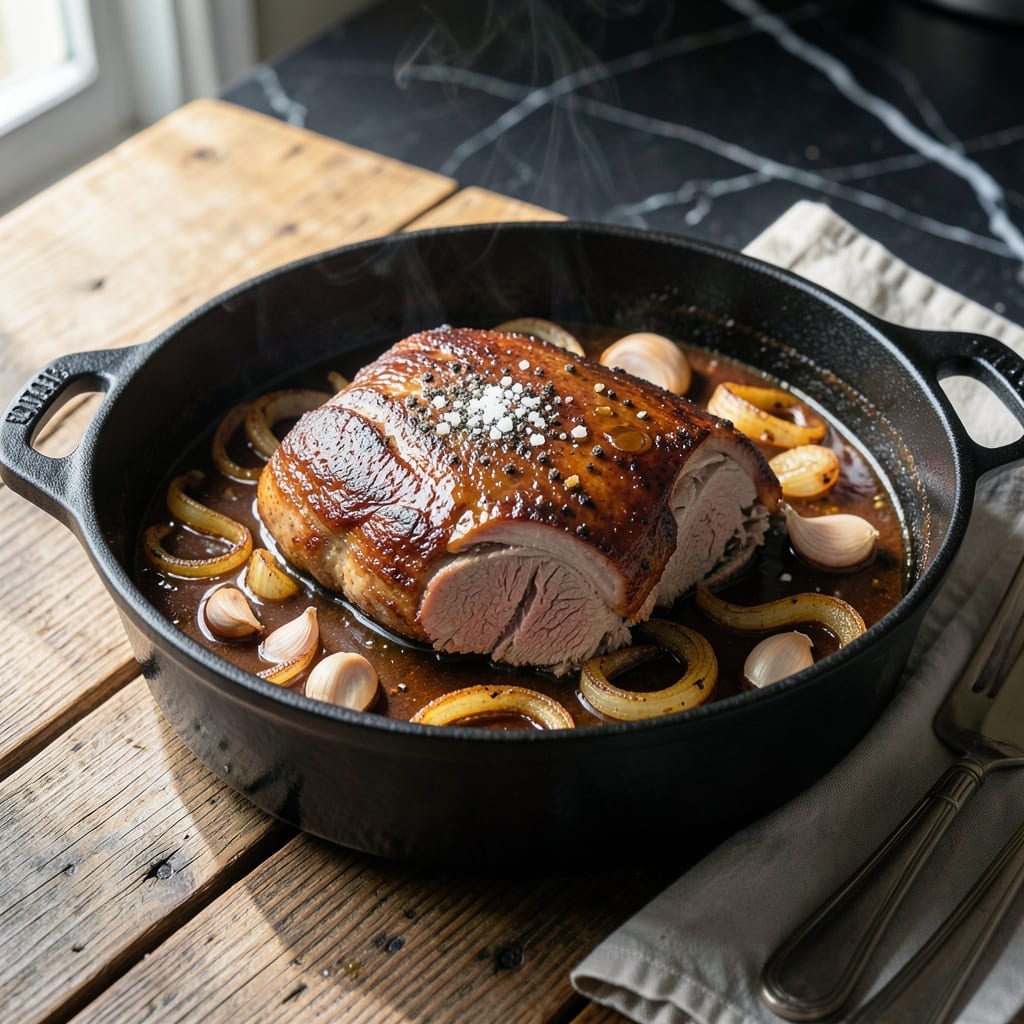
Watching my grandmother cook taught me that the best dishes come from patience, not complexity. This pork pot roast brings her lesson to life with fall-off-the-bone results achieved entirely on your stovetop.
I’ve refined this method through years of testing, focusing on low, steady heat that turns tough cuts into tender perfection. Simple ingredients and time do most of the work here.
The herbs infuse every bite with aroma while the pork slowly breaks down, creating its own rich sauce. No oven required—just one pot and careful attention.
By the end, you’ll have a centerpiece dish that feels special but requires no special effort. The meat will practically dissolve at the touch of your fork.
Ingredients for Pork Pot Roast Recipe Stove Top
Simple ingredients and time transform tough cuts into something unforgettable right on your stovetop.
| Ingredient | Amount | Notes |
|---|---|---|
| Pork Shoulder 🐖 | 2 lb | Boneless, well-marbled preferred |
| Kosher Salt 🧂 | 1 ½ tsp | Divided for seasoning layers |
| Black Pepper 🌶️ | 1 tsp | Freshly ground preferred |
| Olive Oil 🫒 | 2 tbsp | For searing pork |
| Yellow Onion 🧅 | 1 whole | Large, roughly chopped |
| Garlic Cloves 🧄 | 6 cloves | Smashed for robust flavor |
| Fresh Rosemary 🌿 | 2 tbsp | Chopped, stems removed |
| Fresh Thyme 🍃 | 2 tbsp | Leaves stripped from stems |
| Bay Leaves 🍃 | 2 pieces | Dried, for depth |
| Low-Sodium Chicken Broth 🥣 | 2 cups | Or substitute vegetable broth |
| Carrots 🥕 | 3 whole | Peeled, cut into chunks |
| Celery Stalks 🥬 | 2 whole | Cut into large pieces |
| Red Wine 🍷 | ½ cup | Dry variety preferred |
| Tomato Paste 🍅 | 2 tbsp | For umami richness |
| Apple Cider Vinegar 🍏 | 1 tbsp | Balances the richness |
The pork shoulder is non-negotiable here—look for good marbling at your butcher or Whole Foods counter. It’s the fat that melts into the meat, creating that fall-apart texture. If you see a piece labeled Boston butt, that’s the same cut (just boneless). I usually buy mine from Costco when I’m cooking for a crowd (the 8-pound packs freeze beautifully). For herbs, fresh rosemary and thyme from the grocery store produce section work great—just give them a quick rinse.
No pork shoulder? Pork butt or picnic shoulder (bone-in is fine, just adjust time) work too. Skip the wine? Extra broth plus a splash of vinegar mimics the acidity. Out of fresh herbs? Dried at one-third the amount gets you close. The tomato paste can be from a can or those handy squeeze tubes at Trader Joe’s—no waste, keeps for months. Baby carrots work if that’s what you’ve got (just halve the larger ones).
Leftovers taste even better the next day. Store in an airtight container for up to 4 days in the fridge or freeze for 3 months. The broth solidifies when chilled—perfect for skimming off fat before reheating.
Why You’ll Love This Recipe
- One Pot Wonder: I love that this comes together in a single pot—just sear the pork shoulder, toss in the onion, and let the stove do the work.
- Weeknight Hero: Honestly, it’s my go-to for busy evenings—start it early, and dinner’s ready when the family walks in.
- Stretches Far: One pork shoulder feeds us for days, and the leftovers make killer sandwiches or tacos the next night.
Step-by-Step Instructions for Pork Pot Roast Stove Top
Here’s the method. Simple, reliable, delivers melt-in-your-mouth results every time.
Step 1: Sear and Season the Pork Shoulder
Pat the 2 lb Pork Shoulder dry with paper towels—this ensures a perfect sear. Season generously with 1.5 tsp Kosher Salt and 1 tsp Black Pepper, pressing the seasoning into the meat so it adheres well. Don’t skip this; it builds the flavor foundation.
Heat 2 tbsp Olive Oil in a large Dutch oven over medium-high heat. When the oil shimmers, add the pork shoulder and sear for 4-5 minutes per side until deeply browned. You want a rich, caramelized crust—this is where the depth of flavor starts.
Step 2: Sauté Aromatics and Deglaze
Remove the pork and set it aside. In the same pot, add the roughly chopped Yellow Onion, 3 whole Carrots, and 2 whole Celery Stalks. Cook for 5 minutes until the vegetables begin to soften and brown slightly.
Add the 6 cloves Garlic Cloves, 2 tbsp Fresh Rosemary, and 2 tbsp Fresh Thyme, stirring for 1 minute until fragrant. Then, stir in the 2 tbsp Tomato Paste and cook for another 1-2 minutes to deepen its flavor.
Pour in the 0.5 cup Red Wine and scrape the bottom of the pot to release all the browned bits. Let it simmer for 2-3 minutes until the liquid reduces by half. This step is non-negotiable—it builds the sauce’s complexity.
Step 3: Braise to Fall-Off-The-Bone Tenderness
Return the pork shoulder to the pot. Add the 2 cups Low-Sodium Chicken Broth, 2 pieces Bay Leaves, and 1 tbsp Apple Cider Vinegar. The liquid should come about halfway up the pork. If it doesn’t, add a splash of water.
Bring the mixture to a gentle simmer, then reduce the heat to low. Cover and let it cook for 2.5 to 3 hours, turning the pork every 45 minutes to ensure even cooking. You’ll know it’s done when the meat pulls apart easily with a fork.
Real talk: Don’t rush this. The long, slow braise is what transforms the pork into that buttery, tender masterpiece. Keep the heat low and steady—you want a gentle simmer, not a rolling boil.
Step 4: Reduce and Serve
Once the pork is tender, remove it from the pot and set it aside. Skim any excess fat from the surface of the braising liquid, then increase the heat to medium-high. Let the liquid simmer uncovered for 10-15 minutes until it thickens into a rich, velvety sauce.
Shred or slice the pork and return it to the pot to soak up the flavors. Serve it hot with the vegetables and sauce spooned over the top. The pork should be so tender it practically melts in your mouth, and the sauce should be thick enough to cling to every bite.
Pro Tips For Making Pork Pot Roast Recipe Stove Top
- Sear the Pork Hard: I learned this the hard way—get your pan screaming hot before adding the pork shoulder, and don’t move it for at least 3-4 minutes per side. A deep brown crust on that pork is what builds the flavor base for your pot roast. —
- Cut Onions Thick: After burning a few batches, I finally figured out that slicing the yellow onion into ½-inch thick pieces prevents them from dissolving into mush during the long cook. They’ll soften just right and add texture. —
- Don’t Crowd the Pan: Resist the urge to throw everything in at once—if your pork shoulder is too big for the pan, cut it into 2-3 large chunks so each piece gets proper browning. Steaming pork is sad pork. —
- Use a Heavy Pot: My grandmother swore by this, and she was right: a heavy Dutch oven or thick-bottomed pot distributes heat evenly and prevents scorching during the long simmer. Thin pans lead to burnt bits and uneven cooking.
Best Sauces and Condiments for This Recipe
Classic Gravy
Use the pot’s braising liquid as your base—simmer it down until it coats the back of a spoon. I thicken mine with 1 tbsp cornstarch mixed with 2 tbsp cold water, stirring until glossy. Grandmother never measured; she just knew by feel. 💪
Apple Compote
Sauté 2 peeled apples with 1 tbsp butter, 1 tbsp brown sugar, and a pinch of cinnamon until soft. The sweetness complements the pork’s richness beautifully. I use apples from our local farmers market.
Horseradish Cream
Mix ½ cup sour cream with 2 tbsp prepared horseradish and 1 tsp lemon juice. This adds a sharp, refreshing contrast that cuts through the dish’s heartiness. It’s my secret weapon for special occasions.
Herb Chimichurri
Blend 1 cup fresh parsley, ¼ cup olive oil, 2 tbsp red wine vinegar, and 1 minced garlic clove. The bright, herby flavors wake up the rich pork. I make this in my tiny food processor.
Spicy Mustard
Whisk 3 tbsp Dijon mustard with 1 tbsp honey and 1 tsp sriracha. The combination of heat and sweetness enhances every bite. It’s surprisingly simple but always impresses.
Nutrition Facts
Frequently Asked Questions
Do I need to use a Dutch oven?
A heavy pot with a tight lid is essential. A Dutch oven works best, but any heavy-bottomed pot will do as long as it retains heat well.
Can I use a different cut of pork?
Pork shoulder is ideal, but pork butt works too. Avoid lean cuts like tenderloin—they won’t get as tender. Stick to well-marbled options.
How do I know when it’s done?
The meat should pull apart easily with a fork. If it resists, give it more time—2.5-3 hours is typical. Patience is key!
Can I skip the wine?
Yes! Use extra broth plus 1 tbsp vinegar for acidity. The flavor won’t be identical, but it’ll still be delicious.

- Potato Chip Cookie Recipe With Pecans: Buttery Crunch Meets Nutty Richness - October 30, 2026
- Potato Patty Recipe No Egg: Crispy Edges Without the Binder - October 30, 2026
- Paula Deen’s Potato Chip Cookies Recipe: Salty-Sweet Crunch in Every Bite - October 30, 2026