
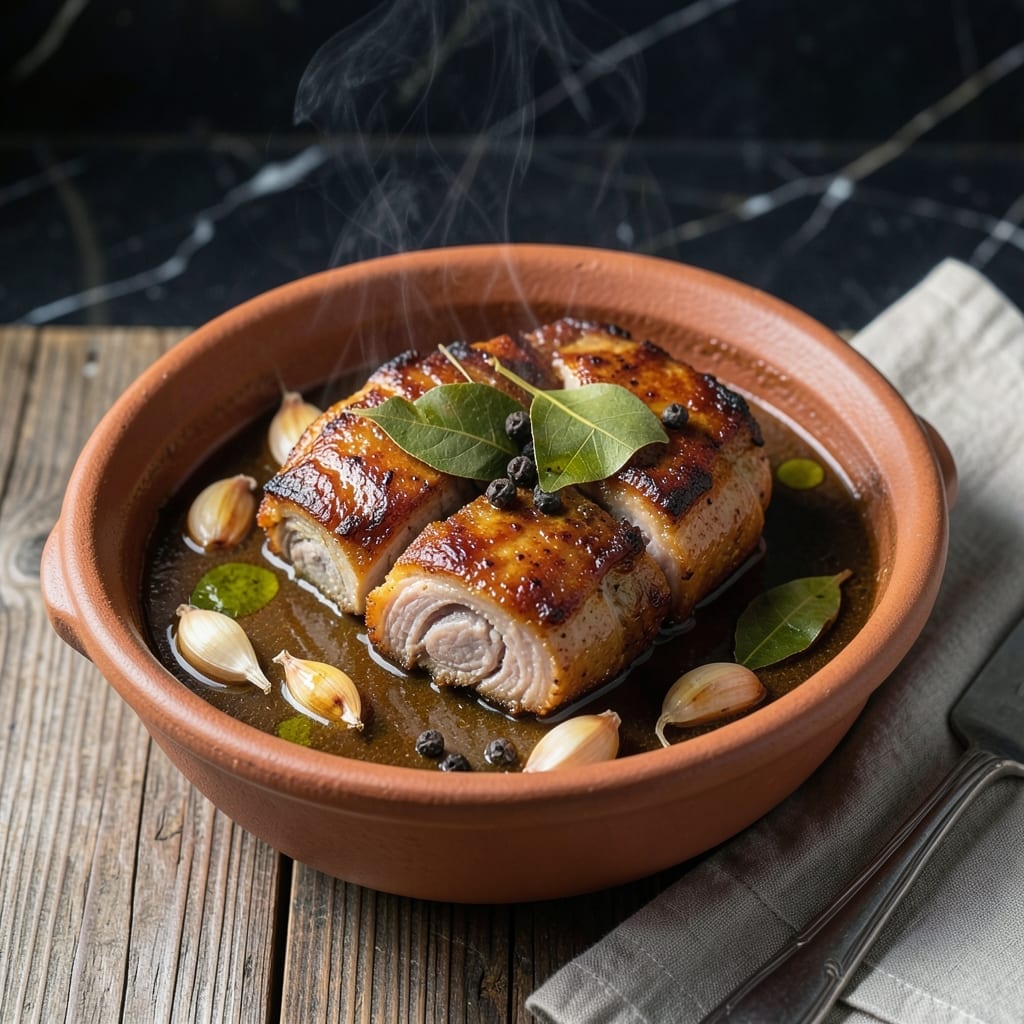
This Filipino-inspired pork recipe delivers tender meat infused with classic adobo flavors. The combination of soy sauce, vinegar, and garlic creates a perfect balance of savory and tangy notes.
I developed this method to ensure the pork stays juicy while soaking up the rich marinade. The vinegar glaze adds a subtle sweetness that complements the bold adobo base.
The dish comes together in one pot, making it simple yet packed with authentic Pinoy taste. The slow cooking process guarantees fork-tender results every time.
Serve with steamed rice to soak up every drop of the flavorful sauce. This is comfort food at its finest.
Ingredients for Pork Recipe Pinoy Style
A handful of pantry staples and a few fresh items bring authentic Pinoy adobo to your table.
| Ingredient | Amount | Notes |
|---|---|---|
| Pork Shoulder 🥩 | 2 lb | Cut into 2-inch chunks, bone-in preferred |
| Soy Sauce 🫒 | ¾ cup | Filipino brand preferred for authenticity |
| White Vinegar 🍶 | ½ cup | Cane vinegar for traditional flavor |
| Garlic Cloves 🧄 | 10 cloves | Peeled and smashed for maximum flavor |
| Bay Leaves 🍃 | 3 whole | Dried, for aromatic depth |
| Black Peppercorns 🌶️ | 1 tbsp | Lightly crushed for freshness |
| Brown Sugar 🍚 | 2 tbsp | For balancing vinegar acidity |
| Water 💧 | 1 cup | To adjust sauce consistency |
| Cornstarch 🌾 | 1 tbsp | Mixed with water for glaze |
| Vegetable Oil 🫒 | 2 tbsp | For searing pork chunks |
| Green Onions 🧅 | ½ cup | Sliced thinly for garnish |
| Lime 🍈 | 1 whole | Juiced for final acidity |
The pork shoulder is non-negotiable here—bone-in pieces from Asian markets or Costco give the best texture. Look for good marbling; fat equals flavor in this slow-cooked dish. Filipino soy sauce brands like Silver Swan (available at most Asian grocers) add the right depth. Don’t skip the cane vinegar if you can find it—regular white works but lacks the subtle complexity.
Out of pork shoulder? Pork belly makes it richer (reduce cooking time). No cane vinegar? Apple cider vinegar at equal amount works in a pinch. Bay leaves can be fresh at double the quantity. The brown sugar balances the tang—coconut sugar adds a deeper caramel note. For a quicker version, pressure cooker cuts time to 45 minutes.
Adobo tastes even better the next day—reheat gently to keep the pork tender. Stores in the fridge for 4-5 days or freezes for 3 months (the sauce may separate but re-emulsifies when reheated). Always serve with steamed rice to soak up every last drop.
Why You’ll Love This Recipe
- I’ll be real: the leftovers are even richer the next day, if they last that long.
- One Pan Wonder: I just dump pork shoulder, soy sauce, vinegar, garlic, and bay leaves in a pot and let it simmer—no fancy steps.
- That Garlic Punch: The garlic cloves soak up the soy-vinegar blend, giving every bite that bold, tangy-savory kick I crave.
- Feeds the Gang: Honestly, it’s my go-to for big families or potlucks—stretches far without breaking the bank.
Step-by-Step Instructions for Pork Adobo
Here is the method. Straightforward, tested, delivers tender results every time.
Step 1: Sear the Pork Shoulder
Heat 2 tbsp vegetable oil in a large pot or Dutch oven over medium-high heat. Add the 2 lb pork shoulder chunks and sear until all sides are golden brown, about 5-7 minutes total.
Resist the urge to stir too frequently—let each piece develop a deep crust. This searing creates a flavorful fond at the bottom of the pot, which will enrich the sauce later. Remove the pork and set aside.
Step 2: Build the Adobo Base
In the same pot, reduce heat to medium and add 10 cloves garlic cloves, 3 whole bay leaves, and 1 tbsp black peppercorns. Sauté for 1-2 minutes until the garlic is fragrant but not browned.
Pour in the 0.75 cup soy sauce, 0.5 cup white vinegar, 2 tbsp brown sugar, and 1 cup water. Stir to combine, scraping up any browned bits from the bottom. The vinegar will create a tangy steam that begins tenderizing the meat immediately.
Step 3: Braise Until Fork-Tender
Return the pork to the pot, ensuring it is mostly submerged in the liquid. Bring to a boil, then reduce heat to low, cover, and simmer for 1.5 to 2 hours.
Check occasionally and turn the pork chunks to ensure even cooking. The pork is done when it is fork-tender and the liquid has reduced slightly. The low, slow cooking process allows the collagen in the pork shoulder to break down, resulting in meltingly tender meat.
Step 4: Thicken the Sauce and Finish
In a small bowl, mix 1 tbsp cornstarch with 2 tbsp water to create a slurry. Stir the slurry into the pot and simmer for an additional 5 minutes until the sauce thickens to a glaze-like consistency.
Remove from heat and stir in the juice of 1 whole lime. The lime brightens the rich, savory flavors of the adobo. Taste and adjust seasoning if needed.
Step 5: Garnish and Serve
Discard the bay leaves. Spoon the pork and sauce into a serving dish and garnish with 0.5 cup green onions. The green onions add a fresh, crisp contrast to the tender pork and rich sauce.
Serve hot with steamed rice to soak up every bit of the tangy, savory glaze. The pork should be so tender that it falls apart with minimal pressure, and the sauce should cling beautifully to each piece.
Pro Tips For Making Pork Recipe Pinoy Style
- Sear Before Simmering: I learned this the hard way—browning the pork shoulder first in a hot pan (about 3-4 minutes per side) locks in juices and adds depth to the soy-vinegar sauce.
- Crush the Garlic: Sounds weird, but it works: lightly crushing the garlic cloves (instead of mincing) releases more flavor without burning, especially during the long simmer with bay leaves.
- Skip the Lid: After burning three batches, I finally figured out that leaving the pot uncovered for the last 20 minutes reduces the vinegar sauce just enough to coat the pork perfectly.
- Use More Vinegar: My grandmother swore by this, and she was right: add a splash extra white vinegar at the end—it cuts through the richness and brightens every bite.
Serving Suggestions for This Dish
Traditional Pairing
Steamed jasmine rice is the classic companion—its mild flavor soaks up the adobo sauce perfectly. I always use a 1:1.5 rice-to-water ratio in my rice cooker for fluffy results. The contrast between tender pork and soft rice is pure comfort.
Vegetable Balance
For freshness, serve with steamed bok choy or blanched green beans. The bitterness of sautéed bitter melon (ampalaya) also complements the richness beautifully. I toss my veggies with a drizzle of the adobo sauce for extra flavor.
Pickled Sides
Atchara (Filipino pickled papaya) cuts through the richness with its tangy crunch. I make mine with julienned green papaya, carrots, and bell peppers in a vinegar-sugar brine. The acidity mirrors the dish’s vinegar notes. 💫
Beverage Pairings
An ice-cold San Miguel beer is my go-to—its crispness cleanses the palate. For non-alcoholic options, calamansi juice or sago’t gulaman (tapioca pearl drink) adds sweet contrast. The citrus in calamansi echoes the lime in the adobo.
Extra Garnishes
Beyond green onions, try toasted garlic bits or crushed chili flakes for added texture. I sometimes add hard-boiled eggs to the dish itself—it’s a common Pinoy touch that soaks up the sauce wonderfully.
Serving Style
Present family-style in a deep platter for communal serving. I love watching guests mix their rice with the pork and sauce at the table. The shared experience makes the meal even more special. 🔥
Nutrition Facts
Frequently Asked Questions
Can I use a different cut of pork?
Yes, pork belly adds richness but cooks faster. Shoulder is ideal for tenderness. Avoid lean cuts like tenderloin, as they dry out during braising.
Why use cane vinegar instead of white?
Cane vinegar has a milder, more complex flavor that’s traditional in Pinoy cooking. White vinegar works but may taste sharper.
How do I fix sauce that’s too sour?
Balance the acidity by adding 1-2 tsp brown sugar or a splash of water. Taste as you go to avoid oversweetening.

- Potato Chip Cookie Recipe With Pecans: Buttery Crunch Meets Nutty Richness - October 30, 2026
- Potato Patty Recipe No Egg: Crispy Edges Without the Binder - October 30, 2026
- Paula Deen’s Potato Chip Cookies Recipe: Salty-Sweet Crunch in Every Bite - October 30, 2026