
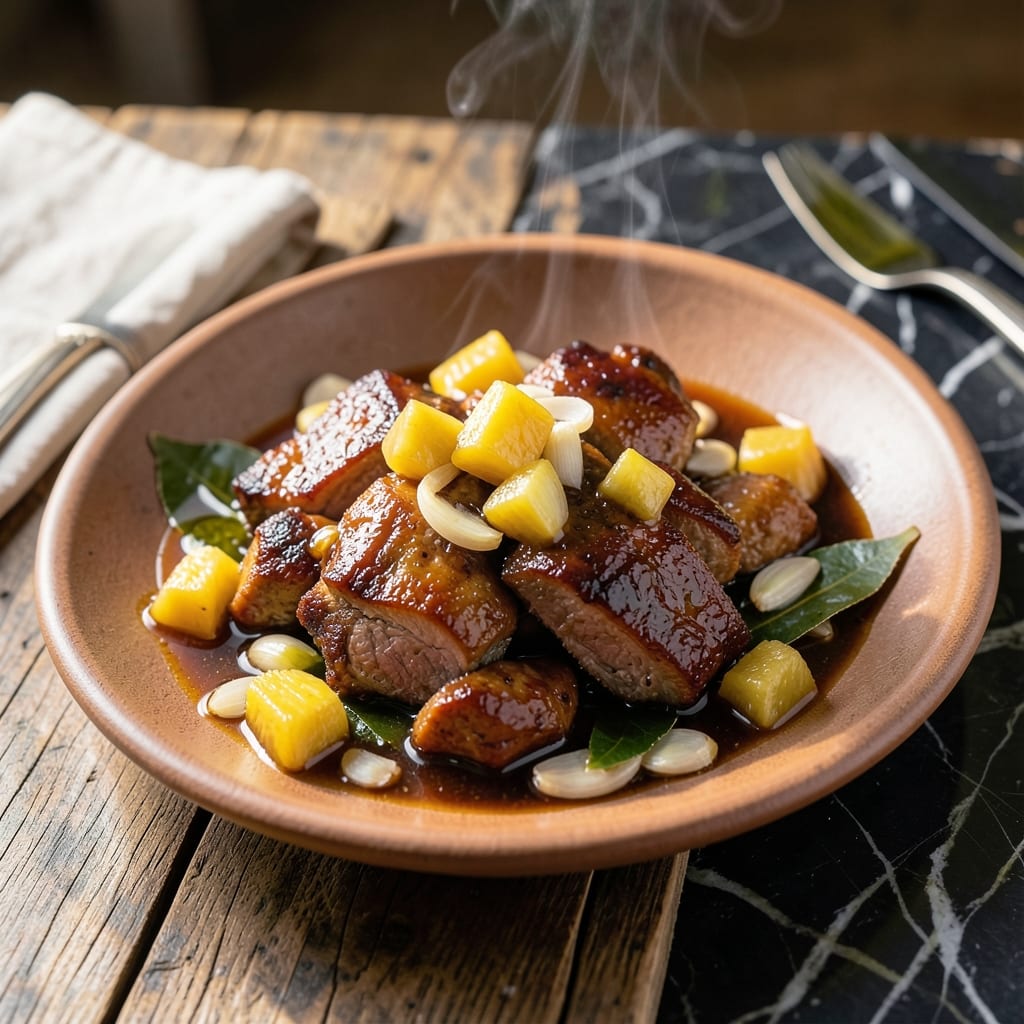
This slow-cooked adobo brings authentic Pinoy flavor to your kitchen with minimal effort. The pineapple addition balances the traditional vinegar and soy sauce with natural sweetness.
I developed this version after testing countless ratios to achieve the perfect harmony of tangy, salty, and sweet. The pork becomes fork-tender after hours in the sauce, absorbing every rich layer.
The key is patience—letting the sauce reduce slowly creates depth that can’t be rushed. Each bite delivers the comforting, complex taste that defines Filipino home cooking.
Serve over steamed rice to soak up every drop of this irresistible sauce.
Ingredients for Pork Recipe Pinoy
Pantry staples and fresh pork create this rich, slow-cooked Filipino classic with a sweet twist.
| Ingredient | Amount | Notes |
|---|---|---|
| Pork Shoulder 🍖 | 2 lb | Cut into 2-inch chunks |
| Soy Sauce 🫒 | ¾ cup | Use Filipino brands if available |
| White Vinegar 🧂 | ½ cup | Cane or distilled white |
| Pineapple Chunks 🍍 | 1 cup | Fresh or canned, drained |
| Garlic Cloves 🧄 | 8 cloves | Minced for maximum flavor |
| Bay Leaves 🌿 | 3 whole | Dried or fresh |
| Black Peppercorns 🌶️ | 1 tsp | Whole or freshly cracked |
| Brown Sugar 🍚 | 2 tbsp | Light or dark, packed |
| Onion 🧅 | 1 whole | Medium, thinly sliced |
| Water 💧 | 1 cup | To adjust sauce consistency |
| Vegetable Oil 🫒 | 2 tbsp | For searing pork |
| Salt 🧂 | 1 tsp | Adjust to taste |
The pork shoulder is non-negotiable here. Look for well-marbled pieces at your butcher or Costco—fat equals flavor in adobo. Filipino soy sauce (Silver Swan or Datu Puti) has a distinct taste, but any soy sauce works in a pinch. For vinegar, cane vinegar is traditional, though white vinegar gets you 90% there (just avoid apple cider).
No pineapple? Mango or peaches add a similar sweet contrast, though they’ll soften differently. Short on time? Pre-cut pork stew meat works but won’t be as tender. If using canned pineapple, save the juice—it’s great for deglazing. The bay leaves are subtle but essential; dried work fine (just remove before serving).
Adobo tastes even better the next day—2-3 days in the fridge, 3 months frozen. The sauce thickens as it cools, so thin with water when reheating. Always serve with rice (jasmine is perfect) to soak up every last drop.
Why You’ll Love This Recipe
- One Pan Meal: I just toss the pork shoulder, soy sauce, vinegar, and pineapple chunks in a pan—minimal cleanup, maximum flavor.
- Sweet-Savory Magic: The garlic and soy sauce create this deep umami base, while the pineapple adds a bright, juicy contrast that’s ridiculously good.
- Feeds a Crowd: I make a big batch for family gatherings, and it’s always the first dish to disappear.
- Budget Stretcher: Pork shoulder is so affordable, and a little goes a long way—leftovers taste even better the next day.
Step-by-Step Instructions for Slow-Cooked Adobo With Pineapple Sweetness
Here’s the method I use to achieve fall-off-the-bone tenderness with that perfect sweet-tangy balance.
Step 1: Sear the Pork Shoulder for Depth of Flavor
Heat the 2 tbsp vegetable oil in a large pot over medium-high heat until it shimmers. Pat the 2 lb pork shoulder chunks dry, then season with the 1 tsp salt. Working in batches, sear the pork until golden brown on all sides—this takes about 3-4 minutes per side.
Don’t overcrowd the pot or the pork will steam instead of brown. As each batch finishes, transfer it to a plate. The fond (browned bits) left in the pot will become the base of your sauce, so don’t scrape it off.
Step 2: Build the Adobo Base and Deglaze
In the same pot, add the thinly sliced onion and cook for 2-3 minutes until softened. Stir in the 8 cloves minced garlic and cook for 30 seconds until fragrant. Immediately add the 0.75 cup soy sauce, 0.5 cup white vinegar, 3 whole bay leaves, and 1 tsp black peppercorns.
Bring to a boil, then use a wooden spoon to scrape up all those browned bits from the bottom. This deglazing step ensures no flavor is left behind. Let it simmer for 2 minutes to allow the flavors to meld before adding the pork back in.
Step 3: Add Pork and Simmer Until Tender
Return the seared pork to the pot along with any accumulated juices. Add the 1 cup pineapple chunks, 2 tbsp brown sugar, and 1 cup water. Stir to combine, ensuring the pork is mostly submerged in the liquid.
Bring to a boil, then reduce heat to low, cover, and let it simmer for 1.5 to 2 hours. You’ll know it’s ready when the pork is fork-tender and the sauce has thickened slightly. Stir occasionally and add a splash of water if it reduces too quickly.
Step 4: Adjust and Reduce the Sauce
Once the pork is tender, remove the lid and increase heat to medium. Let it cook uncovered for 10-15 minutes to reduce the sauce to your desired consistency. Taste and adjust seasoning—you might want to add a pinch more salt or brown sugar depending on your preference.
The sauce should coat the back of a spoon and have a glossy appearance. The pineapple will have softened and absorbed the adobo flavors, creating a perfect balance of sweet and savory. Remove the bay leaves before serving.
Pro Tips For Making Pork Recipe Pinoy
- Sear the Pork First: Brown the pork shoulder in small batches over medium-high heat until deeply caramelized—this builds a flavor base that soy sauce and vinegar can’t replicate on their own. I learned this the hard way after skipping it and ending up with pale, bland meat.
- Balance the Sour: Use a 1:1 ratio of soy sauce to white vinegar, but taste before adding all the vinegar—some brands are sharper than others. My grandmother swore by this, and she was right: too much vinegar can overpower the pineapple’s sweetness.
- Skip Pre-Cooked Pineapple: Fresh or canned pineapple chunks in juice (not syrup) hold their shape and absorb the sauce better than pre-cooked ones. Sounds weird, but it works: the firmer texture keeps the dish from turning mushy.
- Simmer Low and Slow: Once everything’s in the pot, keep it at a gentle simmer for at least 45 minutes—any higher heat and the pork will toughen before it tenderizes. After burning three batches, I finally figured out patience is the thing that matters most here.
Health Benefits of These Flavors
Protein Powerhouse
This dish delivers 40g of protein per serving, helping build and repair muscles. Pork shoulder is rich in essential amino acids, making it a complete protein source for your body’s daily needs. I notice I stay fuller longer after eating adobo. 💪
Vitamin B Boost
Pork is packed with B vitamins, especially B1 and B12, which support energy metabolism and brain function. A single serving provides about 60% of your daily B12 needs, crucial for nerve health.
Immunity Support
The garlic in this recipe isn’t just for flavor—it contains allicin, a compound with natural antibacterial properties. With 8 cloves in the recipe, you’re getting a serious immune-boosting dose.
Antioxidant Rich
Pineapple adds more than sweetness—it’s loaded with vitamin C and manganese, powerful antioxidants that protect cells from damage. The vinegar in adobo may also help stabilize blood sugar levels. ✨
Low-Calorie Option
At about 350 calories per serving (without rice), this is a satisfying meal that won’t derail your diet. The slow-cooking method means you use minimal oil while maximizing flavor.
Bone Health
The soy sauce contributes calcium and iron, while the vinegar may help your body absorb these minerals more effectively. This combination supports strong bones and healthy blood.
Nutrition Facts
Frequently Asked Questions
Can I use a different cut of pork?
Pork shoulder is ideal, but pork belly or ribs work too. Avoid lean cuts like tenderloin—they’ll dry out during the 1.5-2 hour cook.
What if I don’t have cane vinegar?
White vinegar is a fine substitute. Avoid apple cider vinegar—its flavor overpowers the 0.5 cup needed. The dish will still taste authentic.
How do I store leftovers?
Keep in an airtight container in the fridge for up to 3 days. The flavors deepen overnight! Reheat gently with a splash of water.

- Potato Chip Cookie Recipe With Pecans: Buttery Crunch Meets Nutty Richness - October 30, 2026
- Potato Patty Recipe No Egg: Crispy Edges Without the Binder - October 30, 2026
- Paula Deen’s Potato Chip Cookies Recipe: Salty-Sweet Crunch in Every Bite - October 30, 2026