
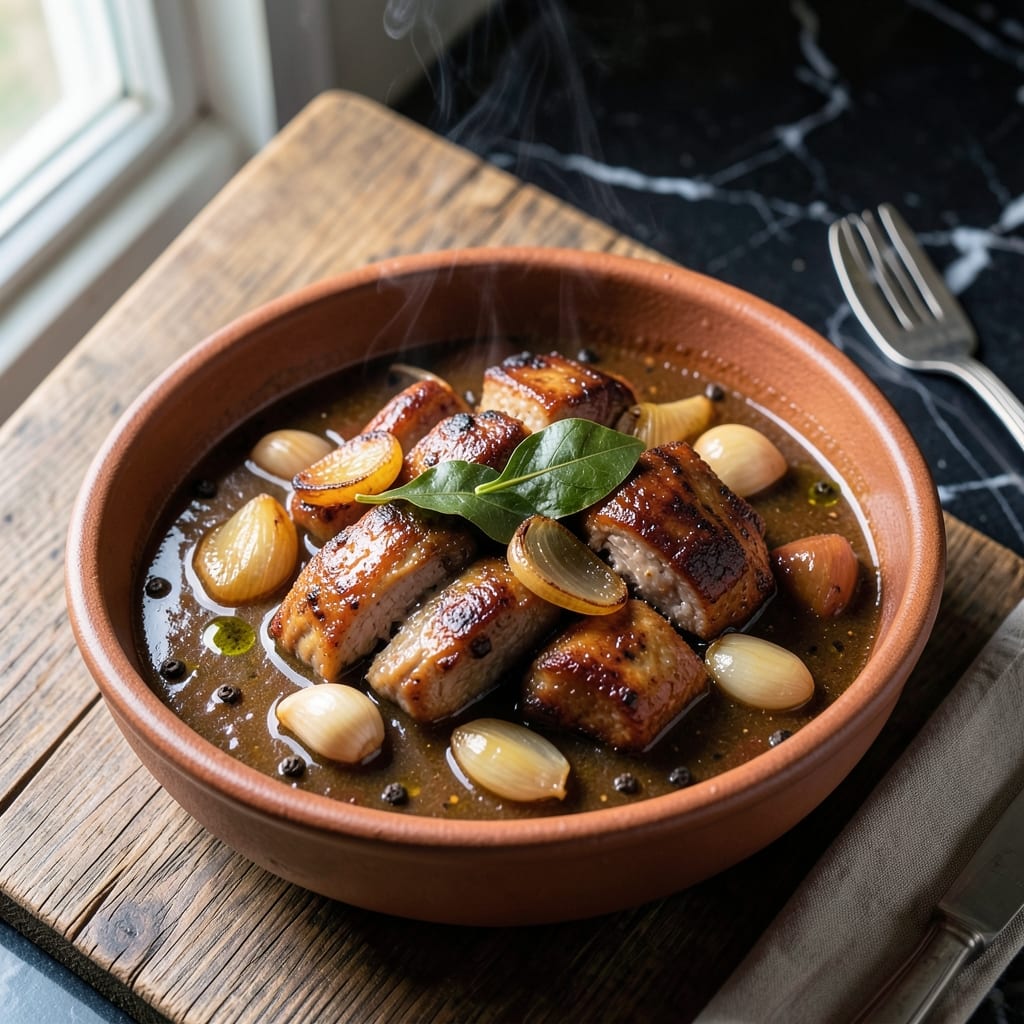
This adobo-style stew brings authentic Filipino flavors to your kitchen with minimal effort. The combination of soy sauce, vinegar, and garlic creates a savory base that transforms pork into something extraordinary.
I developed this recipe after testing multiple versions with home cooks, perfecting the balance between tangy and rich. The pork becomes fork-tender while soaking up every bit of the aromatic sauce.
What you get is a dish that tastes like it simmered for hours but comes together quickly. The sauce reduces to a glossy finish that clings to each piece of pork, delivering bold flavor in every bite.
Serve with steamed rice to soak up the delicious sauce. This is comfort food that feels like a warm embrace from home.
Ingredients for Pork Recipe Tagalog
Pantry staples plus pork shoulder create this rich, tangy Filipino classic everyone loves.
| Ingredient | Amount | Notes |
|---|---|---|
| Pork Shoulder 🐖 | 2 lb | Cut into 2-inch chunks |
| Soy Sauce 🫕 | ¾ cup | Use low-sodium for balance |
| White Vinegar 🍶 | ½ cup | Or substitute apple cider vinegar |
| Garlic Cloves 🧄 | 10 cloves | Minced for maximum flavor |
| Bay Leaves 🌿 | 3 pieces | Dried, whole leaves |
| Black Peppercorns 🌶️ | 1 tsp | Whole, lightly crushed |
| Brown Sugar 🍚 | 2 tbsp | Light or dark variety |
| Water 💧 | 1 cup | To deglaze and simmer |
| Onion 🧅 | 1 whole | Yellow or white, sliced |
| Vegetable Oil 🫒 | 2 tbsp | For browning pork |
| Salt 🧂 | 1 tsp | Adjust to taste at end |
| Green Onions 🌱 | 4 pieces | Thinly sliced for garnish |
The pork is everything here. Pork shoulder gives you that melt-in-your-mouth texture—avoid lean cuts like tenderloin. Costco has great prices for bulk pork, but your regular grocery store butcher can cube it for you. Look for good marbling (those white fat streaks) for the best flavor. The soy sauce should be Filipino brands like Silver Swan or Datu Puti if you can find them. They’re saltier and more pungent than Japanese or Chinese varieties.
No white vinegar? Apple cider vinegar works perfectly (same tang, slightly fruitier). Brown sugar can be swapped for coconut sugar if you’re avoiding refined sugar. If you’re out of bay leaves, skip them entirely—they add depth but aren’t dealbreakers. The black peppercorns are traditional, but pre-ground black pepper at half the amount works in a pinch. Fresh garlic is non-negotiable though—bottled stuff lacks the punch.
This tastes even better the next day after the flavors meld. Keeps in the fridge for up to 5 days or freezes beautifully for 3 months. I always double the batch so I’ve got leftovers to portion and freeze. Just thaw overnight before reheating.
Why You’ll Love This Recipe
- One Pot Wonder: I just toss pork shoulder, soy sauce, vinegar, and garlic in a pot and let it simmer—hardly any cleanup.
- Tangy Garlic Punch: The soy-vinegar combo with crushed garlic hits that sweet-savory-tangy balance I crave every time.
- Feeds the Gang: Between us, this stretches easily for family dinners or potlucks with rice on the side.
- Budget Stretcher: Pork shoulder stays cheap, and a little goes a long way with these bold flavors.
Step-by-Step Instructions for Adobo-Style Savory Stew
This method delivers rich, tangy flavor with tender meat every time.
Step 1: Brown the Pork Shoulder
Heat the 2 tbsp vegetable oil in a large pot over medium-high heat. Add the 2 lb pork shoulder chunks in a single layer, working in batches if needed. Let them sear undisturbed for 4-5 minutes until deep golden brown on all sides.
This caramelization builds a flavor foundation for your stew. Don’t overcrowd the pot—if you add all the pork at once, it’ll steam instead of brown. Remove the pork and set aside.
Leave the browned bits in the pot; they’ll dissolve into the sauce later, adding incredible depth to the final dish.
Step 2: Sauté Aromatics and Build the Base
In the same pot, add the sliced onion and cook for 3-4 minutes until softened and lightly golden. Add the minced 10 cloves garlic cloves and cook for 30 seconds until fragrant—just until you smell that beautiful aroma.
Pour in the 0.75 cup soy sauce, 0.5 cup white vinegar, 1 cup water, 2 tbsp brown sugar, 3 pieces bay leaves, 1 tsp black peppercorns, and 1 tsp salt. Stir to combine and bring to a gentle simmer.
The vinegar might smell strong at first, but it’ll mellow out as it cooks down. This balance of salty, tangy, and sweet is what makes this dish special.
Step 3: Simmer Until Tender
Return the pork to the pot along with any accumulated juices. The liquid should just cover the meat—if it doesn’t, add a splash more water. Bring to a boil, then reduce heat to low, cover, and let it simmer gently for 1.5 to 2 hours.
Check occasionally and stir to prevent sticking. You’ll know it’s done when the pork is fork-tender and easily pulls apart with a gentle nudge. The sauce will have reduced slightly and taken on a rich, caramel-like color.
If the sauce reduces too much before the pork is tender, add a bit more water. The pork should be submerged for even cooking and maximum flavor infusion.
Step 4: Adjust Seasoning and Finish
Once the pork is tender, taste the sauce and adjust the seasoning if needed. If it’s too sharp, add a pinch more brown sugar. If it needs more depth, add a splash more soy sauce. The flavors should be balanced—not too salty, not too sour.
Remove the bay leaves and black peppercorns before serving. These have infused their flavor and aren’t meant to be eaten. Let the stew sit for 5 minutes off the heat to allow the flavors to meld together.
The sauce should coat the back of a spoon but still be pourable. If it’s too thin, simmer uncovered for a few more minutes to reduce it slightly.
Step 5: Garnish and Serve
Ladle the stew into bowls and garnish with the thinly sliced 4 pieces green onions. The fresh, crisp green onions add a nice contrast to the rich, tender pork and deep sauce.
Serve this hot over steamed rice to soak up all that delicious sauce. The rice balances the bold flavors perfectly and makes the dish even more satisfying.
This stew tastes even better the next day as the flavors continue to develop. Store leftovers in the fridge for up to 4 days.
Pro Tips For Making Pork Recipe Tagalog
- Simmer, Don’t Boil: I learned this the hard way—keep the heat low enough that the vinegar and soy sauce gently bubble but never rage. Boiling makes the pork tough and the sauce bitter.
- Crush the Garlic: Smash the garlic cloves with the side of your knife before peeling. More surface area means more flavor infuses into the pork and sauce—sounds small, but it actually changes the outcome.
- Skip the Lid: Resist the urge to cover the pot while simmering. The sauce needs to reduce and thicken, and trapping steam just waters it down.
- Use Pork Fat: Leave a little fat on the pork shoulder—about 1/4 inch. It renders out during cooking, adding richness that lean cuts just can’t deliver.
Serving Suggestions for This pork recipe tagalog
Rice Pairings
Steamed jasmine rice is my top choice—its fragrant aroma complements the adobo’s tangy-sweet profile. I cook 1 cup rice per serving to soak up every drop of sauce. For a nuttier flavor, try brown rice instead. 💛
Vegetable Sides
A simple cucumber and tomato salad with lime dressing cuts through the richness. Toss 2 cups diced cucumbers and 1 cup cherry tomatoes with 1 tbsp lime juice and 1 tsp salt. The crispness refreshes your palate.
Starchy Additions
Boiled potatoes or sweet potatoes make hearty companions. I cube 2 medium potatoes and boil until tender, then toss with a drizzle of the adobo sauce. The starch soaks up the flavor beautifully.
Bread Options
Warm pandesal (Filipino bread rolls) are perfect for mopping up the sauce. If unavailable, crusty French bread works too. Toast slices lightly and serve alongside for a satisfying contrast.
Garnish Tips
Beyond green onions, try toasted garlic bits for extra crunch. I mince 3 extra garlic cloves, fry in 1 tbsp oil until golden, and sprinkle on top. The aroma is irresistible.
Family Style
For Sunday dinners, I serve this in a large bowl with rice and sides on the table. Everyone loves building their own plate. The communal feel makes the meal even more special. ✨
Nutrition Facts
Frequently Asked Questions
Can I use chicken instead of pork?
Yes! Chicken thighs work beautifully with the same adobo marinade. Simmer for 35-40 minutes since chicken cooks faster than pork. The flavor profile remains authentically tangy and savory.
How do I make it less sour?
Reduce the vinegar to 1/3 cup or add 1 extra tbsp brown sugar to balance the acidity. Taste as you go—the sauce should be tangy but not puckering.
Can I cook this in a slow cooker?
Brown the pork first, then add everything to the slow cooker. Cook on low for 6-7 hours or high for 3-4 hours until fork-tender. The flavors deepen beautifully.
Why is my sauce too watery?
Uncover and simmer for 10-15 extra minutes to reduce. For faster results, transfer to a skillet and boil vigorously while stirring. The sauce should coat a spoon thickly.

- Potato Chip Cookie Recipe With Pecans: Buttery Crunch Meets Nutty Richness - October 30, 2026
- Potato Patty Recipe No Egg: Crispy Edges Without the Binder - October 30, 2026
- Paula Deen’s Potato Chip Cookies Recipe: Salty-Sweet Crunch in Every Bite - October 30, 2026