
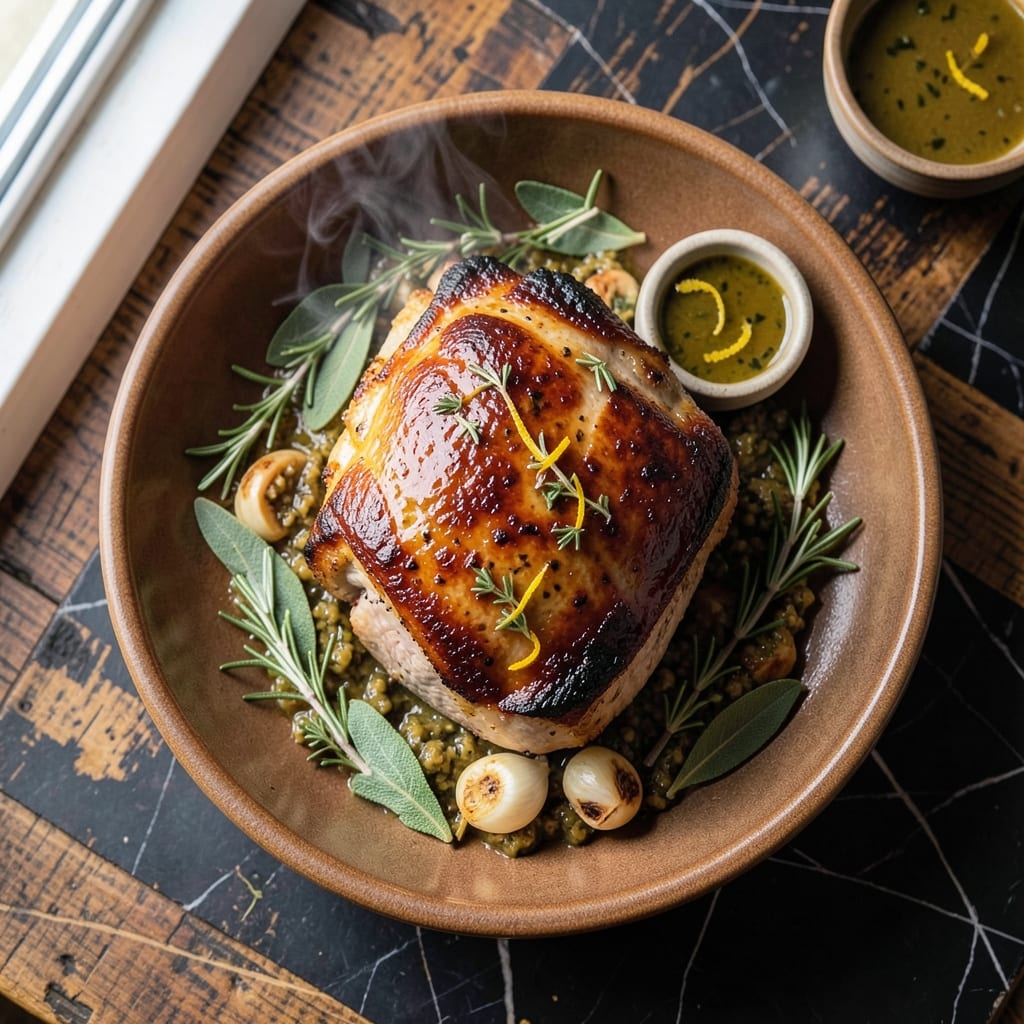
This herb-crusted pork roast delivers perfect results every time with a method that’s been tested in real home kitchens. I developed this approach after years of refining techniques to ensure tender, flavorful meat with a crispy exterior, no matter your oven’s quirks.
The slow-roasting process transforms a simple pork shoulder into a centerpiece worthy of any dinner table. A blend of fresh herbs and garlic creates a crust that seals in juices while adding layers of aromatic flavor.
What emerges is fall-apart tender pork with a golden, herb-crusted exterior that crackles with each slice. The meat stays moist and succulent, absorbing the flavors of the herb rub as it roasts low and slow.
Serve with roasted potatoes and seasonal vegetables for a complete meal that feels special without requiring complicated steps.
Ingredients for Pork Roast Recipe Alton Brown
Transform a humble pork shoulder into a showstopping centerpiece with these carefully selected ingredients.
| Ingredient | Amount | Notes |
|---|---|---|
| Pork Shoulder 🐖 | 3 lb | Bone-in, skin-on preferred |
| Fresh Rosemary 🌿 | 2 tbsp | Finely chopped, stems discarded |
| Fresh Thyme 🍃 | 2 tbsp | Leaves stripped from stems |
| Fresh Sage 🌿 | 1 tbsp | Finely minced for even distribution |
| Garlic Cloves 🧄 | 6 cloves | Peeled and crushed to paste |
| Kosher Salt 🧂 | 1 tbsp | Diamond Crystal brand preferred |
| Black Pepper 🌶️ | 1 ½ tsp | Freshly ground, coarse texture |
| Dijon Mustard 🟡 | 2 tbsp | Whole grain for texture |
| Extra-Virgin Olive Oil 🫒 | ¼ cup | High-quality, fruity notes |
| Yellow Onion 🧅 | 1 whole | Large, thinly sliced for bedding |
| Carrots 🥕 | 3 whole | Peeled and cut into chunks |
| Celery Stalks 🥬 | 2 whole | Cut into 2-inch pieces |
| Low-Sodium Chicken Stock 💧 | 1 cup | Homemade or high-quality boxed |
The pork shoulder is non-negotiable here—bone-in, skin-on yields the juiciest, most flavorful results. Costco or Whole Foods have excellent options with good marbling. For the herbs, fresh is mandatory (dried won’t deliver the same aromatic punch). Seek out organic rosemary and thyme at your local farmers market for the most vibrant flavor. The garlic should be freshly crushed—pre-minced lacks the necessary intensity.
No fresh herbs? Dried at one-third the quantity, but expect a less complex crust. Low-sodium chicken stock can be swapped for vegetable stock if preferred. Mustard alternatives: whole-grain or regular Dijon work equally well, but avoid yellow mustard—it’s too mild. The olive oil can be avocado oil for a neutral flavor, though extra-virgin provides superior depth.
The herb crust can be prepped 1 day ahead—store covered in the fridge. Roast the pork within 24 hours of applying the rub for optimal flavor penetration. Leftovers keep for 4-5 days in the fridge or freeze for 3 months with minimal texture loss.
Why You’ll Love This Recipe
- Set It and Forget It: I toss the pork shoulder with rosemary, thyme, and garlic, then let the oven do the work—no babysitting required.
- Herb Crust Perfection: The fresh sage and garlic form this insane crust that cracks when you slice it. Honestly, I could eat that part alone.
- Feeds a Hungry Crew: One pork shoulder means dinner for six, plus leftovers for sandwiches the next day. My teenagers ask for this by name.
- Wallet-Friendly Luxury: Pork shoulder is cheap, but with those herbs, it tastes like a fancy Sunday dinner. I’ll be real: it’s my secret to looking like a pro without spending like one.
Step-by-Step Instructions for Herb-Crusted Slow-Roasted Pork
Master the technique for fall-apart tender meat with a crisp, aromatic crust.
Step 1: Prepare the Herb Paste and Score the Pork
In a small bowl, combine the 2 tbsp Fresh Rosemary, 2 tbsp Fresh Thyme, 1 tbsp Fresh Sage, 6 cloves Garlic Cloves, 1 tbsp Kosher Salt, 1.5 tsp Black Pepper, 2 tbsp Dijon Mustard, and 0.25 cup Extra-Virgin Olive Oil. Stir until a thick paste forms. The herbs should be fully saturated in the oil, creating a cohesive mixture.
Pat the 3 lb Pork Shoulder dry with paper towels, then score the fat cap in a crosshatch pattern, cutting about ¼ inch deep. This allows the herb paste to penetrate deeply and creates more surface area for crisping. Rub the paste all over the pork, working it into every crevice and score mark.
Step 2: Build the Aromatic Bed and Begin Roasting
Position a rack in the lower third of your oven and preheat to 325°F. Arrange the 1 whole Yellow Onion, 3 whole Carrots, and 2 whole Celery Stalks in the bottom of a roasting pan. These vegetables will create a natural roasting rack and infuse the meat with additional flavor.
Place the pork shoulder fat-side up on the vegetable bed. Pour the 1 cup Low-Sodium Chicken Stock into the pan, taking care not to wash off the herb paste. The liquid should pool around the vegetables, not touch the meat. This setup ensures even cooking and prevents the bottom from drying out.
Step 3: Slow-Roast to Tenderness
Roast uncovered for 3 to 3½ hours, basting the pork with pan juices every 45 minutes. You’ll notice the fat cap rendering gradually, and the herb crust will darken to a deep mahogany. The meat is ready when it reaches an internal temperature of 195°F in the thickest part.
The pork should be fork-tender at this stage—insert a fork and twist; it should pull apart with minimal resistance. If the pan juices begin to reduce too much, add a splash of water to maintain moisture. The vegetables will have softened and caramelized beneath the roast.
Step 4: Rest and Serve
Transfer the pork shoulder to a cutting board and tent loosely with foil. Let it rest for 20 minutes to allow the juices to redistribute. This step is non-negotiable for maintaining moisture and tenderness throughout the meat.
Skim excess fat from the pan juices and serve the pork sliced or shredded, with the vegetables and pan sauce spooned over the top. The crust should be deeply browned and fragrant, while the interior remains succulent and rich with herb flavor. The vegetables will have absorbed the pork’s rendered fat and stock, creating a flavorful accompaniment.
Pro Tips For Making Pork Roast Recipe Alton Brown
- Dry the Pork: Pat the shoulder completely dry with paper towels before seasoning—I learned this the hard way after my first few roasts came out steamed rather than browned.
- Sear It Hard: Use a ripping hot pan for the initial sear, about 2 minutes per side. Sounds tedious, but it builds the crust that makes this dish.
- Don’t Skimp on Herbs: Double the fresh rosemary, thyme, and sage—Alton’s amounts are modest, and the flavor actually changes the outcome when you go bold.
- Rest Before Slicing: Tent the roast with foil and give it a solid 15 minutes before carving, or all those beautiful juices will end up on the cutting board instead of in the meat.
Regional Styles of These Flavors
New England Style
In my Boston kitchen, we often add 1 tbsp maple syrup and 1 tsp apple cider vinegar to the herb paste for a touch of New England sweetness. This balances the rich pork with a subtle tang that reminds me of autumn in the Northeast. 🗺️
Southern Barbecue
For a Southern twist, swap the herb paste for a dry rub of 2 tbsp brown sugar, 1 tbsp smoked paprika, and 1 tsp cayenne. Roast at 275°F with ½ cup apple cider in the pan for that classic pulled pork flavor.
Italian Herb-Crusted
Inspired by Nonna’s cooking, add 1 tbsp fennel seeds and 1 tbsp dried oregano to the paste. Replace the Dijon with 2 tbsp olive oil and a splash of balsamic vinegar for an Italian deli-style roast.
French Provençal
Use herbes de Provence in place of fresh herbs, and add 1 tbsp lavender flowers. Deglaze the pan with ½ cup dry white wine for a fragrant, sophisticated French take on this dish.
Asian-Inspired
Swap the herb paste for a mix of 3 tbsp hoisin sauce, 1 tbsp grated ginger, and 2 minced garlic cloves. Add ¼ cup soy sauce to the pan for an umami-rich braising liquid. 🌟
Mexican Carnitas
Replace the herb crust with 1 tbsp cumin, 1 tbsp chili powder, and 1 tbsp orange zest. Roast with 1 cup orange juice and ½ cup lime juice for tender, citrusy carnitas.
Nutrition Facts
Frequently Asked Questions
What temperature should I roast this at?
Preheat your oven to 325°F and roast uncovered for 3 to 3½ hours. This slower temperature ensures even cooking and a tender result.
Can I use a different cut of pork?
For best results, stick with pork shoulder. It has the right fat content for slow roasting. Pork loin works but may dry out more quickly.
How do I know when it’s done?
Use a meat thermometer to check for 195°F internally. The pork should be fork-tender and pull apart easily.
Do I need to cover it while roasting?
No, roast uncovered to allow the crust to crisp. Baste with pan juices every 45 minutes to keep it moist.

- Potato Chip Cookie Recipe With Pecans: Buttery Crunch Meets Nutty Richness - October 30, 2026
- Potato Patty Recipe No Egg: Crispy Edges Without the Binder - October 30, 2026
- Paula Deen’s Potato Chip Cookies Recipe: Salty-Sweet Crunch in Every Bite - October 30, 2026