
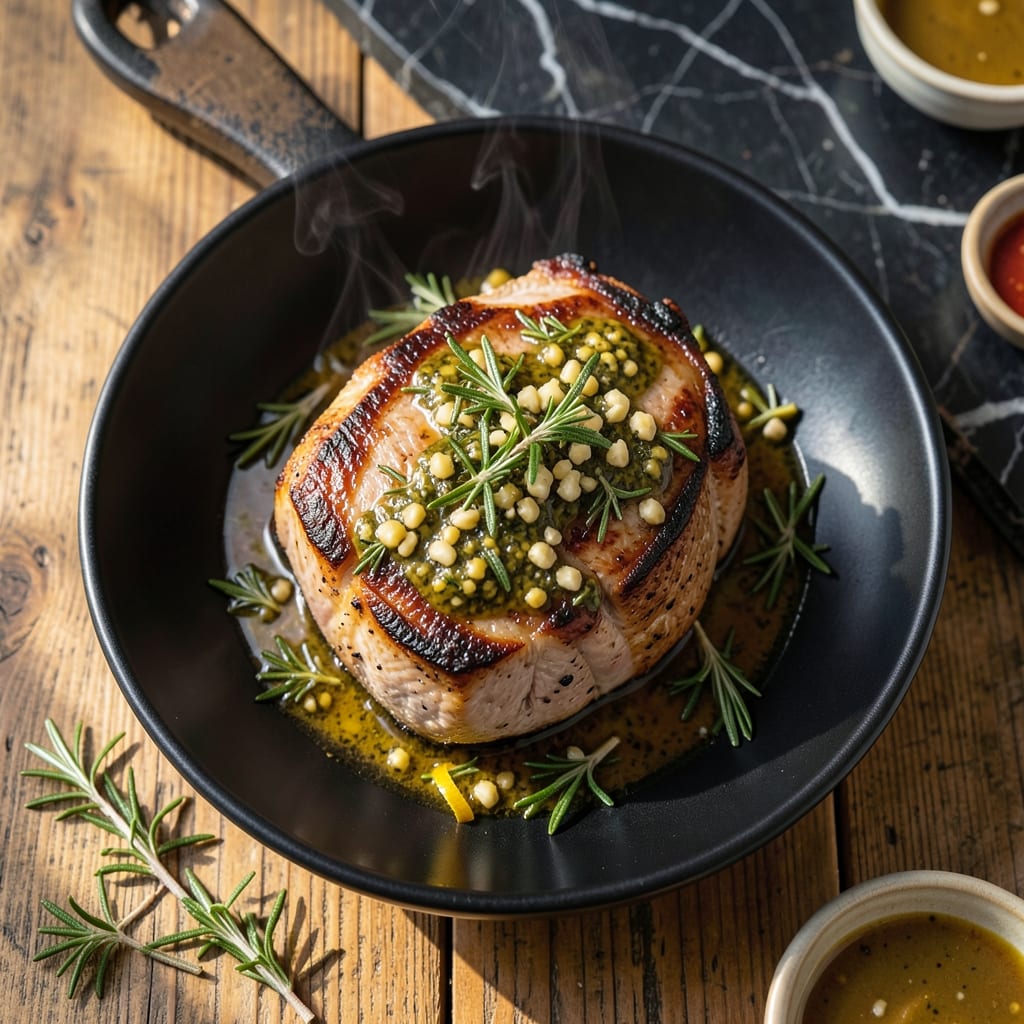
This oven-roasted pork ribeye delivers a succulent center with a herb-crusted edge that rivals any steakhouse. I developed this method after years of testing different cooking approaches in my small kitchen.
The key is starting with high heat to sear the outer layer, then finishing at a lower temperature to ensure even cooking. A blend of fresh herbs and garlic creates a fragrant crust that locks in natural juices.
You’ll end up with tender, flavorful meat that’s perfectly pink inside with a golden, aromatic exterior. The herb crust adds depth without overpowering the pork’s natural richness.
Serve with roasted vegetables or mashed potatoes for a complete meal. This technique works every time.
Ingredients for Pork Ribeye Recipe Oven
High-quality pork plus fresh herbs and aromatics create this herb-crusted oven masterpiece.
| Ingredient | Amount | Notes |
|---|---|---|
| Pork Ribeye Roast 🥩 | 2 ½ lb | Bone-in, well-marbled preferred |
| Fresh Rosemary 🌿 | 2 tbsp | Finely chopped, stems discarded |
| Fresh Thyme 🍃 | 2 tbsp | Leaves stripped from stems |
| Garlic Cloves 🧄 | 6 cloves | Minced to fine paste |
| Dijon Mustard 🟡 | 2 tbsp | Smooth, not whole grain |
| Extra-Virgin Olive Oil 🫒 | 3 tbsp | Divided for crust and searing |
| Kosher Salt 🧂 | 1 ½ tsp | Diamond Crystal preferred |
| Freshly Ground Black Pepper 🌶️ | 1 tsp | Coarse grind for crust |
| Red Wine Vinegar 🍷 | 1 tbsp | For brightness in crust |
| Unsalted Butter 🧈 | 2 tbsp | Softened, for finishing |
| Shallot 🧅 | 1 whole | Finely minced for depth |
| Dry White Wine 🥂 | ¼ cup | For deglazing pan |
The pork ribeye roast is non-negotiable here. Bone-in, well-marbled cuts from a trusted butcher like Whole Foods or local purveyors ensure succulence. Avoid pre-packaged options with added solutions—look for natural color and visible fat streaking. The fresh herbs should be vibrant, not wilted; rosemary and thyme from Trader Joe’s are consistently reliable. For garlic, fresh heads are mandatory—no pre-minced jars.
No fresh rosemary? Dried at one-third the amount works, but fresh delivers superior aroma. Swap thyme for sage or marjoram if needed. Dijon mustard alternatives include whole-grain mustard for texture or a mix of yellow mustard with a pinch of turmeric. The white wine can be substituted with chicken stock plus a teaspoon of lemon juice. Butter can be replaced with ghee for a richer finish.
Store the raw pork on a tray in the coldest part of your fridge for up to 3 days. The herb crust mixture can be prepped a day ahead—keep it refrigerated. Leftovers reheat beautifully and stay fresh for 4-5 days. This also freezes well for up to 3 months if properly wrapped.
Why You’ll Love This Recipe
- Hands-Off Cooking: I just season, pop it in the oven, and let the rosemary and garlic work their magic.
- Herb-Crusted Perfection: That Dijon mustard crust with fresh thyme? It gives every bite a rich, savory depth I crave.
- Feeds My Crew: One ribeye roast and I’ve got enough for Sunday dinner plus leftovers for sandwiches.
- Budget-Friendly Luxury: Honestly, it tastes like a fancy restaurant dish but costs way less to make at home.
Step-by-Step Instructions for Pork Ribeye Roast
This method delivers a perfectly cooked roast with a flavorful herb crust every time.
Step 1: Prepare the Herb Crust
In a small bowl, combine the 2 tbsp Fresh Rosemary, 2 tbsp Fresh Thyme, 6 cloves Garlic Cloves, 2 tbsp Dijon Mustard, 1.5 tsp Kosher Salt, 1 tsp Freshly Ground Black Pepper, 1 tbsp Red Wine Vinegar, and 2 tbsp Extra-Virgin Olive Oil. Stir until the mixture forms a thick, aromatic paste.
The acidity from the red wine vinegar brightens the herb flavors while the Dijon mustard helps the crust adhere to the pork. Press the mixture firmly onto all surfaces of the 2.5 lb Pork Ribeye Roast, ensuring an even coating. Let it marinate at room temperature for 30 minutes while you preheat the oven.
Step 2: Sear the Roast for Depth of Flavor
Heat the remaining 1 tbsp Extra-Virgin Olive Oil in a large oven-safe skillet over medium-high heat. When the oil shimmers, place the pork ribeye roast in the pan and sear for 3-4 minutes per side until deeply browned. This creates a flavorful fond that will enhance the finished dish.
Don’t move the roast during searing—let it develop a rich crust. You’ll know it’s ready to flip when it releases easily from the pan. The seared exterior will lock in juices while adding complexity to the herb crust.
Step 3: Roast to Perfection
Transfer the skillet to a preheated 400°F oven. Roast the pork ribeye for 25-30 minutes or until an instant-read thermometer inserted into the thickest part registers 145°F. The roast should have a deep golden-brown crust with herbs visibly caramelized.
Baste the roast with pan juices once or twice during cooking to keep the crust moist and flavorful. The internal temperature will continue to rise 5-10°F during resting, so remove it from the oven when it hits 140-145°F for medium-rare to medium doneness.
Step 4: Create a Pan Sauce and Rest
Remove the roast to a cutting board and tent loosely with foil. Place the skillet on the stovetop over medium heat. Add the 1 whole Shallot and cook for 2-3 minutes until softened. Deglaze with the 0.25 cup Dry White Wine, scraping up all browned bits from the bottom of the pan.
Simmer for 3-4 minutes until the wine reduces by half, then whisk in the 2 tbsp Unsalted Butter until melted and emulsified into a glossy sauce. Let the roast rest for 10-15 minutes before slicing—this ensures maximum juiciness. Serve slices with the pan sauce spooned over the top.
Pro Tips For Making Pork Ribeye Recipe Oven
- Start Hot, Finish Low: Sear the pork ribeye at 450°F for 20 minutes to get a good crust, then drop to 325°F to finish cooking evenly—I learned this the hard way after my first attempt came out tough and uneven.
- Score the Fat: Cut 1/4-inch slits in a diamond pattern across the fat cap so the rosemary, thyme, and garlic can penetrate deeper. Sounds fussy, but it actually changes the outcome.
- Skip Cold Meat: Let the roast sit at room temperature for 30-45 minutes before it goes in the oven. After burning the edges on a cold roast once, I finally figured out why my timing was always off.
- Mustard First, Herbs Last: Brush the Dijon mustard on the pork before the herbs so they stick better—this isn’t the prettiest method, but it’s the tastiest.
Serving Suggestions for This Dish
Classic New England Pairings
I love serving this with creamy mashed potatoes that soak up the pan sauce beautifully. Use Yukon Golds and ½ cup heavy cream for the richest texture. The starchy base complements the pork’s richness perfectly.
Seasonal Vegetable Sides
Roasted Brussels sprouts with pancetta and balsamic glaze add a smoky-sweet contrast. Toss 1 lb trimmed sprouts with 2 tbsp olive oil and roast at 400°F for 20 minutes. They finish while the pork rests. 💛
Bread for Sauce Soaking
A crusty sourdough baguette from my local Boston bakery is perfect for mopping up every last bit of sauce. Warm it for 5 minutes in the oven before serving. The chewy texture stands up to the tender pork beautifully.
Fresh Salad Contrast
A simple arugula salad with lemon vinaigrette cuts through the richness. Toss 4 cups arugula with 2 tbsp olive oil, 1 tbsp lemon juice, and shaved Parmigiano-Reggiano. The peppery greens refresh your palate between bites.
Wine Pairing
A medium-bodied Pinot Noir from Oregon complements the herb crust without overpowering. The earthy notes harmonize with rosemary and thyme. For white wine lovers, a buttery Chardonnay from California works wonderfully. 🍷
Family-Style Service
I recommend slicing the roast at the table for a dramatic presentation. Arrange slices on a warm platter with sides in bowls. This encourages sharing and makes for a cozy, communal meal—just like Nonna used to serve.
Nutrition Facts
Frequently Asked Questions
What temperature should I cook pork ribeye to?
Remove from oven at 140-145°F internal temp. It will rise to 145-150°F while resting, giving perfect medium doneness.
Can I use dried herbs instead of fresh?
Yes, use 1/3 the amount of dried. Fresh delivers better aroma, but dried rosemary and thyme work in a pinch.
How long should the pork rest before slicing?
Let it rest 10-15 minutes tented with foil. This keeps juices inside the meat for maximum tenderness.
What if my roast isn’t browning?
Pat it dry before searing and ensure oven is fully preheated to 400°F. Baste with pan juices during cooking.

- Potato Chip Cookie Recipe With Pecans: Buttery Crunch Meets Nutty Richness - October 30, 2026
- Potato Patty Recipe No Egg: Crispy Edges Without the Binder - October 30, 2026
- Paula Deen’s Potato Chip Cookies Recipe: Salty-Sweet Crunch in Every Bite - October 30, 2026