
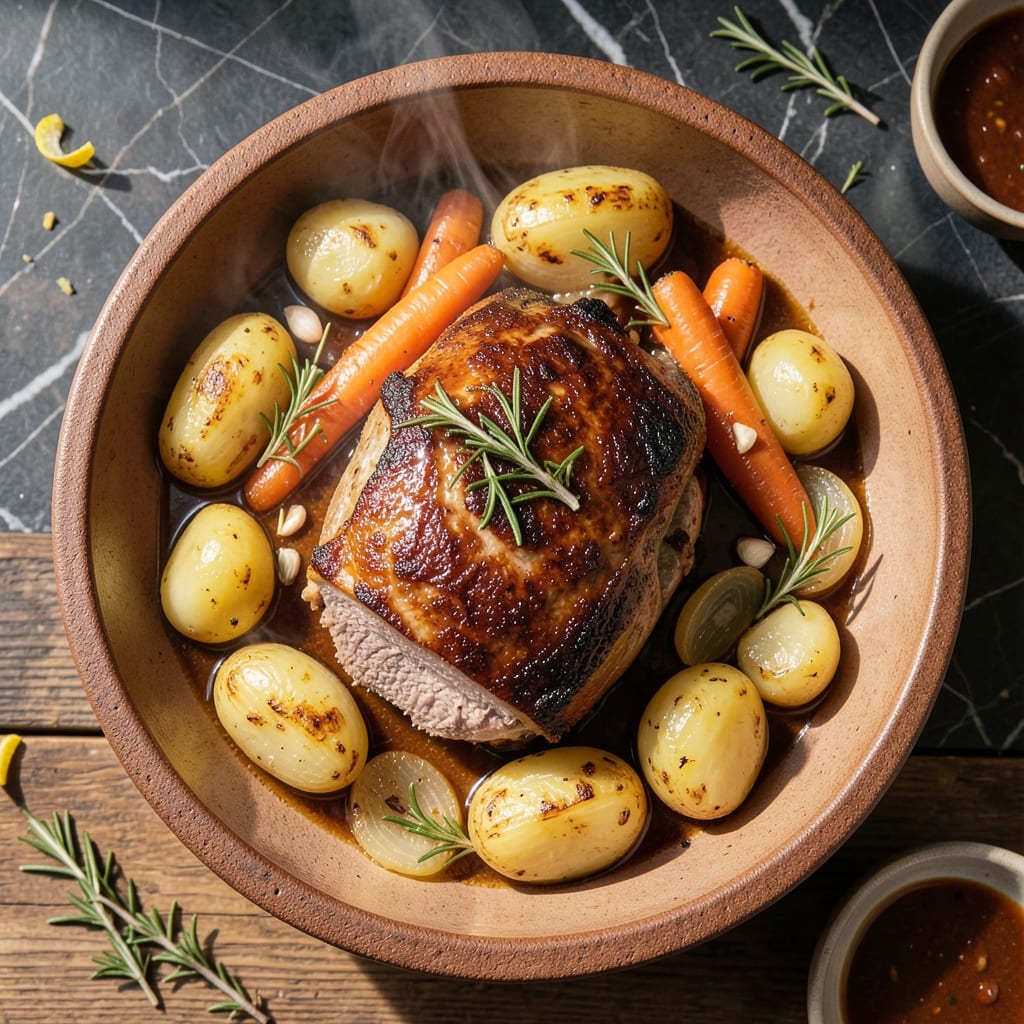
This oven-baked pork pot roast delivers tender, herb-crusted meat with vegetables that caramelize into sweet perfection. The slow, dry heat transforms a humble cut into a centerpiece worthy of any dinner table.
I developed this method to ensure the pork stays juicy while developing a rich, flavorful crust. A simple rub of garlic, rosemary, and thyme creates depth without overpowering the natural pork flavor.
By the time it emerges from the oven, you’ll have fall-apart meat surrounded by golden, caramelized potatoes and carrots. The pan juices reduce into a light gravy that ties everything together.
Serve it straight from the roasting pan for a meal that feels special but requires minimal effort.
Ingredients for Pork Pot Roast Recipe Oven
Pork shoulder, root vegetables, and aromatic herbs combine for this oven-baked centerpiece dish.
| Ingredient | Amount | Notes |
|---|---|---|
| Pork Shoulder Roast 🥩 | 3 lb | Bone-in for extra flavor |
| Yukon Gold Potatoes 🥔 | 2 lb | Cut into 2-inch chunks |
| Carrots 🥕 | 1 lb | Peeled, cut into 3-inch pieces |
| Yellow Onion 🧅 | 1 whole | Quartered through root end |
| Garlic Cloves 🧄 | 6 cloves | Minced for herb rub |
| Fresh Rosemary 🌿 | 2 tbsp | Finely chopped, stems discarded |
| Fresh Thyme Leaves 🍃 | 2 tbsp | Stems removed, loosely packed |
| Diamond Crystal Kosher Salt 🧂 | 1 ½ tsp | Divided for seasoning layers |
| Freshly Ground Black Pepper 🌶️ | 1 tsp | Coarsely ground preferred |
| Olive Oil 🫒 | 3 tbsp | Divided for searing and vegetables |
| Dijon Mustard 🟡 | 2 tbsp | For herb crust adhesion |
| Low-Sodium Chicken Stock 🥣 | 1 cup | For pan juices and gravy |
| Dry White Wine 🍷 | ½ cup | For deglazing pan |
| Unsalted Butter 🧈 | 2 tbsp | For finishing pan sauce |
The pork shoulder is non-negotiable here. Bone-in, well-marbled roasts from Whole Foods or your local butcher yield the most tender results. Look for cuts labeled as Boston butt or picnic shoulder—both work beautifully. At Costco, you’ll find larger roasts that can be portioned and frozen for future use. Avoid pre-cut stew meat, as it lacks the connective tissue needed for proper breakdown during slow roasting.
No fresh rosemary or thyme? Dried herbs at one-third the amount work in the rub, though the flavor won’t be as vibrant. Substitute sweet potatoes for Yukon Golds if preferred, but reduce roasting time by 15 minutes. For the wine, any dry white works—Sauvignon Blanc or Pinot Grigio are ideal. Vegetable stock can replace chicken stock, though the flavor profile will be slightly different.
The roast benefits from resting 15-20 minutes before carving. Leftovers keep refrigerated for 4-5 days or frozen for 3 months. Reheat gently in the oven with a splash of stock to maintain moisture. The caramelized vegetables reheat particularly well, often tasting even better the next day.
Why You’ll Love This Recipe
- One Pan Magic: I just toss the pork shoulder, potatoes, carrots, and onions on a sheet pan—no fancy prep, no extra dishes.
- Garlic-Infused Comfort: The pork soaks up the roasted garlic and onion flavors, making every bite ridiculously rich.
- Feeds a Crowd: I serve this for Sunday dinner, and it’s always a hit with both kids and adults.
- Leftovers for Days: Honestly, it tastes even better the next day—perfect for sandwiches or quick reheats.
Step-by-Step Instructions for Pork Pot Roast
This method ensures tender pork and deeply caramelized vegetables with a fragrant herb crust.
Step 1: Sear and Season the Pork Shoulder
Pat the 3 lb Pork Shoulder Roast dry with paper towels. This step is crucial for achieving a proper sear. Season all sides with 1 tsp Diamond Crystal Kosher Salt and 1 tsp Freshly Ground Black Pepper.
Heat 2 tbsp Olive Oil in a Dutch oven over medium-high heat until shimmering. Sear the pork on all sides for 8-10 minutes total, turning occasionally, until deeply browned. The meat should release easily from the pan when properly seared. Transfer to a plate.
Step 2: Prepare the Herb Crust and Vegetables
In a small bowl, combine the 2 tbsp Fresh Rosemary, 2 tbsp Fresh Thyme Leaves, 6 cloves minced Garlic Cloves, 2 tbsp Dijon Mustard, 0.5 tsp Diamond Crystal Kosher Salt, and 1 tbsp Olive Oil. Rub this mixture all over the seared pork.
Arrange the 2 lb Yukon Gold Potatoes, 1 lb Carrots, and 1 whole Yellow Onion around the pork in the Dutch oven. Drizzle with the remaining 1 tbsp Olive Oil and toss to coat evenly. These vegetables will both flavor the pork and absorb its juices during cooking.
Step 3: Braise in the Oven
Return the pork to the Dutch oven, placing it on top of the vegetables. Pour in the 1 cup Low-Sodium Chicken Stock and 0.5 cup Dry White Wine. The liquid should come about halfway up the vegetables.
Cover and transfer to a preheated 325°F oven. Braise for 2.5 to 3 hours, turning the pork halfway through, until the meat is fork-tender and the internal temperature reaches 195°F. The vegetables should be soft and beginning to caramelize at the edges.
Step 4: Finish with Pan Sauce and Rest
Transfer the pork to a cutting board and tent with foil. Skim excess fat from the braising liquid, then place the Dutch oven on the stovetop over medium heat. Stir in the 2 tbsp Unsalted Butter and simmer for 3-4 minutes until the sauce thickens slightly.
Let the pork rest for 15 minutes before slicing. This allows the juices to redistribute, ensuring moist, tender meat. Serve the pork with the vegetables and pan sauce spooned over the top. The sauce should coat the back of a spoon with a glossy sheen.
Pro Tips For Making Pork Pot Roast Recipe Oven
- Sear the Pork First: I learned this the hard way—browning the pork shoulder in the Dutch oven before roasting adds a depth of flavor that skipping this step just can’t match. Use medium-high heat and about 2 tablespoons of oil to get a good crust on all sides.
- Cut Potatoes Evenly: Yukon Golds cook faster than you think, so slice them into 2-inch chunks to guarantee they soften at the same rate as the carrots. Uneven pieces mean some will be mushy while others stay underdone.
- Don’t Overcrowd the Pan: Resist the urge to dump all the veggies in at once—if the pan is too full, the pork steams instead of roasts. Spread them in a single layer around the meat for that perfect caramelized finish.
- Use a Meat Thermometer: After pulling out a dry pot roast one too many times, I finally started checking for 195°F internal temp. Pork shoulder is forgiving, but this ensures it’s fall-apart tender without guessing.
Flavor Customization for These Flavors
Spicy Kick
Add 1-2 tsp cayenne pepper or 1 tbsp smoked paprika to the herb rub for heat. For a milder option, use 1 tsp chipotle powder—it adds smokiness without overwhelming spice. I love how this transforms the flavor profile. 🌶️
Sweet Glaze
During the last 30 minutes of cooking, brush the pork with a mixture of ¼ cup honey and 2 tbsp apple cider vinegar. This creates a sticky, sweet-tangy crust that pairs perfectly with the savory meat.
Asian-Inspired Twist
Swap the Dijon mustard for 2 tbsp hoisin sauce and add 1 tbsp grated ginger to the herb rub. Replace the wine with ½ cup soy sauce for an umami-rich variation. Serve with steamed jasmine rice.
Mediterranean Flavors
Add 1 tsp dried oregano and ½ tsp ground cumin to the herb mix. Replace the carrots with 1 lb chopped fennel and add ½ cup pitted kalamata olives to the pan before roasting.
Herb Boost
For a more aromatic version, add 2 tbsp chopped fresh parsley and 1 tbsp chopped fresh sage to the herb rub. The sage adds an earthy depth that complements the pork beautifully. 💫
Coffee Rub
Replace 1 tbsp Diamond Crystal Kosher Salt with 1 tbsp finely ground coffee in the rub. Coffee enhances the pork’s natural richness and adds a subtle depth. It sounds unusual but works wonderfully.
Nutrition Facts
Frequently Asked Questions
What cut works best if pork shoulder isn’t available?
Pork butt is an excellent substitute with similar marbling. Avoid lean cuts like tenderloin as they dry out during long cooking.
How do I prevent the vegetables from turning mushy?
Cut them into uniform 2-inch chunks and add to the pot only after searing the meat. This prevents overcooking.
Can I make this in a slow cooker instead?
Yes, but sear the pork first for best flavor. Cook on low for 8 hours or high for 5-6 hours.
Why does the recipe specify 195°F internal temperature?
Collagen breaks down between 195-205°F, ensuring tender, fall-apart texture. Lower temps may leave meat chewy.

- Potato Chip Cookie Recipe With Pecans: Buttery Crunch Meets Nutty Richness - October 30, 2026
- Potato Patty Recipe No Egg: Crispy Edges Without the Binder - October 30, 2026
- Paula Deen’s Potato Chip Cookies Recipe: Salty-Sweet Crunch in Every Bite - October 30, 2026