
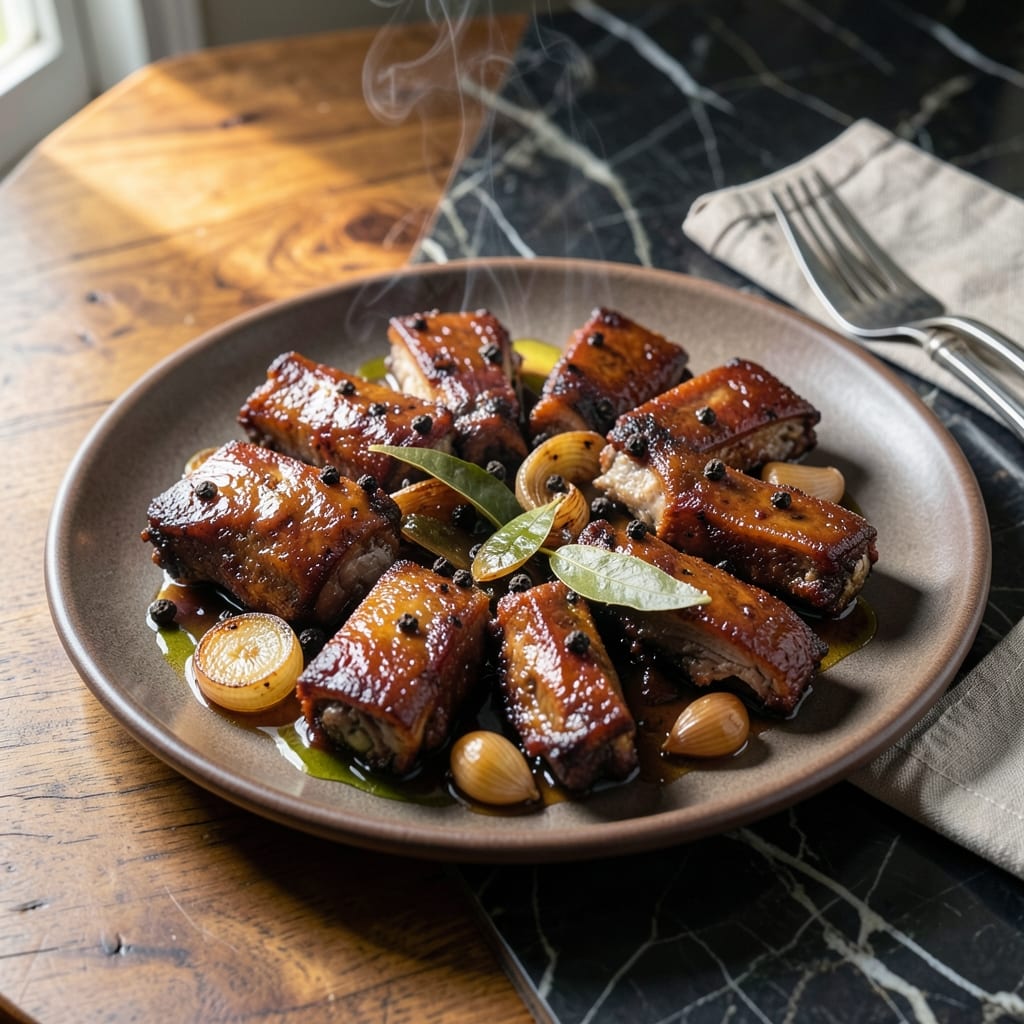
This Filipino adobo recipe transforms pork ribs into tender, fall-off-the-bone perfection with a tangy soy glaze. The traditional method uses vinegar, soy sauce, and garlic to create a bold flavor profile that defines the dish.
The key is slow cooking, allowing the ribs to absorb the marinade fully. I developed this version after testing multiple vinegar-to-soy ratios to achieve the ideal balance of sour and savory notes.
You’ll end up with meat that’s incredibly tender, coated in a rich, slightly sticky sauce. The aroma alone will draw everyone to the table long before serving.
Serve with steamed rice to soak up every drop of the flavorful sauce. Here’s how to make it.
Ingredients for Pork Ribs Adobo Recipe Filipino
Pantry staples and pork ribs create this Filipino classic with bold, tangy depth.
| Ingredient | Amount | Notes |
|---|---|---|
| Pork Ribs 🥩 | 2 ½ lb | Baby back or spare ribs |
| Soy Sauce 🫒 | ¾ cup | Regular or low-sodium |
| White Vinegar 💧 | ¾ cup | Distilled or cane vinegar |
| Garlic Cloves 🧄 | 8 cloves | Peeled and crushed |
| Bay Leaves 🍃 | 3 whole | Dried or fresh |
| Black Peppercorns 🌶️ | 1 tsp | Whole, lightly crushed |
| Brown Sugar 🍚 | 2 tbsp | Light or dark variety |
| Water 💧 | 1 cup | For simmering liquid |
| Onion 🧅 | 1 whole | Medium, sliced thin |
| Cooking Oil 🫒 | 2 tbsp | Neutral oil for searing |
| Salt 🧂 | 1 tsp | Adjust to taste |
| Green Onions 🧅 | ¼ cup | Chopped, for garnish |
The pork ribs are key here—baby back ribs offer the best meat-to-bone ratio, but spare ribs work too (just trim excess fat). Look for good marbling at your butcher or Costco for quality at a better price. The soy sauce should be Filipino brands like Silver Swan or Datu Puti for authentic flavor. Avoid pre-crushed garlic; fresh gives the brightest punch.
No white vinegar? Apple cider vinegar works fine but may add a fruitier note. Out of soy sauce? Tamari or coconut aminos are decent swaps (adjust saltiness). Brown sugar can be honey or coconut sugar at a 1:1 ratio. If you skip the bay leaves, add a pinch of dried thyme for complexity. The onions can be shallots if you prefer a milder bite.
The ribs taste even better the next day as flavors meld. Store in an airtight container for up to 4 days in the fridge or freeze for 3 months. Reheat gently on the stove to keep the meat tender.
Why You’ll Love This Recipe
- One Pot Wonder: I throw the ribs, soy sauce, vinegar, garlic, and bay leaves in a pot and let it simmer—minimal cleanup, maximum flavor.
- Deep Umami Bomb: The soy sauce and garlic meld into this rich, tangy sauce that clings to every rib.
- Weeknight Hero: Honestly, it’s my go-to when I need something hearty but hands-off for a busy evening.
- Better Next Day: The flavors deepen overnight, so leftovers taste even more ridiculously good for lunch tomorrow.
Step-by-Step Instructions for Pork Ribs Adobo
Master this classic Filipino technique for tender ribs with a perfect balance of tangy and savory flavors.
Step 1: Sear the Pork Ribs
Heat the 2 tbsp Cooking Oil in a large pot over medium-high heat. Pat the 2.5 lb Pork Ribs dry with paper towels and season with the 1 tsp Salt. Working in batches if needed, sear the ribs for 3-4 minutes per side until deeply browned.
This step builds a rich flavor foundation. Don’t crowd the pot—giving each rib space ensures proper browning rather than steaming. Transfer the seared ribs to a plate and set aside.
Step 2: Sauté Aromatics and Build the Sauce
In the same pot, add the sliced 1 whole Onion and cook for 2-3 minutes until softened. Add the 8 cloves Garlic Cloves, 3 whole Bay Leaves, and 1 tsp Black Peppercorns, stirring for 30 seconds until fragrant.
Pour in the 0.75 cup Soy Sauce, 0.75 cup White Vinegar, 2 tbsp Brown Sugar, and 1 cup Water. Stir well to dissolve the sugar and deglaze the pot, scraping up any browned bits from the bottom. This creates a rich, balanced sauce base.
Step 3: Braise the Ribs to Tenderness
Return the seared ribs to the pot, ensuring they are mostly submerged in the sauce. Bring the mixture to a boil, then reduce the heat to low. Cover and simmer for 1.5 to 2 hours, turning the ribs occasionally for even cooking.
You’ll know they’re done when the meat pulls away from the bone easily with a fork. The sauce should reduce slightly, becoming thicker and more concentrated. If it reduces too much, add a splash of water to maintain the right consistency.
Step 4: Reduce the Sauce and Glaze the Ribs
Once the ribs are tender, remove the lid and increase the heat to medium. Simmer uncovered for 10-15 minutes, turning the ribs frequently, until the sauce thickens into a glossy glaze and coats the back of a spoon.
This step intensifies the flavors and gives the ribs that signature sticky, caramelized finish. Keep an eye on the pot to prevent the sauce from burning—stir occasionally and adjust the heat as needed.
Step 5: Garnish and Serve
Transfer the ribs to a serving platter and spoon the thickened sauce over the top. Sprinkle with the 0.25 cup Green Onions for a fresh, vibrant finish. Let the ribs rest for 5 minutes before serving to allow the juices to redistribute.
Serve warm with steamed rice to soak up the rich, tangy sauce. The ribs should be fall-off-the-bone tender with a perfect balance of sweet, salty, and sour flavors in every bite.
Pro Tips For Making Pork Ribs Adobo Recipe Filipino
- Simmer Low and Slow: Keep the heat on medium-low once the vinegar goes in—I learned this the hard way after scorching two batches. The ribs should be tender in about 40-45 minutes, not falling apart.
- Balance the Vinegar: Use equal parts soy sauce and white vinegar, but add the vinegar last and never let it hit raw pork without simmering first. My grandmother swore by this, and she was right: it keeps the acid from toughening the meat.
- Skip the Overcrowding: Resist the urge to dump all the ribs in at once—give them space in the pot so they brown instead of steam. I was skeptical until I tried it, but the flavor depth is night and day.
- Crush the Garlic: Smash the garlic cloves with the side of your knife before mincing—it releases way more flavor into the adobo. Sounds weird, but it works, especially when you’re using just a few cloves for a big pot.
Dietary Considerations for This Dish
Gluten-Free Adaptation
For a gluten-free version, simply swap the soy sauce for tamari or coconut aminos. Both maintain the dish’s savory depth without gluten. I always keep San-J Tamari in my pantry—it’s my go-to for gluten-free cooking. 💪
Lower Sodium Option
To reduce sodium, use low-sodium soy sauce and cut the added salt in half. You can also boost flavor with extra garlic, black pepper, or a splash of fish sauce for umami without the salt overload.
Dairy-Free by Default
This recipe is naturally dairy-free, making it perfect for those avoiding milk products. The rich, tangy sauce comes entirely from vinegar, soy, and spices—no butter or cream needed. I love how inclusive this dish is for dietary needs.
Sugar Alternatives
Replace the brown sugar with coconut sugar or honey at a 1:1 ratio for a refined sugar-free version. The caramelized notes will still shine through while keeping it more natural. 🌱
Vegetable Add-Ins
For extra nutrients, toss in 1 cup sliced carrots or potatoes during the braising step. They’ll soak up the adobo sauce beautifully. I often add these when cooking for my daughter Lily—she loves the extra texture.
Keto-Friendly Adjustments
Skip the sugar entirely and use a sugar-free sweetener like erythritol or monk fruit at 1 tbsp. The dish will still be flavorful, just less sweet. Serve with cauliflower rice to keep it low-carb.
Nutrition Facts
Frequently Asked Questions
Can I use a different type of vinegar?
Yes, apple cider or cane vinegar work well. Each adds a slightly different fruitiness, but maintains the tangy balance. Avoid balsamic as its sweetness overpowers the dish.
How do I know when the ribs are done?
The meat should pull away easily from the bone with a fork. If it resists, simmer for another 20-30 minutes and check again. Overcooking makes them dry.
Why did my sauce turn out too salty?
This often happens with regular soy sauce. Use low-sodium soy sauce next time, or balance with extra vinegar or a pinch of sugar. Taste as you go.
Can I make this in a slow cooker?
Brown the ribs first, then cook on low for 6-8 hours or high for 4 hours. This method makes the meat incredibly tender.

- Potato Patty Recipe No Egg: Crispy Edges Without the Binder - October 30, 2026
- Paula Deen’s Potato Chip Cookies Recipe: Salty-Sweet Crunch in Every Bite - October 30, 2026
- Potato Gnocchi Recipe Ideas: Pillowy Soft Dumplings With Rustic Charm - October 30, 2026