
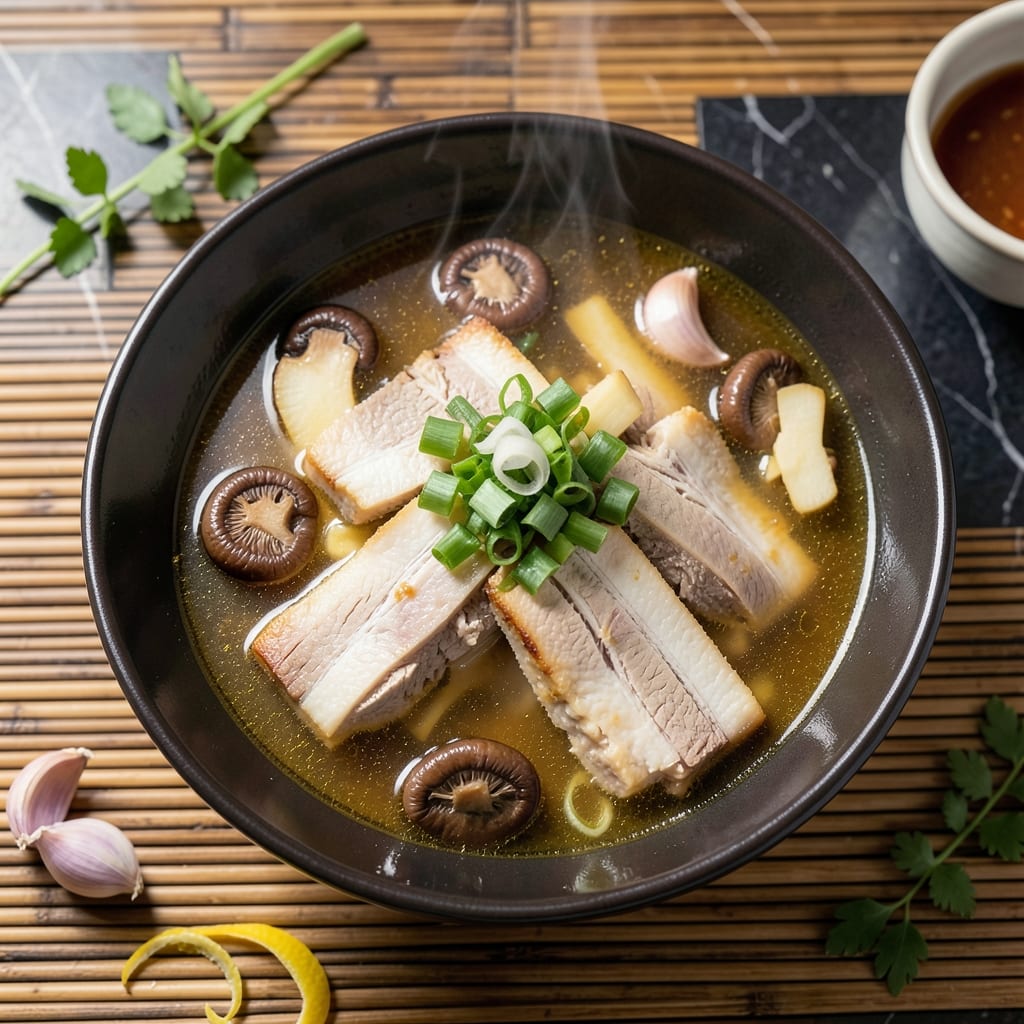
There’s a reason Chinese pork ribs soup has been a staple in my kitchen for decades. The slow-simmered broth extracts every bit of richness from the bones, creating a comforting base that’s deeply flavorful yet clean and light.
I learned this technique during my apprenticeship in Charleston, where precision matters. The key is patience—letting the ribs release their collagen and gelatin for that signature tender texture that falls right off the bone.
What you get is a bowl of warmth with every spoonful. Silky broth, meat so soft it nearly dissolves, and a depth of flavor that only comes from time and care.
Perfect for chilly evenings or when you need a meal that feels like a hug. This is how tradition tastes.
Ingredients for Pork Ribs Soup Recipe Chinese Style
A handful of humble ingredients transform into a bowl of deep, comforting warmth.
| Ingredient | Amount | Notes |
|---|---|---|
| Pork Ribs 🍖 | 1 ½ lb | Bone-in, cut into individual ribs |
| Water 💧 | 8 cups | For simmering broth |
| Ginger 🌿 | 3 slices | Fresh, thick slices, smashed |
| Garlic Cloves 🧄 | 5 cloves | Lightly crushed, peeled |
| Green Onions 🧅 | 4 whole | Cut into 2-inch pieces |
| Dried Shiitake Mushrooms 🍄 | 4 pieces | Rehydrated, stems removed |
| Red Dates 🌰 | 3 pieces | Pitted, optional for sweetness |
| Star Anise Pods ✨ | 2 whole | For aromatic depth |
| Bay Leaves 🍃 | 2 whole | Dried, for broth flavor |
| Salt 🧂 | 1 tbsp | Adjust to taste after simmering |
| White Pepper 🌶️ | 1 tsp | Ground, for traditional flavor |
| Shaoxing Wine 🍷 | 2 tbsp | Or dry sherry as substitute |
| Soy Sauce 🫒 | 1 tbsp | Light or all-purpose variety |
| Sesame Oil 🫒 | 1 tsp | For finishing aroma |
The pork ribs are the foundation here. Look for meaty, bone-in ribs with good marbling—your butcher can cut them into individual pieces if you ask. Asian markets often have pre-cut ribs perfect for soups. Ginger and garlic should be fresh (the pre-minced jars just don’t have the same punch). Don’t skip the dried shiitakes—they add a meaty depth that’s hard to replicate.
No Shaoxing wine? Dry sherry works in a pinch. Missing star anise? Add a cinnamon stick and 1/4 tsp fennel seeds for similar warmth. Red dates can be swapped for goji berries (or omitted entirely). The soy sauce can be tamari for gluten-free, but light soy sauce gives the cleanest flavor. If your ribs are particularly fatty, skim the broth as it simmers.
This soup tastes even better the next day—flavors meld and deepen. Keeps 4-5 days in the fridge, freezes for 3 months. Reheat gently to preserve the silkiness of the broth (don’t boil it like mad).
Why You’ll Love This Recipe
- Set and Forget: I toss the ribs, ginger, and garlic in a pot, let it simmer, and walk away—no babysitting required.
- Deep Umami Punch: The slow-cooked pork ribs soak up every bit of ginger and garlic, making the broth ridiculously rich.
- Family Feast Ready: Honestly, it’s my go-to for Sunday dinners when everyone’s gathered around.
- Budget Stretcher: A cheap cut of ribs and a handful of aromatics feed my whole family for days.
Step-by-Step Instructions for Pork Ribs Soup Chinese Style
Follow this slow-simmered process for fall-off-the-bone ribs in a deeply aromatic broth.
Step 1: Blanch the Pork Ribs for a Clean Base
Place the 1.5 lb Pork Ribs in a large pot and cover with cold water. Bring to a boil over high heat, then reduce to medium and let simmer for 5 minutes. You’ll see impurities rise to the surface as a foamy layer—this step removes them for a crystal-clear final broth.
Drain the ribs and rinse them under cold water, scrubbing off any remaining foam. Pat them dry with paper towels. This blanching process is non-negotiable for authentic Chinese-style soups; it eliminates any gamey or blood flavors while keeping the meat tender.
Step 2: Build the Aromatic Foundation
In a clean pot, add the 8 cups Water, 3 slices Ginger, 5 cloves Garlic Cloves, 4 whole Green Onions, 4 pieces Dried Shiitake Mushrooms, 3 pieces Red Dates, 2 whole Star Anise Pods, and 2 whole Bay Leaves. Bring to a boil over high heat.
Once boiling, reduce to low heat and let the aromatics steep for 10 minutes before adding the ribs. This infuses the water with a complex, layered base. The ginger and garlic should release their fragrance, and the shiitake mushrooms will start to plump up and deepen in color.
Step 3: Simmer the Ribs to Tender Perfection
Add the blanched ribs to the pot along with the 2 tbsp Shaoxing Wine and 1 tbsp Soy Sauce. Return to a boil, then immediately reduce to low heat. Cover and let simmer for 1.5 to 2 hours.
The broth should maintain a gentle simmer—small bubbles breaking the surface, not a rolling boil. You’ll know the ribs are done when the meat pulls away from the bone with minimal resistance. The Red Dates will soften and sweeten the broth, balancing the savory depth of the Star Anise Pods and Bay Leaves.
Step 4: Season and Finish the Soup
Once the ribs are tender, stir in the 1 tbsp Salt and 1 tsp White Pepper. Taste and adjust the seasoning if needed—the flavors should be bold but harmonious. Remove the Star Anise Pods and Bay Leaves to avoid overpowering the broth.
Turn off the heat and stir in the 1 tsp Sesame Oil. This final touch adds a nutty aroma that ties all the flavors together. Let the soup sit covered for 10 minutes to allow the sesame oil to infuse and the ribs to absorb more of the rich, aromatic broth.
Serve hot in deep bowls, ensuring each portion has a generous amount of the tender ribs and flavorful liquid. The broth should be clear yet deeply savory, with a subtle sweetness from the dates and a lingering warmth from the spices.
Pro Tips For Making Pork Ribs Soup Recipe Chinese Style
- Blanch the Ribs: Parboil the ribs for 5-10 minutes first to remove impurities—this keeps your broth clean and flavorful instead of cloudy and bitter.
- Smash the Aromatics: Lightly crush the ginger and garlic with the side of your knife before adding them; it releases way more flavor into the soup.
- Skim Regularly: I learned this the hard way—use a fine-mesh skimmer to remove foam and fat every 15 minutes for a clearer, cleaner-tasting broth.
- Use Cold Water: Start the ribs in cold water and slowly bring to a simmer—it extracts more collagen for a richer, silkier soup base.
Perfect Pairings for This Recipe
Side Dish Pairings
I love serving this with steamed jasmine rice—the fluffy grains soak up that silky broth beautifully. For texture contrast, stir-fried bok choy with garlic adds a crisp, fresh element that cuts through the richness. 🥗
Bread Options
Scallion pancakes are my go-to for mopping up every last drop. The flaky layers and mild onion flavor complement the soup’s depth. If you’re short on time, warm mantou buns work just as well for dipping.
Light Bites
A simple cucumber salad with rice vinegar and sesame seeds offers a cool, tangy counterpoint. Or try pickled mustard greens—their sharpness balances the soup’s savory notes perfectly.
Beverage Pairings
For tea, jasmine green tea enhances the soup’s aromatic spices without overpowering it. A light Sake or Tsintgtao beer also works well, cleansing your palate between bites. 🍺
Nutrition Facts
Frequently Asked Questions
Why blanch the ribs first?
Blanching removes impurities and blood, ensuring a clean, clear broth. This step is essential for authentic flavor and appearance.
Can I use a pressure cooker?
Yes! Cook on high pressure for 35 minutes after blanching. Natural release for 10 minutes gives similar tenderness.
What if my broth is too bland?
Add 1 tsp salt or more soy sauce gradually. Simmer uncovered for 15-20 minutes to concentrate flavors.
How do I store leftovers?
Cool completely, then refrigerate in airtight containers for up to 5 days. Freeze for up to 3 months.

- Potato Patty Recipe No Egg: Crispy Edges Without the Binder - October 30, 2026
- Paula Deen’s Potato Chip Cookies Recipe: Salty-Sweet Crunch in Every Bite - October 30, 2026
- Potato Gnocchi Recipe Ideas: Pillowy Soft Dumplings With Rustic Charm - October 30, 2026