
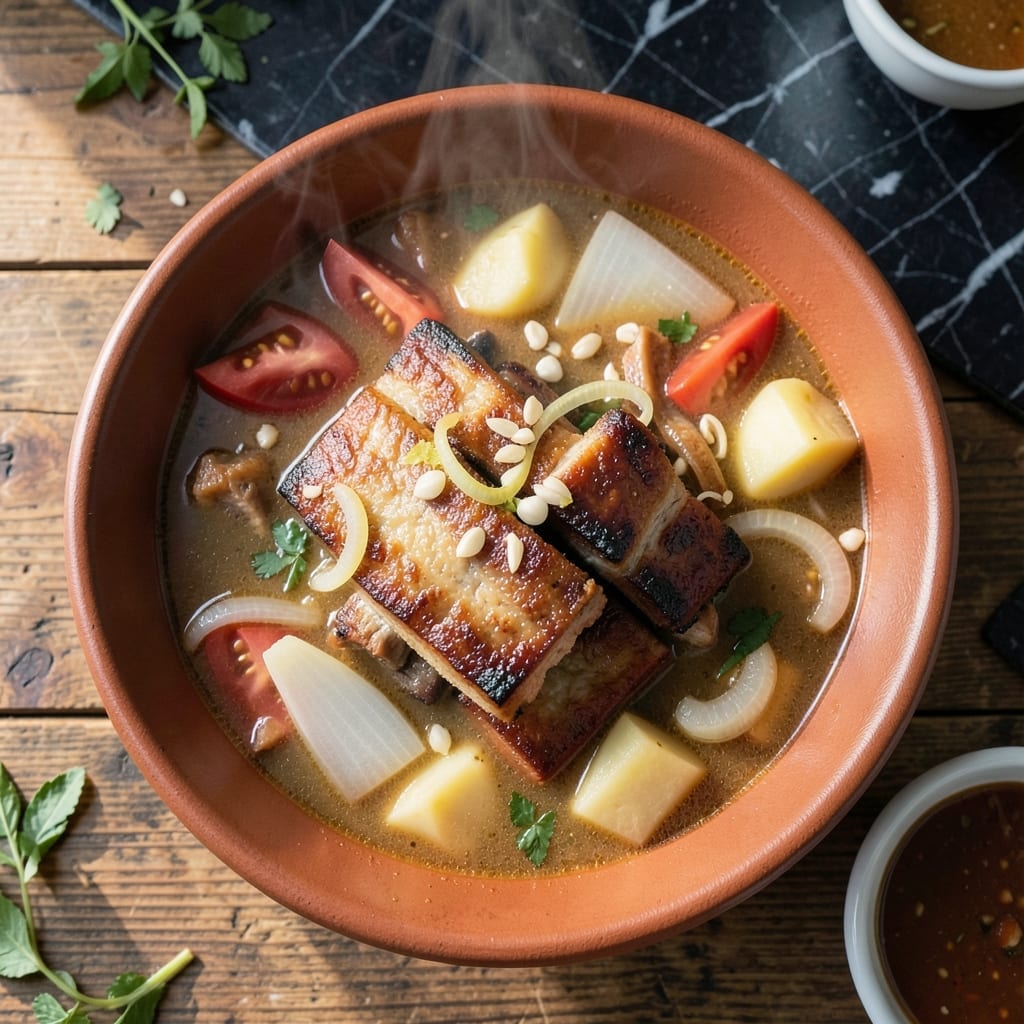
Filipino pork ribs soup brings comfort in every spoonful with its tender meat and tangy tamarind broth. This dish captures the heart of home cooking with simple yet bold flavors.
I’ve perfected this recipe to ensure the ribs become fall-off-the-bone tender while the broth stays rich and balanced. The tamarind adds a signature sour note that defines this traditional soup.
The beauty lies in its simplicity—just pork ribs, vegetables, and tamarind simmered together. No fancy techniques, just time and patience to let the flavors meld perfectly.
Serve it hot with steamed rice for a meal that feels like a warm embrace. This is soul food at its best.
Ingredients for Pork Ribs Soup Recipe Filipino Style
Simple ingredients create this soul-warming Filipino soup with tender ribs and tangy depth.
| Ingredient | Amount | Notes |
|---|---|---|
| Pork Spareribs 🍖 | 2 lb | Cut into individual ribs |
| Tamarind Paste 🍈 | ½ cup | Or 1 packet tamarind soup base |
| Yellow Onion 🧅 | 1 whole | Quartered, skin on |
| Tomatoes 🍅 | 2 whole | Quartered, core removed |
| Daikon Radish 🥕 | 1 whole | Peeled, cut into chunks |
| Potatoes 🥔 | 2 whole | Peeled, quartered |
| Napa Cabbage 🥬 | ½ whole | Cut into large pieces |
| Green Beans 🌱 | 1 cup | Trimmed, cut into 2-inch pieces |
| Garlic Cloves 🧄 | 6 cloves | Smashed, peeled |
| Fish Sauce 🐟 | 2 tbsp | Patis or Vietnamese fish sauce |
| Salt 🧂 | 1 tsp | Adjust to taste |
| Black Peppercorns 🌶️ | 1 tsp | Lightly crushed |
| Water 💧 | 8 cups | Or enough to cover ribs |
The pork ribs are non-negotiable here. Spareribs give you that perfect fat-to-meat ratio for fall-off-the-bone results. Most Asian grocery stores will have them pre-cut into individual ribs, which saves time. If you’re buying a whole slab, ask the butcher to cut them for you—it’s usually free. Look for ribs with some marbling; lean cuts dry out during the long simmer.
No tamarind paste? Tamarind soup base packets (found at Filipino markets) work in a pinch. Short on daikon? Substitute with turnips or extra potatoes. Fish sauce can be swapped for soy sauce at half the amount, but the flavor profile changes slightly. The green beans can be replaced with bok choy or spinach if that’s what you have on hand.
This soup actually improves overnight as the flavors meld. Stores in the fridge for 3-4 days and freezes beautifully for up to 3 months. Reheat gently to preserve the rib tenderness. Always serve with steamed rice to soak up that rich broth.
Why You’ll Love This Recipe
- One Pot Wonder: I just dump the spareribs, tamarind paste, and veggies in and let the stove do the work.
- Tangy Comfort: The tamarind gives it that signature Filipino sour kick that’s balanced by the sweet daikon.
- Feeds the Crowd: I make a big batch on Sunday and it’s lunch for the whole week—no complaints.
- Budget Stretcher: Pork spareribs are cheap, and the daikon bulks it up without breaking the bank.
Step-by-Step Instructions for Pork Ribs Soup Filipino Style
This method delivers tender meat with the perfect balance of tangy and savory flavors.
Step 1: Brown the Pork Spareribs
Pat the 2 lb Pork Spareribs dry with paper towels. In a large pot over medium-high heat, sear the ribs until lightly browned on all sides, about 5-7 minutes. This step builds a flavor foundation for your soup.
Don’t rush this process—browning creates a rich base that enhances the overall depth. You’ll notice the fat rendering out, which adds to the soup’s richness. Remove the ribs and set aside temporarily.
Step 2: Sauté the Aromatics
In the same pot, add the 6 cloves Garlic Cloves, 1 whole Yellow Onion, and 2 whole Tomatoes. Sauté for 3-4 minutes until the onion softens and the tomatoes start to break down.
The garlic should turn golden brown but not burn—burnt garlic adds bitterness. Stir in the 0.5 cup Tamarind Paste, and cook for another 1-2 minutes to meld the flavors. This creates a fragrant base for the broth.
Step 3: Simmer the Broth
Return the ribs to the pot. Add the 8 cups Water, 1 tsp Salt, and 1 tsp Black Peppercorns. Bring to a boil, then reduce heat to low and let it simmer for 45-60 minutes until the meat is tender.
Skimming off any foam that rises to the surface keeps your broth clear. You’ll know the ribs are ready when the meat starts to pull away from the bone. This slow simmer extracts all the richness from the pork.
Step 4: Add the Vegetables
Add the 1 whole Daikon Radish, 2 whole Potatoes, 0.5 whole Napa Cabbage, and 1 cup Green Beans. Stir in the 2 tbsp Fish Sauce and continue simmering for another 15-20 minutes.
The vegetables should be fork-tender but still hold their shape. The daikon and potatoes will soak up the tangy broth, while the cabbage and green beans add freshness. Adjust the salt to taste if needed.
Step 5: Finish and Serve
Turn off the heat and let the soup sit for 5 minutes to allow the flavors to meld together. The ribs should be fall-off-the-bone tender, and the broth should have a balanced tangy-savory profile.
Ladle the soup into bowls, ensuring each serving has a mix of ribs and vegetables. The tamarind gives it that signature Filipino sour note, while the fish sauce adds umami depth. Serve hot with steamed rice for a hearty meal.
Pro Tips For Making Pork Ribs Soup Recipe Filipino Style
- Parboil the Ribs: Boil the spareribs for 5-7 minutes first to remove impurities—this keeps your broth clear and gets rid of any gamey taste. I learned this the hard way after serving a murky soup to guests.
- Bloom the Tamarind: Sauté the tamarind paste with onions and tomatoes for 2-3 minutes before adding liquid. Sounds weird, but it works: it deepens the sour flavor without any raw tang.
- Skip the Small Daikon: Use thick daikon slices (about 1-inch) so they hold their shape and don’t turn mushy. My grandmother swore by this, and she was right: thin pieces dissolve into the broth.
- Simmer Low and Slow: After the initial boil, drop to a gentle simmer for 45-60 minutes—any higher and the ribs get tough. I was skeptical until I tried it, but the meat falls off the bone every time.
Perfect Pairings for This Dish
Side Dish Pairings
Steamed jasmine rice is essential—it soaks up that tangy broth beautifully. I use a 1:1 rice-to-water ratio in my rice cooker for perfect texture every time. For something different, try garlic fried rice with a beaten egg mixed in. 💛
Fresh Accompaniments
A simple cucumber and tomato salad with lime dressing cuts through the richness. Thinly slice 1 cucumber and 2 tomatoes, then toss with 1 tbsp lime juice and 1 tsp salt. The acidity complements the tamarind perfectly.
Beverage Pairings
I love serving this with calamansi juice—it’s a Filipino citrus that’s tart and refreshing. Mix ½ cup calamansi concentrate with 4 cups water and 3 tbsp sugar. For beer lovers, a light San Miguel lager works well. 🍺
Condiment Suggestions
Set out fish sauce for guests to add extra umami depth. A small bowl of chopped bird’s eye chili lets heat seekers customize their bowl. I also recommend minced scallions for a fresh, oniony bite.
These pairings elevate the meal without overpowering the soup’s delicate balance.
Nutrition Facts
Frequently Asked Questions
Can I use baby back ribs instead of spareribs?
Yes, but spareribs are ideal for their higher fat content. Baby back ribs work in a pinch but may dry out during the 45-60 minutes simmer. Add them 15 minutes later to prevent overcooking.
How do I adjust the sourness level?
Start with 0.5 cup tamarind paste, then taste before adding vegetables. For more tang, add 1-2 tbsp lime juice at the end. The sourness mellows as it simmers, so check often.
Can I make this in a slow cooker?
Brown the ribs first, then transfer everything to the slow cooker. Cook on low for 6-8 hours or high for 4 hours. The flavors develop beautifully with the long, gentle heat.
What if my broth is too thin?
Simmer uncovered for 10-15 minutes to reduce. For a richer texture, mash some potatoes into the broth. Avoid cornstarch—it creates a starchy texture that doesn’t suit this dish.

- Potato Patty Recipe No Egg: Crispy Edges Without the Binder - October 30, 2026
- Paula Deen’s Potato Chip Cookies Recipe: Salty-Sweet Crunch in Every Bite - October 30, 2026
- Potato Gnocchi Recipe Ideas: Pillowy Soft Dumplings With Rustic Charm - October 30, 2026