
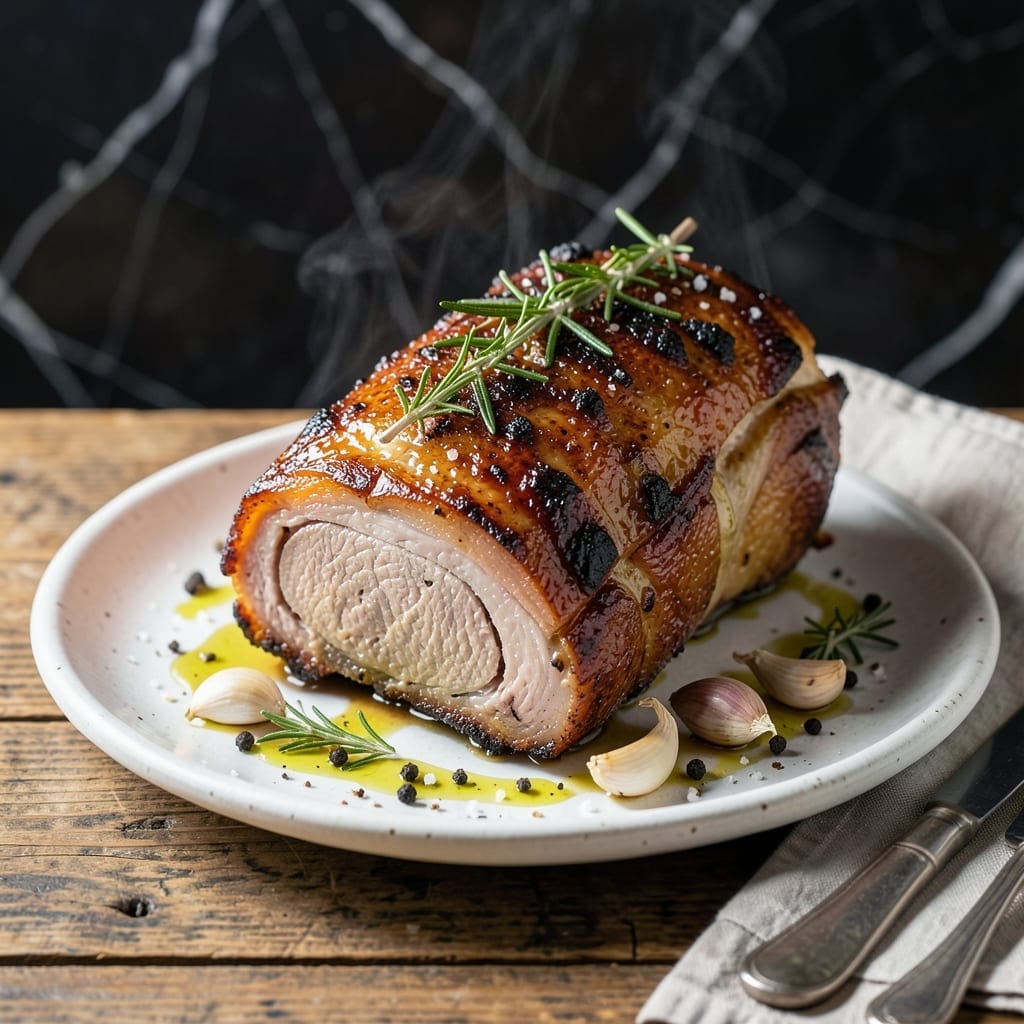
Slow-roasting transforms a humble pork shoulder into something extraordinary, with tender meat that falls apart at the touch of a fork.
Rosemary and garlic work together to create an aromatic crust that infuses every bite with deep, herbaceous flavor. This method requires patience but rewards with melt-in-your-mouth results.
I learned this technique while working in Asheville, where farm-to-table meant respecting the ingredient. Here, the pork does most of the work—just provide time and low, steady heat.
The final dish emerges with a golden-brown exterior and juices that pool richly on the cutting board. Serve with roasted vegetables to complete the meal.
Ingredients for Pork Roast Recipe with Rosemary
Transform humble pork shoulder with rosemary, garlic, and time into a melt-in-your-mouth masterpiece.
| Ingredient | Amount | Notes |
|---|---|---|
| Pork Shoulder 🥩 | 4 lb | Bone-in, skin-on preferred |
| Fresh Rosemary Sprigs 🌿 | 4 whole | Woody stems removed, roughly chopped |
| Garlic Cloves 🧄 | 8 cloves | Peeled, smashed into paste |
| Kosher Salt 🧂 | 1 ½ tbsp | Diamond Crystal preferred |
| Black Peppercorns 🌶️ | 1 tbsp | Freshly cracked for best flavor |
| Extra-Virgin Olive Oil 🫒 | 2 tbsp | High-quality, fruity finish |
| Yellow Onion 🧅 | 1 whole | Peeled, quartered |
| Carrots 🥕 | 3 whole | Peeled, cut into 2-inch chunks |
| Celery Stalks 🌿 | 3 whole | Cut into 2-inch pieces |
| Low-Sodium Chicken Stock 🥣 | 1 cup | Homemade or high-quality store-bought |
| Dry White Wine 🍷 | ½ cup | Sauvignon Blanc or Pinot Grigio |
| Dijon Mustard 🟡 | 1 tbsp | Smooth, not whole grain |
| Apple Cider Vinegar 🍏 | 1 tbsp | Balances richness of pork |
The pork shoulder is non-negotiable here—bone-in, skin-on yields unparalleled tenderness and flavor. Source from Whole Foods or a trusted local butcher for quality marbling. Rosemary should be fresh, not dried, with vibrant green needles and a strong piney aroma. Garlic, ideally organic, should be firm with unbroken cloves. Asheville taught me that patience in sourcing mirrors patience in cooking.
No white wine? Apple cider or additional stock works in a pinch. For rosemary, fresh thyme at equal volume offers a complementary herbaceous note. Mustard can be substituted with whole-grain Dijon for texture, though flavor will be slightly more pungent. The chicken stock can be vegetable stock if avoiding poultry—just ensure it’s low-sodium to control seasoning.
The roast keeps beautifully, wrapped in foil, for up to 4 days in the fridge. For longer storage, portion and freeze for 3 months. Reheat gently in covered dish with a splash of stock to revive moisture (worth the extra minute).
Why You’ll Love This Recipe
- I’ll be real: the pork tastes even better sliced into sandwiches or tossed into tacos the next day.
- One Pan Wonder: I just toss the pork shoulder with rosemary sprigs, garlic, salt, and pepper, then let the oven do the work.
- Fallen-Off-the-Bone Tender: Honestly, the rosemary and garlic infuse into every bite—so flavorful it doesn’t even need sauce.
- Feeds a Crowd: Between us, this recipe stretches effortlessly for Sunday dinner or a casual gathering with friends.
Step-by-Step Instructions for Pork Roast With Rosemary
Master this slow-roasting technique for fall-apart tender pork with fragrant herb notes throughout.
Step 1: Prepare the Pork Shoulder and Aromatics
Pat the 4 lb Pork Shoulder dry with paper towels, ensuring all moisture is removed from the surface. This step is crucial for achieving a proper sear and crispy exterior.
Rub the pork shoulder with 1.5 tbsp Kosher Salt and 1 tbsp Black Peppercorns, pressing the seasoning into the meat. Combine the 8 cloves Garlic Cloves with 2 tbsp Extra-Virgin Olive Oil to create a paste, then rub this mixture all over the pork shoulder. Finely chop the 4 whole Fresh Rosemary Sprigs and press them into the surface as well.
Let the seasoned pork sit at room temperature for 30 minutes while you prepare the remaining ingredients. This allows the salt to begin penetrating the meat and the flavors to meld.
Step 2: Sear and Build the Braising Liquid
Preheat your oven to 325°F. In a large Dutch oven, sear the pork shoulder over medium-high heat on all sides until deeply browned, about 8-10 minutes total. Remove the pork and set aside.
In the same pot, add the 1 whole Yellow Onion, 3 whole Carrots, and 3 whole Celery Stalks. Cook for 5 minutes until the vegetables begin to soften and develop color. Deglaze with 0.5 cup Dry White Wine, scraping up all the browned bits from the bottom of the pot.
Add 1 tbsp Dijon Mustard and 1 tbsp Apple Cider Vinegar, stirring to combine with the vegetables. Pour in 1 cup Low-Sodium Chicken Stock and bring to a simmer.
Step 3: Braise to Tenderness
Return the pork shoulder to the Dutch oven, nestling it among the vegetables. The liquid should come about halfway up the pork. If needed, add a bit more chicken stock to reach this level.
Cover the pot and transfer it to the preheated oven. Braise for 3 to 3.5 hours, turning the pork every 45 minutes to ensure even cooking. The pork is done when it shreds easily with a fork and reaches an internal temperature of 195°F.
During the final hour of cooking, the collagen in the pork shoulder will break down, transforming tough connective tissue into unctuous, melt-in-your-mouth gelatin. This is what creates the signature tenderness of this dish.
Step 4: Rest and Serve
Carefully remove the pork from the Dutch oven and transfer it to a cutting board. Tent loosely with foil and let it rest for 20 minutes. This resting period allows the juices to redistribute throughout the meat.
Skimming the fat from the surface of the braising liquid, you can reduce it on the stovetop to create a simple pan sauce. Strain the liquid if you prefer a smoother sauce, or leave the vegetables whole for a rustic presentation.
Shred or slice the pork and serve it with the braising liquid spooned over the top. The meat should be incredibly tender, with the rosemary and garlic flavors infused throughout each bite.
Pro Tips For Making Pork Roast Recipe With Rosemary
- Dry the Pork First: Pat the pork shoulder completely dry with paper towels before seasoning—I learned this the hard way after my first few roasts steamed instead of browned in the oven.
- Crush the Garlic: Smash the garlic cloves lightly with the side of your knife before using; it releases more flavor and lets the aroma infuse the meat as it roasts.
- Rest Before Slicing: Give the pork a solid 15-20 minutes under foil after roasting—it keeps all the juices inside where they belong, not on your cutting board.
- Use Fresh Rosemary: Skip the dried stuff for this one; fresh rosemary sprigs bruised with your fingers release oils that dried just can’t match, especially with pork shoulder.
Perfect Pairings for These Flavors
Wine Pairings
A medium-bodied Pinot Noir from Oregon complements the rosemary without overpowering the pork. I also love a Grenache blend—its red fruit notes mirror the dish’s richness. David always requests a Chianti Classico for its earthy finish. 🍷
Beer Options
An amber ale with caramel notes balances the herbaceous flavors beautifully. For something lighter, a crisp German pilsner cuts through the fat. Austin’s Live Oak Hefeweizen is my local go-to.
Side Dishes
Creamy polenta soaks up the braising liquid like a dream—I use Anson Mills grits. Roasted Brussels sprouts with a balsamic glaze add a nice contrast. Both are staples at our Sunday dinners.
Bread Choices
A crusty sourdough from Central Market is perfect for mopping up juices. I also love cornbread with honey butter—David swears it’s the only way to eat pork roast.
Vegetable Sides
Sautéed green beans with almonds add texture and freshness. For heartier meals, try mashed sweet potatoes with a touch of brown sugar. Both work wonderfully with the rosemary notes. 🌟
Nutrition Facts
Frequently Asked Questions
What’s the best cut for this cooking method?
Pork shoulder is ideal for slow-roasting due to its high fat content and connective tissue. These break down during long cooking, creating that melt-in-your-mouth texture. Avoid lean cuts like tenderloin, as they dry out.
Can I use dried rosemary instead of fresh?
Fresh rosemary provides the best flavor, but in a pinch, use 1/3 the amount of dried. Soak it in warm water for 10 minutes first to rehydrate. The flavor won’t be as bright, but it’ll still work.
How do I store and reheat leftovers?
Store in an airtight container in the fridge for up to 4 days. Reheat gently in a covered dish at 300°F with a splash of stock to keep it moist. Avoid microwaving, as it can dry out the meat.

- Potato Patty Recipe No Egg: Crispy Edges Without the Binder - October 30, 2026
- Paula Deen’s Potato Chip Cookies Recipe: Salty-Sweet Crunch in Every Bite - October 30, 2026
- Potato Gnocchi Recipe Ideas: Pillowy Soft Dumplings With Rustic Charm - October 30, 2026