
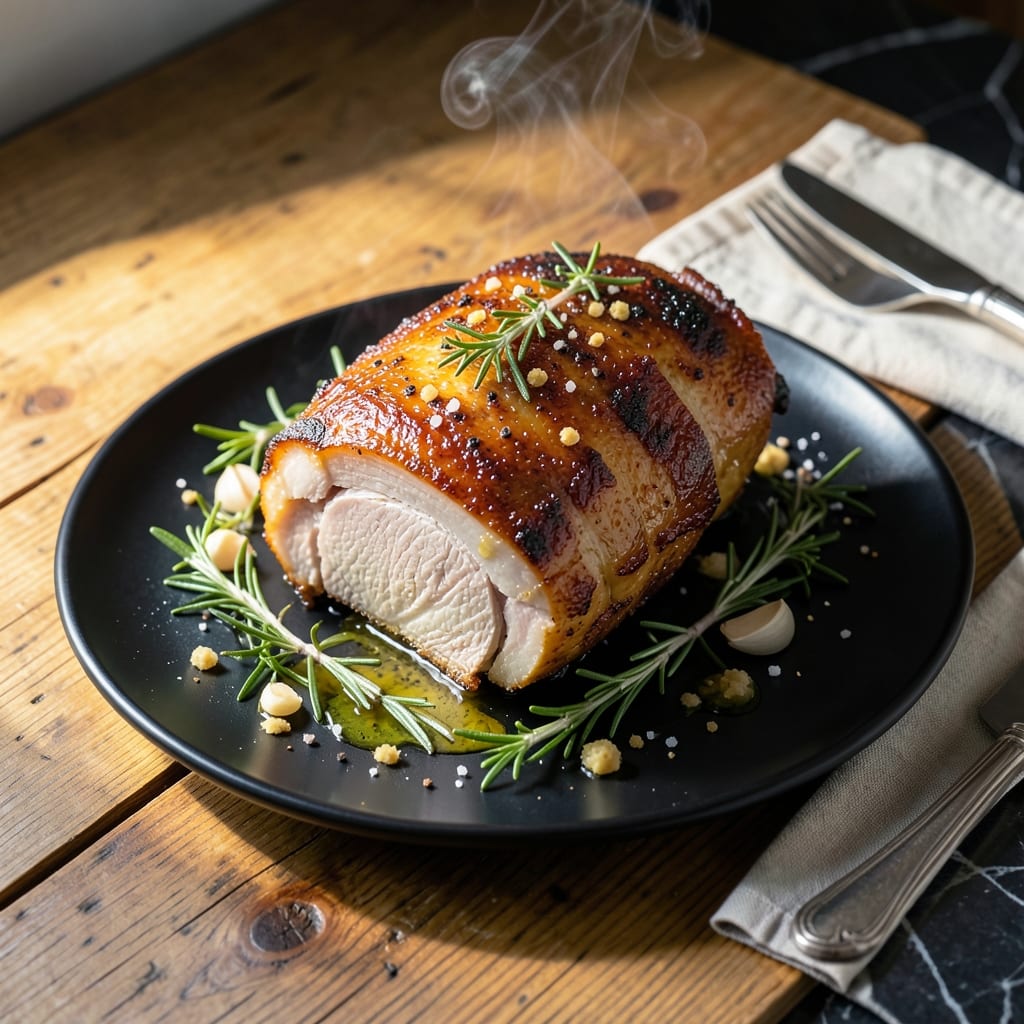
There’s something deeply satisfying about a tender pork roast that falls apart at the touch of a fork. I developed this method after years of experimenting, focusing on low heat and simple herbs to achieve that perfect melt-in-your-mouth texture.
The secret lies in patience—slow roasting at 275°F allows the collagen to break down gradually. A dry rub of rosemary, thyme, and garlic enhances the natural pork flavors without overpowering them.
What emerges from the oven is meat so tender it nearly dissolves, with a golden crust that gives just enough resistance. The herbs infuse every bite, creating layers of savory depth that make this dish unforgettable.
Perfect for Sunday dinners or special occasions, this roast delivers consistent results every time. The aroma alone will have your family gathering in the kitchen before it’s done.
Ingredients for Pork Roast Recipe Oven Slow
Pantry staples plus fresh herbs create this melt-in-your-mouth masterpiece with minimal effort.
| Ingredient | Amount | Notes |
|---|---|---|
| Pork Shoulder Roast 🥩 | 3 lb | Bone-in for best flavor |
| Diamond Crystal Kosher Salt 🧂 | 1 ½ tbsp | For dry rub and seasoning |
| Freshly Ground Black Pepper 🌶️ | 1 tbsp | Coarse grind preferred |
| Fresh Rosemary Sprigs 🌿 | 3 pieces | Stems removed, finely chopped |
| Fresh Thyme Sprigs 🍃 | 4 pieces | Leaves stripped from stems |
| Garlic Cloves 🧄 | 6 cloves | Minced for rub |
| Olive Oil 🫒 | 2 tbsp | Extra-virgin for richness |
| Yellow Onion 🧅 | 1 whole | Quartered for roasting |
| Carrots 🥕 | 3 whole | Peeled, cut into chunks |
| Celery Stalks 🌿 | 3 pieces | Cut into large pieces |
| Chicken Stock 🥫 | 1 cup | Low-sodium preferred |
| Dijon Mustard 🟡 | 1 tbsp | For depth in rub |
| Brown Sugar 🟤 | 1 tbsp | Light or dark variety |
The pork shoulder is non-negotiable here. Bone-in gives you that fall-apart texture we’re after, and 3 pounds is the sweet spot for even cooking. I grab mine from Costco—consistent quality and great price. For the herbs, fresh rosemary and thyme make a huge difference (the dried stuff just doesn’t have the same punch). Most grocery stores have them in the produce section, but a local farmers market will have the most fragrant bunches.
No fresh herbs? Dried at one-third the amount works in a pinch (just rub it into the meat so it sticks). Short on time? Skip the veggies—they’re for flavor, not structure. Out of chicken stock? Water plus a bouillon cube gets you close. The Dijon adds depth to the crust, but regular yellow mustard works too. Brown sugar helps caramelization—honey or maple syrup are fine swaps if that’s what you’ve got.
The roast needs 24 hours in the fridge to dry-brine after rubbing (worth it, trust me). After cooking, it’ll keep 4-5 days in the fridge or 3 months frozen. Slice only what you need—whole roast reheats better.
Why You’ll Love This Recipe
- Set It & Forget: That pork shoulder practically cooks itself in the oven while I fold laundry or help with homework.
- Herb-Kissed Perfection: The rosemary and thyme infuse every bite with an aroma that makes the whole house smell like a cozy Sunday dinner.
- Feeds a Hungry Crowd: One roast, multiple meals—sandwiches tonight, tacos tomorrow, soup the next day.
- Budget-Friendly Star: Pork shoulder is cheap, but with just salt, pepper, and fresh herbs, it tastes like a restaurant special.
Step-by-Step Instructions for Pork Roast Oven Slow
Here’s my tested method for achieving melt-in-your-mouth pork with minimal effort.
Step 1: Create the Aromatic Rub for Maximum Flavor
Remove the stems from the 3 pieces fresh rosemary sprigs and strip the leaves from the 4 pieces fresh thyme sprigs, then finely chop both. Mince the 6 cloves garlic cloves into a paste-like consistency. This fine chop ensures the herbs and garlic distribute evenly and infuse every bite.
In a small bowl, combine the chopped herbs, garlic, 1.5 tbsp Diamond Crystal Kosher Salt, 1 tbsp freshly ground black pepper, 1 tbsp Dijon mustard, and 1 tbsp brown sugar. Stir in 2 tbsp olive oil to form a thick paste. The oil helps the rub adhere to the pork while the mustard and sugar create a caramelized crust.
Step 2: Season and Sear the Pork Shoulder
Pat the 3 lb pork shoulder roast dry with paper towels – this is crucial for achieving a good sear. Rub the aromatic paste all over the surface of the pork, pressing it into every crevice. I like to let it sit for 15-20 minutes to allow the salt to begin penetrating the meat.
Preheat your oven to 325°F. While it heats, place a Dutch oven over medium-high heat on the stovetop. Sear the pork on all sides until deeply browned, about 3-4 minutes per side. You’ll know it’s ready to flip when it releases easily from the pot. This searing step develops complex flavors that carry through the slow cooking process.
Step 3: Build the Braising Liquid with Vegetables
After searing, remove the pork and set it aside. In the same Dutch oven, add the 1 whole yellow onion (quartered), 3 whole carrots (peeled and cut into chunks), and 3 pieces celery stalks (cut into large pieces). Sauté for 3-4 minutes until the vegetables begin to soften and develop some color.
Pour in the 1 cup chicken stock, using a wooden spoon to scrape up all the browned bits from the bottom of the pot. These fond bits are packed with flavor and will dissolve into your braising liquid. Return the seared pork to the pot, nestling it among the vegetables.
Step 4: Slow Roast to Fall-Off-The-Bone Tenderness
Cover the Dutch oven and transfer it to the preheated oven. Roast for 3 to 3.5 hours, flipping the pork halfway through the cooking time. The low and slow method breaks down the connective tissue in the pork shoulder, transforming tough muscle into buttery, tender meat.
You’ll know it’s done when the pork shreds easily with a fork and reaches an internal temperature of 195-200°F. The meat should be so tender that it nearly falls apart when you try to lift it. The vegetables will have melted into the braising liquid, creating a rich, flavorful sauce.
Step 5: Rest and Serve with the Pan Sauce
Carefully remove the pork from the Dutch oven and transfer it to a cutting board. Let it rest for 15-20 minutes before shredding or slicing. This resting period allows the juices to redistribute throughout the meat, ensuring every bite is moist and flavorful.
While the pork rests, skim any excess fat from the surface of the braising liquid. The remaining liquid can be served as a sauce over the pork. The meat should be incredibly tender, with the herbs and garlic from the rub perfuming every bite. Serve with the roasted vegetables and extra sauce for a complete, comforting meal.
Pro Tips For Making Pork Roast Recipe Oven Slow
- Start Low and Slow: Set your oven to 275°F—any higher and the pork shoulder tightens up before it gets tender. I learned this the hard way after pulling a dry roast out of a 325°F oven.
- Salt the Night Before: Rub the pork with Diamond Crystal salt at least 12 hours ahead; it penetrates deep and seasons evenly. Sounds weird, but it works.
- Don’t Skip the Rest: Let the roast rest under foil for 20-30 minutes after cooking—it reabsorbs the juices and stays moist. I used to rush this and wondered why my pork was dry.
- Use Fresh Herbs: Fresh rosemary and thyme bruise easily, so rub them between your palms before scattering to release their oils. My grandmother swore by this, and she was right.
Pro Cooking Tips for This Dish
Perfect Searing Technique
Pat the pork completely dry with paper towels—this is non-negotiable for a good sear. I use Bounty for its absorbency. Heat your Dutch oven until it’s smoking hot before adding the meat. The first side needs 4-5 minutes undisturbed to develop a deep crust. 🔥
Temperature Precision
Use a ThermoWorks Dot probe thermometer for accuracy. The sweet spot for pork shoulder is 195-200°F internal. Don’t rely on time alone—size and oven variations affect cooking. I check mine every 30 minutes after the first 2 hours.
Flipping Strategy
Flip the roast only once halfway through cooking. Use tongs and a sturdy spatula to avoid tearing the crust. This maintains even cooking and prevents moisture loss. I learned this the hard way after ruining my first 2 roasts with too much handling.
Liquid Management
Add ½ cup extra stock if the liquid reduces too much during cooking. The veggies should be mostly submerged. For extra richness, I sometimes add ¼ cup dry white wine when deglazing. This creates a more complex sauce.
Resting Importance
Never skip the 15-20 minute rest post-roasting. Tent loosely with foil to keep warm. The juices redistribute during this time, ensuring moist meat. I usually prep side dishes while waiting—multitasking at its finest. 💡
Equipment Tip
Invest in an enameled Le Creuset Dutch oven if possible. The even heat distribution prevents hot spots. On a budget? Lodge’s enameled cast iron works nearly as well. Just ensure your pot has a tight-fitting lid for proper braising.
Nutrition Facts
Frequently Asked Questions
What’s the best cut for this method?
Pork shoulder is ideal for slow roasting. Its high fat content and tough connective tissue break down beautifully during the long cooking time. Look for a bone-in cut for the richest flavor and most tender results.
Why is the searing step important?
Searing develops a deep, caramelized crust that adds incredible flavor. It also creates fond bits in the pan that dissolve into your braising liquid, making the sauce richer. Don’t skip this 3-4 minute step per side.
How do I know when it’s done?
Use a meat thermometer to check for an internal temperature of 195-200°F. The pork should shred easily with a fork. If it doesn’t pull apart effortlessly, give it another 30 minutes.
Can I make this in a slow cooker?
Yes, but the texture will differ. Sear first, then cook on low for 8-10 hours. You won’t get the same caramelized crust, but the meat will still be tender. Adjust liquid amounts to prevent over-saturation.

- Potato Patty Recipe No Egg: Crispy Edges Without the Binder - October 30, 2026
- Paula Deen’s Potato Chip Cookies Recipe: Salty-Sweet Crunch in Every Bite - October 30, 2026
- Potato Gnocchi Recipe Ideas: Pillowy Soft Dumplings With Rustic Charm - October 30, 2026