
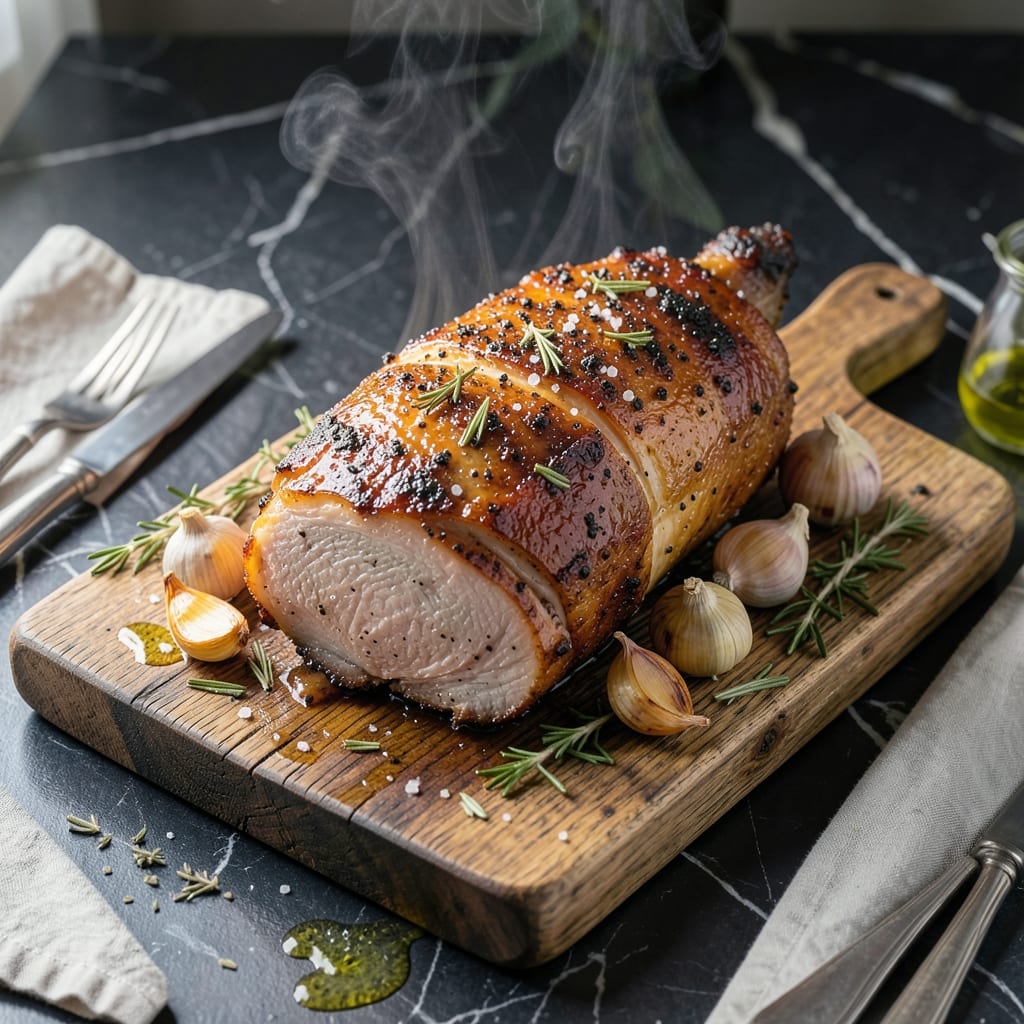
Achieving perfect pork roast means nailing the internal temperature for juicy results every time. I’ve tested this method in my small Boston kitchen until it became foolproof.
The key is using a meat thermometer and knowing exact doneness temperatures. This ensures safety while preventing dry, overcooked meat that ruins a good roast.
With precise timing and resting, you’ll get tender, flavorful pork that falls apart at the touch of a fork. The thermometer removes all guesswork from the process.
This technique works for any cut, from shoulder to loin. Let’s get the details right for your next Sunday dinner.
Ingredients for Pork Roast Recipe Temperature
A few quality ingredients plus patience equal the juiciest roast you have ever made.
| Ingredient | Amount | Notes |
|---|---|---|
| Pork Shoulder Roast 🥩 | 3 lb | Bone-in for extra flavor |
| Kosher Salt 🧂 | 2 tsp | Diamond Crystal preferred |
| Black Pepper 🌶️ | 1 tsp | Freshly cracked for best taste |
| Garlic Cloves 🧄 | 6 cloves | Smashed but left whole |
| Fresh Rosemary 🌿 | 2 tbsp | Chopped, stems discarded |
| Fresh Thyme 🍃 | 2 tbsp | Leaves stripped from stems |
| Olive Oil 🫒 | 2 tbsp | Extra-virgin for richness |
| Yellow Onion 🧅 | 1 whole | Quartered for roasting |
| Carrots 🥕 | 3 whole | Peeled, cut into chunks |
| Chicken Stock 🍲 | 1 cup | Low-sodium preferred |
| Dijon Mustard 🟡 | 1 tbsp | For crust formation |
| Apple Cider Vinegar 🍏 | 1 tbsp | Adds brightness to pan juices |
The pork shoulder is non-negotiable here. Bone-in gives you that extra depth of flavor, and 3 pounds feeds four with leftovers for sandwiches. I grab mine from Whole Foods or Market Basket—look for good marbling and a pinkish-red color. The herbs? Fresh is best, but if you’re in a pinch, dried rosemary and thyme work at one-third the amount.
No fresh herbs? Dried at one-third the amount. Out of Dijon? Whole-grain mustard adds a nice texture. Chicken stock can be swapped for vegetable if that’s what you’ve got. The apple cider vinegar might seem small, but it brightens the pan juices—don’t skip it. For the onions and carrots, any variety works (red onions add color).
This roast actually improves overnight. Store in the fridge for up to 4 days, or freeze portions for 3 months. Reheat gently in the oven with a splash of stock to keep it moist. Leftovers make killer tacos or sandwiches (trust me on this one).
Why You’ll Love This Recipe
- Set and Forget: I just season, pop it in the oven, and let the pork shoulder do its thing—no babysitting required.
- Herb-Crusted Bliss: That rosemary and garlic rub forms the most incredible crust. Honestly, I could eat it straight off the bone.
- Feeds the Whole Crew: Between us, this one roast stretches into sandwiches, tacos, and leftovers for days.
- Budget-Friendly Winner: Pork shoulder is always affordable, and with just salt, pepper, and a few fresh herbs, it tastes like a million bucks.
Step-by-Step Instructions for Pork Roast
Here’s the method I use to achieve fall-apart tender pork with a perfectly caramelized crust every time.
Step 1: Season and Sear the Pork Shoulder
Pat the 3 lb Pork Shoulder Roast dry with paper towels, then rub it all over with the 2 tsp Kosher Salt and 1 tsp Black Pepper. I press the seasoning in firmly so it adheres well. This creates a flavorful base that will develop into a beautiful crust.
Heat the 2 tbsp Olive Oil in a Dutch oven over medium-high heat until shimmering. Sear the pork on all sides for 3-4 minutes per side until deeply browned. You’ll know it’s ready to flip when it releases easily from the pan. This searing step builds the foundation for rich, complex flavors.
Step 2: Build the Aromatic Base
Remove the pork and set it aside. In the same pot, add the 1 whole Yellow Onion, 3 whole Carrots, 6 cloves Garlic Cloves, 2 tbsp Fresh Rosemary, and 2 tbsp Fresh Thyme. Cook for 2-3 minutes until the vegetables begin to soften and the herbs become fragrant.
Pour in the 1 cup Chicken Stock, 1 tbsp Dijon Mustard, and 1 tbsp Apple Cider Vinegar, scraping up any browned bits from the bottom. These liquid ingredients will create a flavorful braising liquid that keeps the pork moist throughout the long cooking process.
Step 3: Braise Until Fork-Tender
Return the pork to the Dutch oven, nestling it into the vegetables and liquid. Cover and transfer to a preheated 325°F oven. Braise for 2.5-3 hours until the internal temperature reaches 195-200°F and the meat is fork-tender.
I check the pork after 2 hours and add a splash of water if the liquid level is low. The pork is done when it pulls apart easily with a fork. This low-and-slow method guarantees juicy, tender results that will impress even the most discerning eaters.
Step 4: Rest and Shred
Carefully remove the pork from the Dutch oven and transfer it to a cutting board. Let it rest for 15-20 minutes before shredding. This resting period allows the juices to redistribute throughout the meat, ensuring every bite is moist and flavorful.
Use two forks to shred the pork into chunks. I like to mix some of the cooking liquid back into the shredded meat for extra moisture and flavor. The pork should be tender enough to pull apart with minimal effort, and the aromatic vegetables will have infused the meat with their delicious flavors.
Pro Tips For Making Pork Roast Recipe Temperature
- Pull at 195°F: I learned this the hard way—pork shoulder needs to hit 195°F internally to shred like butter. Anything lower and it stays tough, no matter how long you cook it.
- Score the Fat: Cut 1/4-inch slashes in the fat cap before seasoning so the salt, garlic, and rosemary actually penetrate the meat instead of sitting on top.
- Skip the Boiling Garlic: Sounds weird, but it works: par-cook the garlic cloves in boiling water for 30 seconds first to mellow their bite—otherwise they can taste harsh in the finished roast.
- Rest 30 Minutes: After burning one too many roasts by slicing too soon, I finally figured out it needs a full 30-minute rest to reabsorb juices—yes, even if you’re starving.
Wine and Beer Pairings for This Dish
Rich Red Wines
For this creation, I love a bold Syrah from California—its dark fruit and peppery notes stand up to the rich pork. A Zinfandel from Lodi offers jammy flavors that complement the caramelized crust beautifully. These work especially well with the rosemary and thyme. 🍷
White Wine Options
A full-bodied Chardonnay with oak aging provides enough structure to pair with the dish. I prefer one from Sonoma County for its balance of fruit and acidity. Viognier also works with its floral notes and creamy texture.
Craft Beer Picks
An amber ale from Samuel Adams—our Boston favorite—adds caramel and toasted malt notes. A porter with chocolate undertones pairs surprisingly well with the pork’s depth. I always keep a few local craft options on hand for testing. 🍺
Light Beer Choices
If you prefer something lighter, a crisp pilsner like Harpoon cleanses the palate between bites. The carbonation cuts through the richness while the mild hop bitterness balances the dish’s savory flavors.
Non-Alcoholic Pairings
For non-drinkers, try sparkling apple cider from a local New England orchard. The effervescence and sweetness mirror the apple cider vinegar in the recipe. I also enjoy a ginger beer for its spicy kick.
Nutrition Facts
Frequently Asked Questions
What internal temperature means pork is safe to eat?
The USDA recommends a minimum of 145°F for whole cuts like pork roast. For pull-apart tenderness, I cook to 195-200°F which breaks down collagen beautifully.
Why does my roast turn out dry?
Overcooking is the main culprit. Remove from oven at 195°F and let rest 15-20 minutes before slicing. This lets juices redistribute throughout the meat.
Can I cook it at a higher temperature to save time?
Not recommended. High heat causes uneven cooking and dryness. Stick to 325°F for even doneness. The low-and-slow method guarantees juicy, tender results.

- Potato Chip Cookie Recipe With Pecans: Buttery Crunch Meets Nutty Richness - October 30, 2026
- Potato Patty Recipe No Egg: Crispy Edges Without the Binder - October 30, 2026
- Paula Deen’s Potato Chip Cookies Recipe: Salty-Sweet Crunch in Every Bite - October 30, 2026