
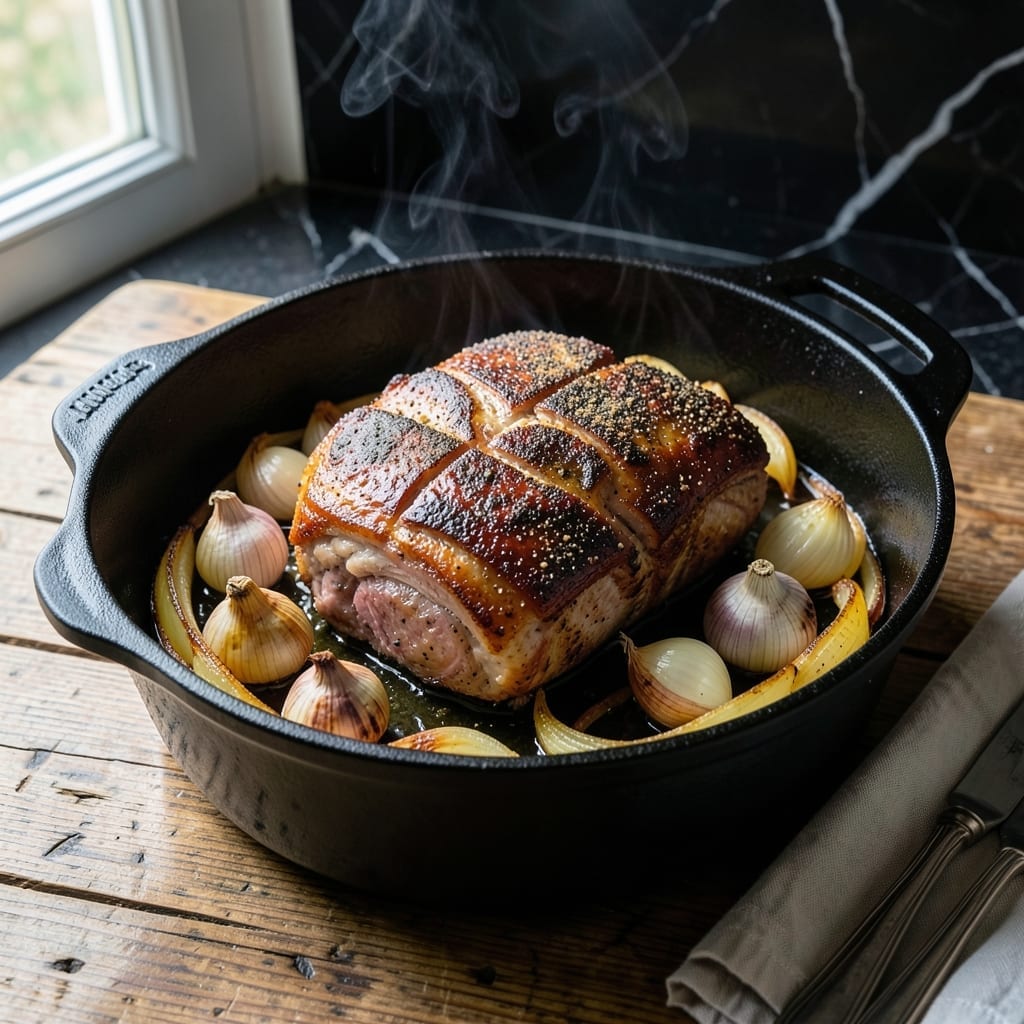
This Dutch oven method transforms pork shoulder blade roast into a tender, fall-apart masterpiece with minimal effort. The slow braising process allows the connective tissue to melt into rich, flavorful meat.
I developed this technique after years of experimenting with different cuts and cooking methods. The Dutch oven’s even heat distribution ensures consistent results, while the covered environment locks in moisture.
The result is pork so tender it practically dissolves on your tongue, with a rich, caramelized exterior. Each bite delivers deep, savory flavor that belies the simplicity of the preparation.
Perfect for Sunday dinners or special occasions, this dish rewards patience with restaurant-quality results. The aroma alone will have everyone gathering in the kitchen.
Ingredients for Pork Shoulder Blade Roast Recipe Dutch Oven
Transform pork shoulder blade roast into melting tenderness with these essential ingredients.
| Ingredient | Amount | Notes |
|---|---|---|
| Pork Shoulder Blade Roast 🥩 | 3 lb | Bone-in, well-marbled preferred |
| Kosher Salt 🧂 | 1 ½ tbsp | Diamond Crystal preferred |
| Black Pepper 🌶️ | 1 tbsp | Freshly ground coarse |
| Smoked Paprika 🌶️ | 1 tbsp | Sweet or hot variety |
| Garlic Cloves 🧄 | 6 cloves | Peeled, smashed lightly |
| Yellow Onion 🧅 | 1 whole | Large, quartered roughly |
| Carrots 🥕 | 3 whole | Large, cut into chunks |
| Celery Stalks 🌿 | 3 whole | Cut into large pieces |
| Chicken Stock 💧 | 2 cups | Low-sodium preferred |
| Apple Cider Vinegar 🍏 | 2 tbsp | Balances rich meat flavors |
| Brown Sugar 🧈 | 2 tbsp | Light or dark variety |
| Tomato Paste 🍅 | 2 tbsp | For depth of flavor |
| Olive Oil 🫒 | 2 tbsp | For searing roast |
| Fresh Rosemary Sprigs 🍃 | 2 whole | For aromatic braising |
| Fresh Thyme Sprigs 🍃 | 4 whole | Optional but recommended |
The pork shoulder blade roast is non-negotiable here. Bone-in cuts yield superior moisture and flavor, and marbling is your best indicator of tenderness. Source from local butchers or high-end grocers like Whole Foods for consistent quality. Avoid pre-cut stew meat—whole roasts allow for even cooking and better caramelization. A 3-4 lb piece serves 4 generously with leftovers.
No apple cider vinegar? White wine vinegar works at the same ratio. Missing fresh herbs? Dried rosemary and thyme at one-third the amount suffice, though fresh delivers brighter notes. For the stock, vegetable broth can substitute, but chicken stock provides richer depth. The brown sugar can be swapped with maple syrup for a slightly different caramelization profile.
This dish reheats exceptionally well—flavors deepen after 24 hours. Store in the refrigerator for up to 4 days or freeze portions for 3 months. Always reheat gently to preserve the fall-apart texture you worked so hard to achieve.
Why You’ll Love This Recipe
- One Pot Magic: I just season, sear, and let the Dutch oven do the work—minimal active time, max flavor.
- Smoky & Rich: The smoked paprika and garlic turn the pork into tender, fall-apart bites that taste like a weekend project.
- Feeds a Crowd: This roast stretches for sandwiches, tacos, or straight-up dinners—my family’s new Sunday staple.
- Budget Winner: A shoulder blade roast is affordable, and leftovers reheat like a dream. Honestly, it’s my wallet’s best friend.
Step-by-Step Instructions for Pork Shoulder Blade Roast
This method transforms tough cuts into fork-tender perfection with minimal active effort.
Step 1: Season and Sear the Pork Shoulder
Pat the 3 lb Pork Shoulder Blade Roast completely dry with paper towels. This ensures a proper sear. Rub the surface evenly with the 1.5 tbsp Kosher Salt, 1 tbsp Black Pepper, and 1 tbsp Smoked Paprika. The spices should adhere uniformly, creating a flavorful crust.
Heat the 2 tbsp Olive Oil in a Dutch oven over medium-high heat until shimmering. Sear the roast on all sides for 3-4 minutes per side until deeply browned. The fond created here will form the base of your braising liquid. Don’t rush this step—proper browning develops complex flavors.
Step 2: Build the Aromatic Base
Remove the roast and reduce heat to medium. Add the 1 whole Yellow Onion, 3 whole Carrots, and 3 whole Celery Stalks to the pot. Cook for 4-5 minutes until the vegetables soften and begin to caramelize at the edges.
Stir in the 2 tbsp Tomato Paste and cook for 1-2 minutes, allowing it to darken slightly. Add the 6 cloves Garlic Cloves, 2 whole Fresh Rosemary Sprigs, and 4 whole Fresh Thyme Sprigs, stirring to release their fragrance. This builds layers of flavor that penetrate the meat during braising.
Step 3: Deglaze and Begin Braising
Pour in the 2 cups Chicken Stock, 2 tbsp Apple Cider Vinegar, and 2 tbsp Brown Sugar. Scrape the browned bits from the bottom of the pot with a wooden spoon. These bits contain concentrated flavor that will enrich your braising liquid.
Return the roast to the pot, nestling it among the vegetables. The liquid should come about halfway up the meat. If not, add a splash of water. Bring to a gentle simmer, then cover tightly with the Dutch oven lid. This creates a steam environment that tenderizes the connective tissue.
Step 4: Slow-Braise to Tenderness
Transfer the covered pot to a preheated 325°F oven. Braise for 2.5-3 hours, turning the roast halfway through the cooking time. The meat is done when it pulls apart easily with a fork and reaches an internal temperature of 195-200°F.
Resist the urge to check too frequently—every time you open the oven, you lose heat and extend the cooking time. The low, steady heat is what transforms the collagen in the Pork Shoulder Blade Roast into gelatin, creating that signature melting tenderness.
Step 5: Rest and Serve
Carefully remove the roast from the pot and transfer to a cutting board. Skim excess fat from the braising liquid if desired, though I prefer to leave some for flavor. The vegetables will have softened into the liquid, creating a rich, flavorful sauce.
Let the roast rest for 15-20 minutes before shredding or slicing. This allows the juices to redistribute throughout the meat. Serve with the braising liquid spooned over the top, ensuring each portion is moist and flavorful.
Pro Tips For Making Pork Shoulder Blade Roast Recipe Dutch Oven
- Sear the Shoulder: I learned this the hard way—browning the pork shoulder in the Dutch oven before slow cooking adds a depth of flavor you just can’t get otherwise. Use medium-high heat and about 2 tablespoons of oil to get that crust.
- Salt Generously: Pork shoulder can handle more salt than you think, especially with kosher salt. I use about 1 tablespoon per pound, rubbing it in the night before if I have time.
- Don’t Rush the Cook: After burning a few batches, I finally figured out that low and slow is the only way—aim for 300°F and at least 3 hours, or until it pulls apart with a fork.
- Smash the Garlic: Sounds weird, but it works: lightly crushing the garlic cloves before adding them releases way more flavor into the meat as it cooks. No need to peel, just smash and toss in.
Storing and Reheating pork shoulder blade roast recipe dutch oven
Refrigerator Storage
Let the roast cool completely in its braising liquid, about 2 hours. Transfer to an airtight container—I use glass Pyrex from New Seasons Market. It keeps beautifully in the fridge at 40°F for up to 4 days. The flavors deepen overnight, making leftovers even more delicious. ❄️
Freezer Storage
For longer storage, portion the meat with some braising liquid into freezer bags. Squeeze out excess air to prevent freezer burn. It freezes well for up to 3 months without texture loss. Label with the date—I always forget when I stored things!
Stovetop Reheating
This is my preferred method. Transfer portions to a pot with a splash of chicken stock. Heat over medium-low for 10-15 minutes, stirring occasionally. The slow heat revives the tenderness perfectly. 🔥
Oven Reheating
Preheat oven to 300°F. Place pork in a baking dish with some liquid, cover with foil, and warm for 20-25 minutes. This method works great for larger portions and maintains moisture beautifully.
Microwave Option
For quick meals, place portions in a microwave-safe dish with 2 tbsp liquid. Cover with a damp paper towel and heat on 70% power for 2-3 minutes, stirring halfway. Add time in 30-second intervals until hot.
Nutrition Facts
Frequently Asked Questions
Can I use a slow cooker instead of a Dutch oven?
Yes! Set it to low for 8 hours or high for 5-6 hours. The texture will be similar, though Dutch oven braising provides better caramelization.
How do I know when it’s done?
The meat should pull apart effortlessly with a fork. Look for an internal temperature of 195-200°F for that perfect fall-apart texture.
What if my roast isn’t tender after the suggested time?
Keep cooking! The collagen needs time to break down. Add 30-60 minutes more and check again. The Dutch oven will maintain steady heat.
Can I make this ahead?
The flavors improve overnight. Reheat gently on the stove with a splash of stock for 10-15 minutes.

- Potato Patty Recipe No Egg: Crispy Edges Without the Binder - October 30, 2026
- Paula Deen’s Potato Chip Cookies Recipe: Salty-Sweet Crunch in Every Bite - October 30, 2026
- Potato Gnocchi Recipe Ideas: Pillowy Soft Dumplings With Rustic Charm - October 30, 2026