
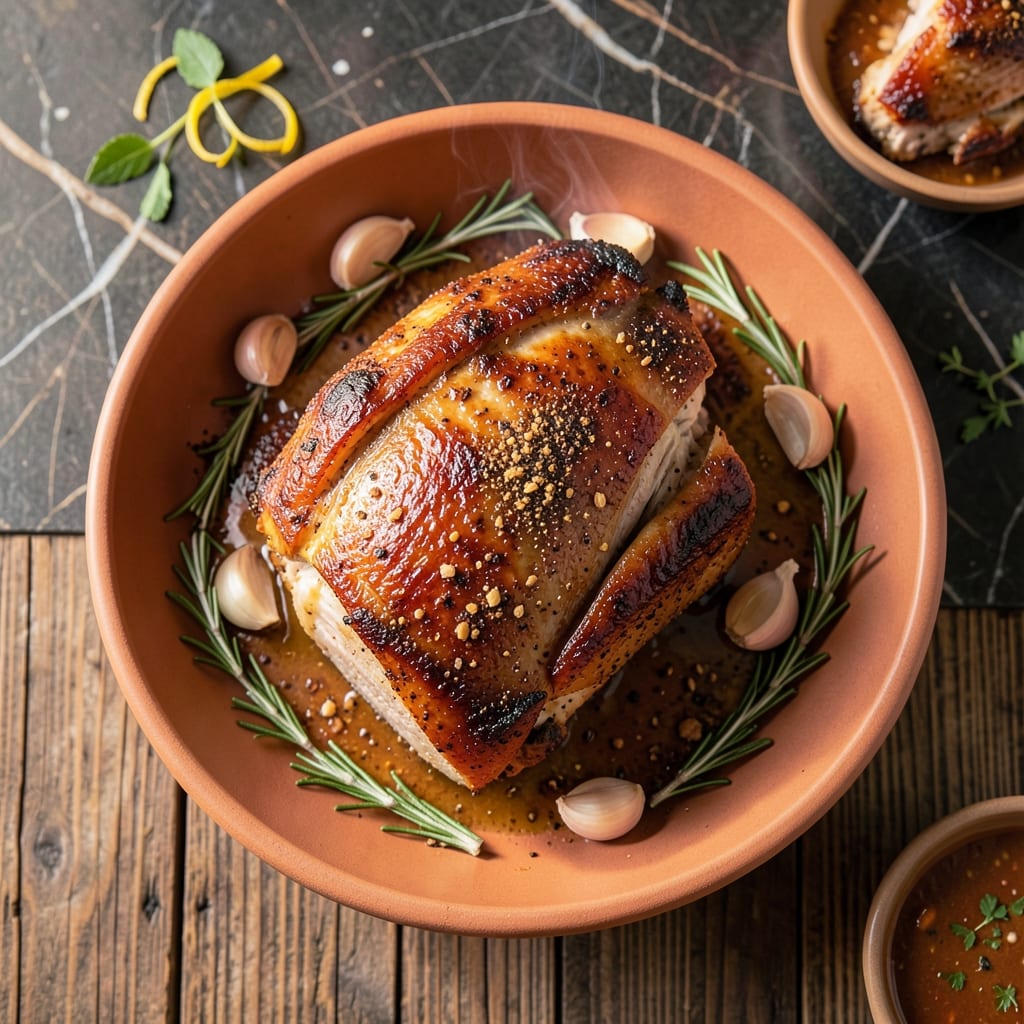
This pork shoulder picnic roast transforms tough cuts into fork-tender perfection through slow oven roasting. I developed this method after years of testing to achieve consistent, melt-in-your-mouth results every time.
The secret lies in low and slow cooking at 300°F, allowing the connective tissue to break down gradually. A simple dry rub of salt, pepper, and smoked paprika enhances the natural pork flavor without overpowering it.
After several hours in the oven, the meat will pull apart with minimal effort, creating juicy, flavorful shreds. The exterior develops a rich, caramelized crust that seals in all the natural juices.
This technique delivers restaurant-quality results with minimal active cooking time. The waiting is the hardest part, but the payoff is absolutely worth it.
Ingredients for Pork Shoulder Picnic Roast Recipe Oven
Slow-roasted pork shoulder with a simple dry rub and aromatic vegetables for depth.
| Ingredient | Amount | Notes |
|---|---|---|
| Pork Shoulder Picnic Roast 🥩 | 4 lb | Bone-in preferred for flavor |
| Kosher Salt 🧂 | 2 tbsp | Diamond Crystal preferred for texture |
| Freshly Ground Black Pepper 🌶️ | 1 tbsp | Coarse grind for crust |
| Smoked Paprika 🌶️ | 1 tbsp | Sweet or hot variety |
| Garlic Powder 🧄 | 1 tbsp | Not garlic salt substitute |
| Onion Powder 🧅 | 1 tbsp | Enhances depth of flavor |
| Dried Oregano 🍃 | 1 tsp | Mediterranean oregano preferred |
| Olive Oil 🫒 | 2 tbsp | Extra-virgin for richness |
| Apple Cider Vinegar 🍏 | 2 tbsp | Balances richness of pork |
| Brown Sugar 🍚 | 2 tbsp | Light or dark variety |
| Yellow Onion 🧅 | 1 whole | Quartered for roasting bed |
| Carrots 🥕 | 3 whole | Peeled, cut into chunks |
| Celery Stalks 🌿 | 3 whole | Cut into large pieces |
The pork shoulder picnic roast is non-negotiable here. Bone-in cuts from Costco or Whole Foods offer the best marbling and flavor. Look for pieces with a good fat cap—this renders down during cooking, basting the meat from within. The weight matters: 4 pounds feeds four generously with leftovers. Avoid pre-cut chunks; the whole roast maintains moisture better during the long cook.
No smoked paprika? Regular paprika plus a pinch of cayenne gets you close. Garlic powder and onion powder are interchangeable in a pinch, but don’t skip them—they build the flavor base. Balsamic vinegar can sub for apple cider, though the flavor profile shifts slightly. The brown sugar is optional but recommended; it helps form that caramelized crust mentioned in the intro. Fresh herbs? Skip them—dried work better for this long roast.
Store the raw pork in its packaging on a tray in the fridge for up to 3 days. Leftovers keep for 5 days refrigerated or freeze for 3 months. Reheat gently in the oven with a splash of broth to maintain moisture. The roast improves overnight, so plan ahead if possible.
Why You’ll Love This Recipe
- I’ll be real: the best part is pulling the extras for quick lunches or freezing portions for future lazy nights.
- Set It and Forget: I rub the pork with salt, pepper, smoked paprika, and garlic powder, pop it in the oven, and let it do its thing—no babysitting required.
- Smoky Depth: Honestly, the smoked paprika and garlic powder create this rich, savory crust that makes every bite irresistible.
- Feeds the Crew: Between us, this roast stretches easily for sandwiches, tacos, or a hearty dinner with sides—ideal for Sunday supper or meal prep.
Step-by-Step Instructions for Pork Shoulder Picnic Roast Oven
This method ensures melt-in-your-mouth tenderness with minimum hands-on time.
Step 1: Prepare the Dry Rub and Season the Roast
In a small bowl, combine the 2 tbsp Kosher Salt, 1 tbsp Freshly Ground Black Pepper, 1 tbsp Smoked Paprika, 1 tbsp Garlic Powder, 1 tbsp Onion Powder, and 1 tsp Dried Oregano. Stir until evenly blended—this aromatic mix will form a flavorful crust as the pork roasts.
Pat the 4 lb Pork Shoulder Picnic Roast completely dry with paper towels to ensure the rub adheres properly. Coat all sides of the roast with the dry rub, pressing firmly to create a thick, even layer. Place the seasoned roast in a large bowl, then drizzle with the 2 tbsp Olive Oil, 2 tbsp Apple Cider Vinegar, and 2 tbsp Brown Sugar, turning to coat evenly. Let it marinate for 30 minutes at room temperature.
Step 2: Prepare the Roasting Bed
While the roast marinates, prepare the vegetable bed for even cooking and moisture retention. Roughly chop the 1 whole Yellow Onion, 3 whole Carrots, and 3 whole Celery Stalks into large chunks. There’s no need for precision here—the vegetables will soften and caramelize as they roast beneath the pork.
Arrange the chopped vegetables in a single layer in a roasting pan or Dutch oven, creating a natural rack for the pork. This elevates the roast, allowing heat to circulate evenly and preventing the bottom from steaming. The vegetables will also absorb the rendered fat and juices, adding depth to the final dish.
Step 3: Sear and Begin the Slow Roast
Preheat your oven to 325°F. Place the roasting pan with the vegetable bed on the stovetop over medium-high heat. Add the marinated roast to the pan, fat-side down, and sear for 3-4 minutes until the surface develops a deep, golden-brown crust. This step enhances the flavor through the Maillard reaction.
Flip the roast fat-side up—this position allows the fat to baste the meat as it cooks. Cover the pan tightly with a lid or aluminum foil to trap moisture, then transfer it to the preheated oven. Roast for 2.5 hours without disturbing, allowing the connective tissue to break down slowly.
Step 4: Finish Roasting and Rest
After 2.5 hours, remove the lid or foil and increase the oven temperature to 400°F. Roast uncovered for an additional 30-45 minutes until the pork reaches an internal temperature of 195-200°F on an instant-read thermometer. The surface should be deeply browned and crispy, while the interior should be fork-tender.
Transfer the roast to a cutting board and let it rest, loosely tented with foil, for 20 minutes. This allows the juices to redistribute throughout the meat. Discard the vegetables or use them as a base for gravy. Shred or slice the pork against the grain before serving to ensure maximum tenderness.
Pro Tips For Making Pork Shoulder Picnic Roast Recipe Oven
- Dry the Roast: Pat the pork shoulder completely dry with paper towels before seasoning—this guarantees the rub sticks and the skin gets crispy, not steamed.
- Start Hot, Finish Low: Sear the roast at 450°F for 20 minutes to lock in flavor, then drop to 300°F for the rest of the cook time. I learned this the hard way after ending up with dry edges and a pale crust.
- Season Overnight: Rub the kosher salt, black pepper, smoked paprika, and garlic powder into the meat the night before—it penetrates deeper and tastes more balanced than a last-minute sprinkle.
- Rest Before Slicing: Tent the roast with foil and let it sit for at least 15 minutes after pulling it from the oven. Sounds tedious, but it keeps the juices inside the meat instead of all over your cutting board.
Troubleshooting This Recipe
Meat Not Tender
If your pork isn’t fork-tender after the suggested time, the oven temperature was likely too low. Check your oven with a separate thermometer—many run 25-50°F cooler than their display. I keep an oven thermometer in mine at all times. 🌡️
Dry Results
This usually means the roast wasn’t covered properly or the internal temperature didn’t reach 195°F. Always use a meat thermometer and cover tightly with foil or a lid. The fat cap should baste the meat as it cooks.
Uneven Cooking
If one side is more done than the other, rotate the pan 180°F halfway through cooking. Also, ensure your roast is centered in the oven. My Portland kitchen has hot spots I’ve learned to work around.
No Crust Formation
For that perfect crust, don’t skip the final 30-45 minutes at 400°F uncovered. The brown sugar in the rub helps caramelize the surface. I sometimes broil for 2-3 minutes at the end for extra color.
Rub Won’t Stick
Pat the roast completely dry before applying the rub. Any moisture creates a barrier. I use paper towels and press firmly. The vinegar in the marinade helps the rub adhere better.
Vegetables Burn
If your veggies are burning before the pork is done, add ¼ cup water or broth to the pan. This creates steam to prevent burning while maintaining moisture for the meat. 💡
Nutrition Facts
Frequently Asked Questions
What oven temperature works best for tenderness?
Start at 325°F for the slow cook phase, then finish at 400°F to crisp the exterior. This two-stage approach ensures the connective tissue breaks down properly.
How long should I let the roast rest before serving?
Rest for 20 minutes loosely tented with foil. This allows juices to redistribute for maximum moisture. Skipping this step can result in dry meat.
Can I use a boneless cut instead?
Yes, but bone-in provides more flavor and moisture. If using boneless, reduce cooking time by 20-30 minutes and check internal temp often.
Why did my rub fall off during cooking?
Always pat the roast completely dry first. Any moisture prevents adhesion. Press the rub firmly into the meat for better results.

- Potato Patty Recipe No Egg: Crispy Edges Without the Binder - October 30, 2026
- Paula Deen’s Potato Chip Cookies Recipe: Salty-Sweet Crunch in Every Bite - October 30, 2026
- Potato Gnocchi Recipe Ideas: Pillowy Soft Dumplings With Rustic Charm - October 30, 2026