
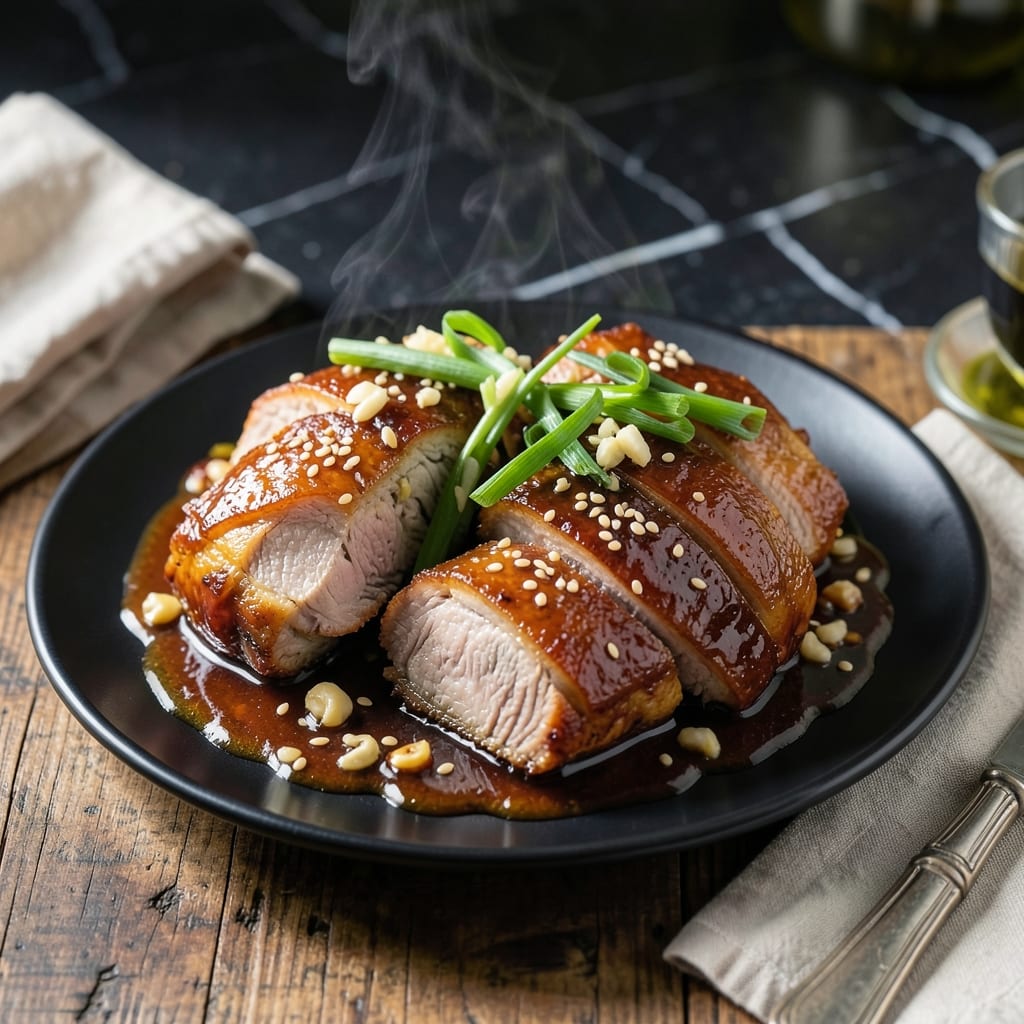
This Asian-style pork shoulder transforms tough cuts into tender, fall-apart meat through a slow braising process that builds layers of umami flavor.
I developed this method to maximize flavor while minimizing effort, using a simple blend of soy sauce, ginger, and garlic that infuses every bite with rich, aromatic depth.
The low-and-slow cooking time allows the connective tissue to break down, resulting in meat so tender it practically melts in your mouth.
Perfect for serving over rice or noodles, this dish brings restaurant-quality results to your home kitchen with minimal hands-on time.
Ingredients for Pork Shoulder Recipe Asian Style
Transform tough pork into melt-in-your-mouth tenderness with these aromatic, umami-packed ingredients.
| Ingredient | Amount | Notes |
|---|---|---|
| Pork Shoulder 🐖 | 2 ½ lb | Boneless, cut into large chunks |
| Soy Sauce 🫒 | ¾ cup | Low-sodium preferred for balance |
| Fresh Ginger 🌿 | 3 tbsp | Peeled and finely grated |
| Garlic Cloves 🧄 | 6 cloves | Minced for maximum flavor infusion |
| Brown Sugar 🍚 | ¼ cup | Packed, for caramelization |
| Rice Vinegar 🍯 | ¼ cup | Adds bright acidity to balance |
| Sesame Oil 🫒 | 1 tbsp | Toasted variety for depth |
| Star Anise Pods ⭐ | 2 whole | Whole, for aromatic infusion |
| Cinnamon Stick 🌰 | 1 whole | Lightly crushed to release flavor |
| Green Onions 🧅 | 4 whole | Thinly sliced for garnish |
| Chili Flakes 🌶️ | ½ tsp | Adjust to heat preference |
| Vegetable Oil 🫒 | 2 tbsp | For searing pork initially |
| Water 💧 | 1 cup | To deglaze and braise |
| Cornstarch 🌾 | 1 tbsp | Optional, for thickening sauce |
The pork shoulder is the star here—look for good marbling at your butcher or Costco for the best results. I prefer boneless for easier slicing later, but bone-in works too (just remove it before serving). The ginger and garlic should be fresh—skip the jarred stuff. Asian markets often have the best prices on star anise and cinnamon sticks, but Whole Foods has solid options too.
No pork shoulder? Pork butt is essentially the same thing (just a different name for the cut). Out of soy sauce? Tamari works as a 1:1 swap. If you can’t find star anise, add an extra teaspoon of five-spice powder for similar complexity. Brown sugar can be swapped for coconut sugar (same amount). The rice vinegar is flexible—apple cider vinegar in a pinch works fine.
This tastes even better the next day. Store leftovers in an airtight container in the fridge for up to 4 days, or freeze for 3 months. Reheat gently to keep the meat tender—microwave works, but stovetop with a splash of water is ideal (worth the extra minute).
Why You’ll Love This Recipe
- Minimal Chopping Required: I just toss the pork shoulder in with minced garlic, grated ginger, and soy sauce—no fancy knife skills needed.
- Sweet & Savory Magic: The brown sugar caramelizes with the soy sauce, creating this sticky, umami-packed glaze that’s honestly irresistible.
- Feeds a Hungry Crowd: One pork shoulder makes enough for a family dinner with leftovers for sandwiches the next day.
- Budget-Friendly Protein: Pork shoulder is cheap, and this recipe stretches it into multiple meals without sacrificing flavor.
Step-by-Step Instructions for Pork Shoulder Asian Style
Here’s my method for achieving fall-apart tenderness with bold, aromatic flavors.
Step 1: Sear the Pork Shoulder for Deep Flavor
Heat the 2 tbsp vegetable oil in a heavy pot or Dutch oven over medium-high heat until shimmering. Pat the 2.5 lb pork shoulder chunks dry with paper towels—this ensures a proper sear. I always work in batches to avoid crowding the pot, which steams instead of browns.
Sear the pork on all sides for 8-10 minutes total until deeply browned. You’re looking for a rich, mahogany crust that develops the Maillard reaction, which adds incredible depth. The pieces should release easily when ready to flip—if they stick, they need more time.
Step 2: Build the Aromatic Braising Liquid
Lower the heat to medium and add the 3 tbsp fresh ginger, 6 cloves garlic cloves, 0.5 tsp chili flakes, 2 whole star anise pods, and 1 whole cinnamon stick to the pot. Stir for 1-2 minutes until fragrant—this blooms the spices and prevents bitterness.
Pour in the 0.75 cup soy sauce, 0.25 cup brown sugar, 0.25 cup rice vinegar, and 1 tbsp sesame oil. Scrape up all the browned bits from the bottom with a wooden spoon. Then add the 1 cup water and bring to a gentle simmer. This liquid will transform into a complex, umami-packed sauce.
Step 3: Slow Braise Until Fork-Tender
Return all the pork to the pot, along with any accumulated juices. The liquid should come about halfway up the meat—if it doesn’t, add a splash more water. Cover and reduce heat to maintain a gentle simmer.
Braise for 2 to 2.5 hours, turning the pork occasionally, until the meat yields easily to a fork. I check at the 2-hour mark—when the pork shreds with just a gentle nudge, it’s ready. The star anise and cinnamon stick will have infused their warm, aromatic notes throughout.
Step 4: Thicken the Sauce and Finish
Remove the pork to a serving dish and skim any excess fat from the sauce. In a small bowl, mix the 1 tbsp cornstarch with 2 tbsp of the braising liquid to create a slurry. Stir this into the pot and simmer for 3-5 minutes until the sauce thickens to a glossy, spoon-coating consistency.
Return the pork to the sauce, turning to coat evenly. Garnish with the 4 whole green onions, thinly sliced. The sauce should cling to the meat with a beautiful sheen, and the pork should pull apart effortlessly with a fork, delivering that promised tenderness in every bite.
Pro Tips For Making Pork Shoulder Recipe Asian Style
- Low and Slow: Cook the pork shoulder at 300°F for at least 3 hours—I learned this the hard way after ending up with tough meat when I rushed it at higher heat.
- Grate the Ginger: Sounds weird, but finely grating the fresh ginger instead of mincing it actually changes the outcome, giving you a more even flavor distribution in the marinade.
- Don’t Skip the Fat: Resist the urge to trim all the fat off the pork shoulder; that marbling keeps the meat moist during the long cook and adds richness to the sauce.
- Bloom the Aromatics: Sauté the garlic and ginger in a bit of oil for 30 seconds before adding the soy sauce—this brings out their depth and makes a real difference in the final dish.
Troubleshooting Perfect Results
Sauce Too Thin
If your braising liquid hasn’t reduced enough, uncover the pot and simmer for an additional 10-15 minutes. I often prop the lid slightly ajar to allow steam to escape while concentrating flavors. For a quicker fix, make a cornstarch slurry with 1 tbsp cornstarch and 2 tbsp cold water. 💡
Pork Not Tender
The most common issue is not cooking it long enough. If your pork resists forking after 2.5 hours, continue braising for another 30-45 minutes. Check that your liquid maintains a gentle simmer—too low and it won’t break down the collagen.
Sauce Over-Reduced
If your sauce thickens too much before the pork is done, add ½ cup hot water and return to a simmer. This prevents burning while giving the meat more time to tenderize. I keep a kettle of hot water nearby for this exact scenario.
Bitter Flavors
Bitterness usually comes from burnt garlic or ginger. Next time, lower the heat when blooming these aromatics. If it’s already happened, stir in 1 tsp brown sugar or a splash of rice vinegar to balance the flavors. Honestly, I’ve saved many a batch this way.
Star Anise Overpowering
If the star anise flavor dominates, remove the pods after 1.5 hours of braising. For future batches, lightly crush just 1 pod instead of using whole. I learned this trick from a Vietnamese chef friend.
Uneven Cooking
Ensure your pork chunks are similar in size—about 2-inch pieces works best. Rotate them occasionally during braising. If some pieces finish early, remove them and continue cooking the rest. This method keeps everything perfectly tender. 🔥
Nutrition Facts
Frequently Asked Questions
Can I use a slow cooker for this?
Sear the meat first, then transfer everything to your slow cooker. Cook on low for 6-8 hours or high for 4-5 hours until fork-tender. The flavors develop beautifully with this method.
What if I don’t have star anise?
Substitute with 1 tsp five-spice powder or ½ tsp ground anise seed. You can also use 1 tsp fennel seeds for a similar aromatic touch. The flavor profile will still be delicious.
How do I store leftovers?
Keep in an airtight container in the fridge for up to 4 days. For longer storage, freeze for up to 3 months. Reheat gently on the stovetop with a splash of water.
Can I make this spicier?
Increase the chili flakes to 1 tsp or add 1 tbsp sriracha to the braising liquid. For fresh heat, include sliced Thai chilies when building the sauce.

- Potato Patty Recipe No Egg: Crispy Edges Without the Binder - October 30, 2026
- Paula Deen’s Potato Chip Cookies Recipe: Salty-Sweet Crunch in Every Bite - October 30, 2026
- Potato Gnocchi Recipe Ideas: Pillowy Soft Dumplings With Rustic Charm - October 30, 2026