
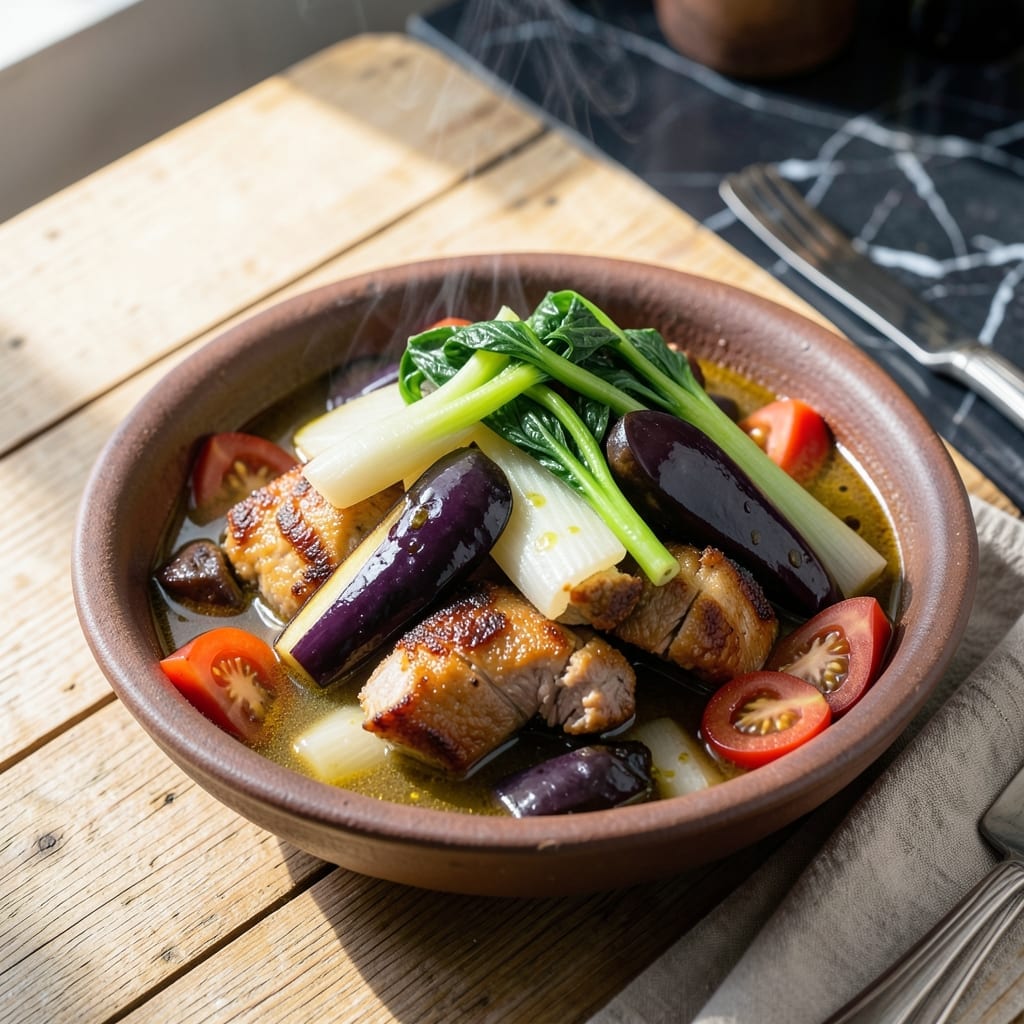
This Filipino classic brings bold, tangy flavors to your table with a balance of sour tamarind and tender pork that falls apart with each bite.
I learned the importance of sourcing quality pork during my time in Charleston, and this dish proves why heritage cuts make all the difference.
The secret lies in simmering the pork low and slow with fresh vegetables, allowing the tamarind broth to infuse every ingredient with its signature tang.
What emerges is a comforting, complex stew that’s as satisfying as it is authentic, with each spoonful delivering layers of bright, savory depth.
Ingredients for Pork Sinigang Recipe Ingredients
Heritage pork and fresh vegetables simmer in tangy tamarind broth for this Filipino classic.
| Ingredient | Amount | Notes |
|---|---|---|
| Pork Shoulder 🥩 | 1 ½ lb | Bone-in, cut into 2-inch pieces |
| Tamarind Paste 🍈 | ½ cup | Or tamarind soup base packets |
| Daikon Radish 🥬 | 1 whole | Peeled, sliced into rounds |
| Eggplant 🍆 | 1 whole | Asian variety preferred, quartered |
| Kangkong 🌿 | 1 bunch | Water spinach, stems trimmed |
| Tomatoes 🍅 | 2 whole | Medium, quartered |
| Red Onion 🧅 | 1 whole | Large, sliced into wedges |
| Long Green Chili 🌶️ | 2 pieces | Optional, for heat |
| Fish Sauce 🐟 | 2 tbsp | Patis, for umami depth |
| Garlic Cloves 🧄 | 4 cloves | Minced for aromatic base |
| Fresh Ginger 🌿 | 1 whole | 2-inch piece, sliced |
| Water 💧 | 6 cups | For simmering broth |
| Salt 🧂 | 1 tsp | Adjust to taste |
| Black Pepper 🌶️ | ½ tsp | Freshly ground preferred |
The pork is everything here. Heritage-breed shoulder from a good butcher (or Whole Foods if you’re lucky) gives that melt-in-your-mouth texture the intro promised. Look for bone-in pieces—they stay juicier during the long simmer. I learned in Charleston that the fat marbling makes all the difference, so don’t trim it all away. Daikon and eggplant should be firm, not shriveled (a sign they’re past their prime).
No tamarind paste? Tamarind soup base packets (like Mama Sita’s) work perfectly—just dissolve in warm water first. Guava paste in a pinch gives similar sourness but a fruitier undertone. Swap kangkong for bok choy or spinach if it’s hard to find. Fish sauce is non-negotiable for the umami backbone, but soy sauce can substitute if you’re avoiding seafood (though it’ll taste different).
This stew actually improves overnight. Store in the fridge for up to 3 days—the flavors deepen as it sits. Freezes beautifully for 3 months (portion before freezing). Pro tip: skim the fat after chilling for a cleaner broth when reheating.
Why You’ll Love This Recipe
- One Pot Wonder: I just dump everything in—pork shoulder, tamarind paste, daikon—and let it simmer while I fold laundry.
- Tangy Comfort: That first bite of sour tamarind with tender pork and eggplant hits different every time.
- Feeds a Crowd: Honestly, I double the batch because my family fights over the leftovers with kangkong.
- Budget Stretcher: Pork shoulder stays cheap, and daikon radish fills us up without breaking the bank.
Step-by-Step Instructions for Pork Sinigang
Here’s the method to achieve that perfect balance of tangy and savory with fall-off-the-bone pork.
Step 1: Sear the Pork Shoulder
Heat a large pot over medium-high heat. Add the 1.5 lb pork shoulder pieces and sear until lightly browned on all sides, about 3-4 minutes per side. This step locks in the juices and builds a flavor foundation for your stew. Don’t rush—proper browning creates the maillard reaction that deepens the dish’s complexity.
I always work in batches if needed to avoid crowding the pot, which would steam the pork instead of browning it. The meat should release easily from the pot when it’s ready to turn.
Step 2: Build the Aromatic Base
Reduce heat to medium and add the sliced red onion, minced garlic cloves, and sliced fresh ginger. Sauté for 2-3 minutes until the onions soften and become translucent. The aroma should become fragrant and inviting—this is your signal that the base is ready.
Add the 2 pieces long green chili and cook for another 30 seconds to release their essence. If you prefer less heat, you can remove the chili after this step. The goal is to bloom all these flavors before adding the liquid.
Step 3: Add Liquids and Tamarind
Pour in the 6 cups water and scrape up any browned bits from the bottom of the pot. Add the 0.5 cup tamarind paste and stir until fully dissolved. This creates the signature tangy broth that defines sinigang. The mixture should turn a rich, golden-brown color.
Bring the liquid to a gentle boil, then reduce heat to low-medium. Return the pork to the pot if you removed it earlier. The broth should have a noticeable tartness at this stage—this is exactly what you want.
Step 4: Simmer with Vegetables
Add the daikon radish, eggplant, and tomatoes. Simmer uncovered for 40-45 minutes until the pork becomes fork-tender and the daikon is soft. The eggplant should absorb the flavors beautifully, becoming silky in texture.
About 5 minutes before serving, add the kangkong stems first, then the leaves. This timing ensures the water spinach stays crisp-tender. The stems need a little more time to soften than the delicate leaves.
Step 5: Season and Finish
Stir in the 2 tbsp fish sauce, 1 tsp salt, and 0.5 tsp black pepper. Taste and adjust seasoning as needed—you might want a touch more tamarind for extra tang or a bit more fish sauce for umami depth.
Let the stew rest for 5 minutes off heat before serving. This allows the flavors to meld together. The final result should have a perfect balance: tangy from the tamarind, savory from the pork and fish sauce, with just enough sweetness from the vegetables. Serve hot with steamed rice.
Pro Tips For Making Pork Sinigang Recipe Ingredients
- Boil Pork First: Start the pork shoulder in boiling water for 5-7 minutes to remove impurities and keep the broth clear. I learned this the hard way after serving murky sinigang to guests.
- Soak Tamarind Paste: Mix tamarind paste with 1/2 cup warm water and strain it—this removes seeds and gives a smoother, more consistent sour flavor. Sounds tedious, but it works.
- Add Daikon Last: Daikon radish turns to mush if cooked too long, so add it 10 minutes before serving. My grandmother swore by this, and she was right.
- Salt in Layers: Season the pork lightly when browning, then adjust the broth’s saltiness at the end. After under-seasoning my first few batches, I finally figured out timing matters most.
Wine and Beer Pairings for These Flavors
White Wine Pairings
A crisp Riesling from Germany or Washington state cuts through the tangy broth beautifully. The slight sweetness balances sinigang’s sour notes while protecting your palate from the acidity. I love the Dr. Loosen Blue Slate for its mineral backbone. 🍷
Rosé Options
Dry rosé from Provence offers red fruit notes that complement the pork without overwhelming the tamarind. Look for Miraval or Whispering Angel—both have the body to stand up to the stew’s bold flavors. Serve chilled between 45-50°F.
Light Beer Styles
A Filipino San Miguel Light or American pilsner like Modelo Especial cleanses your palate between bites. The carbonation helps reset your taste buds after each spoonful of rich broth. I always keep a few cold ones ready when serving this dish. 🍺
Wheat Beer Choices
German hefeweizens with their banana and clove esters provide an interesting contrast to the sour tamarind. Try Weihenstephaner Hefeweissbier or Paulaner Hefe-Weisse. The cloudy texture feels right at home with this hearty stew.
Non-Alcoholic Pairing
For a zero-proof option, try calamansi soda—a Filipino citrus drink that mirrors the tamarind’s acidity. Or go with sparkling water with a lime wedge. Both refresh without competing with the dish’s complex flavors.
Nutrition Facts
Frequently Asked Questions
What can I use if I don’t have tamarind paste?
Use tamarind soup base packets dissolved in warm water for convenience. For a different twist, guava paste adds similar tanginess with a fruitier note.
Can I use a different pork cut?
Pork ribs or belly work well but may need 10-15 minutes extra simmering. Shoulder remains ideal for its fat marbling and fork-tender result.
How do I store leftovers?
Keep in an airtight container in the fridge for up to 3 days. For longer storage, freeze for 3 months and thaw overnight before reheating.

- Potato Patty Recipe No Egg: Crispy Edges Without the Binder - October 30, 2026
- Paula Deen’s Potato Chip Cookies Recipe: Salty-Sweet Crunch in Every Bite - October 30, 2026
- Potato Gnocchi Recipe Ideas: Pillowy Soft Dumplings With Rustic Charm - October 30, 2026