
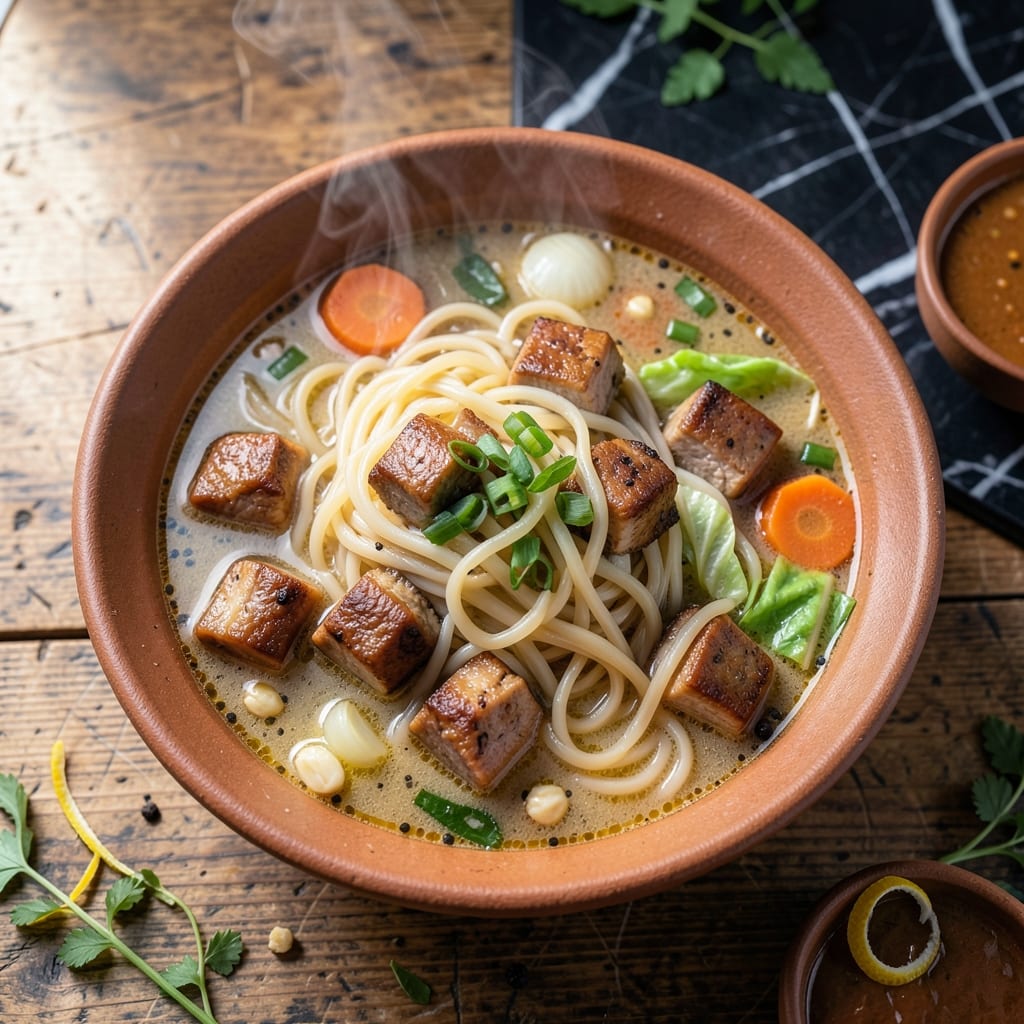
This Filipino comfort dish brings together tender pork, glass noodles, and a deeply flavorful broth that warms the soul. I first encountered sotanghon soup during my travels through Southeast Asia, where its simplicity and heartiness left a lasting impression.
The key lies in the balance of savory pork, chewy sotanghon noodles, and a rich broth infused with garlic, onions, and a touch of soy sauce. Each ingredient plays a crucial role in building layers of authentic Filipino taste.
What emerges is a bowl of comforting soup with perfectly cooked pork pieces, soft glass noodles, and vegetables that soak up the savory broth. It’s a dish that feels both nourishing and deeply satisfying.
Ideal for chilly evenings or when you crave something hearty yet light. Here’s how to make this traditional Filipino favorite.
Ingredients for Pork Sotanghon Soup Recipe Panlasang Pinoy
Pantry staples meet fresh produce for this hearty, soul-warming bowl of goodness.
| Ingredient | Amount | Notes |
|---|---|---|
| Pork Belly 🥩 | 1 lb | Cut into small pieces |
| Sotanghon Noodles 🍜 | 8 oz | Glass noodles, mung bean starch |
| Garlic Cloves 🧄 | 6 cloves | Minced for broth |
| Yellow Onion 🧅 | 1 whole | Medium, quartered |
| Green Onions 🧅 | 3 pieces | Chopped for garnish |
| Carrot 🥕 | 1 whole | Medium, sliced |
| Cabbage 🥬 | 2 cups | Shredded, green or napa |
| Soy Sauce 🫒 | 3 tbsp | Filipino brand preferred |
| Black Peppercorns 🌶️ | 1 tsp | Whole, for broth |
| Bay Leaf 🍃 | 2 pieces | Dried or fresh |
| Water 💧 | 8 cups | For simmering broth |
| Salt 🧂 | 1 tsp | Adjust to taste |
| Calamansi or Lemon 🍋 | 1 piece | For serving, optional |
| Fish Sauce 🐟 | 1 tbsp | For umami depth, optional |
The pork belly is non-negotiable for that melt-in-your-mouth texture—ask your butcher for skin-on if you want extra richness. Filipino markets carry sotanghon noodles in the dried goods aisle, but Asian grocery stores work too. Look for the clear, cellophane-like strands. For the soy sauce, Silver Swan or Datu Puti are the go-to brands for authentic flavor (found at any Filipino store).
No pork belly? Pork shoulder works at a 1:1 swap, though it won’t be as tender. Out of sotanghon? Rice stick noodles are the closest alternative—just soak them first. Skip the fish sauce if you’re avoiding seafood, but add an extra 1 tbsp soy sauce for balance. The cabbage can be swapped for bok choy or spinach (add at the end so it doesn’t turn mushy).
Broth tastes even better the next day—store in the fridge for up to 3 days. Freeze without the noodles (they turn to mush) for up to 3 months. Reheat gently so the pork stays tender (don’t boil the life out of it).
Why You’ll Love This Recipe
- Minimal Chopping: I just dice the pork belly, onion, and garlic—no fancy knife skills needed, and the sotanghon cooks right in the broth.
- Garlic-Infused Broth: The pork belly simmers with crushed garlic and onion, filling the kitchen with that rich, savory aroma I can’t resist.
- Feeds a Crowd: Honestly, it’s my go-to for family gatherings—one pot, hearty portions, and everyone leaves happy.
- Budget Stretcher: Pork belly and sotanghon are affordable, and leftovers taste even better the next day.
Step-by-Step Instructions for Pork Sotanghon Soup
Here’s the method. Straightforward, tested, works every time.
Step 1: Build the Flavorful Broth Base
In a large pot, combine the 8 cups Water, 1 lb Pork Belly cut into small pieces, 6 cloves Garlic Cloves, 1 whole Yellow Onion (quartered), 1 tsp Black Peppercorns, 2 pieces Bay Leaf, and 1 tsp Salt.
Bring to a boil over medium-high heat, then reduce to a gentle simmer. Skim off any foam that rises to the surface during the first 5 minutes—this keeps your broth clear and clean. Let it simmer uncovered for 30 minutes so the pork flavors infuse deeply into the liquid.
Step 2: Add Vegetables and Seasonings
After 30 minutes, add the 1 whole Carrot (sliced) and 2 cups Cabbage (shredded) to the pot. These vegetables should soften without turning mushy, so maintain a steady simmer.
Stir in the 3 tbsp Soy Sauce and 1 tbsp Fish Sauce for that essential umami depth. I always taste at this point and adjust the salt if needed, though the soy and fish sauces usually provide enough seasoning. Simmer for another 10 minutes until the pork is tender and the carrots are just fork-tender.
Step 3: Cook the Sotanghon Noodles
Add the 8 oz Sotanghon Noodles directly to the simmering broth. Unlike pasta, sotanghon noodles cook quickly—usually in 3-4 minutes. Stir gently to separate the strands and prevent clumping.
Watch for the noodles to turn from opaque white to translucent—this is your visual cue that they’re done. Overcooking will make them gummy, so remove the pot from heat as soon as they reach this stage. The residual heat will finish the cooking process.
Step 4: Finish and Serve
Let the soup sit off heat for 2-3 minutes to allow the flavors to meld together. The sotanghon noodles will continue to absorb the rich broth, becoming perfectly tender.
Ladle into bowls and garnish with the 3 pieces Green Onions (chopped). Serve immediately with calamansi or lemon wedges on the side for a bright, citrusy finish that cuts through the richness of the pork and broth.
Pro Tips For Making Pork Sotanghon Soup Recipe Panlasang Pinoy
- Parboil the Pork: Boil the pork belly slices for 5-7 minutes first to remove impurities—this keeps your broth clean and flavorful without that gamey aftertaste. I learned this the hard way after wondering why my soup looked murky.
- Soak the Sotanghon: Cover the noodles in warm water for 10 minutes before cooking, or they’ll absorb too much broth and turn mushy. Sounds tedious, but it guarantees they cook evenly in the soup.
- Skip the Overcrowding: Don’t dump all the noodles in at once—add them in batches if needed, or they’ll clump together and cook unevenly. After ruining two pots of sopas this way, I now do it religiously.
- Finish with Green Onions: Stir in the green onions only in the last 2 minutes of cooking to preserve their fresh, crisp bite. My grandmother swore by this, and she was right: it adds a bright contrast to the rich broth.
Perfect Pairings for These Flavors
Filipino Side Dishes
I love serving this with steamed rice to soak up every last drop of that savory broth. Some prefer garlic fried rice for extra flavor—just cook 2 cups jasmine rice with minced garlic in a little oil. 🥗
Fresh Accompaniments
A simple cucumber and tomato salad with a splash of calamansi juice adds a refreshing contrast. Or try atchara, the pickled green papaya that cuts through the richness beautifully.
Beverage Pairings
For drinks, calamansi juice is my go-to—it’s the perfect citrusy complement. Iced tea works too, especially if it’s slightly sweet. For something warm, ginger tea enhances the soup’s comforting qualities. 🍋
Extra Toppings
Set out small bowls of crispy garlic bits, chopped cilantro, and sliced chili peppers for customization. These let everyone tailor their bowl to taste.
Bread Options
If you want to go beyond rice, pandesal (Filipino bread rolls) are perfect for dipping. Toast them lightly for extra texture.
Nutrition Facts
Frequently Asked Questions
Can I use chicken instead of pork?
Substitute 1 lb chicken thighs for pork belly. Chicken cooks faster, so reduce simmering time to 20 minutes to prevent dryness.
How do I prevent the noodles from sticking?
Rinse sotanghon noodles in cold water before adding to broth. Stir gently during the 3-4 minutes cooking time to separate strands.
Can I make this in a slow cooker?
Yes! Cook on low for 6 hours or high for 3-4 hours. Add noodles 30 minutes before serving to avoid overcooking.
What if my broth is too salty?
Add 1-2 cups water to dilute. Balance with a squeeze of calamansi or a pinch of sugar to mellow the saltiness.

- Potato Patty Recipe No Egg: Crispy Edges Without the Binder - October 30, 2026
- Paula Deen’s Potato Chip Cookies Recipe: Salty-Sweet Crunch in Every Bite - October 30, 2026
- Potato Gnocchi Recipe Ideas: Pillowy Soft Dumplings With Rustic Charm - October 30, 2026