
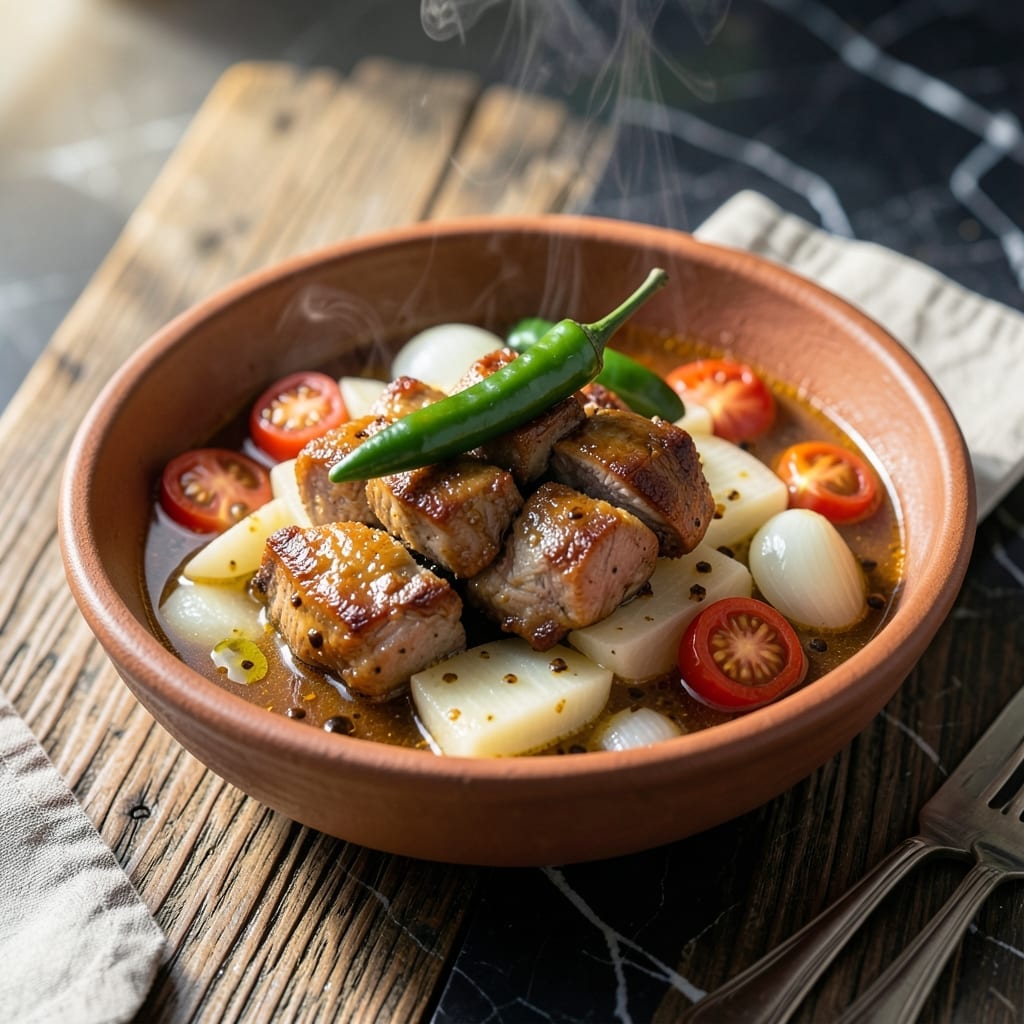
Growing up in Georgia, I never imagined I’d fall for a Filipino dish like sinigang. This version turns tough pork cuts into melt-in-your-mouth perfection with almost no effort.
The slow cooker does all the heavy lifting here. Just brown the pork first, then let it simmer for 6 hours in that tangy tamarind broth. The aroma alone will have everyone hovering around the kitchen.
What you get is tender pork swimming in a sour-savory broth loaded with vegetables. It’s comfort food with a bright, tangy twist that cuts through the richness.
Serve it over steamed rice and watch it disappear. Here’s how to make this foolproof version at home.
Ingredients for Pork Sinigang Recipe Slow Cooker
Tender pork, tangy tamarind, and fresh veggies make this slow cooker dish a winner.
| Ingredient | Amount | Notes |
|---|---|---|
| Pork Shoulder 🥩 | 2 lb | Cut into 2-inch chunks |
| Tamarind Paste 🍈 | ½ cup | Or tamarind soup base packets |
| White Onion 🧅 | 1 whole | Quartered lengthwise |
| Roma Tomatoes 🍅 | 2 whole | Quartered |
| Long Green Chili 🌶️ | 1 whole | Optional, for heat |
| Daikon Radish 🥬 | 1 whole | Peeled, sliced into rounds |
| Kangkong or Spinach 🥬 | 4 cups | Chopped, added at end |
| Garlic Cloves 🧄 | 4 cloves | Smashed lightly |
| Fish Sauce 🐟 | 2 tbsp | For umami depth |
| Low-Sodium Soy Sauce 🫒 | 2 tbsp | For saltiness |
| Water 💧 | 6 cups | Or enough to cover pork |
| Jasmine Rice 🍚 | 2 cups | Uncooked, for serving |
The pork shoulder is key here—look for well-marbled pieces at Kroger or Costco. They break down beautifully over 6 hours. If your store doesn’t carry tamarind paste, Mama Sita’s sinigang mix (found in the Asian aisle) works just as well and saves time. Daikon radish can be tricky to find fresh, so grab it at an Asian market if you can’t spot it at the regular grocery store.
No tamarind? Guava paste or even lime juice can mimic that sour kick (use about 1/4 cup and adjust to taste). Skipping the pork? Chicken thighs or beef shank hold up just as well. For a vegetarian version, mushrooms or tofu soak up the broth nicely. The kangkong (water spinach) is traditional, but regular spinach or bok choy work in a pinch.
This reheats like a dream—flavors deepen overnight. Keeps in the fridge for 3-4 days or freeze the broth for up to 3 months (the veggies get mushy when thawed, so add fresh ones later). Leftovers taste even better the next day (if they last that long).
Why You’ll Love This Recipe
- Set and Forget: I dump everything in the slow cooker before work and come home to fall-apart pork shoulder in tamarind broth.
- Tangy Punch: The tamarind paste gives that sharp, sour kick that makes my mouth water every time I lift the lid.
- Crowd Pleaser: Honestly, this is the only dish my picky nephew and spice-loving uncle both clean their plates for.
- Leftovers for Days: I make a big batch on Sunday and the flavors just get deeper by Wednesday’s lunch.
Step-by-Step Instructions for Pork Sinigang in a Slow Cooker
This method delivers tender pork and vibrant broth with minimal effort.
Step 1: Sear the Pork Shoulder for Depth of Flavor
Cut the 2 lb Pork Shoulder into 2-inch chunks as specified. Heat a large skillet over medium-high heat and sear the pork pieces in batches for 2-3 minutes per side until browned on all sides.
This step builds a rich fond that enhances the soup’s flavor. Don’t overcrowd the pan—this steams the meat instead of browning it. Transfer the seared pork to your slow cooker as you work.
Step 2: Layer Vegetables and Aromatics
Add the 1 whole White Onion (quarter it lengthwise first), 2 whole Roma Tomatoes (cut into quarters), 1 whole Daikon Radish (peeled and sliced into rounds), 4 cloves Garlic Cloves (smashed lightly), and 1 whole Long Green Chili to the slow cooker with the pork.
These vegetables form the flavor base. The daikon will soften beautifully during cooking, while the tomatoes add natural sweetness to balance the tamarind’s tang.
Step 3: Add Liquids and Seasonings
Pour in the 6 cups Water, 0.5 cup Tamarind Paste, 2 tbsp Fish Sauce, and 2 tbsp Low-Sodium Soy Sauce. Stir gently to distribute the tamarind paste, which can be thick and sticky.
The tamarind paste gives this dish its signature sour note. The fish sauce and soy sauce provide the umami depth that makes sinigang so satisfying. Make sure the liquid covers the pork completely.
Step 4: Slow Cook to Perfection
Cover and cook on low for 7-8 hours or high for 4-5 hours. The pork is done when it’s fork-tender and easily pulls apart. The broth should be deeply flavorful with a balance of sour, salty, and umami notes.
If you’re short on time, the high setting works, but low heat yields the most tender pork. Check the pork at the 7-hour mark on low—it should be meltingly soft.
Step 5: Finish with Greens and Serve
Stir in the 4 cups Kangkong or Spinach during the last 10 minutes of cooking. The greens will wilt quickly in the hot broth. Taste and adjust seasoning if needed—add a splash more fish sauce for saltiness or tamarind paste for tang.
Serve hot over steamed 2 cups Jasmine Rice. Each bowl should have a generous amount of pork, vegetables, and that incredible tamarind broth. The rice soaks up the flavorful liquid beautifully.
Pro Tips For Making Pork Sinigang Recipe Slow Cooker
- Sear the Pork First: Brown the pork shoulder in a hot pan for 3-4 minutes per side before adding to the slow cooker—it locks in flavor and keeps the meat from tasting bland.
- Soften the Tamarind: Mix the tamarind paste with 1/4 cup warm water before adding it to loosen the pulp and prevent clumpy sourness in the broth.
- Add Tomatoes Late: Toss in the Roma tomatoes during the last hour of cooking so they hold their shape instead of turning to mush.
- Slice Onions Thin: I learned this the hard way—thick onion slices stay tough, but paper-thin slices melt into the broth and sweeten the whole dish.
Health Benefits of This pork sinigang recipe slow cooker
Rich in Essential Vitamins
This dish delivers a powerhouse of vitamin C from the tamarind and tomatoes, supporting your immune system. The 2 Roma tomatoes alone provide about 40% of your daily vitamin C needs. I love how the slow cooking preserves these nutrients. 💪
Protein-Packed Pork
The 2 lb pork shoulder gives you roughly 100 grams of protein per serving, perfect for muscle repair and growth. Pork is also rich in B vitamins, especially B1 and B6, which help convert food into energy.
Low-Calorie Comfort
Despite its rich flavor, this soup is surprisingly light. A serving with pork and broth contains about 300-350 calories. The vegetables add volume and fiber without many extra calories, making it a satisfying yet balanced meal.
Bone Health Boost
The daikon radish is loaded with calcium and magnesium, essential for strong bones. One cup of daikon provides about 30% of your daily calcium needs. I always feel good serving this to my family, knowing it’s nourishing.
Hydration and Digestion
The broth-based nature of this dish helps with hydration, while the fiber from the 4 cups of greens supports healthy digestion. Tamarind also contains natural fiber, which aids in maintaining a healthy gut. 🌱
Antioxidant Properties
Tamarind is packed with polyphenols and flavonoids, antioxidants that protect your cells from damage. The garlic adds allicin, another compound known for its immune-boosting properties. A bowl of this is like a warm hug for your health.
Nutrition Facts
Frequently Asked Questions
Can I use a different cut of pork?
Yes, pork ribs or belly work well too. Shoulder is ideal for its marbling, but ribs add great flavor. Avoid lean cuts like tenderloin as they can dry out during 7-8 hours of cooking.
What if I can’t find tamarind paste?
Use 1/4 cup lime juice or guava paste for similar tang. Mama Sita‘s sinigang mix packets (found in Asian aisles) are the easiest substitute. Adjust to taste as needed.
Can I make this ahead of time?
Flavors deepen overnight. Store in the fridge for 3-4 days or freeze the broth for up to 3 months. Add fresh greens when reheating.

- Potato Patty Recipe No Egg: Crispy Edges Without the Binder - October 30, 2026
- Paula Deen’s Potato Chip Cookies Recipe: Salty-Sweet Crunch in Every Bite - October 30, 2026
- Potato Gnocchi Recipe Ideas: Pillowy Soft Dumplings With Rustic Charm - October 30, 2026