
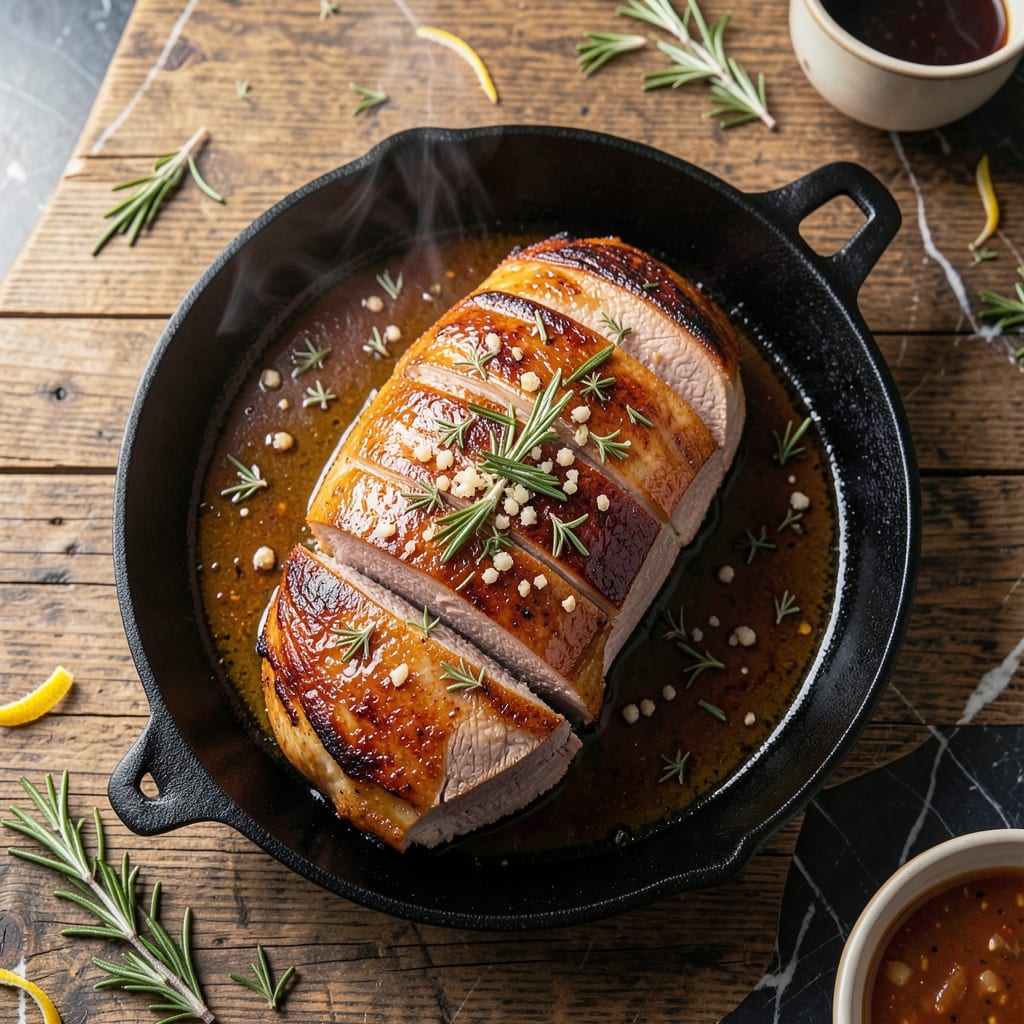
There’s something deeply satisfying about a perfectly cooked pork loin, with its herb-crusted exterior and juicy, tender interior. A roaster oven ensures even heat distribution, making it nearly impossible to overcook.
I’ve refined this method over years of testing, focusing on a simple blend of herbs and spices that enhances the pork’s natural flavor without overwhelming it. The result is a centerpiece dish that’s impressive yet effortless.
The roaster oven’s consistent temperature guarantees a moist, flavorful result every time. No dry, tough cuts here—just succulent meat that falls apart at the touch of a fork.
This technique works for holidays or Sunday suppers. The hands-off cooking leaves you free to prepare the rest of the meal.
Ingredients for Pork Loin Recipe Roaster Oven
Pantry staples meet fresh herbs for a restaurant-quality centerpiece with minimal effort.
| Ingredient | Amount | Notes |
|---|---|---|
| Pork Loin 🥩 | 2 lb | Bone-in or boneless, trimmed |
| Fresh Garlic Cloves 🧄 | 6 cloves | Minced or crushed to paste |
| Fresh Rosemary 🌿 | 2 tbsp | Finely chopped, stems discarded |
| Fresh Thyme Leaves 🍃 | 2 tbsp | Stripped from stems |
| Extra-Virgin Olive Oil 🫒 | 3 tbsp | Divided for rub and searing |
| Kosher Salt 🧂 | 1 ½ tsp | Diamond Crystal preferred |
| Coarsely Ground Black Pepper 🌶️ | 1 tsp | Freshly ground for best flavor |
| Dijon Mustard 🟡 | 2 tbsp | Smooth, not whole grain |
| Dry White Wine 🍷 | ½ cup | For deglazing pan |
| Low-Sodium Chicken Stock 🥣 | ½ cup | Or substitute vegetable stock |
| Unsalted Butter 🧈 | 2 tbsp | For finishing sauce |
| All-Purpose Flour 🌾 | 1 tbsp | For thickening pan sauce |
The pork loin is the star—opt for bone-in for extra juiciness or boneless for easier slicing. Source from a reputable butcher or the meat counter at Whole Foods for consistent quality. The cut should have a light pink hue and minimal marbling. For the herbs, organic rosemary and thyme from the produce section offer superior aroma. Avoid pre-chopped herbs (they oxidize quickly).
No fresh herbs? Dried at one-third the amount works, but the crust won’t cling as well. Swap white wine for apple cider vinegar plus water (equal parts). Low-sodium stock prevents oversalting—Better Than Bouillon makes a solid concentrate. The butter can be omitted, but it adds a luxurious finish to the pan sauce. Dijon mustard is non-negotiable for the crust’s tang.
Prep the herb mixture up to 24 hours ahead—store covered in the fridge. The pork loin keeps raw for 3-4 days in the coldest part of your fridge or freezes for 6 months. Leftovers reheat beautifully, though the crust softens slightly.
Why You’ll Love This Recipe
- One Pan Wonder: Honestly, I just toss the pork loin with olive oil, garlic, rosemary, and thyme into the roaster oven—no babysitting required.
- Flavor Bomb: That first bite with the crispy garlic crust and fragrant herbs? I’ll be real: it’s why I make this every Sunday.
- Feeds a Crowd: Between us, it’s my go-to for dinner parties—one roast, eight happy people, and zero stress.
- Leftovers Win: The pork stays juicy for days, so I get sandwiches, tacos, or fried rice without extra cooking.
Step-by-Step Instructions for Pork Loin Roaster Oven
This method delivers perfectly even cooking and a herb-crusted exterior every time.
Step 1: Prepare the Herb Rub
In a small bowl, combine the 2 tbsp fresh rosemary, 2 tbsp fresh thyme leaves, 6 cloves fresh garlic cloves (minced), 1.5 tsp kosher salt, and 1 tsp coarsely ground black pepper. Stir in 2 tbsp extra-virgin olive oil and 2 tbsp Dijon mustard until it forms a thick paste.
This aromatic blend will create a flavorful crust that adheres beautifully to the pork loin. The mustard acts as a binder while adding its signature tang, and the fresh herbs infuse the meat with bright, earthy notes as it cooks.
Step 2: Apply Rub and Preheat Roaster Oven
Pat the 2 lb pork loin dry with paper towels to ensure the rub sticks properly. Massage the herb mixture evenly over the entire surface of the pork loin, pressing gently to create an even coating. Let it sit at room temperature for 15 minutes while you preheat the roaster oven to 375°F.
This resting period allows the flavors to begin penetrating the meat. Meanwhile, the roaster oven’s even heat distribution ensures the pork loin cooks uniformly, preventing dry spots or uneven doneness.
Step 3: Sear and Roast the Pork Loin
Place the pork loin in the preheated roaster oven, fat-side up. Roast uncovered for 30 minutes, then reduce the temperature to 325°F and continue roasting for another 45-60 minutes, or until the internal temperature reaches 145°F on a meat thermometer.
The initial high heat helps develop a golden-brown crust, while the lower temperature ensures the pork loin cooks through gently. The herbs in the rub will caramelize slightly, adding depth to the flavor profile.
Step 4: Make the Pan Sauce
Transfer the pork loin to a cutting board and let it rest for 10 minutes. Place the roaster oven insert on the stovetop over medium heat. Add the 0.5 cup dry white wine and scrape up any browned bits. Simmer for 2 minutes, then whisk in 1 tbsp all-purpose flour.
Pour in the 0.5 cup low-sodium chicken stock and simmer for 3-4 minutes until slightly thickened. Remove from heat and stir in 2 tbsp unsalted butter until melted and smooth. The sauce should coat the back of a spoon with a glossy finish.
Step 5: Slice and Serve
Slice the pork loin against the grain into ½-inch thick pieces. Arrange on a platter and drizzle with the pan sauce. The meat should be juicy and tender, with a beautifully browned herb crust.
Serve immediately while warm, ensuring each portion gets a generous spoonful of the rich, savory sauce. The combination of the herb-crusted pork and velvety pan sauce creates a dish that’s both elegant and deeply satisfying.
Pro Tips For Making Pork Loin Recipe Roaster Oven
- Start Hot, Finish Low: Sear the pork loin at 450°F for 20 minutes first, then drop to 325°F to finish—this locks in juices while ensuring even cooking without drying it out. I learned this the hard way after pulling out a dry, sad roast more times than I’d like to admit.
- Score the Fat: Make shallow cuts in the fat cap every inch or so before seasoning. Sounds weird, but it works: the renderings crisp up better and the garlic-herb oil penetrates deeper.
- Rest Under Foil: Give it a solid 10-15 minutes under loose foil after roasting—this keeps the meat moist while the juices redistribute. Skip this and you’ll watch all that flavor pool on the cutting board.
- Crush the Garlic: Smash the fresh garlic cloves with the side of your knife before mincing—they’ll release more oils and stick better to the pork. My grandmother swore by this, and she was right: the flavor clings instead of sliding off.
Common Mistakes When Making This Dish
Skipping the Thermometer
Never guess doneness—this is the most common mistake. A 2 lb pork loin needs to reach 145°F internal temperature for perfect juiciness. I use a ThermoWorks instant-read for accuracy. Color alone isn’t reliable, as pork can look done at 140°F but still be undercooked. 🌡️
Overcrowding the Oven
Give your pork loin space to cook evenly. If you’re making multiple roasts, use separate racks or cook in batches. Crowding causes uneven heat distribution and can lead to some parts drying out while others remain undercooked.
Skipping the Rest
Resting for 10 minutes after cooking lets the juices redistribute. Slicing too soon causes all those beautiful juices to spill onto the cutting board. I’ve ruined many a roast by being impatient—don’t make my mistake.
Using Dull Herbs
Old or dried-out rosemary and thyme won’t create that vibrant crust. Use fresh herbs when possible, or replace dried herbs every 6 months. The flavor difference is night and day.
Ignoring the Roaster Oven’s Quirks
Every roaster oven has hot spots. Mine runs 10°F hotter in the back left corner, so I rotate the pan halfway through. Get to know your oven’s personality for consistent results. 🔥
Skipping the Sear
The initial 30 minutes at 375°F develops the crust. Without this step, the herb rub won’t caramelize properly, and you’ll miss out on that beautiful golden-brown exterior.
Nutrition Facts
Frequently Asked Questions
What temperature should the roaster oven be set to?
Start at 375°F for the first 30 minutes, then reduce to 325°F until the pork reaches 145°F internally. This two-stage method ensures a perfect crust and even cooking.
Can I use dried herbs instead of fresh?
Yes, but use 1/3 the amount since dried herbs are more concentrated. The crust may not adhere as well, but the flavor will still be excellent. Fresh herbs are ideal for the best texture and aroma.
How long should I let the pork rest before slicing?
Always rest the pork for 10 minutes after cooking. This allows juices to redistribute, ensuring each slice stays moist and tender. Slicing too soon will cause the juices to spill out.
What if my roaster oven has hot spots?
Rotate the pan halfway through cooking to ensure even browning. Most roaster ovens have minor temperature variations, so this simple step guarantees consistent results.

- Potato Patty Recipe No Egg: Crispy Edges Without the Binder - October 30, 2026
- Paula Deen’s Potato Chip Cookies Recipe: Salty-Sweet Crunch in Every Bite - October 30, 2026
- Potato Gnocchi Recipe Ideas: Pillowy Soft Dumplings With Rustic Charm - October 30, 2026