
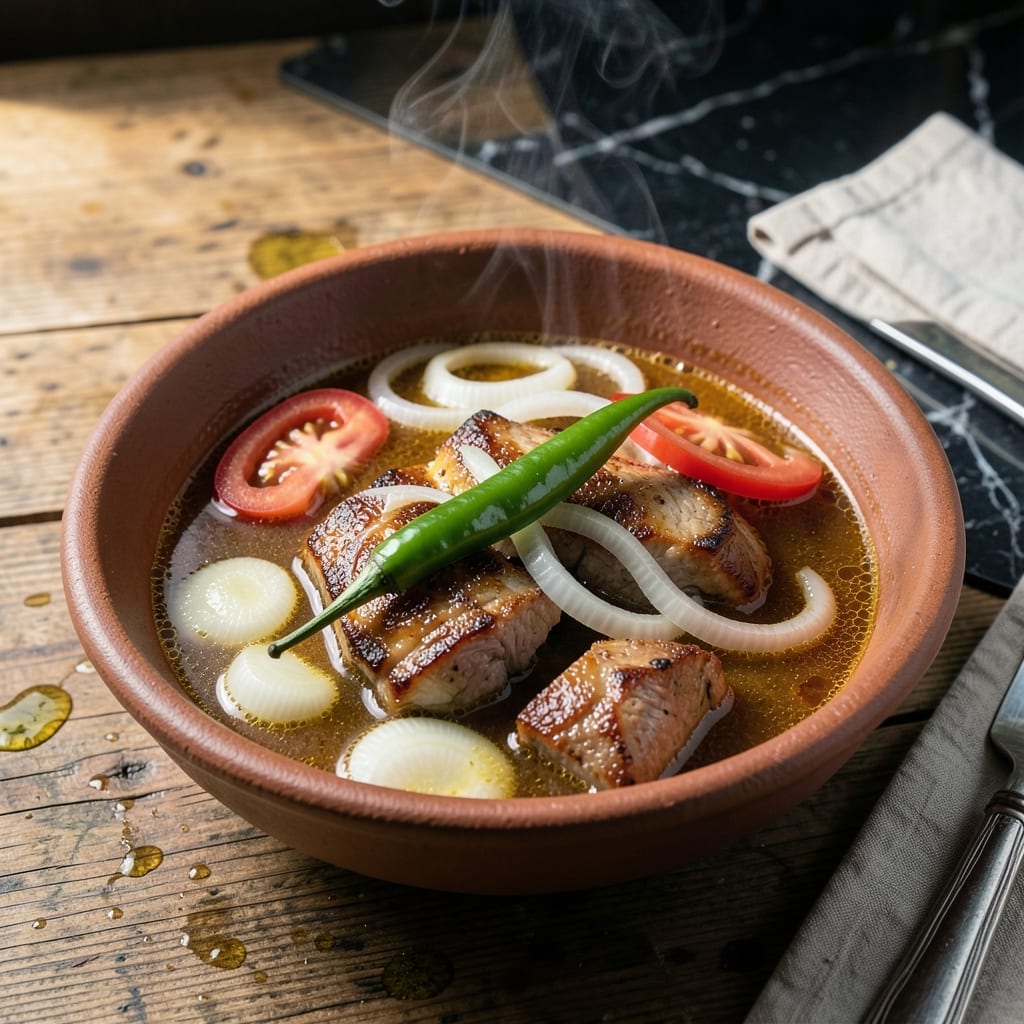
This Filipino pork sinigang delivers the perfect balance of tender meat and tangy broth that defines authentic Panlasang Pinoy cooking.
I developed this method after studying traditional techniques to ensure the pork becomes fall-apart soft while the tamarind base provides that signature sour depth.
The secret is simmering the pork low and slow until it reaches that melt-in-your-mouth texture, then adding vegetables at just the right moment.
What results is a comforting bowl where each spoonful offers tender pork, vibrant vegetables, and that irresistible sour tang.
Ingredients for Pork Sinigang Recipe Panlasang Pinoy
Authentic Panlasang Pinoy ingredients for that perfect sour and tender balance.
| Ingredient | Amount | Notes |
|---|---|---|
| Pork Shoulder 🍖 | 1 ½ lb | Cut into 2-inch chunks, bone-in preferred |
| Tamarind Paste 🌿 | ½ cup | Or 8-10 fresh tamarind pods, soaked |
| Yellow Onion 🧅 | 1 whole | Large, quartered |
| Tomatoes 🍅 | 2 whole | Medium, quartered |
| Daikon Radish 🥕 | 8 oz | Peeled, sliced into rounds |
| Long Green Chili 🌶️ | 2 whole | Optional for heat, left whole |
| Kangkong 🌿 | 1 lb | Water spinach, trimmed into 2-inch lengths |
| String Beans 🌱 | ½ lb | Trimmed into 2-inch pieces |
| Eggplant 🍆 | 1 whole | Medium, sliced into rounds |
| Fish Sauce 🐟 | 2 tbsp | Patis, or substitute soy sauce |
| Salt 🧂 | 1 tsp | Or to taste |
| Black Pepper 🌶️ | ½ tsp | Freshly ground preferred |
| Water 💧 | 6 cups | For simmering broth |
The pork shoulder is non-negotiable here. Bone-in cuts from a trusted butcher yield the most flavorful, fall-apart texture—Costco or Asian markets often carry pre-cut chunks perfect for sinigang. Tamarind paste (found in the international aisle at Whole Foods or H-Mart) offers consistent sourness, but fresh tamarind pods (soaked and strained) deliver superior depth. Look for pods with smooth, dark brown shells and no mold.
Substituting tamarind? Green mango powder (amchur) or guava paste work in a pinch, though the flavor profile shifts slightly. No daikon? White turnips or jicama provide similar crunch. For the fish sauce, vegetarian oyster sauce or soy sauce with a squeeze of lime can mimic the umami. Kangkong is traditional, but regular spinach or bok choy (added later) are acceptable swaps.
Broth can be made 1 day ahead—flavor intensifies overnight. Store tamarind paste in an airtight container for 1 year unopened, 3 months once opened. Pork leftovers keep 3-4 days refrigerated, but vegetables are best eaten fresh as they soften significantly upon reheating.
Why You’ll Love This Recipe
- Dump and Simmer: I just toss the pork shoulder, tamarind paste, and veggies in the pot and let it work its magic.
- Tangy Comfort: That first sip of sour tamarind broth with tender pork and radish hits different every time.
- Weeknight Hero: Between us, this is my Tuesday night lifesaver when I need something hearty and fast.
- Stretches Far: Honestly, one batch feeds my family of four with leftovers for lunch the next day.
Step-by-Step Instructions for Pork Sinigang
Here’s the method. Straightforward, tested, works every time.
Step 1: Sear the Pork Shoulder for Depth of Flavor
Heat a large pot over medium-high heat without oil. Add the 1.5 lb Pork Shoulder chunks and sear for 4-5 minutes until browned on all sides. This creates a rich fond that will deepen the stew’s flavor profile.
I press down gently on each piece with tongs to ensure maximum contact with the pot. Don’t rush this step—proper browning takes patience but pays off in the final dish’s complexity.
Step 2: Build the Sour Broth Base
Add the 1 whole Yellow Onion, 2 whole Tomatoes, 0.5 cup Tamarind Paste, 1 tsp Salt, and 0.5 tsp Black Pepper to the pot. Pour in the 6 cups Water and stir to dissolve the tamarind completely.
Bring to a boil, then reduce heat to medium-low. Simmer for 10 minutes to allow the tamarind to fully infuse the liquid with its signature sour notes. The broth should turn a rich amber color and smell tangy.
Step 3: Simmer the Pork Until Tender
Add the 8 oz Daikon Radish, 0.5 lb String Beans, and 1 whole Eggplant to the pot. Return to a gentle simmer and cook covered for 40-45 minutes until the pork is fork-tender.
Check the pork periodically—it’s ready when it pulls apart easily with a fork. The daikon should be translucent and the eggplant soft. Skim any foam that rises to the surface during simmering for a cleaner broth.
Step 4: Add Leafy Greens and Finish
Stir in the 1 lb Kangkong and 2 whole Long Green Chili. Cook for an additional 3-4 minutes until the kangkong wilts but retains a slight bite. The chili will infuse the broth with subtle heat without overpowering.
Taste and adjust seasoning with the 2 tbsp Fish Sauce if needed. The ideal balance is prominently sour with savory depth from the pork and vegetables. Remove from heat immediately to prevent overcooking the greens.
Step 5: Serve Hot with Steamed Rice
Ladle the sinigang into bowls, ensuring each serving has a good distribution of pork and vegetables. The broth should be clear with a vibrant sour aroma, and the pork should be fall-apart tender.
I always serve this with steamed rice to soak up the flavorful broth. The dish tastes best when served immediately, while the vegetables are still at their peak texture and the sour notes are most pronounced.
Pro Tips For Making Pork Sinigang Recipe Panlasang Pinoy
- Boil Pork First: Parboil the pork shoulder for 5-10 minutes to remove impurities—I learned this the hard way after skimming scum off my sinigang for what felt like an hour.
- Soak Tamarind Paste: Mix the tamarind paste with 1 cup warm water and let it sit for 10 minutes before adding it, or you’ll end up with bitter clumps instead of that smooth, tangy broth.
- Skip Raw Daikon: Add the daikon radish 15 minutes after the pork starts simmering, not at the beginning, unless you want mushy, flavorless slices.
- Use Ripe Tomatoes: Overripe tomatoes break down faster and sweeten the broth naturally—my grandmother swore by this, and she was right.
Make-Ahead Tips for This pork sinigang recipe panlasang pinoy
Prep Ahead Broth
You can make the tamarind broth 1-2 days ahead—it actually improves as flavors meld. Store in an airtight container in the fridge. The acidity helps preserve it, but give it a quick boil before adding pork if it’s been stored for 24+ hours. 💡
Pork Prep
Cut and trim your 1.5 lb Pork Shoulder the night before and store it in a sealed container. This saves time and lets the meat come to room temperature before cooking, ensuring more even doneness throughout each piece.
Vegetable Prep
Wash and chop all vegetables except kangkong the morning of cooking. Keep them in separate containers with damp paper towels in the fridge. The kangkong is best trimmed fresh, as it wilts quickly once cut.
Day-Of Assembly
When ready to cook, just combine your prepped pork, broth, and hard vegetables. The simmering time remains 40-45 minutes for pork tenderness. This method cuts active prep to under 15 minutes on cooking day. ⏰
Reheating Leftovers
Store leftovers in the fridge for up to 3 days. Reheat gently on the stove over medium-low heat—microwaving can make the pork tough. Add a splash of water if the broth thickens too much.
Freezing Tips
Freeze the broth and pork together without vegetables for up to 3 months. Thaw overnight in the fridge, then reheat and add fresh vegetables at the end. This maintains the best texture for your sinigang. ❄️
Nutrition Facts
Frequently Asked Questions
Can I use a different cut of pork?
Pork ribs or belly work well, but expect longer cooking. Shoulder is ideal for its 40-45 minute tenderizing time. Avoid lean cuts like tenderloin—they dry out too quickly.
What if my broth isn’t sour enough?
Add more tamarind paste in 1 tbsp increments until balanced. Alternatively, splash in calamansi juice or vinegar for instant acidity. Taste as you go to avoid overdoing it.
Can I make this in a slow cooker?
Yes! Sear pork first, then cook on low for 6-7 hours or high for 3-4 hours. Add vegetables in the last 30 minutes to prevent mushiness.
How do I store leftovers?
Keep in an airtight container in the fridge for 3 days. Reheat gently on the stove—microwaving toughens the pork. Add fresh veggies when reheating.

- Potato Patty Recipe No Egg: Crispy Edges Without the Binder - October 30, 2026
- Paula Deen’s Potato Chip Cookies Recipe: Salty-Sweet Crunch in Every Bite - October 30, 2026
- Potato Gnocchi Recipe Ideas: Pillowy Soft Dumplings With Rustic Charm - October 30, 2026