
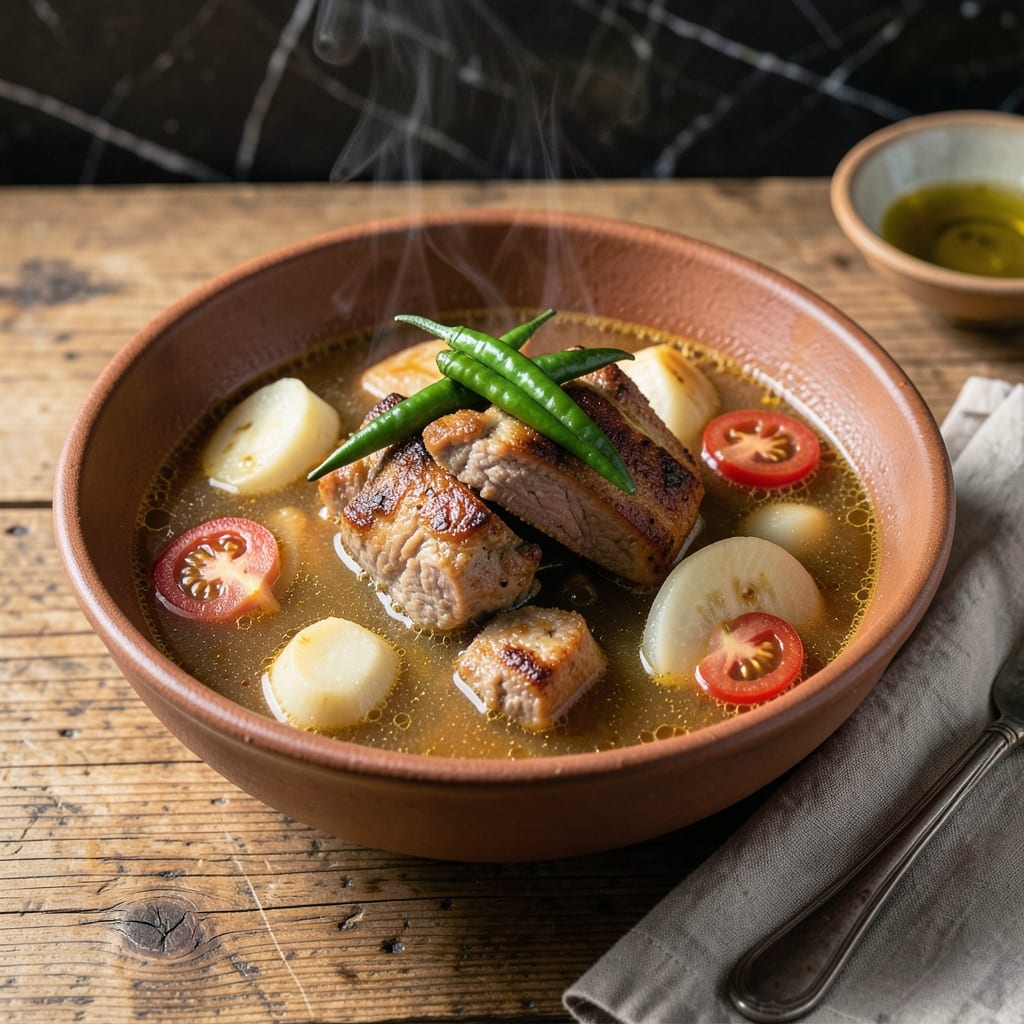
This Filipino sour stew brings bold, tangy flavors to your table with tender pork and earthy taro root. The tamarind base creates a perfectly balanced sour profile that defines authentic sinigang.
Gabi, or taro root, adds a unique starchy texture that soaks up the rich broth beautifully. I developed this recipe to highlight traditional Filipino techniques while keeping the process simple for home cooks.
The broth develops deep, complex flavors as the pork simmers with aromatics like onion and tomato. Each spoonful delivers that signature sour tang with layers of savory depth.
Serve piping hot with steamed rice to complete the meal. This dish brings comfort and tradition to any dinner table.
Ingredients for Pork Sinigang Recipe with Gabi
Pantry staples meet fresh finds for this comforting Filipino classic with pork and gabi.
| Ingredient | Amount | Notes |
|---|---|---|
| Pork Shoulder 🐖 | 1 ½ lb | Cut into 2-inch pieces, bone-in preferred |
| Taro Root 🥔 | 1 lb | Peeled and cut into chunks |
| Tamarind Paste 🍈 | ½ cup | Or tamarind soup base packets |
| Onion 🧅 | 1 whole | Medium, quartered |
| Tomatoes 🍅 | 2 whole | Medium, quartered |
| Long Green Chili 🌶️ | 2 pieces | Optional for heat |
| Daikon Radish 🥬 | 8 oz | Peeled and sliced (labanos) |
| String Beans 🌿 | 4 oz | Trimmed, cut into 2-inch pieces |
| Kangkong Leaves 🥬 | 1 cup | Or substitute spinach |
| Water 💧 | 8 cups | For simmering broth |
| Fish Sauce 🐟 | 2 tbsp | Patis for umami depth |
| Salt 🧂 | 1 tsp | Adjust to taste |
| Black Pepper 🌶️ | ½ tsp | Freshly ground preferred |
The pork shoulder is key here—bone-in gives the richest broth, but boneless works too. Look for good marbling at your local Asian market or butcher. Taro root (gabi) can be tricky to find; H Mart or Seafood City usually stocks it fresh. If you can’t find tamarind paste, those Mama Sita’s tamarind soup base packets are a solid backup (and super convenient).
No tamarind? Guava or calamansi can work in a pinch for sourness. Swap daikon for extra taro if you love the texture. Spinach or bok choy can replace kangkong. For vegetarians, mushrooms or tofu stand in for pork beautifully. Fish sauce is traditional, but soy sauce works if that’s what you’ve got.
Broth actually improves overnight—tastes even better the next day. Keeps 3-4 days in the fridge, freezes for 3 months. I always make a double batch of broth and freeze half for next time (worth the extra minute).
Why You’ll Love This Recipe
- I’ll be real: the flavors deepen overnight. My daughter even sneaks the cold gabi straight from the fridge.
- One Pot Wonder: I just toss everything in—pork shoulder, gabi, tamarind paste—and let it simmer. No fancy techniques.
- Tangy Comfort: That sour tamarind with the creamy gabi and tender pork hits all the right notes. Honestly, it’s my ultimate rainy-day fix.
- Feeds the Fam: Between us, this stretches easily for leftovers or a crowd. Pork shoulder’s affordable, and gabi fills it out perfectly.
Step-by-Step Instructions for Pork Sinigang With Gabi
Here’s the method I use for that perfect tangy-savory balance every time.
Step 1: Brown the Pork Shoulder
Heat a large pot over medium-high heat without any oil. Add the 1.5 lb pork shoulder pieces and sear until lightly browned on all sides, about 3-4 minutes per side. This step builds a flavorful foundation for your stew.
You’ll notice the pork releases its own fat as it browns—this is exactly what you want. Don’t rush this process; proper browning adds depth that simmering alone can’t achieve. The meat doesn’t need to cook through here, just develop color.
Step 2: Build the Sour Base and Add Vegetables
Once the pork is browned, add the 1 whole onion, 2 whole tomatoes, and 2 pieces long green chili. Stir for 2 minutes until the onion softens slightly and the tomatoes begin to break down.
Pour in the 8 cups water and add the 0.5 cup tamarind paste, stirring until it dissolves completely. The liquid should turn a pale caramel color. Now add the 1 lb taro root, 8 oz daikon radish, and 4 oz string beans.
Step 3: Simmer Until Pork is Tender
Bring the mixture to a boil, then reduce heat to medium-low. Let it simmer uncovered for 40-45 minutes, skimming off any foam that rises to the top. The pork is done when it’s fork-tender and the taro root can be pierced easily with a knife.
This is where the magic happens. The tamarind infuses the broth with its signature sour tang, while the pork and vegetables absorb all those bold flavors. Stir occasionally to prevent sticking, but avoid over-stirring, which can break up the taro.
Step 4: Season and Add Leafy Greens
Stir in the 2 tbsp fish sauce, 1 tsp salt, and 0.5 tsp black pepper. Taste and adjust the seasoning if needed—you might want more salt or a touch more sourness. Add the 1 cup kangkong leaves, pressing them down into the broth.
Cook for another 3-4 minutes until the kangkong wilts and turns bright green. The leaves should be tender but still vibrant. This final step adds freshness and a pop of color to the dish.
Step 5: Rest and Serve
Turn off the heat and let the sinigang rest for 5 minutes before serving. This allows the flavors to meld together one last time. The broth should be tangy and rich, with a perfect balance of sour, savory, and slightly sweet from the vegetables.
Ladle the stew into bowls, making sure each serving has a mix of pork, taro, and other vegetables. Serve hot with steamed rice to soak up all that delicious broth.
Pro Tips For Making Pork Sinigang Recipe With Gabi
- Boil Pork First: Parboil the pork shoulder for 5-7 minutes before adding other ingredients to remove impurities and keep the broth clear. I learned this the hard way after wondering why my sinigang looked murky.
- Peel Gabi Carefully: Wear gloves when peeling taro root and slice it just before adding to the pot—it oxidizes quickly and can turn gray if left exposed.
- Balance Tamarind Early: Add tamarind paste gradually and taste as you go; it’s easier to adjust sourness at the start than fix an overly tart broth later.
- Add Gabi Last: Taro root cooks faster than pork, so add it 15 minutes before serving to prevent it from turning mushy. Sounds weird, but it works.
Serving Suggestions for This Dish
Rice Pairing
Steamed jasmine rice is my top choice—the floral aroma complements the tangy broth beautifully. I use a 1:1 rice-to-water ratio in my rice cooker for perfect results every time. The rice soaks up that delicious sinigang liquid like a dream. 💛
Side Dishes
A simple fish sauce dip with sliced calamansi and silicua (long beans) enhances the meal. For crunch, serve with fried plantains—the sweetness balances the sour stew wonderfully.
Fresh Garnishes
Top each bowl with thinly sliced green onions and a sprinkle of toasted garlic bits. These garnishes add freshness and texture contrast. I also love a squeeze of fresh calamansi juice just before eating.
Beverage Pairings
A cold San Miguel beer cuts through the richness perfectly. For non-alcoholic options, try calamansi juice or iced tea with lemon. The citrus notes enhance the tamarind’s tang.
Serving Style
Serve family-style in a large bowl for sharing. I use my vintage cast iron pot to keep it hot at the table. Encourage everyone to customize their bowls with extra chili or fish sauce. ✨
Nutrition Facts
Frequently Asked Questions
Can I use other souring agents besides tamarind?
Yes! Guava or calamansi work well for a fruity tang. Green mango also adds sourness. Adjust to taste as these may be milder than tamarind.
How do I prevent taro from turning brown?
Soak peeled gabi in cold water with a splash of vinegar or lemon juice. This prevents oxidation until you’re ready to cook.
Can I make this in a slow cooker?
Brown the pork first, then add all ingredients except kangkong. Cook on low for 6-7 hours. Add leafy greens in the last 30 minutes.
Why did my broth turn bitter?
Overcooked tamarind can turn bitter. Simmer gently and taste often. If it happens, balance with a pinch of sugar or more fish sauce.

- Potato Patty Recipe No Egg: Crispy Edges Without the Binder - October 30, 2026
- Paula Deen’s Potato Chip Cookies Recipe: Salty-Sweet Crunch in Every Bite - October 30, 2026
- Potato Gnocchi Recipe Ideas: Pillowy Soft Dumplings With Rustic Charm - October 30, 2026