
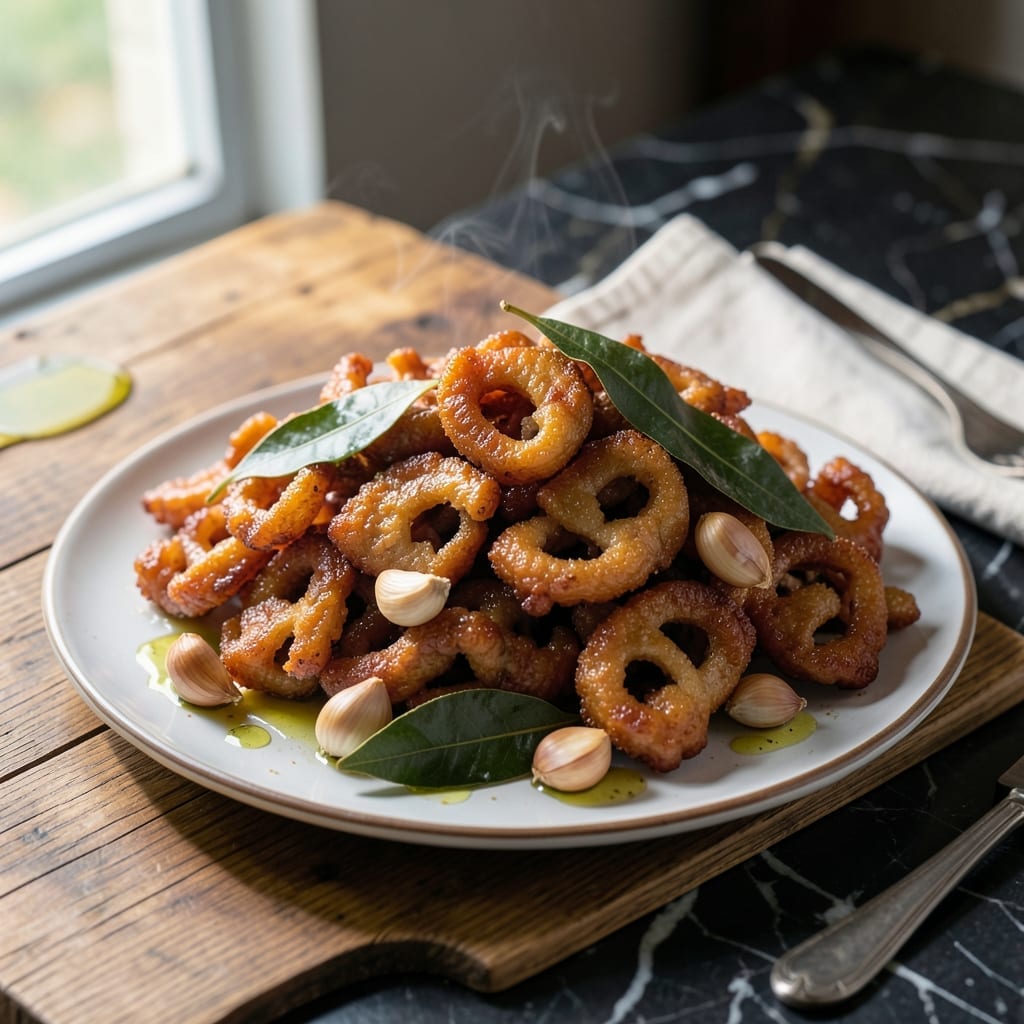
I learned the art of perfect chicharon from my grandmother, who taught me that patience transforms simple pork skin into golden, shatteringly crispy perfection. Her method was intuitive, but I’ve decoded every step for foolproof results.
This traditional Filipino preparation requires careful boiling to soften the skin before frying, ensuring every piece puffs up and crisps evenly. The key is maintaining steady heat and drying the skin thoroughly between steps.
What emerges is a batch of chicharon with an irresistible crunch and rich, savory depth. The golden hue signals ideal doneness, while the texture remains light and airy.
Serve as a snack, garnish, or side dish. The process demands attention but rewards with a result worth every minute.
Ingredients for Pork Skin Recipe Panlasang Pinoy
Simple ingredients transform into golden, irresistibly crispy chicharon with rich savory depth.
| Ingredient | Amount | Notes |
|---|---|---|
| Pork Skin 🥓 | 2 lb | Fresh, rinsed, scraped clean |
| Water 💧 | 8 cups | For boiling pork skin |
| White Vinegar 🍶 | ½ cup | For cleaning and tenderizing |
| Salt 🧂 | 2 tbsp | Kosher or coarse sea salt |
| Bay Leaves 🍃 | 3 pieces | For boiling aroma |
| Black Peppercorns 🌶️ | 1 tbsp | Lightly crushed for boiling |
| Vegetable Oil 🫒 | 4 cups | For deep frying, high smoke point |
| Garlic Cloves 🧄 | 6 cloves | Smashed for boiling flavor |
| Baking Soda 🧂 | 1 tsp | Optional for extra crispiness |
| Lemon Juice 🍋 | 2 tbsp | For final seasoning |
| Ground Black Pepper 🌶️ | 1 tsp | For final seasoning |
The pork skin must be fresh. Ask your butcher for untrimmed skin with some fat attached—this renders down for extra flavor. I get mine from Asian markets where they sell it pre-cut into strips. Look for pieces that are even in thickness (about 1/4 inch) for consistent cooking. The vinegar in the boiling water helps break down the collagen, so don’t skip it.
No pork skin? Chicken skin works in a pinch (fry it skin-side down first). Short on time? Pre-boiled pork rinds from a Latin market cut the process in half. The baking soda is optional but gives that extra puff—use it if you want chicharon that’s light as air. For oil, any neutral variety works (vegetable, canola, peanut), just avoid olive oil (too low smoke point).
Store raw pork skin in the fridge for up to 2 days before cooking, or freeze for 3 months. Once fried, chicharon keeps in an airtight container for 1 week (if it lasts that long). Re-crisp in a dry pan or oven if it softens.
Why You’ll Love This Recipe
- 5-Minute Prep: I just boil the pork skin with water, vinegar, salt, and bay leaves—no fancy steps.
- Crispy & Tangy: The vinegar cuts through the richness while the salt and bay leaves give it that classic Pinoy taste.
- Filling & Budget-Friendly: A kilo of pork skin costs next to nothing and stretches for days.
- Pulutan Ready: Honestly, it’s my go-to for game nights—crispy, salty, and perfect with cold drinks.
Step-by-Step Instructions for Crunchy Chicharon
Here’s the method I use to achieve perfectly crispy pork skin with a golden bite every time.
Step 1: Clean and Boil the Pork Skin
Begin by thoroughly rinsing the 2 lb pork skin under cold water to remove any impurities. In a large pot, combine the 8 cups water, 0.5 cup white vinegar, 2 tbsp salt, 3 pieces bay leaves, 1 tbsp black peppercorns, and 6 cloves garlic cloves.
Add the pork skin to the pot and bring to a boil over high heat. Once boiling, reduce the heat to medium-low and simmer for 45-60 minutes until the pork skin becomes tender but not falling apart. This boiling process removes excess fat and softens the skin for optimal crispiness.
Step 2: Dry and Season the Skin
Drain the pork skin and pat it completely dry with paper towels. I like to let it air-dry for 10-15 minutes on a wire rack to remove any remaining moisture. The drier the skin, the crispier your chicharon will be.
For extra crispiness, I dust the pork skin with 1 tsp baking soda. The baking soda raises the pH, helping the skin puff up and become more brittle during frying. Make sure to coat all pieces evenly for consistent texture.
Step 3: Deep Fry to Golden Perfection
Heat the 4 cups vegetable oil in a deep, heavy-bottomed pot to 350-375°F. The oil is ready when a small piece of pork skin sizzles immediately upon contact. Fry the pork skin in batches to avoid overcrowding, which would lower the oil temperature and result in greasy chicharon.
Fry for 8-12 minutes or until the skin turns golden brown and puffs up significantly. I use a slotted spoon to occasionally turn the pieces for even cooking. When done, the chicharon should be light and crispy throughout, not soft or chewy in any spots.
Step 4: Drain and Season
Remove the fried pork skin from the oil and drain on a wire rack or paper towels. While still hot, sprinkle with 2 tbsp lemon juice and 1 tsp ground black pepper. The lemon juice adds a subtle tang that cuts through the richness, while the pepper gives it a nice kick.
Let the chicharon cool completely before serving. As it cools, the skin will crisp up even more, reaching that perfect crunch we all love. Store in an airtight container at room temperature for up to 3 days, though I doubt they’ll last that long.
Pro Tips For Making Pork Skin Recipe Panlasang Pinoy
- Boil Twice: First boil the pork skin with salt and bay leaves for 30 minutes, then drain and boil again with vinegar—this removes impurities and ensures a cleaner, crispier result.
- Dry Thoroughly: After boiling, pat the pork skin completely dry with a paper towel. Any moisture left will steam instead of crisp, and I learned this the hard way after my first batch turned out chewy.
- Skip the Overcrowding: Fry in small batches to avoid temperature drops. Sounds tedious, but it’s the only way to get that perfect puff and crunch without soggy pieces.
- Use Fresh Skin: If you can get your hands on fresh pork skin instead of frozen, do it. The texture is noticeably better, and it crisps up faster—frozen skin often needs extra time to render properly.
Health Benefits of These Flavors
Protein Powerhouse
Pork skin is surprisingly packed with collagen, a structural protein that supports skin, hair, and joint health. When you consume it, your body breaks collagen down into amino acids like glycine and proline, which are essential for tissue repair. A 1-ounce serving provides about 7 grams of protein. 💪
Low-Carb Snack
This creation is naturally low in carbohydrates, making it a great option for keto or low-carb diets. With virtually 0 grams of carbs per serving, it won’t spike your blood sugar. I’ve found it’s a satisfying snack that keeps me full between meals without the energy crash.
Rich in Healthy Fats
The fat in pork skin is primarily monounsaturated and saturated, which your body uses for energy and hormone production. While it’s calorie-dense, the fats help absorb fat-soluble vitamins like A, D, E, and K. Just remember, moderation is key—enjoy a small handful as part of a balanced diet.
Mineral Boost
You’ll get a decent dose of zinc and iron from chicharon. Zinc supports immune function and wound healing, while iron is crucial for oxygen transport in your blood. A 1-ounce serving contains about 5% of your daily iron needs and 3% of zinc. My grandmother always said it gave her energy, and now I understand why.
B Vitamin Source
Pork skin contains several B vitamins, including B12 and niacin, which are vital for metabolism and nervous system health. These vitamins help convert food into energy and maintain healthy brain function. A serving provides a small but meaningful contribution to your daily B vitamin intake. 💡
Nutrition Facts
Frequently Asked Questions
Can I use chicken skin instead of pork?
Yes, chicken skin works as a substitute. Fry it skin-side down first at 350°F for 5-7 minutes until crispy. The texture will be thinner but still delicious.
Why does my chicharon turn out chewy?
Chewy chicharon usually means it wasn’t dried thoroughly after boiling or fried at too low a temperature. Ensure skin is bone-dry and oil reaches 350-375°F before frying.
How do I store leftover chicharon?
Keep in an airtight container at room temperature for up to 3 days. To revive crispiness, reheat in a dry pan or oven at 300°F for 5 minutes.

- Potato Patty Recipe No Egg: Crispy Edges Without the Binder - October 30, 2026
- Paula Deen’s Potato Chip Cookies Recipe: Salty-Sweet Crunch in Every Bite - October 30, 2026
- Potato Gnocchi Recipe Ideas: Pillowy Soft Dumplings With Rustic Charm - October 30, 2026