
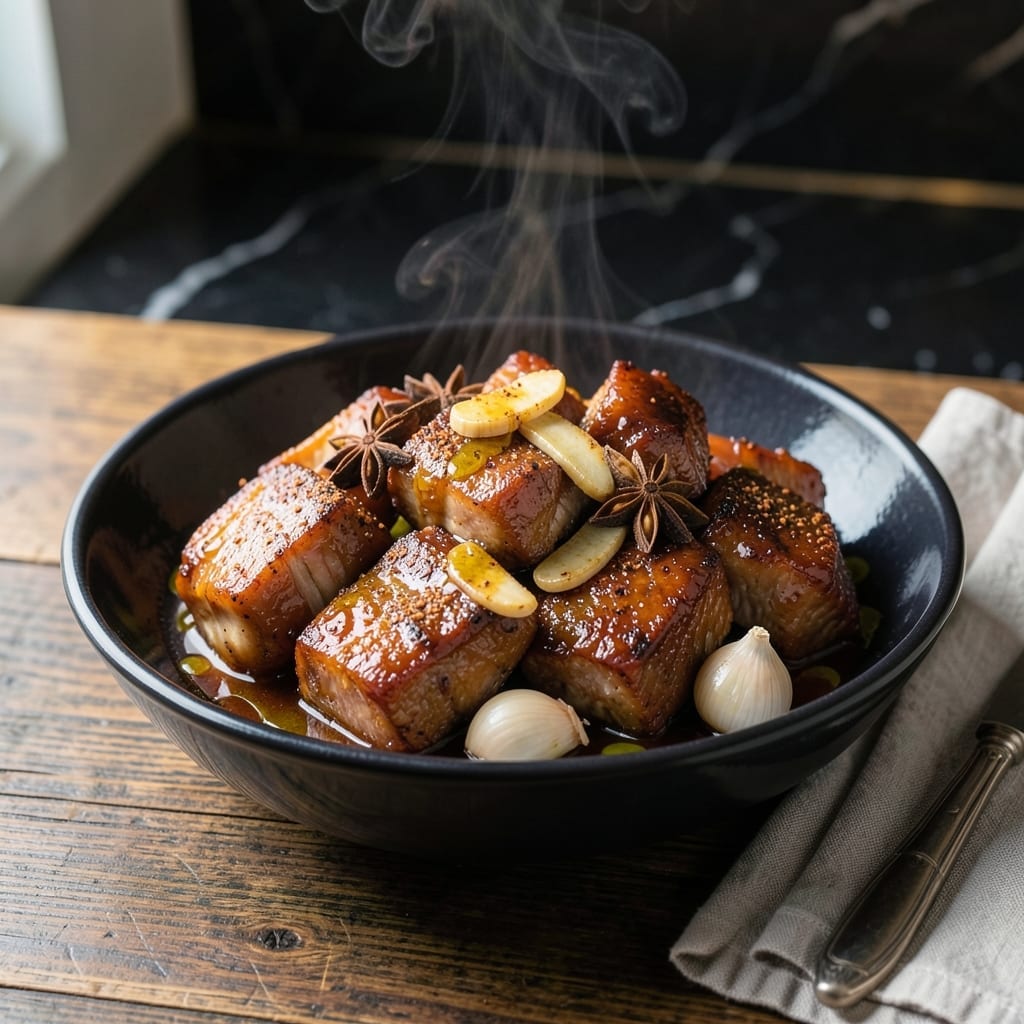
Achieving melt-in-your-mouth pork requires patience and the right balance of five-spice and soy. This method transforms tough cuts into tender, flavorful meat through slow braising.
The key lies in searing the pork first to lock in juices, then simmering it in a rich sauce of star anise, ginger, and garlic. Each bite delivers complex layers of savory and aromatic notes.
After 2-3 hours of gentle cooking, the meat falls apart effortlessly, soaking up every bit of the fragrant braising liquid. The result is a dish that’s rich, comforting, and deeply satisfying.
Serve with steamed rice or noodles to soak up the sauce. The process is straightforward, but the payoff is extraordinary.
Ingredients for Pork Shoulder Recipe Chinese Style
Transform tough pork into tender perfection with these aromatic ingredients and slow braising.
| Ingredient | Amount | Notes |
|---|---|---|
| Pork Shoulder 🥩 | 2 lb | Boneless, cut into 2-inch chunks |
| Soy Sauce 🥣 | ½ cup | Low-sodium preferred for control |
| Five-Spice Powder 🌶️ | 1 tbsp | Freshly ground for best aroma |
| Star Anise Pods ⭐ | 2 whole | Whole pods, not ground |
| Fresh Ginger 🌿 | 3 tbsp | Peeled and minced |
| Garlic Cloves 🧄 | 6 cloves | Peeled and smashed |
| Brown Sugar 🍚 | ¼ cup | Light or dark variety |
| Rice Wine 🍶 | ¼ cup | Shaoxing wine preferred |
| Chicken Stock 🥣 | 2 cups | Low-sodium for balance |
| Green Onions 🧅 | 4 whole | Thinly sliced for garnish |
| Neutral Oil 🫒 | 2 tbsp | For searing pork |
| Cornstarch 🌾 | 1 tbsp | Mixed with water for slurry |
| Sesame Oil 🫒 | 1 tsp | For finishing aroma |
| Water 💧 | 2 tbsp | For cornstarch slurry |
The pork shoulder is the foundation here. Bone-in adds flavor but boneless is easier to serve. Look for good marbling—it melts into the meat during cooking. Asian markets often have pre-cut chunks, but any grocery store with a butcher can cube it for you. For the five-spice, Penzeys or bulk bins at natural food stores have the freshest blends.
No Shaoxing wine? Dry sherry works in a pinch. If you’re out of star anise, add an extra teaspoon of five-spice (it usually contains anise). Brown sugar can be swapped for white in a 1:1 ratio, though the molasses notes in brown add depth. For a gluten-free version, tamari instead of soy sauce does the trick without compromising flavor.
This dish tastes even better the next day. Store leftovers in an airtight container for up to 4 days in the fridge, or freeze for 3 months. The braising liquid thickens as it cools—perfect for drizzling over rice when reheated.
Why You’ll Love This Recipe
- One Pot Magic: I just toss the pork shoulder with soy sauce, five-spice, and ginger, then let the oven do the work.
- Deep Complex Flavor: The star anise and five-spice powder give it that warm, aromatic depth I crave in Chinese takeout.
- Meal Prep Hero: I make a big batch on Sunday and it tastes even better in stir-fries or bao all week.
- Budget Stretcher: A cheap pork shoulder turns into restaurant-quality meat with just a few pantry staples.
Step-by-Step Instructions for Pork Shoulder Chinese Style
Master the technique for fall-apart tender pork with aromatic depth in every bite.
Step 1: Sear the Pork Shoulder
Heat the 2 tbsp neutral oil in a heavy pot or Dutch oven over medium-high heat until it shimmers. Pat the 2 lb pork shoulder chunks dry with paper towels—this ensures a proper sear rather than steaming.
Add the pork in a single layer, working in batches if necessary to avoid crowding. Sear undisturbed for 3-4 minutes per side until deep golden brown on all sides. You’ll know it’s ready to flip when the pieces release easily from the pot.
This step builds a flavorful fond on the bottom of the pot that will enrich the braising liquid later.
Step 2: Build the Aromatic Braising Liquid
Reduce heat to medium and add the 3 tbsp fresh ginger and 6 cloves garlic cloves to the pot. Cook for 1-2 minutes until fragrant, stirring constantly to prevent burning.
Stir in the 0.5 cup soy sauce, 0.25 cup brown sugar, 0.25 cup rice wine, 1 tbsp five-spice powder, and 2 whole star anise pods. Pour in the 2 cups chicken stock and scrape up any browned bits from the bottom of the pot.
Bring the mixture to a gentle simmer. The liquid should look rich and aromatic, with the star anise beginning to release its licorice-like fragrance.
Step 3: Braise Until Fork-Tender
Return all the pork to the pot, ensuring the pieces are mostly submerged in the liquid. Cover and reduce heat to low, maintaining a gentle simmer. Cook for 2 to 2.5 hours, turning the pork occasionally.
You’ll know it’s done when the pork shreds easily with a fork and the liquid has reduced slightly, coating the back of a spoon. The meat should be fall-apart tender and the braising liquid deeply colored and fragrant.
If the liquid reduces too much during cooking, add a splash of water to maintain the level.
Step 4: Thicken and Finish
Remove the star anise pods and discard. In a small bowl, mix the 1 tbsp cornstarch with the 2 tbsp water to create a slurry. Stir this into the pot and simmer for 2-3 minutes until the sauce thickens slightly.
Drizzle in the 1 tsp sesame oil and stir to combine. The sauce should now cling to the pork and have a glossy, velvety texture. Taste and adjust seasoning if needed, though the soy sauce and brown sugar should provide a balanced sweet-savory flavor.
Step 5: Garnish and Serve
Slice the 4 whole green onions thinly and sprinkle them over the pork. Let the dish rest for 5-10 minutes off the heat to allow the flavors to meld.
Serve the pork and sauce over steamed rice or noodles, ensuring each portion gets plenty of the rich, aromatic braising liquid. The pork should be incredibly tender, with the sauce soaking into every bite.
Pro Tips For Making Pork Shoulder Recipe Chinese Style
- Sear the Shoulder: Brown the pork shoulder in a hot pan before braising—about 3-4 minutes per side until deeply caramelized. I learned this the hard way: skipping this step leaves the meat bland, even with all those spices.
- Toast the Spices: Lightly toast the star anise and five-spice powder in a dry pan for 30 seconds before adding liquids. Sounds weird, but it works: it wakes up the flavors so they don’t taste flat.
- Skip the Overcrowding: Use a pot just big enough to fit the pork and liquid—no more. After burning three batches, I finally figured out that too much space means uneven cooking and diluted flavor.
- Use Fresh Ginger: Grate a 2-inch knob of fresh ginger instead of powdered—it’s non-negotiable for that bright, zingy kick. My grandmother swore by this, and she was right: dried ginger just doesn’t cut it here.
Perfect Pairings for This Recipe
Rice and Noodles
Steamed jasmine rice is my go-to—its floral aroma complements the five-spice beautifully. For something heartier, try udon noodles that soak up the rich braising liquid like a sponge. 🥗
Vegetable Sides
Quick-stir bok choy with 2 cloves garlic and 1 tsp ginger balances the richness. I also love blanched green beans tossed with 1 tsp sesame oil and a pinch of salt. The crisp texture cuts through the tender pork.
Pickled Accompaniments
Serve with quick-pickled cucumbers or radishes for a bright contrast. Thinly slice 1 cucumber and toss with ¼ cup rice vinegar, 1 tbsp sugar, and ½ tsp salt. Let sit for 30 minutes before serving.
Beverage Pairings
A cold Tsintgtao beer or jasmine tea cleanses your palate between bites. For wine lovers, an off-dry Riesling with its citrus notes works surprisingly well with the five-spice profile. 🍺
Finishing Touches
Garnish with extra green onions and a sprinkle of toasted sesame seeds. I also like adding thinly sliced red chili for a subtle kick. These small touches elevate the dish visually and flavor-wise.
Nutrition Facts
Frequently Asked Questions
What can I use instead of five-spice powder?
Mix 1 tsp cinnamon, 1 tsp fennel seeds, ½ tsp cloves, ½ tsp star anise, and ½ tsp Szechuan peppercorns. Grind together for a homemade blend that works just as well.
Why does the pork need to be seared first?
Searing creates a flavorful crust and locks in juices. The browned bits left in the pot also enrich the braising liquid, adding depth to the final sauce. Skipping this step can result in bland meat.
Can I cook this in a slow cooker?
Yes! Sear the pork first, then transfer to a slow cooker with all other ingredients. Cook on low for 6-8 hours or high for 4-5 hours until fork-tender.
How do I prevent the sauce from being too salty?
Use low-sodium soy sauce and taste before adding extra seasoning. If it’s still too salty, stir in a splash of chicken stock or water to balance the flavors.

- Potato Patty Recipe No Egg: Crispy Edges Without the Binder - October 30, 2026
- Paula Deen’s Potato Chip Cookies Recipe: Salty-Sweet Crunch in Every Bite - October 30, 2026
- Potato Gnocchi Recipe Ideas: Pillowy Soft Dumplings With Rustic Charm - October 30, 2026