
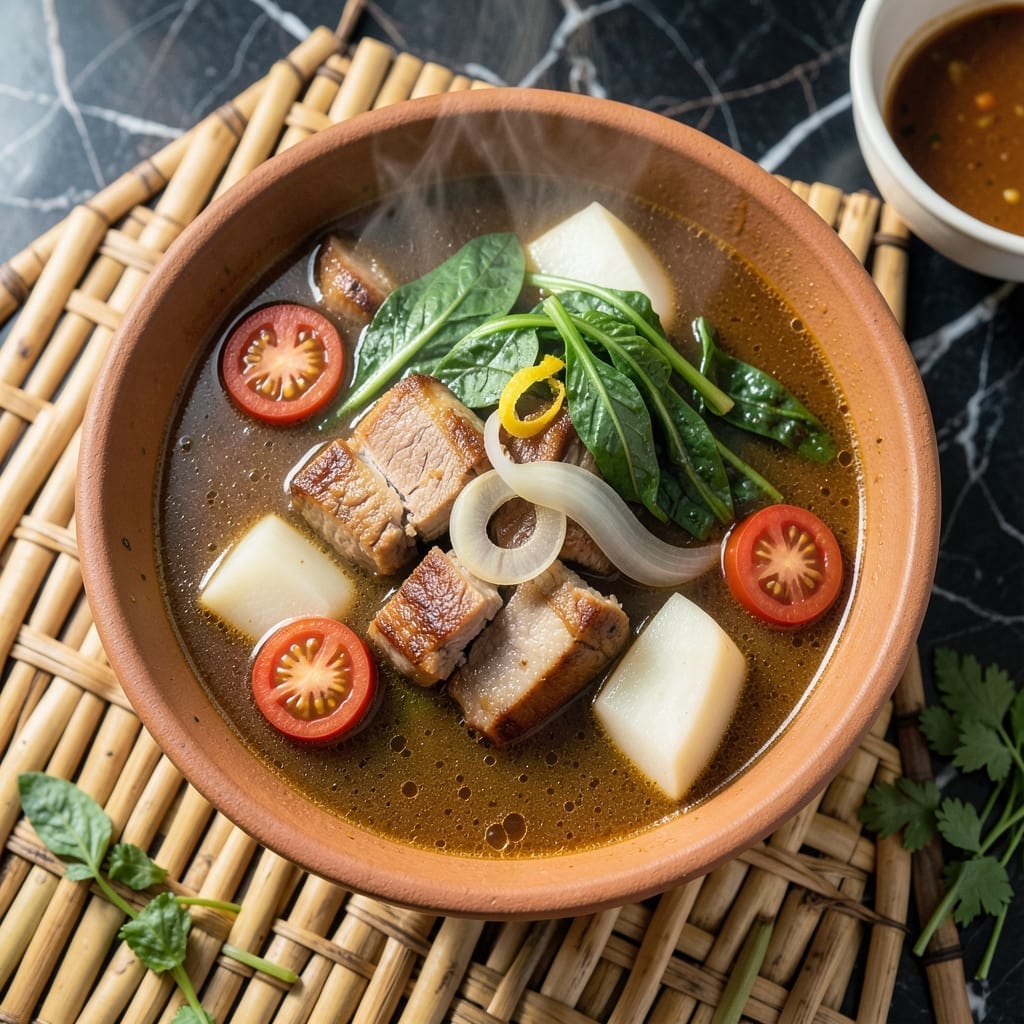
This Filipino-style pork soup brings the bold, tangy flavors of sinigang to your kitchen with a simple, foolproof method.
I learned this technique from a family friend who swore by using fresh tamarind for that signature sour kick. The pork cooks until fall-apart tender, soaking up the rich broth.
The secret is balancing the tamarind’s sourness with the pork’s natural richness. Vegetables like kangkong and radish add freshness and texture to every bite.
Serve this steaming bowl with rice for a comforting meal that tastes just like home. Here’s how to make it right.
Ingredients for Pork Soup Recipe Filipino
Bold, tangy sinigang comes to life with pork, tamarind, and fresh vegetables for a comforting bowl.
| Ingredient | Amount | Notes |
|---|---|---|
| Pork Belly 🥩 | 1 ½ lb | Cut into 2-inch chunks |
| Fresh Tamarind 🌱 | 8 oz | Peeled, seeded, or tamarind paste |
| Water Spinach 🌿 | 2 cups | Kangkong, stems trimmed |
| Daikon Radish 🥕 | 1 whole | Peeled, sliced into rounds |
| Medium Onion 🧅 | 1 whole | Quartered |
| Large Tomatoes 🍅 | 2 whole | Quartered |
| Long Green Chili 🌶️ | 2 whole | Optional, for heat |
| Fish Sauce 🐟 | 2 tbsp | Patis, or soy sauce for alternative |
| Kosher Salt 🧂 | 1 tsp | Adjust to taste |
| Ground Black Pepper 🌶️ | ½ tsp | Freshly cracked preferred |
| Water 💧 | 8 cups | For broth base |
The pork belly is non-negotiable for that melt-in-your-mouth texture—look for well-marbled cuts at Asian markets or butcher shops. Fresh tamarind delivers the signature sour punch, but tamarind paste (found at Whole Foods or international aisles) works in a pinch. Kangkong (water spinach) is the traditional green, but baby spinach or bok choy (Trader Joe’s has great options) can substitute if you’re in a bind.
No tamarind? Guava paste or green mango gives a similar tang. For a vegetarian twist, swap pork for mushrooms or tofu. Fish sauce adds umami depth—soy sauce or coconut aminos keeps it plant-based. The radish can be swapped for turnips or potatoes, but daikon holds its shape best. Green chili is optional, but adds authentic heat (remove seeds for milder flavor).
The soup tastes even better the next day once flavors meld. Store in an airtight container in the fridge for up to 3 days. Freeze without the greens for 2-3 months—add fresh kangkong when reheating for best texture. Always serve piping hot with steamed rice.
Why You’ll Love This Recipe
- One Pot Wonder: I just dump the pork belly, tamarind, and veggies in a pot and let it do its thing—minimal cleanup.
- Tangy Comfort: The fresh tamarind gives it that bright, sour kick that balances the rich pork belly perfectly.
- Feeds the Fam: Honestly, this stretches easily for a big group or meal prep—leftovers taste even better the next day.
- Budget Friendly: Pork belly and daikon are affordable, and a little goes a long way in this hearty soup.
Step-by-Step Instructions for Sinigang-Style Pork Soup
This method delivers the perfect balance of tangy, savory, and umami flavors characteristic of Filipino sinigang.
Step 1: Prepare the Tamarind Base and Pork
Begin by peeling and seeding the 8 oz fresh tamarind, then place it in a large pot with the 8 cups water. Bring to a boil over high heat, then reduce to a simmer for 10 minutes to extract the sour essence. Mash the tamarind with a wooden spoon to release all the pulp.
Strain the mixture through a fine-mesh sieve into a clean pot, pressing on the solids to extract every bit of liquid. Discard the solids. Add the 1.5 lb pork belly (cut into 2-inch chunks) to the tamarind broth and bring to a gentle boil. Skim off any foam that rises to the surface for a clear, clean broth.
Step 2: Build the Aromatic Foundation
Add the quartered 1 whole medium onion and 2 whole large tomatoes to the pot. These will soften and dissolve into the broth, creating a rich, savory base. Simmer for 15 minutes until the pork begins to tenderize and the aromatics break down.
Season with 1 tsp kosher salt and 0.5 tsp ground black pepper. At this stage, the broth should have a pronounced tangy aroma with a hint of sweetness from the tamarind. Adjust the heat to maintain a steady, gentle simmer—never a rolling boil, which can toughen the pork.
Step 3: Add the Vegetables
Incorporate the peeled, sliced 1 whole daikon radish into the pot and simmer for 10 minutes until the radish slices are slightly translucent at the edges but still hold their shape. Daikon absorbs flavors beautifully, so this timing ensures it doesn’t turn mushy.
Add the 2 cups water spinach (stems trimmed) and the 2 whole long green chili. The water spinach should wilt within 2-3 minutes, turning a vibrant green. The chili will infuse the broth with a subtle heat, balancing the tamarind’s sourness.
Step 4: Finish and Season to Taste
Drizzle in the 2 tbsp fish sauce and stir well. This adds the essential umami depth that defines sinigang. Simmer for an additional 5 minutes to allow the flavors to meld completely. Taste the broth—it should be a harmonious blend of sour, salty, and savory.
Remove from heat once the pork is fork-tender and the daikon is soft but not falling apart. Serve immediately in deep bowls, ensuring each portion includes pork, daikon, and a generous amount of the tangy broth. The spinach will continue to wilt slightly from the residual heat.
Pro Tips For Making Pork Soup Recipe Filipino
- Parboil the Belly: Boil the pork belly for 5-10 minutes first to remove impurities—I learned this the hard way after skimming scum from my soup for ages.
- Strain Tamarind Well: Press the tamarind pulp through a fine sieve to remove seeds and fibers, or you’ll be picking them out of your teeth later.
- Add Spinach Last: Toss in the water spinach just 2-3 minutes before serving so it stays bright green and crisp, not a sad, mushy afterthought.
- Use Ripe Tamarind: Fresh tamarind should be soft and slightly sticky—underripe ones taste harsh and ruin the sour balance in your broth.
Perfect Pairings for This pork soup recipe filipino
Rice Pairings
Steamed jasmine rice is the classic choice—its floral aroma complements the sour broth beautifully. I use 1 cup rice to 1½ cups water in my rice cooker for perfect texture. The neutral flavor soaks up the tangy tamarind broth like a dream. 🍚
Vegetable Sides
A simple cucumber and tomato salad with lime juice and 1 tsp salt adds refreshing crunch. Alternatively, stir-fried bok choy with garlic maintains the Filipino theme while adding greens to the meal.
Condiments
Serve with patis (fish sauce) on the table for guests who want extra umami depth. A side of calamansi or lime wedges lets everyone adjust the sourness to their taste—I always squeeze in an extra wedge myself.
Beverage Pairings
Iced tea with calamansi cuts through the richness perfectly. For something sparkling, try San Pellegrino with a lime slice. Avoid milk-based drinks as the acidity may curdle them. 🍹
Dessert Follow-Up
End with halo-halo or leche flan for a sweet Filipino finish. The creamy flan contrasts beautifully with the soup’s tang. In Portland, I find ube ice cream at local Asian markets for a simpler option.
Nutrition Facts
Frequently Asked Questions
What can I use if I don’t have tamarind?
Use 1/2 cup guava paste or 1 green mango for similar tang. Lime or calamansi juice works too, but add gradually to taste.
Can I use a different cut of pork?
Pork shoulder or ribs work well, but may need 30-45 minutes more simmering. Avoid lean cuts like tenderloin—they dry out.
How do I fix soup that’s too sour?
Balance with a pinch of sugar or 1 tsp fish sauce. Adding more water or a splash of coconut milk also helps mellow the acidity.
Is this soup freezer-friendly?
Freeze without greens for up to 3 months. Thaw overnight, then reheat gently. Add fresh kangkong just before serving.

- Potato Patty Recipe No Egg: Crispy Edges Without the Binder - October 30, 2026
- Paula Deen’s Potato Chip Cookies Recipe: Salty-Sweet Crunch in Every Bite - October 30, 2026
- Potato Gnocchi Recipe Ideas: Pillowy Soft Dumplings With Rustic Charm - October 30, 2026