
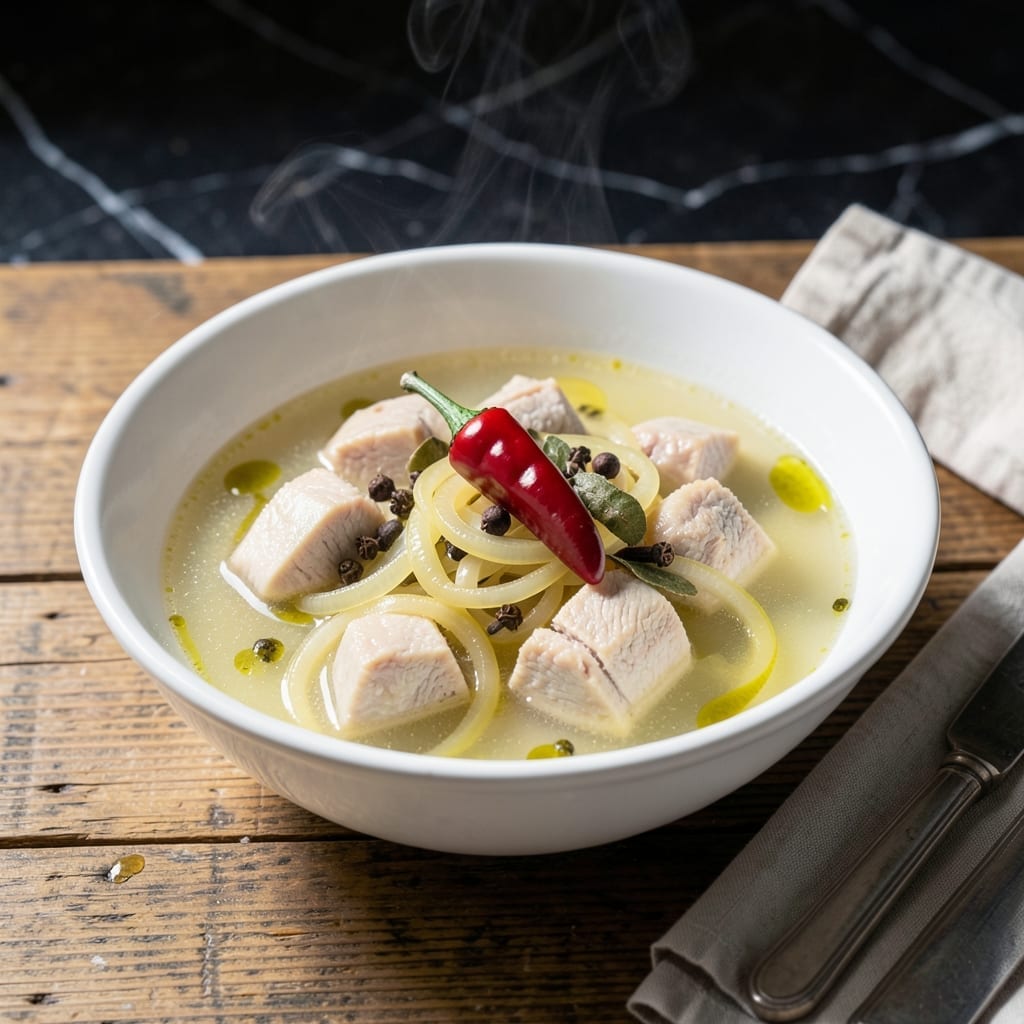
This Bahamian classic brings the islands to your kitchen with its bright, tangy flavors. I discovered this method while trying to recreate my grandmother’s vague handwritten notes about pickled pork.
The traditional preparation uses pork feet or ears, but I’ve adapted it with more accessible cuts while keeping the authentic citrus zing. The key is the perfect balance of sour and spice from lime juice and Scotch bonnet peppers.
You’ll end up with tender pork in a bright, aromatic broth that’s served chilled. It’s a refreshing dish that’s perfect for warm weather, with flavors that develop beautifully over time.
This recipe stays true to its roots while working in any home kitchen. Here’s how to make it.
Ingredients for Pork Souse Recipe Bahamas
Bright citrus and bold spices bring this Bahamian classic to life with ease.
| Ingredient | Amount | Notes |
|---|---|---|
| Pork Shoulder 🍖 | 2 lb | Cut into 2-inch chunks, bone-in preferred |
| Water 💧 | 8 cups | For poaching pork |
| Fresh Lime Juice 🍈 | 1 cup | Key West limes preferred |
| White Vinegar 🍶 | 1 cup | Distilled white vinegar |
| Scotch Bonnet Pepper 🌶️ | 1 whole | Seeds removed for less heat |
| Yellow Onion 🧅 | 1 whole | Peeled and quartered |
| Garlic Cloves 🧄 | 6 cloves | Smashed, peeled |
| Fresh Cilantro 🌿 | ½ cup | Chopped, stems included |
| Bay Leaves 🍃 | 2 pieces | Dried or fresh |
| Allspice Berries 🌰 | 10 pieces | Whole, for aromatics |
| Kosher Salt 🧂 | 2 tbsp | Diamond Crystal preferred |
| Black Peppercorns 🌶️ | 1 tbsp | Whole, lightly crushed |
| Jalapeño Pepper 🌶️ | 1 whole | Sliced, for garnish |
The pork shoulder is key here—Costco or Sam’s Club have great prices for big cuts. Ask your butcher to cube it for you (saves time). Look for pieces with good marbling; that fat keeps the meat tender during the long simmer. If you can’t find pork shoulder, pork butt works too (it’s basically the same thing). The limes? Key West limes are ideal, but regular Persian limes are fine.
No Scotch bonnet? Habanero peppers are the closest sub—use the same amount. In a real pinch, jalapeño with seeds gets you some heat. Don’t have fresh cilantro? Dried cilantro at half the amount works, but fresh is way better. The vinegar needs to be white distilled—apple cider vinegar changes the flavor. For the allspice, whole berries are traditional, but ground allspice (1 tsp) can substitute.
This tastes best after 24 hours in the fridge—flavors meld and deepen. Keeps for 4-5 days chilled. Freeze without the broth if you want to store longer (up to 3 months). Always serve it cold; that’s how the islands do it.
Why You’ll Love This Recipe
- One Pot Simplicity: I love that this comes together in a single pot with just pork shoulder, lime, vinegar, and a Scotch bonnet for heat.
- Tangy Zing: The lime and vinegar give it that bright, tangy kick that makes every bite irresistibly fresh.
- Weekend or Weeknight: Honestly, it’s just as good for a lazy Sunday as it is reheated for lunch the next day.
- Stretches Far: Pork shoulder is budget-friendly, and the leftovers taste even better after a night in the fridge.
Step-by-Step Instructions for Pork Souse
This traditional method delivers the bright, tangy flavors that define authentic Bahamian souse.
Step 1: Poach the Pork Shoulder with Aromatics
Place the 2 lb pork shoulder chunks in a large pot and add the 8 cups water. Stir in the 2 tbsp kosher salt, 1 whole scotch bonnet pepper, 1 whole yellow onion, 6 cloves garlic cloves, 2 pieces bay leaves, and 10 pieces allspice berries.
Bring to a boil over high heat, then reduce to medium-low and simmer for 45-60 minutes until the pork is fork-tender. Skim off any foam that rises to the surface during cooking. You’ll know it’s done when the meat easily pulls apart with a fork.
This poaching step infuses the pork with subtle spice and prepares it to soak up the citrus marinade. Don’t rush this—tender pork is essential for authentic souse.
Step 2: Prepare the Citrus Marinade Base
While the pork poaches, combine the 1 cup fresh lime juice and 1 cup white vinegar in a large bowl. The acidity will both preserve the meat and give it that signature tangy kick Bahamian souse is known for.
Add the 1 tbsp black peppercorns to the citrus mixture. I like to lightly crush them first to release their aromatic oils. The peppercorns add a subtle heat that complements the scotch bonnet’s spice without overpowering it.
Step 3: Combine Pork and Marinade
Drain the poached pork, reserving 2 cups of the poaching liquid. Add the hot pork directly to the citrus marinade. The heat helps the meat absorb the flavors more quickly.
Pour in 1 cup of the reserved poaching liquid to mellow the acidity slightly. Stir in the 0.5 cup fresh cilantro, ensuring it’s distributed throughout. The cilantro adds a fresh, herbal note that brightens the whole dish.
Let the mixture cool to room temperature, then cover and refrigerate for at least 4 hours (overnight is best). This chilling time allows the flavors to develop fully.
Step 4: Serve Chilled with Fresh Garnish
Before serving, give the souse a good stir. The pork should be fully submerged in the tangy liquid. Taste and adjust seasoning if needed, though the flavors should be balanced from the poaching and marinating process.
Serve the souse chilled in bowls, garnished with slices of the 1 whole jalapeño pepper for a pop of color and extra heat. The jalapeño adds a fresh, crisp contrast to the tender pork and tangy broth.
This dish tastes even better the next day as the flavors continue to meld. It’s perfect for hot weather or as a refreshing appetizer.
Pro Tips For Making Pork Souse Recipe Bahamas
- Simmer Low and Slow: I learned this the hard way—boiling the pork shoulder too hard makes it tough. Keep it at a gentle simmer for 2-3 hours until fork-tender.
- Balance the Acid: Use a 1:1 ratio of fresh lime juice to white vinegar—any more and the souse turns unpleasantly sharp. My grandmother swore by this, and she was right.
- Seed the Scotch Bonnet: Skip leaving the seeds in unless you want fiery heat. One whole pepper with seeds removed gives flavor without overwhelming spice.
- Skim the Foam: Sounds weird, but it works: skim the scum that rises in the first 30 minutes of cooking. It keeps the broth clean and the flavor pure.
Essential Equipment for This Recipe
Large Stock Pot
You’ll need a 5-6 quart stock pot with a heavy bottom to handle the 8 cups water and pork. I use my Le Creuset Dutch oven—it distributes heat evenly and prevents hot spots that can make the pork tough. Look for one at your local farmers market or thrift store; they last forever. 💪
Quality Knife
A sharp 8-inch chef’s knife makes quick work of cubing the 2 lb pork shoulder. I learned the hard way that a dull knife is more dangerous than a sharp one. Wüsthof makes great affordable options, but any well-maintained knife will do.
Citrus Juicer
For the 1 cup fresh lime juice, a handheld citrus reamer saves time and gets every last drop. I found mine at a small specialty shop for under $10. Key West limes are ideal, but any fresh limes work.
Fine Mesh Strainer
When draining the poached pork, a fine mesh strainer catches all the allspice berries and peppercorns. I use mine constantly—it’s perfect for straining broths and rinsing grains. Look for stainless steel for durability.
Large Mixing Bowl
Use a 4-6 quart mixing bowl for combining the pork with the citrus marinade. Glass or stainless steel won’t absorb odors. I prefer Pyrex because it’s easy to clean and doubles as storage in the fridge.
Long-Tongued Tongs
For handling the hot pork, 12-inch tongs keep your hands safe from steam. I use mine for everything from flipping meat to serving salads. OXO Good Grips makes comfortable, affordable options. 🔥
Nutrition Facts
Frequently Asked Questions
Can I use a different vinegar?
Stick with white vinegar for authentic flavor. Apple cider vinegar adds a fruity note that changes the taste. Rice vinegar is too mild for this dish.
How long will it keep in the fridge?
It stays fresh for 4-5 days refrigerated. The flavors actually improve after 24 hours. For longer storage, freeze the pork without broth for up to 3 months.
What if I can’t find Scotch bonnet peppers?
Habanero peppers are the closest substitute. Use the same amount. In a pinch, jalapeño with seeds adds heat, but the flavor won’t be identical.
Can I use boneless pork?
Yes, but bone-in adds more flavor to the broth. If using boneless, reduce cooking time to 30-45 minutes to prevent drying out.

- Potato Patty Recipe No Egg: Crispy Edges Without the Binder - October 30, 2026
- Paula Deen’s Potato Chip Cookies Recipe: Salty-Sweet Crunch in Every Bite - October 30, 2026
- Potato Gnocchi Recipe Ideas: Pillowy Soft Dumplings With Rustic Charm - October 30, 2026