
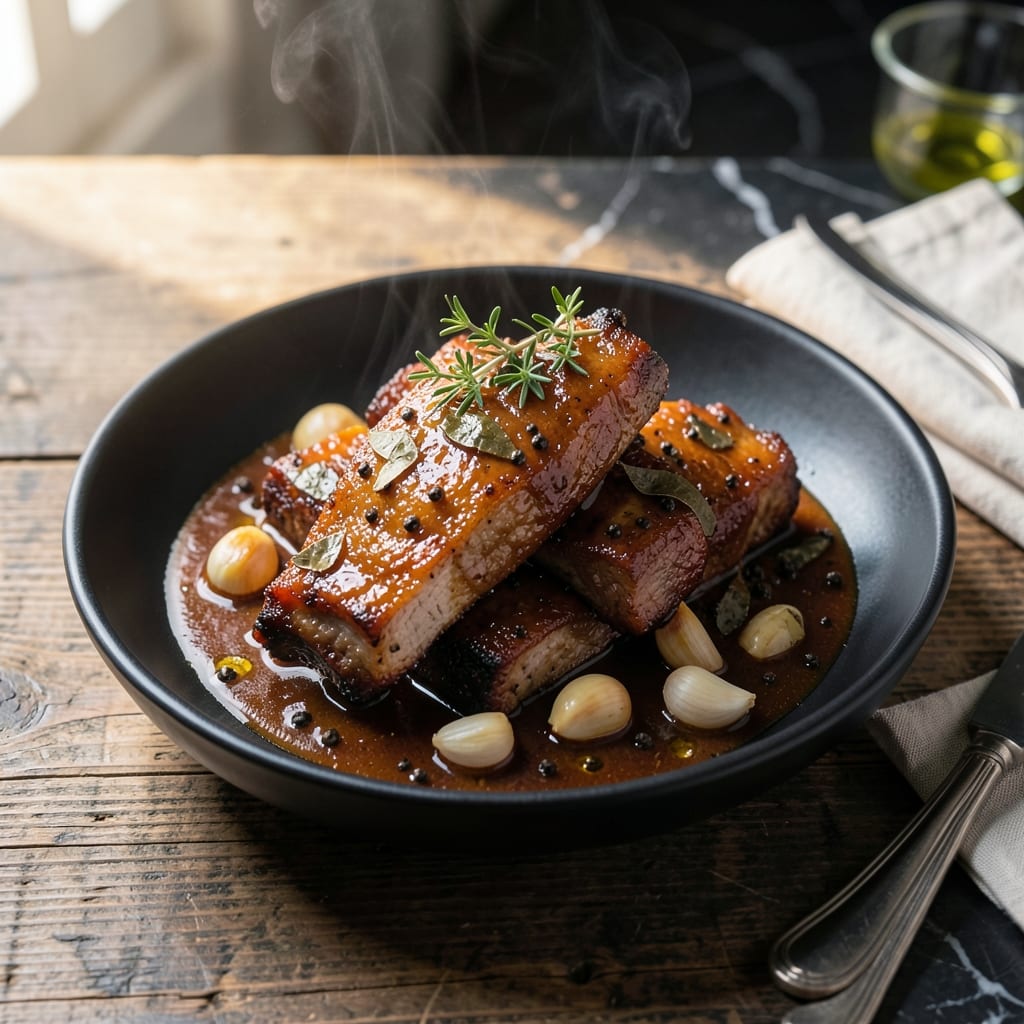
This Filipino adobo recipe brings the bold flavors of my Charleston days to your kitchen table. The vinegar braise transforms tough spare ribs into fall-off-the-bone perfection with minimal effort.
I learned this technique while working with heritage pork, where patience and the right balance of vinegar, soy, and garlic create magic. The ribs absorb every bit of the tangy, savory sauce as they simmer.
What emerges is a dish that’s rich yet balanced, with tender meat and a sauce so good you’ll want to drink it. The aroma alone will have everyone gathered around the stove.
Serve with steamed rice to soak up every drop. This is comfort food at its most authentic.
Ingredients for Pork Spare Ribs Adobo Recipe Panlasang Pinoy
Bold, tangy, and deeply savory—these are the building blocks of authentic adobo magic.
| Ingredient | Amount | Notes |
|---|---|---|
| Pork Spare Ribs 🐖 | 2 lb | Cut into serving pieces |
| White Vinegar 💧 | 1 cup | Cane vinegar preferred |
| Soy Sauce 🫕 | ¾ cup | Use low-sodium if desired |
| Garlic Cloves 🧄 | 10 cloves | Peeled and smashed |
| Bay Leaves 🍃 | 3 whole | Dried or fresh |
| Black Peppercorns 🌶️ | 1 tbsp | Whole, lightly crushed |
| Brown Sugar 🍚 | 2 tbsp | Optional for balance |
| Water 💧 | 1 cup | To cover ribs |
| Olive Oil 🫒 | 1 tbsp | For searing ribs |
| Onion 🧅 | 1 whole | Sliced, for sauce |
| Salt 🧂 | 1 tsp | Adjust to taste |
| Green Onions 🌱 | ¼ cup | Chopped, for garnish |
The ribs are everything here. Look for meaty spare ribs with good marbling at your butcher or Asian grocery store—they’ll stay tender through the long braise. Heritage pork is ideal if you can find it, but regular spare ribs work just fine. Don’t trim off too much fat; it adds flavor. The vinegar should be white cane vinegar (Filipino brands like Datu Puti are perfect) for that authentic sharpness.
No cane vinegar? Apple cider vinegar works in a pinch (milder taste). Out of soy sauce? Coconut aminos for a gluten-free swap, though the flavor will differ slightly. For extra depth, add a splash of fish sauce (even though it’s not traditional). The brown sugar is optional but balances the acidity beautifully. Fresh garlic is non-negotiable—jarred just won’t cut it.
Adobo tastes even better the next day. Store in an airtight container for up to 5 days in the fridge, or freeze for 3 months. The sauce thickens as it cools—perfect for drizzling over rice. Reheat gently to keep the ribs from falling apart.
Why You’ll Love This Recipe
- One Pot Magic: I love that this comes together in a single pot—just brown the ribs, toss in vinegar, soy sauce, garlic, and bay leaves, then let it simmer.
- Flavor Bomb: The tangy vinegar and rich soy sauce soak into the ribs, while the garlic and bay leaves add depth that’s honestly irresistible.
- Weeknight Hero: Between us, this is my go-to when I need a hearty meal without the fuss, and it reheats beautifully for lunch the next day.
- Budget Friendly: Pork spare ribs are affordable, and the pantry staples like vinegar and soy sauce mean I’m not buying anything extra.
Step-by-Step Instructions for Pork Spare Ribs Adobo
This method guarantees fall-off-the-bone ribs with that perfect balance of tangy and savory flavors.
Step 1: Sear the Ribs for Depth of Flavor
Heat the 1 tbsp olive oil in a large pot over medium-high heat. Pat the 2 lb pork spare ribs dry with paper towels and season lightly with the 1 tsp salt. Working in batches if needed, sear the ribs until golden brown on all sides, about 3-4 minutes per side.
This searing step builds a rich, caramelized crust that deepens the flavor of the finished dish. Don’t rush—let each side develop that perfect color before turning. Remove the ribs and set aside once browned.
Step 2: Build the Adobo Base
In the same pot, add the 10 cloves garlic cloves and cook for 1 minute until fragrant. Stir in the 1 whole onion, 3 whole bay leaves, and 1 tbsp black peppercorns, and sauté for 2 minutes until the onion softens slightly.
Pour in the 0.75 cup soy sauce, 1 cup white vinegar, 1 cup water, and 2 tbsp brown sugar. Stir well to combine, scraping up any browned bits from the bottom of the pot. These bits add incredible depth to the sauce.
Step 3: Braise the Ribs to Tenderness
Return the seared ribs to the pot, ensuring they’re mostly submerged in the liquid. Bring to a boil, then reduce the heat to low. Cover and let it simmer for 1.5 to 2 hours, turning the ribs occasionally.
The ribs are done when the meat pulls away from the bone easily with a fork. If the liquid reduces too much, add a splash of water to keep the ribs partially covered. This slow braise is what makes the ribs impossibly tender.
Step 4: Reduce the Sauce and Finish
Once the ribs are tender, remove the lid and increase the heat to medium. Let the sauce simmer uncovered for 10-15 minutes until it thickens slightly and coats the back of a spoon. This step concentrates the flavors into a glossy, rich sauce.
Taste the sauce and adjust the seasoning if needed. If it’s too sharp from the vinegar, a pinch more brown sugar can balance it out. Remove the bay leaves before serving.
Step 5: Garnish and Serve
Transfer the ribs to a serving dish and spoon the sauce generously over the top. Sprinkle with the 0.25 cup green onions for a fresh, vibrant finish. The green onions add a bright contrast to the deep, savory flavors of the adobo.
Let the ribs rest for 5 minutes before serving to allow the flavors to meld. Serve with steamed rice to soak up every last bit of the delicious sauce.
Pro Tips For Making Pork Spare Ribs Adobo Recipe Panlasang Pinoy
- Simmer Low and Slow: I learned this the hard way—boiling the ribs too hard makes them tough. Keep the heat just enough to maintain a gentle simmer, about 2-3 hours, so the meat falls off the bone.
- Balance the Vinegar: Sounds weird, but it works: taste the sauce before adding all the vinegar. Some brands are sharper than others, and ½ cup might be plenty for a good tang without overwhelming the soy and garlic.
- Don’t Skip the Marinade: After burning three batches, I finally figured out that letting the ribs soak in the soy-garlic mix for 30 minutes before cooking actually changes the outcome—way more flavor in every bite.
- Use Fresh Bay Leaves: My grandmother swore by this, and she was right: dried bay leaves can taste bitter. If you can find fresh ones, 2-3 leaves are enough to add that earthy depth without overpowering the adobo.
Flavor Customization for This Dish
Add Sweetness
For a sweeter adobo, increase the brown sugar to 3 tbsp or add 1 tbsp honey. This balances the vinegar’s tang beautifully, creating a more rounded flavor profile. I often do this when cooking for guests who prefer less acidity.
Extra Garlic Kick
Double the garlic to 20 cloves for a more robust, aromatic sauce. Roast half the cloves first at 400°F for 15 minutes to mellow their bite. This technique, learned from my Charleston mentor, adds incredible depth without overpowering. 💛
Spice It Up
Add 1-2 chopped siling labuyo or 1 tsp red pepper flakes for heat. For a smoky twist, stir in 1 tsp smoked paprika when building the sauce base. The spice complements the tangy-savory balance perfectly.
Coconut Milk Variation
Replace the 1 cup water with coconut milk for a creamier, richer sauce. This variation, popular in some Filipino regions, adds a subtle sweetness that pairs wonderfully with the vinegar and soy. Simmer gently to prevent curdling.
Citrus Zing
Add ½ cup calamansi or lime juice at the end for extra brightness. This works especially well with the coconut milk variation. The citrus lifts all the flavors, making the dish taste even more vibrant.
Herb Infusion
Include 3-4 sprigs fresh thyme or 1 tsp dried oregano with the bay leaves. These herbs add a subtle earthy note that complements the pork beautifully. Remove them before serving, just like the bay leaves. 🌟
Nutrition Facts
Frequently Asked Questions
Can I use baby back ribs instead?
Yes, but they cook faster. Reduce braising time to 1 to 1.5 hours to prevent them from becoming mushy. Baby back ribs are leaner, so keep an eye on the liquid level to avoid drying out.
Why does the vinegar taste too strong at first?
The sharpness mellows as it cooks. Simmering for the full 1.5 to 2 hours allows the vinegar to blend with other flavors. If still too tangy, add 1 tsp sugar to balance it out.
How do I store leftovers?
Keep in an airtight container in the fridge for up to 5 days. The flavors deepen overnight, making leftovers even tastier. Reheat gently on the stove to maintain tenderness.
Can I make this in a slow cooker?
Sear the ribs first, then cook on low for 6-8 hours or high for 4-5 hours. Skip the sauce reduction step—it’ll thicken naturally as it cooks.

- Potato Patty Recipe No Egg: Crispy Edges Without the Binder - October 30, 2026
- Paula Deen’s Potato Chip Cookies Recipe: Salty-Sweet Crunch in Every Bite - October 30, 2026
- Potato Gnocchi Recipe Ideas: Pillowy Soft Dumplings With Rustic Charm - October 30, 2026