
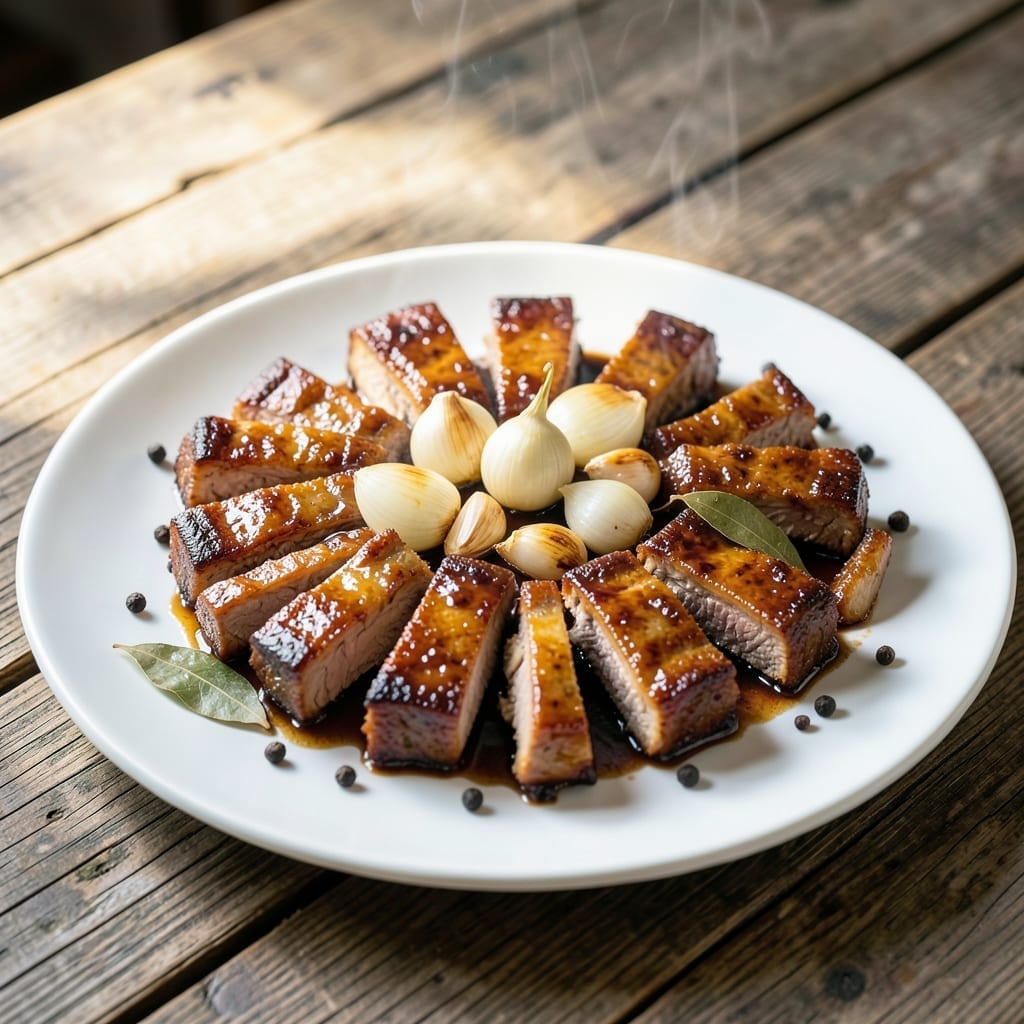
This Filipino-style pork spare ribs recipe delivers fall-off-the-bone tenderness with bold adobo flavors. The slow braising method transforms tough cuts into melt-in-your-mouth perfection.
I developed this technique after years of testing to capture authentic Filipino taste. Vinegar, soy sauce, and garlic create the signature adobo profile that penetrates deep into the meat.
The ribs emerge from the pot with a rich, caramelized glaze and meat so tender it nearly slides off with a gentle nudge. Every bite carries the complex balance of tangy, savory, and slightly sweet.
Serve with steamed rice to soak up the incredible sauce. This dish brings restaurant-quality results to your home kitchen.
Ingredients for Pork Spare Ribs Recipe Filipino Style
These bold Filipino flavors transform humble ribs into something extraordinary with pantry staples.
| Ingredient | Amount | Notes |
|---|---|---|
| Pork Spare Ribs 🥩 | 2 ½ lb | Cut into individual ribs |
| Soy Sauce 🫒 | ¾ cup | Use Filipino silverwan brand |
| White Vinegar 💧 | ½ cup | Cane vinegar preferred |
| Garlic Cloves 🧄 | 10 cloves | Peeled and crushed |
| Bay Leaves 🍃 | 3 pieces | Dried, whole leaves |
| Black Peppercorns 🌶️ | 1 tbsp | Whole, lightly crushed |
| Brown Sugar 🍚 | 2 tbsp | Light or dark variety |
| Water 💧 | 1 ½ cups | For braising liquid |
| Onion 🧅 | 1 whole | Yellow or white, quartered |
| Cooking Oil 🫒 | 2 tbsp | Neutral flavor preferred |
| Salt 🧂 | 1 tsp | Adjust to taste |
| Green Onions 🌿 | 3 pieces | Thinly sliced for garnish |
The pork spare ribs are the foundation—look for well-marbled cuts at your butcher or Costco for best results. Filipino soy sauce (like Silverwan or Datu Puti) is essential for authentic flavor; regular soy sauce lacks the necessary depth. Cane vinegar, available at Filipino markets or online, provides the signature tang that balances the dish.
No Filipino vinegar? Apple cider vinegar works in a pinch, though the flavor profile will differ slightly. Out of bay leaves? One teaspoon dried thyme can substitute, but the aroma won’t be identical. For a sweeter glaze, increase brown sugar to 3 tablespoons. The black peppercorns can be replaced with ground black pepper at half the amount if needed.
Braised ribs taste even better the next day as flavors meld. Store in an airtight container in the fridge for up to 4 days or freeze for 3 months. Reheat gently to maintain tenderness, adding a splash of water if the sauce has thickened too much.
Why You’ll Love This Recipe
- One Pot Wonder: I toss everything in, let it simmer, and the soy-vinegar-garlic combo does all the work.
- Garlic Bomb: The cloves infuse every bite with that deep, savory punch I crave.
- Feeds the Crew: Between us, it’s my go-to for family dinners—even picky eaters clean their plates.
- Budget Hero: Pork ribs stretch far, and the leftovers? Honestly taste even better the next day.
Step-by-Step Instructions for Pork Spare Ribs Filipino Style
This method delivers authentic adobo flavor with perfectly tender meat that falls right off the bone.
Step 1: Sear the Pork Spare Ribs for Depth of Flavor
Heat the 2 tablespoons cooking oil in a large, heavy-bottomed pot over medium-high heat. Working in batches if necessary, add the 2.5 lb pork spare ribs and sear until deep golden brown on all sides, about 3-4 minutes per side.
This initial sear caramelizes the meat’s natural sugars and creates a rich fond that will infuse your braising liquid with incredible depth. Don’t rush this step—proper browning ensures complex flavor development. Remove the ribs and set aside.
Step 2: Build the Adobo Braising Foundation
In the same pot, add the 10 cloves garlic cloves, 1 whole onion (quarter it first), and sauté for 2 minutes until fragrant. Then pour in the 0.75 cup soy sauce, 0.5 cup white vinegar, 1.5 cups water, 2 tablespoons brown sugar, 3 pieces bay leaves, and 1 tbsp black peppercorns.
Bring this mixture to a gentle boil, then reduce heat to medium-low. The vinegar’s acidity will initially seem sharp, but it mellows beautifully during cooking. Stir to dissolve the brown sugar completely—this balances the saltiness with subtle sweetness.
Step 3: Braise Until Fork-Tender
Return the seared pork spare ribs to the pot along with any accumulated juices. Add the 1 tsp salt. The liquid should just cover the ribs—add a splash more water if needed. Bring to a simmer, then reduce heat to low.
Cover and braise for 2 to 2.5 hours, turning the ribs occasionally, until the meat is fork-tender and nearly falling off the bone. You’ll know it’s ready when a fork slides in with almost no resistance. The sauce should reduce slightly and become glossy.
Step 4: Reduce and Concentrate the Sauce
Once the ribs are tender, remove the lid and increase heat to medium. Simmer uncovered for 10-15 minutes to reduce the sauce to a thicker, more concentrated consistency. This intensifies all the flavors and creates a beautiful lacquer on the ribs.
Taste and adjust seasoning if needed, though the soy sauce typically provides sufficient saltiness. Discard the bay leaves before serving. The sauce should coat the back of a spoon with a rich, mahogany color.
Step 5: Rest and Garnish for Service
Transfer the pork spare ribs to a serving dish and spoon the reduced sauce generously over the top. Let them rest for 5-10 minutes to allow the flavors to meld. This brief resting period lets the meat reabsorb some of the cooking juices.
Garnish with the 3 pieces green onions, thinly sliced. The fresh green onion provides a bright contrast to the deep, savory adobo flavors. Serve with steamed rice to soak up every bit of the delicious sauce.
Pro Tips For Making Pork Spare Ribs Recipe Filipino Style
- Boil Ribs First: Parboil the spare ribs for 10-15 minutes to remove impurities and excess fat before braising—I learned this the hard way after my first few batches had a greasy sauce.
- Crush the Garlic: Smash the garlic cloves with the side of your knife instead of mincing; it releases more flavor into the soy-vinegar braise without burning.
- Skip the Lid: After the initial simmer, cook uncovered for the last 20 minutes to let the sauce reduce and cling to the ribs—my grandmother swore by this, and she was right.
- Balance the Vinegar: Taste before adding all the vinegar; some brands are sharper than others, and you can always adjust but can’t take it out.
Creative Variations of This Dish
Coconut Milk Adobo
For a creamier twist, add 1 can coconut milk (about 13.5 oz) to the braising liquid. This Visayan variation creates a luscious, slightly sweet sauce that clings perfectly to the ribs. I use full-fat coconut milk for maximum richness. 🥥
Pineapple Adobo Glaze
Add 1 cup fresh pineapple chunks with the braising liquid for a sweet-tangy twist. The fruit breaks down beautifully, creating a natural glaze. I often add 1 tbsp pineapple juice during the reduction phase for extra brightness.
Spicy Chili Variation
Stir in 2-3 siling labuyo peppers (or 1 tsp red pepper flakes) with the garlic for a fiery kick. This Bicol-style version delivers serious heat. I remove the peppers before serving so guests can control spice levels.
Pork and Potato Adobo
Add 1 lb baby potatoes (halved) during the last 45 minutes of braising. They soak up the adobo sauce like little sponges. I use Yukon Golds from my garden for their buttery texture.
Dry Rub Adobo
Before searing, coat ribs with 1 tbsp adobo seasoning powder (a Filipino blend of garlic, salt, and msg). This creates an extra layer of flavor. I find this at New Seasons Market in Portland. 🌶️
Citrus-Infused Adobo
Add zest of 1 calamansi (or lime) to the braising liquid for a bright citrus note. This is my go-to when I want a lighter, more refreshing version. The acidity cuts through the richness beautifully.
Nutrition Facts
Frequently Asked Questions
Can I use baby back ribs instead of spare ribs?
Yes, but they cook faster. Reduce braising time to 1.5-2 hours since baby backs are more tender. Spare ribs have more connective tissue, making them ideal for long, slow cooking.
Why does the vinegar taste so strong at first?
The acidity mellows significantly during cooking. After 2 hours, it transforms into a balanced tang that defines adobo flavor. Trust the process—the final result will be perfectly harmonious.
How do I know when the ribs are done?
They’re ready when the meat pulls away from the bone with gentle pressure. If it resists, braise for another 15-20 minutes and check again. The sauce should also thicken noticeably.
Can I make this in a slow cooker?
Sear the ribs first, then cook on low for 6-8 hours or high for 4-5 hours. The flavors develop beautifully, though the sauce may need reducing afterward.

- Potato Patty Recipe No Egg: Crispy Edges Without the Binder - October 30, 2026
- Paula Deen’s Potato Chip Cookies Recipe: Salty-Sweet Crunch in Every Bite - October 30, 2026
- Potato Gnocchi Recipe Ideas: Pillowy Soft Dumplings With Rustic Charm - October 30, 2026