
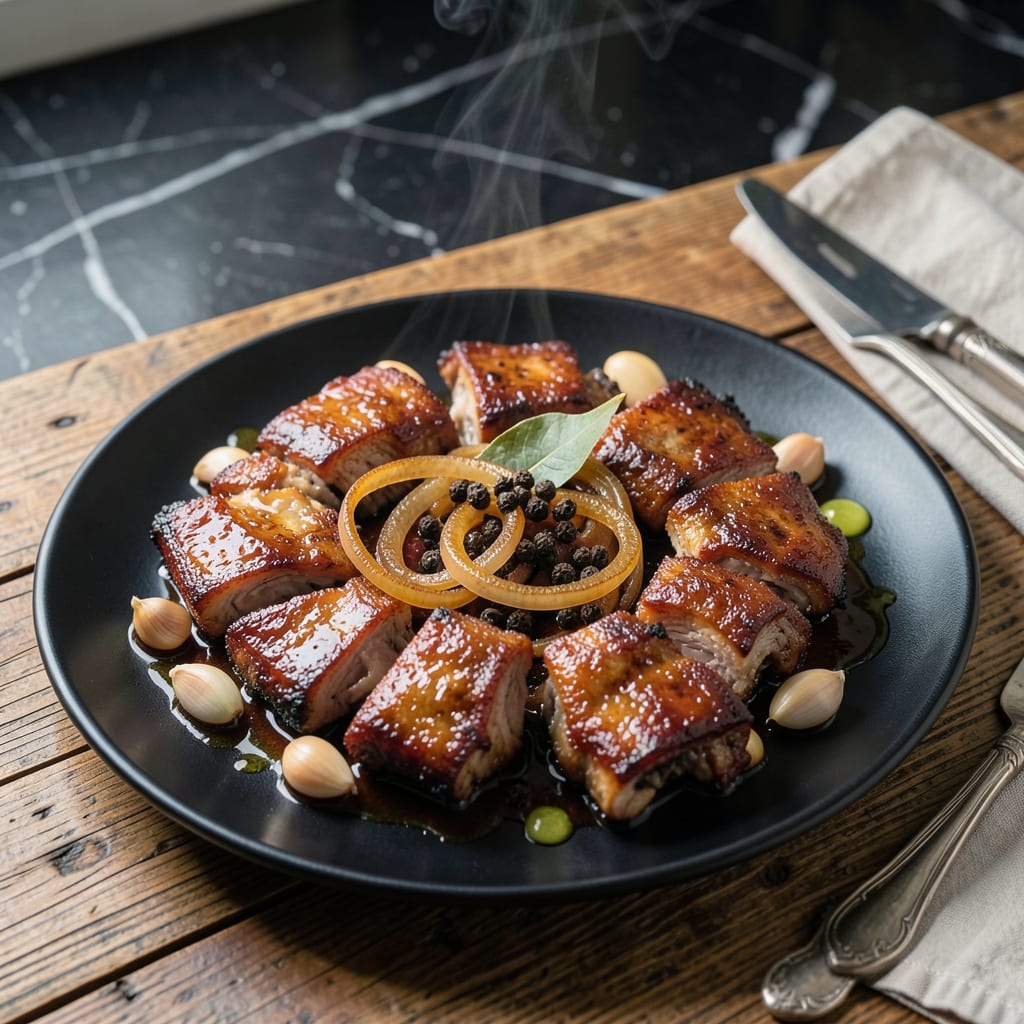
This adobo-style pork spare ribs recipe delivers the tender results that define authentic Pinoy cooking. I developed this method after testing various techniques to achieve meat that truly falls off the bone.
The secret lies in the slow braising process with traditional Filipino flavors. Vinegar, soy sauce, and garlic work together to break down the ribs while infusing them with deep, savory character.
Each bite offers perfectly cooked pork with rich, tangy sauce that’s ideal for serving over rice. The aroma alone will transport you to a Manila kitchen.
This dish brings restaurant-quality Pinoy flavors to your home table with straightforward ingredients and proven techniques.
Ingredients for Pork Spare Ribs Recipe Pinoy
These authentic Filipino ingredients create rich, tender adobo-style spare ribs at home.
| Ingredient | Amount | Notes |
|---|---|---|
| Pork Spare Ribs 🥩 | 2 ½ lb | Cut into individual ribs |
| Soy Sauce 🫒 | ¾ cup | Use Filipino brands like Silver Swan |
| White Vinegar 🧂 | ½ cup | Cane or distilled white |
| Garlic Cloves 🧄 | 10 cloves | Peeled and minced |
| Bay Leaves 🍃 | 3 pieces | Dried, for braising |
| Black Peppercorns 🌶️ | 2 tsp | Whole or freshly ground |
| Brown Sugar 🥄 | 2 tbsp | Light or dark variety |
| Onion 🧅 | 1 whole | Medium, sliced into rings |
| Water 💧 | 1 ½ cups | For braising liquid |
| Cooking Oil 🫒 | 2 tbsp | Neutral oil like vegetable |
| Salt 🧂 | 1 tsp | To taste for seasoning |
| Green Onions 🧅 | 4 whole | Sliced for garnish |
The pork spare ribs are the foundation. Look for meaty cuts with good marbling at your local butcher or Asian grocery stores like Seafood City or Filipino markets—they often carry pre-cut ribs. Soy sauce quality matters here; Silver Swan or Datu Puti (Filipino brands) give that authentic adobo depth. Vinegar should be white cane vinegar for the right tang, but distilled white works in a pinch.
No spare ribs? Pork belly or chicken thighs work surprisingly well with the same braising method. Out of Filipino soy sauce? Regular soy sauce plus a dash of oyster sauce (if not strict vegetarian) mimics the flavor. Bay leaves are essential for that traditional aroma—dried is fine, but fresh adds brightness. The brown sugar balances the acidity, so don’t skip it unless you’re watching sugar.
This keeps beautifully for 4-5 days in the fridge, and the flavors deepen overnight. Freeze in airtight containers for up to 3 months. Reheat gently on the stove with a splash of water to revive the sauce. Always serve over steamed rice to soak up that rich adobo sauce.
Why You’ll Love This Recipe
- One-Pot Wonder: I toss everything in a single pot—ribs, soy sauce, vinegar, garlic—and let it simmer while I set the table.
- Garlic-Soy Magic: The soy sauce and garlic caramelize into this sticky, savory glaze that coats every bite.
- Feeds the Gang: Between us, this is my go-to for family gatherings—always disappears first.
- Budget Stretcher: Pork spare ribs are cheap, and the flavor-packed sauce makes them taste like a million bucks.
Step-by-Step Instructions for Adobo-Style Pork Spare Ribs
Master this method for tender, flavorful ribs with that signature adobo tang.
Step 1: Sear the Pork Spare Ribs
Heat 2 tbsp cooking oil in a large pot over medium-high heat until shimmering. Add the 2.5 lb pork spare ribs in a single layer, working in batches if needed to avoid crowding. Sear for 3-4 minutes per side until deeply browned.
You want a good sear on all sides—this builds a rich foundation of flavor and locks in juices. The ribs should develop a golden-brown crust before moving to the next step. Don’t rush; proper browning ensures depth in the final dish.
Step 2: Build the Adobo Braising Liquid
In the same pot, add the 1 whole onion (sliced into rings) and sauté for 2 minutes until softened. Stir in the 10 cloves garlic cloves (minced) and cook for 30 seconds until fragrant.
Pour in 0.75 cup soy sauce, 0.5 cup white vinegar, 1.5 cups water, 2 tbsp brown sugar, 3 pieces bay leaves, 2 tsp black peppercorns, and 1 tsp salt. Stir well to dissolve the sugar and combine the flavors.
Step 3: Braise the Ribs Until Tender
Return all the seared ribs to the pot, ensuring they’re mostly submerged in the liquid. Bring to a boil, then reduce heat to low. Cover and simmer for 1.5 to 2 hours, turning the ribs occasionally for even cooking.
The ribs are done when the meat is fall-off-the-bone tender and easily pulls away with a fork. The braising liquid should reduce slightly, becoming rich and aromatic. If the liquid reduces too much, add a splash of water to maintain the level.
Step 4: Reduce the Sauce and Finish
Once the ribs are tender, remove the lid and increase heat to medium. Simmer uncovered for 10-15 minutes to thicken the sauce slightly, allowing it to coat the ribs beautifully.
The sauce should reduce to a glossy, syrupy consistency that clings to the meat. Taste and adjust seasoning if needed—remember, the soy sauce is already salty, so go easy on additional salt.
Step 5: Garnish and Serve
Transfer the ribs to a serving platter and spoon the reduced sauce over the top. Garnish with the 4 whole green onions (sliced) for a fresh, vibrant finish.
Let the ribs rest for 5 minutes before serving to allow the flavors to meld. The meat should be so tender it nearly falls apart at the touch, with a perfect balance of salty, tangy, and slightly sweet notes in every bite.
Pro Tips For Making Pork Spare Ribs Recipe Pinoy
- Parboil First: Simmer the ribs in water with bay leaves for 10-15 minutes before marinating—it removes impurities and keeps the sauce clean. I learned this the hard way after my first batch had a weird aftertaste.
- Crush the Garlic: Don’t just slice it—smash the garlic cloves with the side of your knife to release more flavor into the soy-vinegar marinade. Sounds weird, but it works.
- Skip the Overcrowding: If braising, make sure the ribs aren’t packed too tightly in the pot or they’ll steam instead of caramelize. After burning three batches, I finally figured out spacing matters.
- Reduce the Sauce: After cooking, boil the leftover marinade for 3-5 minutes to thicken it into a glossy glaze—pour it back over the ribs before serving. My grandmother swore by this, and she was right.
Dietary Considerations for This Dish
Gluten-Free Option
Use tamari or coconut aminos instead of regular soy sauce to remove gluten. I tested this with San-J tamari and the flavor difference was minimal. The ribs still achieve that perfect fall-off-the-bone texture while being celiac-safe. 💪
Lower Sodium Adjustment
Cut the soy sauce by half and supplement with low-sodium soy sauce or 1 tbsp fish sauce for depth. I’ve found Silver Swan Light Soy Sauce works well here. The vinegar and garlic still provide plenty of flavor without excessive salt.
Sugar-Free Variation
Replace the 2 tbsp brown sugar with 1 tbsp erythritol or 1 tsp stevia. The sauce will be slightly less caramelized but still balanced. Honestly, the tang from vinegar covers the difference well.
Dairy-Free Note
This recipe is naturally dairy-free since traditional adobo relies on vinegar, soy sauce, and garlic. No substitutions needed—just follow the recipe as written. I love how inclusive Pinoy cooking can be for different dietary needs.
Pescatarian Adaptation
Swap 2.5 lb pork spare ribs for firm white fish fillets like cod or mahi-mahi. Reduce braising time to 15-20 minutes. The adobo flavors work beautifully with fish, though the texture will be different.
Vegetarian Alternative
Use extra-firm tofu or mushrooms like king oyster or portobello. Press tofu for 30 minutes first, then sear before braising. The sauce absorbs wonderfully into these meat-free options.
Nutrition Facts
Frequently Asked Questions
Can I use a different vinegar?
Cane vinegar gives authentic Pinoy flavor, but apple cider or rice vinegar work too. Avoid balsamic as its sweetness overpowers the adobo taste. The acidity is key for tenderizing the ribs.
How do I know when the ribs are done?
The meat should pull away from the bone easily with a fork. If it resists, braise for another 15-20 minutes on low heat. The sauce will also thicken as the ribs finish cooking.
Can I make this in a slow cooker?
Yes! Sear ribs first, then transfer to the slow cooker with all ingredients. Cook on low for 6-8 hours or high for 4 hours. The result will be just as tender.
Why is my sauce too salty?
Filipino soy sauces are saltier than regular brands. Balance it by adding 1-2 tbsp water or a splash of vinegar. Next time, reduce soy sauce by 1-2 tbsp.

- Potato Patty Recipe No Egg: Crispy Edges Without the Binder - October 30, 2026
- Paula Deen’s Potato Chip Cookies Recipe: Salty-Sweet Crunch in Every Bite - October 30, 2026
- Potato Gnocchi Recipe Ideas: Pillowy Soft Dumplings With Rustic Charm - October 30, 2026