
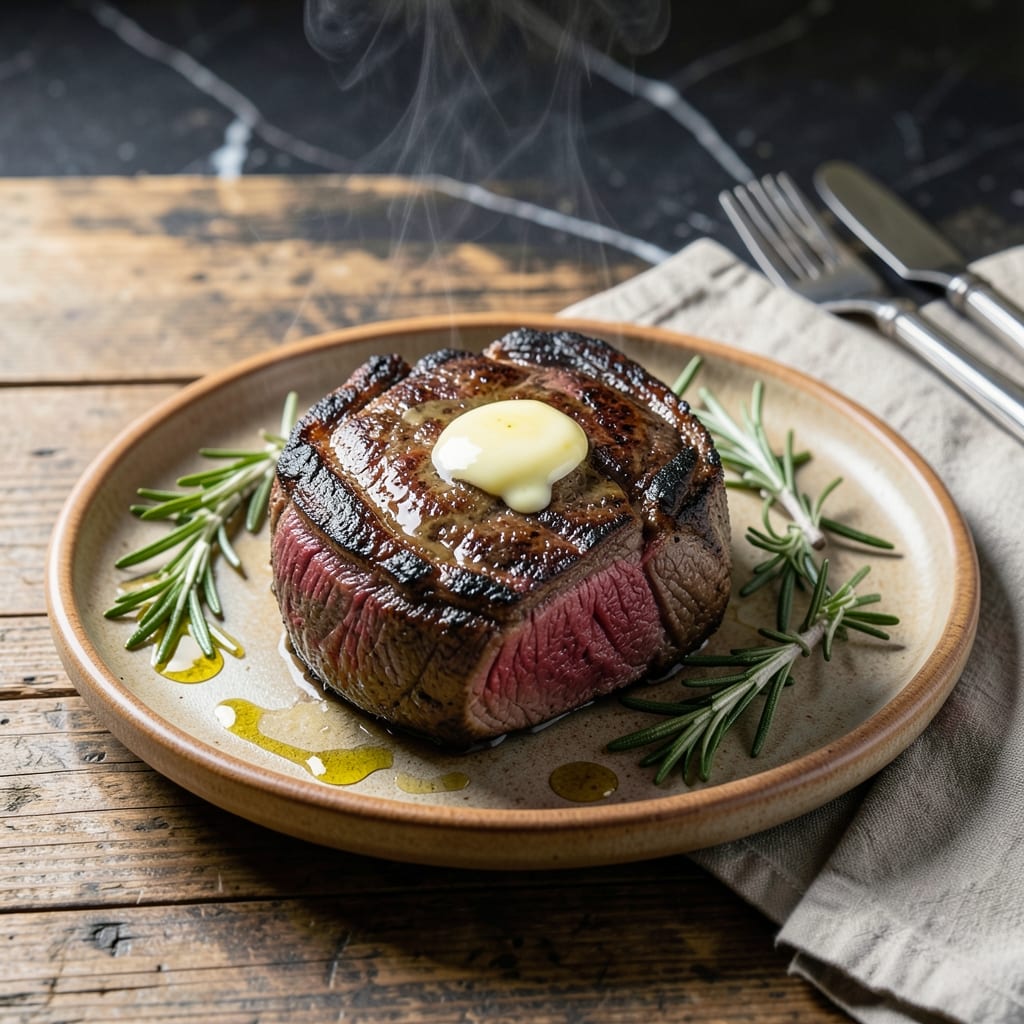
Achieving restaurant-quality porterhouse at home starts with a thick-cut steak and the right oven technique. This method guarantees juicy, tender meat with a perfectly browned crust every time.
I developed this approach after years of experimenting with different heat sources. The oven provides consistent, all-around heat that sears the exterior while gently cooking the interior to your preferred doneness.
The herb crust adds depth without overpowering the natural beef flavor. It forms a golden, aromatic seal that locks in moisture during cooking.
You’ll serve a steak that rivals any steakhouse—tender, flavorful, and topped with a crispy herb crust. Ready to elevate your home cooking?
Ingredients for Porterhouse Steak Recipe Oven
Thick-cut porterhouse, fresh herbs, and a few pantry staples create this steakhouse-worthy dish at home.
| Ingredient | Amount | Notes |
|---|---|---|
| Porterhouse Steak 🥩 | 2 whole | Thick-cut, about 1.5 inches |
| Kosher Salt 🧂 | 2 tsp | Diamond Crystal preferred |
| Freshly Ground Black Pepper 🌶️ | 1 tsp | Coarse grind for texture |
| Olive Oil 🫒 | 2 tbsp | High smoke point variety |
| Unsalted Butter 🧈 | 2 tbsp | For basting herb crust |
| Fresh Rosemary 🌿 | 2 tbsp | Finely chopped, stems removed |
| Fresh Thyme 🌿 | 2 tbsp | Leaves stripped from stems |
| Garlic Cloves 🧄 | 4 cloves | Minced for herb crust |
| Shallot 🧅 | 1 whole | Finely minced for depth |
| Dijon Mustard 🟡 | 1 tbsp | For herb crust binding |
| Red Wine 🍷 | ¼ cup | Dry variety for deglazing |
The steak is everything here. Thick-cut porterhouse (1.5 inches minimum) from a trusted butcher or high-end grocery like Whole Foods ensures even cooking and that perfect crust. Look for good marbling—it’s your flavor insurance. The fresh herbs? Rosemary and thyme are non-negotiable (dried just won’t cut it). Grab them from the produce section, not those sad little jars.
No shallots? Red onion at half the amount works fine. Fresh out of Dijon? Whole-grain mustard adds a nice texture too. The red wine can be any dry variety you’d drink—Cabernet or Merlot are safe bets. For the butter, don’t skimp on quality; European-style unsalted has the fat content you want for that glossy finish.
Cook immediately or let the steak sit at room temperature for 30-40 minutes before cooking. Leftover herb crust? Spread it on bread and broil for a quick garlic bread. The steak itself is best fresh, but slices reheat decently in a hot skillet for 2-3 days.
Why You’ll Love This Recipe
- Set It and Forget: I toss the seasoned porterhouse in the oven and let the heat do the work while I set the table.
- Buttery Crust: The olive oil and butter baste creates a crust so crisp it crackles with every slice.
- Weeknight Splurge: Honestly, this feels like a steakhouse dinner but fits into my Tuesday schedule.
- Leftovers Luxury: That extra slice reheats beautifully for my lunch the next day—still juicy, never dry.
Step-by-Step Instructions for Porterhouse Steak in the Oven
Here’s the method I use for perfectly cooked steaks with a fragrant herb crust.
Step 1: Season and Sear the Porterhouse Steaks
Pat the 2 whole Porterhouse Steak completely dry with paper towels—this is crucial for a good sear. Season both sides aggressively with the 2 tsp Kosher Salt and 1 tsp Freshly Ground Black Pepper, pressing the seasoning into the meat so it adheres.
Heat the 2 tbsp Olive Oil in a large oven-safe skillet over high heat until shimmering. Add the steaks and sear for 3-4 minutes per side until a deep, golden brown crust forms. I press down gently with tongs during the first minute to ensure full contact with the pan.
Step 2: Prepare the Herb Crust Mixture
While the steaks sear, finely chop the 2 tbsp Fresh Rosemary and strip the leaves from the 2 tbsp Fresh Thyme. In a small bowl, combine these herbs with the minced 4 cloves Garlic Cloves, finely minced 1 whole Shallot, and 1 tbsp Dijon Mustard.
This mixture will form a paste that clings to the steaks and creates an aromatic crust. The Dijon mustard acts as a binder, while the shallot and garlic add depth of flavor. Set this aside until ready to use.
Step 3: Apply Herb Crust and Baste with Butter
Once the steaks are seared, reduce the heat to medium. Spread the herb mixture evenly over the top of each steak, pressing gently so it adheres. Add the 2 tbsp Unsalted Butter to the skillet, tilting the pan slightly to pool the butter at one end.
Using a spoon, baste the melted butter over the steaks repeatedly for about 1 minute, focusing on the herb crust. This basting step infuses the crust with rich butter flavor and helps it caramelize in the oven.
Step 4: Finish in the Oven to Desired Doneness
Transfer the skillet to a preheated 400°F oven. Roast for 8-12 minutes, depending on your preferred doneness. For medium-rare, aim for an internal temperature of 130-135°F—use a meat thermometer for accuracy.
The steaks are done when the internal temperature reaches your target and the herb crust is golden and fragrant. If the crust browns too quickly, loosely tent the skillet with foil to prevent burning.
Step 5: Rest and Deglaze for Serving
Transfer the steaks to a cutting board and tent loosely with foil. Let them rest for 10 minutes—this allows the juices to redistribute for maximum tenderness.
While the steaks rest, place the skillet on the stovetop over medium heat. Pour in the 0.25 cup Red Wine and scrape up any browned bits with a wooden spoon. Simmer for 2-3 minutes until slightly reduced, then pour this pan sauce over the sliced steaks before serving.
Pro Tips For Making Porterhouse Steak Recipe Oven
- Preheat the Pan: Get your oven-safe skillet screaming hot—about 5 minutes on high—before adding the steak to guarantee a deep, caramelized crust.
- Salt Generously: Use more kosher salt than feels natural, especially on the thick strip side; it’s the only way to season through that full inch of meat.
- Skip the Cold Steak: Pull the porterhouse from the fridge 45 minutes before cooking so it cooks evenly—no more gray band in the middle.
- Baste with Butter: In the last 2 minutes in the oven, spoon melted butter over the steak repeatedly for a glossy finish and extra richness.
Best Sauces and Condiments for These Flavors
Classic Red Wine Reduction
Use the pan drippings from your steak and deglaze with an extra ½ cup dry red wine—I prefer Cabernet Sauvignon. Simmer for 5-7 minutes until reduced by half, then whisk in 1 tbsp cold butter for a glossy finish. This pairs perfectly with the herb crust. 🍷
Creamy Horseradish Sauce
Combine ½ cup sour cream, 2 tbsp prepared horseradish, 1 tsp Dijon mustard, and a pinch of salt. The sharp kick cuts through the richness of the steak. I love this with the tender filet portion of the porterhouse.
Garlic-Herb Compound Butter
Mix 4 tbsp softened unsalted butter with 1 tbsp chopped rosemary and 1 minced garlic clove. Roll in parchment paper and chill. Slice a pat onto each steak serving—it melts beautifully over the hot meat.
Chimichurri Sauce
Blend 1 cup fresh parsley, ¼ cup olive oil, 2 tbsp red wine vinegar, and 1 minced shallot. This bright, herby sauce from Argentina adds a fresh contrast to the rich steak. 🌿
Blue Cheese Crumble
Sprinkle ¼ cup crumbled blue cheese (I use Rogue River Blue from Oregon) over sliced steak. The bold, tangy flavor pairs wonderfully with the beefy porterhouse. A little goes a long way!
Balsamic Glaze
Drizzle store-bought or homemade balsamic glaze over the steak just before serving. The sweet-tart reduction complements the herb crust without overpowering it. I reduce ½ cup balsamic vinegar with 1 tbsp honey for my version.
Nutrition Facts
Frequently Asked Questions
Should I start with a hot or cold oven?
Always preheat your oven to 400°F before cooking. A hot oven ensures even cooking and helps develop that perfect crust on the herb topping.
How do I know when it’s done?
Use a meat thermometer for accuracy. For medium-rare, pull it at 130-135°F. The temperature will rise 5-10°F during resting.
Can I use a different cut of steak?
Ribeye or New York strip work well with this method. Avoid leaner cuts like filet mignon—they don’t have enough fat for the herb crust to adhere properly.
What if my herb crust burns?
If it browns too quickly, tent the skillet with foil. Reduce oven temp to 375°F and check every 2-3 minutes. The crust should be golden, not blackened.

- Potato Patty Recipe No Egg: Crispy Edges Without the Binder - October 30, 2026
- Paula Deen’s Potato Chip Cookies Recipe: Salty-Sweet Crunch in Every Bite - October 30, 2026
- Potato Gnocchi Recipe Ideas: Pillowy Soft Dumplings With Rustic Charm - October 30, 2026