
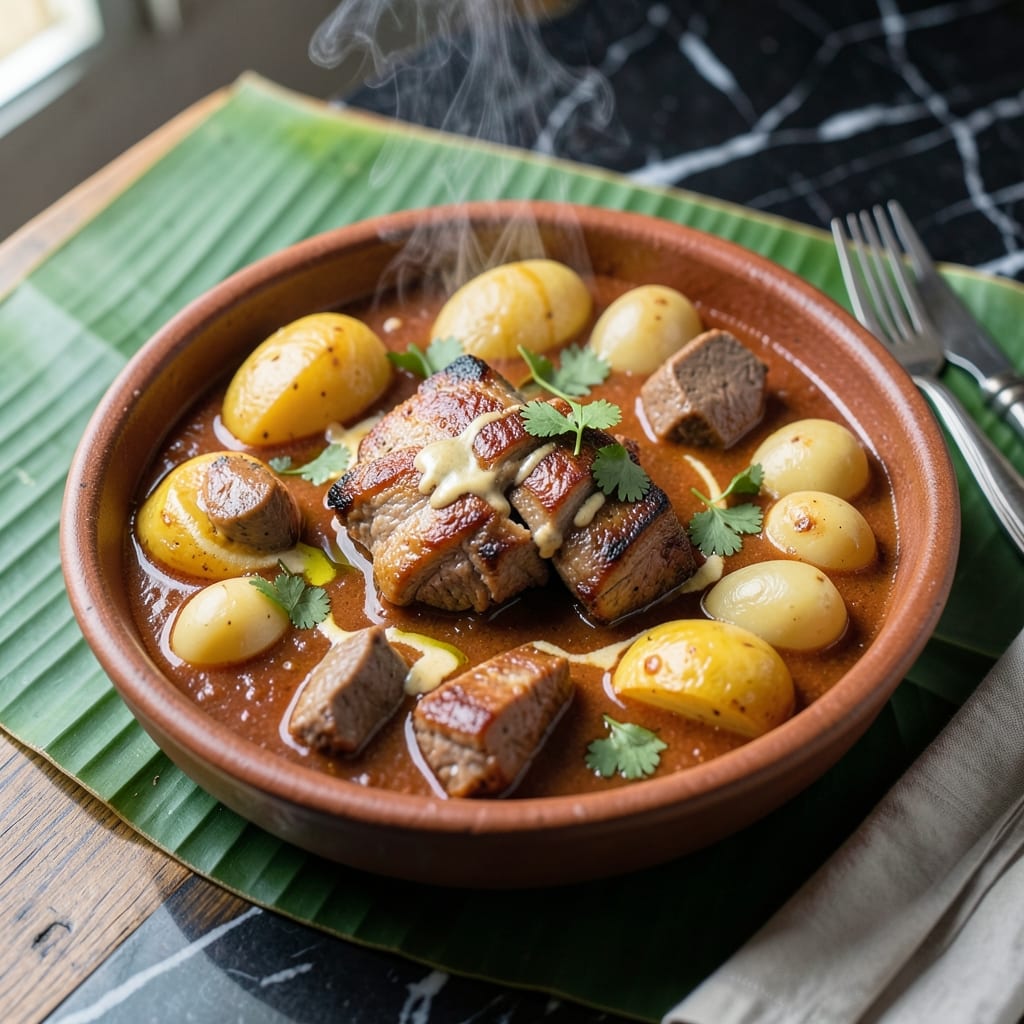
This Ilonggo-style pork pochero brings together tender meat, sweet plantains, and a rich peanut sauce that defines comfort food. The dish balances savory and sweet flavors in a way that feels both hearty and uniquely Filipino.
I’ve refined this recipe to stay true to its regional roots while making it approachable for home cooks. The peanut sauce adds depth, while the plantains contribute a natural sweetness that complements the pork perfectly.
The stew simmers until the meat is fall-apart tender, and the sauce thickens into a velvety consistency. Every spoonful delivers layers of flavor that make this dish a standout at any table.
Serve it with steamed rice to soak up every last bit of the sauce. This is a meal that satisfies on every level.
Ingredients for Pork Pochero Recipe Ilonggo Style
Rich pork, sweet plantains, and creamy peanut sauce create this Filipino comfort classic.
| Ingredient | Amount | Notes |
|---|---|---|
| Pork Shoulder 🥩 | 2 lb | Cut into large chunks |
| Ripe Plantains 🍌 | 3 whole | Peeled and sliced |
| Peanut Butter 🥜 | ½ cup | Creamy variety preferred |
| Tomato Sauce 🍅 | 1 cup | Smooth consistency |
| Chicken Liver 🍗 | ¼ lb | Optional for authenticity |
| Potatoes 🥔 | 2 whole | Peeled and quartered |
| Carrots 🥕 | 2 whole | Peeled and sliced |
| Onion 🧅 | 1 whole | Chopped finely |
| Garlic Cloves 🧄 | 6 cloves | Minced |
| Bay Leaves 🌿 | 2 pieces | Dried |
| Salt 🧂 | 2 tsp | Adjust to taste |
| Black Pepper 🌶️ | 1 tsp | Freshly ground |
| Water 💧 | 4 cups | For simmering |
| Sugar 🍚 | 2 tbsp | For balancing sauce |
| Soy Sauce 🫒 | 3 tbsp | For umami depth |
The pork shoulder is key here—look for well-marbled cuts at your butcher or Costco for the best texture. Ripe plantains (blackened peel) are essential for sweetness; green ones won’t work. For the peanut sauce, natural peanut butter (just peanuts and salt) gives the cleanest flavor. Chicken liver adds authenticity but can be omitted if unavailable.
No pork shoulder? Pork butt works equally well. Plantains can be swapped for sweet potatoes in a pinch. For a nut-free version, sunflower seed butter mimics the richness. If tomato sauce feels too thin, tomato paste can be used at half the quantity. The soy sauce can be tamari for gluten-free needs.
This stew tastes even better the next day. Store in an airtight container in the fridge for up to 4 days, or freeze for 3 months. Reheat gently to preserve the sauce’s velvety texture (worth the extra minute).
Why You’ll Love This Recipe
- One Pot Meal: I toss everything in—pork, plantains, even the chicken liver—and let it simmer. No fuss, no extra pans.
- Rich and Nutty: The peanut butter and tomato sauce blend into this deep, savory sauce that clings to the pork. Honestly, I could drink it with a spoon.
- Crowd Pleaser: I make this for family gatherings, and the mix of sweet plantains and hearty pork means even the picky eaters go back for seconds.
- Stretches Far: Leftovers taste even better the next day, and it’s cheap to make with pork shoulder. I’ll be real: this feeds us for two meals easy.
Step-by-Step Instructions for Pork Pochero Ilonggo Style
This traditional method ensures rich, layered flavors in every tender bite of the stew.
Step 1: Brown the Pork and Chicken Liver
Heat a large pot over medium-high heat. Add the 2 lb Pork Shoulder (cut into large chunks) and sear until all sides turn light brown, about 5-7 minutes. This builds a flavorful foundation for the stew.
Add the 0.25 lb Chicken Liver and cook for 2-3 minutes until it changes color from pink to brown. Remove both the pork and chicken liver from the pot and set them aside temporarily.
Step 2: Sauté Aromatics and Build the Base
In the same pot, sauté the chopped onion and 6 cloves minced Garlic Cloves until fragrant and the onion becomes translucent, about 3-4 minutes. Stir frequently to prevent burning.
Pour in the 3 tbsp Soy Sauce, 1 cup Tomato Sauce, 2 tbsp Sugar, 2 tsp Salt, and 1 tsp Black Pepper. Stir well and let it simmer for 2 minutes to meld the flavors together.
Add the 2 pieces Bay Leaves and return the pork and chicken liver to the pot.
Step 3: Simmer with Vegetables and Plantains
Pour in the 4 cups Water and bring to a boil. Reduce the heat to medium-low and add the 2 whole Potatoes (peeled and quartered) and 2 whole Carrots (peeled and sliced). Cover and let it simmer for 20 minutes.
Add the 3 whole Ripe Plantains (peeled and sliced) and continue simmering for another 10-15 minutes until the pork and vegetables are fork-tender. The plantains should soften but retain their shape.
Step 4: Incorporate Peanut Butter and Finish
In a small bowl, mix the 0.5 cup Peanut Butter with a ladle of hot broth from the pot to thin it out. Stir until smooth, then pour the mixture back into the stew.
Simmer for an additional 5 minutes to allow the peanut flavor to infuse throughout. Taste and adjust the seasoning with more salt or sugar if needed.
Remove the bay leaves before serving. The stew should have a creamy, nutty sauce with tender pork and vegetables. Serve hot with steamed rice for an authentic Ilonggo experience.
Pro Tips For Making Pork Pochero Recipe Ilonggo Style
- Sear the Pork First: Brown the pork shoulder in batches over medium-high heat until deeply caramelized—I learned this the hard way after my first few pochero attempts tasted flat because I skipped this step.
- Use Overripe Plantains: The blacker the plantains, the sweeter and creamier they’ll be in the stew. Sounds weird, but it works: green ones stay hard and starchy.
- Thin the Peanut Butter: Mix the peanut butter with a little hot broth before stirring it in to prevent clumping. I was skeptical until I tried it—now it blends smoothly every time.
- Add Liver Last: Chicken liver turns tough if overcooked, so add it only in the last 5 minutes of simmering. This isn’t the prettiest method, but it’s the tastiest.
Common Mistakes When Making This Dish
Overcooking the Pork
Pork shoulder needs time to tenderize, but boiling it vigorously turns it dry and stringy. Keep the heat at a gentle simmer—medium-low—and check tenderness with a fork after 1 hour. I learned this the hard way when my first batch turned to rubber. 💡
Skipping the Searing
Browning the pork and chicken liver creates a flavor base that defines this dish. Don’t rush this step—let it develop a light brown crust over medium-high heat for 5-7 minutes. The fond left behind adds incredible depth to your broth.
Using Green Plantains
Ripe plantains (with blackened peels) are essential for that signature sweetness. Green ones stay starchy and bland, no matter how long they cook. At New Seasons Market, I always ask for the ripest ones they have.
Lumpy Peanut Sauce
Mix the 0.5 cup Peanut Butter with hot broth in a separate bowl first. This prevents clumping and ensures a silky-smooth sauce. I use a whisk to break up any stubborn bits before stirring it back into the pot.
Forgetting to Adjust Seasoning
The peanut butter and plantains can mute the saltiness, so always taste before serving. I add an extra ½ tsp Salt or 1 tbsp Sugar at the end if needed. The flavors should sing, not whisper.
Overcrowding the Pot
If your pot is too small, the liquid won’t reduce properly, and the flavors won’t concentrate. Use a 5-quart Dutch oven or larger to give everything room to simmer. Trust me—this makes all the difference. 🔥
Nutrition Facts
Frequently Asked Questions
What can I use instead of chicken liver?
You can omit it entirely or substitute with chicken gizzards for similar texture. For a vegetarian option, try mushrooms or tofu to absorb the rich flavors.
How do I know when the pork is fully cooked?
The pork is done when it’s fork-tender and reaches an internal temperature of 145°F. In this stew, it will easily pull apart after simmering for about 1 hour.
Can I make this dish ahead of time?
The flavors deepen overnight. Store in an airtight container in the fridge for up to 4 days or freeze for 3 months. Reheat gently to maintain the sauce’s creamy texture.
Why did my peanut sauce separate?
This happens if the peanut butter isn’t fully incorporated with hot broth. Always mix it in a separate bowl first, then whisk into the stew slowly over medium-low heat.

- Potato Patty Recipe No Egg: Crispy Edges Without the Binder - October 30, 2026
- Paula Deen’s Potato Chip Cookies Recipe: Salty-Sweet Crunch in Every Bite - October 30, 2026
- Potato Gnocchi Recipe Ideas: Pillowy Soft Dumplings With Rustic Charm - October 30, 2026