
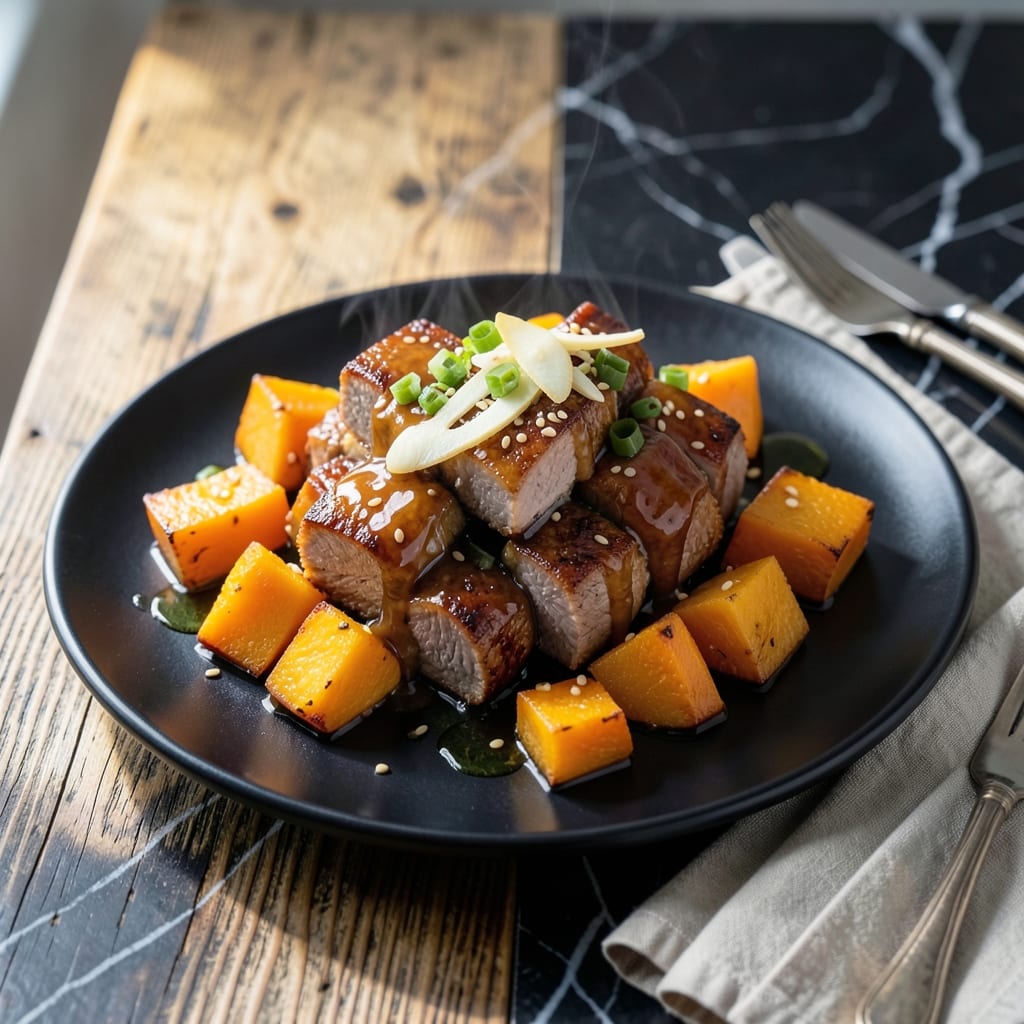
This island-inspired dish brings together tender pork and sweet squash in perfect harmony. The combination reflects Hawaii’s rich culinary traditions, where local ingredients create bold, balanced flavors.
I developed this recipe after visiting a Portland farmers market and spotting beautiful kabocha squash. Its natural sweetness pairs beautifully with savory pork, creating a dish that’s both comforting and exciting. The preparation is straightforward yet delivers impressive results.
The pork becomes fall-apart tender while the squash develops a caramelized edge. Together, they create a meal that’s hearty enough for dinner but special enough for guests. The flavors improve as they meld together, making leftovers even better the next day.
Serve this fusion of flavors with steamed rice to soak up every bit of the delicious sauce. The contrast of textures and tastes makes every bite memorable.
Ingredients for Pork Squash Recipe Hawaii
Tender pork and sweet kabocha squash come together with bold, balanced island flavors in this dish.
| Ingredient | Amount | Notes |
|---|---|---|
| Pork Shoulder 🥩 | 2 lb | Boneless, cut into 1-inch cubes |
| Kabocha Squash 🎃 | 2 lb | Peeled, seeded, cut into 1-inch cubes |
| Soy Sauce 🫙 | ½ cup | Low-sodium preferred for balance |
| Brown Sugar 🍚 | ¼ cup | Packed, for caramelization |
| Fresh Ginger 🌿 | 1 tbsp | Minced, for zing and warmth |
| Garlic Cloves 🧄 | 5 cloves | Minced, essential for depth |
| Rice Vinegar 🍶 | 2 tbsp | Adds tangy brightness |
| Olive Oil 🫒 | 2 tbsp | For searing pork and squash |
| Green Onions 🧅 | 4 whole | Thinly sliced, for garnish |
| Fresh Cilantro 🌿 | ¼ cup | Chopped, for fresh finish |
| Red Pepper Flakes 🌶️ | ½ tsp | Adjust for heat preference |
| Sesame Seeds 🌰 | 1 tbsp | Toasted, for crunch and aroma |
| Steamed Rice 🍚 | 2 cups | Cooked, for serving |
The pork is the foundation here. Pork shoulder (also called pork butt) delivers the fall-apart tenderness that defines this dish. Look for well-marbled pieces at Whole Foods or your local butcher—avoid lean cuts like tenderloin, which dry out. Kabocha squash is non-negotiable for authenticity; H Mart or Asian markets typically stock the best selection. The fresh ginger and garlic should be firm and fragrant, not shriveled or soft.
No kabocha? Butternut squash works in a pinch (though it’s sweeter). Swap soy sauce for tamari if gluten-free. Brown sugar can be replaced with coconut sugar for a deeper caramel note. Fresh cilantro haters can use Thai basil instead. For heat, sriracha or gochujang adds complexity beyond red pepper flakes. The rice vinegar can be substituted with apple cider vinegar if needed.
This dish tastes even better the next day as the flavors meld. Store leftovers in an airtight container in the fridge for up to 4 days. Freeze for up to 3 months—thaw overnight before reheating. The squash may soften slightly, but the pork stays tender.
Why You’ll Love This Recipe
- One Pot Meal: I toss the pork shoulder and kabocha squash in a single pot with soy sauce and brown sugar—minimal cleanup, maximum flavor.
- Sweet & Savory Magic: The brown sugar caramelizes with the soy sauce while the ginger adds this warm, zesty kick that’s honestly addictive.
- Feeds a Crowd: Between us, this dish stretches easily for family dinners or potlucks, and the flavors taste even better the next day.
- Budget Friendly: Pork shoulder and kabocha squash are both affordable, and a little goes a long way with these bold Hawaiian-inspired flavors.
Step-by-Step Instructions for Pork and Kabocha Squash
This method balances caramelization and tenderness while building layers of island-inspired flavor.
Step 1: Sear the Pork Shoulder
Heat 2 tablespoons olive oil in a large skillet over medium-high heat until shimmering. Add all 2 lb Pork Shoulder cubes in a single layer, working in batches if necessary to avoid crowding. Sear undisturbed for 4-5 minutes until deep golden brown on all sides.
The pork should release easily from the pan when properly browned—don’t force it. This sear creates a flavorful fond that will deepen the sauce later. Transfer to a plate and set aside.
Step 2: Caramelize the Kabocha Squash
In the same skillet, add all 2 lb Kabocha Squash cubes. Cook over medium heat for 8-10 minutes, stirring occasionally, until the edges begin to soften and lightly caramelize. The squash should develop a slight crust but remain firm enough to hold its shape.
This step coaxes out the natural sweetness of the kabocha, which will contrast beautifully with the savory pork. If the pan seems dry, add a splash of water to deglaze and prevent sticking.
Step 3: Build the Sauce and Combine
Reduce heat to low and add 1 tablespoon Fresh Ginger, 5 cloves Garlic Cloves, 0.5 cup Soy Sauce, 0.25 cup Brown Sugar, 2 tablespoons Rice Vinegar, and 0.5 teaspoon Red Pepper Flakes to the skillet. Stir until the brown sugar dissolves and the mixture begins to simmer.
Return the seared pork to the skillet along with any accumulated juices. Gently fold everything together, ensuring the pork and squash are fully coated. Simmer for 5-7 minutes until the sauce thickens slightly and clings to the ingredients.
This simmering step allows the flavors to meld, with the sauce reducing just enough to create a glossy, umami-rich glaze.
Step 4: Garnish and Serve
Remove from heat and stir in 0.25 cup Fresh Cilantro and half of the 4 whole Green Onions, thinly sliced. The residual heat will wilt the cilantro slightly while keeping its freshness.
Spoon the mixture over 2 cups Steamed Rice and garnish with the remaining green onions, 1 tablespoon Sesame Seeds, and an extra sprinkle of red pepper flakes if desired. The contrast of textures—tender pork, creamy squash, and crunchy seeds—makes every bite satisfying.
Pro Tips For Making Pork Squash Recipe Hawaii
- Brown the Pork: Sear the pork shoulder in batches over medium-high heat until deeply browned—this builds flavor and prevents steaming. I learned this the hard way after ending up with pale, soggy meat in my first few attempts.
- Peel the Squash: Cut the kabocha in half and microwave for 3-4 minutes before peeling—it softens just enough to make the job easier without losing texture. Sounds weird, but it works.
- Balance the Sauce: Taste as you go and adjust the soy sauce to brown sugar ratio—kabocha is sweet, so you’ll likely need more soy than you think. My grandmother swore by this, and she was right.
- Simmer Low and Slow: Once everything’s in the pot, keep it at a gentle simmer, not a boil, or the squash will turn to mush before the pork is tender. After burning three batches, I finally figured out the patience part.
Regional Styles of pork squash recipe hawaii
Oahu Plate Lunch
On Oahu, this dish often appears as a plate lunch staple, served with steamed rice and macaroni salad. The pork is typically marinated longer—up to 12 hours—in a mix of soy sauce, ginger, and garlic for deeper flavor penetration. 🌺
Big Island Luau Style
Big Island versions often use imu-roasted pork for a smoky depth, with kabocha squash cooked alongside in the underground oven. The squash absorbs the earthy, wood-fired notes, creating a unique island profile. I love the communal feel of this preparation.
Maui Farm Fresh
Maui’s version highlights local produce, often adding sweet Maui onions and fresh pineapple chunks to the stir-fry. The pineapple’s acidity cuts through the richness, while the onions add a subtle sweetness that complements the squash beautifully.
Kauai Plantation Twist
Kauai’s plantation-era influence brings a touch of Portuguese sausage into the mix. The sausage’s spice and fat enhance the pork’s tenderness, while the squash soaks up the smoky, garlicky flavors. A nod to the island’s multicultural history.
Hilo Rainforest Version
In Hilo, where rain keeps the air humid, cooks often finish the dish with a splash of shoyu (Hawaiian soy sauce) and a sprinkle of furikake for extra umami. The squash is sometimes steamed first to soften before caramelizing.
This approach ensures the squash stays tender without drying out in the humid climate. 💧
Nutrition Facts
Frequently Asked Questions
Can I use butternut squash instead of kabocha?
Yes, butternut works as a substitute, though it’s sweeter and less dense. Reduce the brown sugar by 1 tablespoon to balance the flavors. Kabocha holds its shape better during cooking.
How do I know when the pork is fully cooked?
The pork should reach an internal temperature of 145°F and appear white with just a hint of pink. Since it’s cubed, it cooks quickly—usually within 15-20 minutes total.
Can I make this ahead of time?
The flavors deepen as they rest. Store in an airtight container in the fridge for up to 4 days. Reheat gently on the stove with a splash of water.
What if my sauce is too thin?
Simmer uncovered for an extra 3-5 minutes to reduce. For faster thickening, mix 1 teaspoon cornstarch with 1 tablespoon water and stir into the sauce.

- Potato Patty Recipe No Egg: Crispy Edges Without the Binder - October 30, 2026
- Paula Deen’s Potato Chip Cookies Recipe: Salty-Sweet Crunch in Every Bite - October 30, 2026
- Potato Gnocchi Recipe Ideas: Pillowy Soft Dumplings With Rustic Charm - October 30, 2026